

Instructor Burnout: When The Ocean Becomes Just An Office
You think becoming a dive instructor is living the dream? Sus. Wait until you teach Discover Scuba Diving for 20 days straight. Here is how you survive when the magic dies.

Hay naku. I see you. You sit at the back of the boat, staring at the horizon like you lost your wallet. The guests are happy. They are shouting. They saw a Green Turtle. Big deal. You have seen a thousand turtles. You? You just want a cigarette, a San Miguel, and a nap.
You used to love this. I remember when you came here to Batangas. Fresh Open Water diver. Eyes big like saucers. You touched the tank like it was gold. You said, "Tatay Santiago, I want to live underwater. I want to be like you."
Now look at you. You have the fancy Instructor patch. You have the shiny dive computer that costs more than my motorbike (which I told you is a waste of money, by the way). But your eyes? Dead. Like a Lapu-Lapu (grouper) in the wet market waiting to be steamed.
This is what we call burnout. In Tagalog, maybe we just say pagod na. Tired. Deep tired. The dream became a job. The job became a chore. Now the ocean is just your office. And like any office, sometimes the air conditioning is broken, the commute is wet, and the boss is stupid.
It happens to the best of us. But if you do not fix it, you become dangerous. A bored diver is a careless diver. So, sit down. Listen to Tatay.
The "Dream Job" Is A Lie
Let us be honest. The brochures lie. PADI, SSI, NAUI... all of them. They show you drinking cocktails on the beach with bikini girls or handsome boys. They show you crystal clear water and easy diving. They sell you a lifestyle.
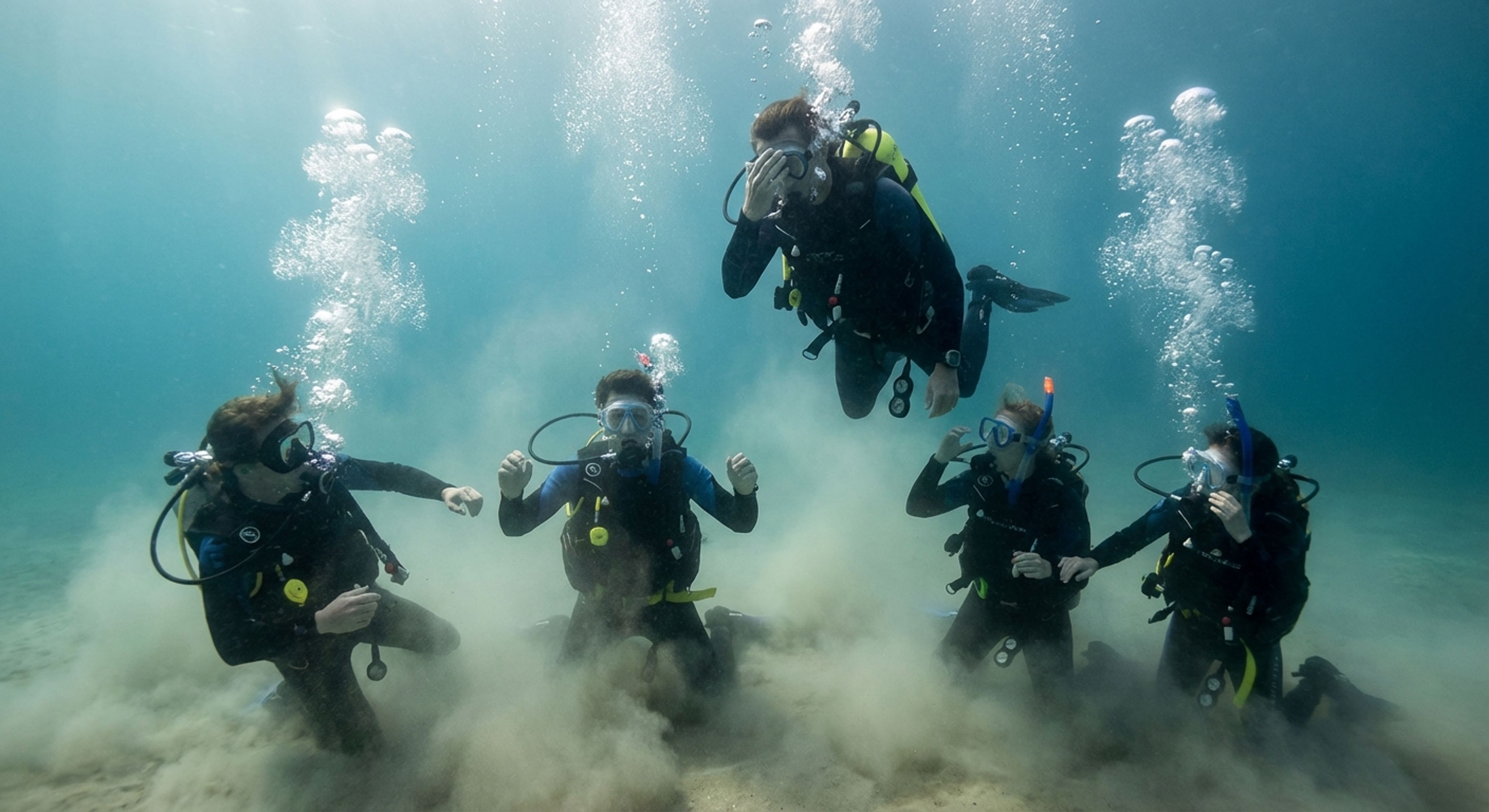
They do not show you carrying twenty aluminum tanks in the tropical humidity until your back screams. They do not show you washing vomit off the regulator because the guest ate too much lechon before the boat ride. They do not show you the panic in a student's eyes at 12 meters when they forget how to breathe and try to bolt to the surface.
When you dive for fun, you look at the fish. You look for the beauty. When you dive for work, you look at the gauge. You look at the fins kicking the fragile coral. You act as a policeman underwater. "Don't touch that." "Buoyancy check." "Where is your buddy?"
You stop seeing the ocean. You only see the risk. You only see the liability.
I have been diving here since before you were born. 40 years in these waters. Do I get tired? Susmaryosep. Of course. I am human, not a sea snake. There are days I hate the smell of neoprene. There are days I want to throw my tank into the jungle. But I am still here. Why? Because I know how to fix my head.
The Physical Toll: Nitrogen and Routine
It is not just in your mind. It is in your blood.
You dive three, four times a day. Every day. Even within the tables, even with your fancy computer beeping at you, the nitrogen builds up. It makes you slow. It makes you foggy. We call it the "Instructor Zombie" mode.
And the routine? It kills the soul.
- Briefing.
- Gear up.
- "Ok, big step."
- Descend.
- Mask clear skill.
- Regulator recovery skill.
- Swim in a circle.
- Safety stop.
- Up.
- Repeat.
It is like working in a factory. But this factory is underwater. When you do the same thing 500 times, you go on autopilot. And autopilot is where accidents happen. You forget to check the tank valve. You forget to check the current. That is when the ocean will slap you. Hard.
Signs You Are burnt Out (Besides Being Grumpy)
You think you are just tired? No. Check yourself. If you have these signs, you are in the danger zone.
- You Hope Guests Cancel: The phone rings. It is the shop manager. You pray it is bad weather. You pray the guests have a stomach ache. When they show up, you are disappointed. This is bad. You should never wish bad luck on the business that feeds you.
- You Do The Minimum (The "Lazy Dog" Syndrome): You check the gear fast. Too fast. You skip the detailed briefing on marine life. "Just follow me," you say. You don't point out the shrimp. You just swim the clock. 45 minutes? Okay, thumb up. Let's go.
- You Hate The Water: You get dry as fast as possible. You never go for a "fun dive." If friends ask you to dive on your day off, you look at them like they are crazy.
- You Get Angry: When a student has buoyancy issues, you don't feel pity. You feel rage. You want to slap them. (Do not slap them. Very bad for business. And illegal). But the anger is real. You treat their struggle as a personal insult to your patience.
How To Find The Fire Again
Listen to Tatay. I almost quit in 1995. Big group of rich tourists from the city. They did not listen. They stood on my favorite table coral. Snap. Broken. 50 years of growth, gone in one second because of a clumsy fin.
I came up, threw my weight belt on the deck, and said "Bahala na!" (Come what may/I don't care). I walked away. I didn't dive for two months.
But the ocean called me back. The salt is in my skin. Here is how you survive when the passion dies.
1. Stop Being A Robot: Learn the Small Life
You teach the same course every day. DSD (Discover Scuba Diving). Open Water. It is like eating plain rice every day. You get sick of it.
You must learn something new. But not that fancy technical diving rubbish with the twin tanks and the three computers and the helium mixtures. That is for people who like math more than fish.
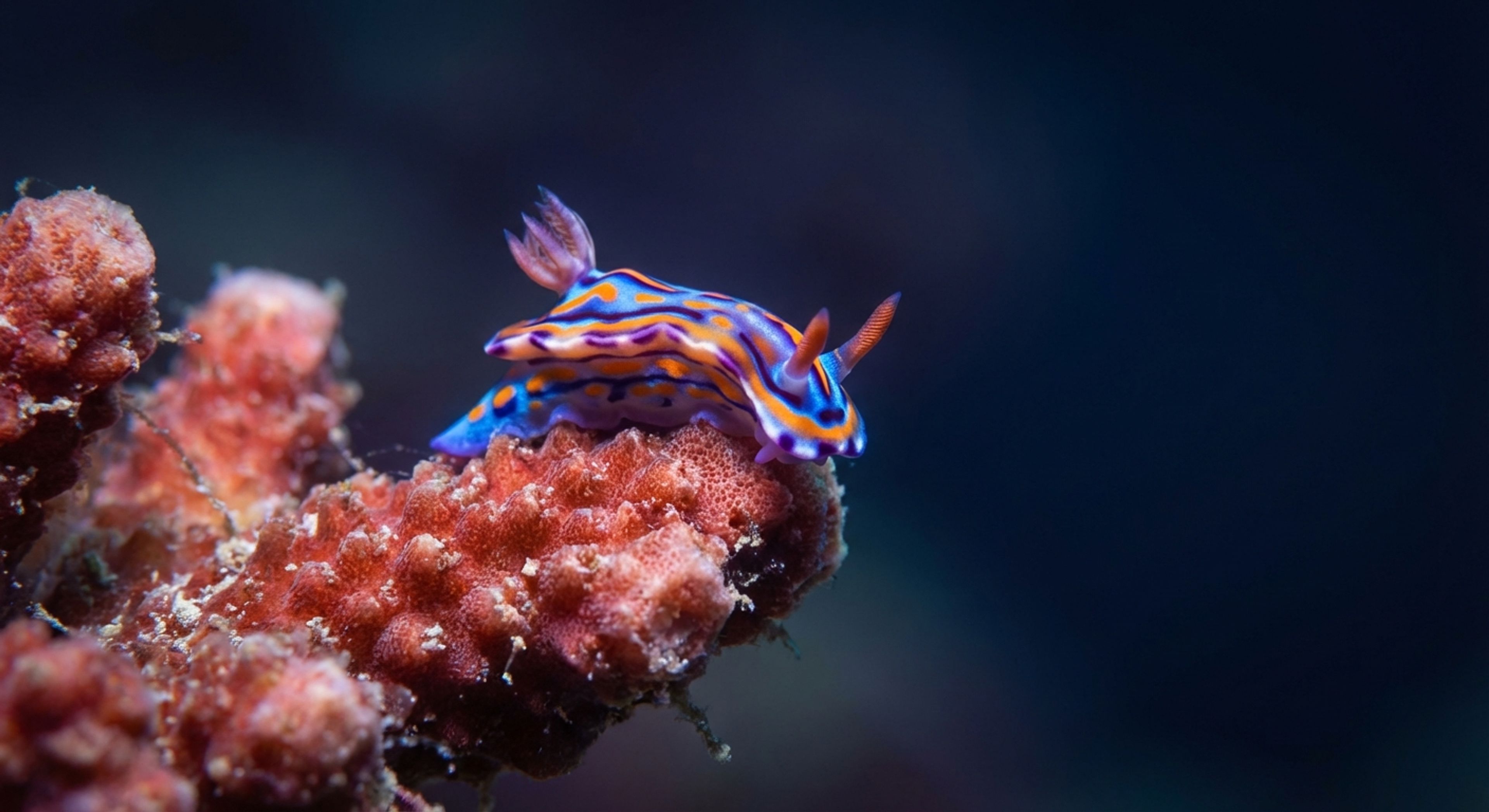
Learn about the life down there. Real knowledge. Not just "That is a fish." Can you name every nudibranch in Batangas? Do you know which fish cleans the other fish? Do you know the mating dance of the Mandarin fish?
When I got bored, I started looking for the small things. The tiny shrimp on the whip coral. The Pygmy Seahorse no bigger than a grain of rice. When you focus on the small life, the dive becomes a treasure hunt again. You are not just swimming in circles waiting for the time to pass. You are hunting with your eyes.
When you show a guest a creature smaller than their fingernail, and they scream into their regulator? That feeling is good. It reminds you that you know secrets they do not.
2. Go Where You Are A Stranger
You are the "Master" here. You know every rock. You know exactly where the current hits at 10:00 AM. Boring.
To fix your head, you must stop being the teacher. Go be the student.
Go to a place where you know nothing. Go to a place with cold water. Go to a place with strong current where you must fight. Feel the fear again.
I remember going to a drift dive in strong current, far away from my home reef. I was scared. My heart was beating dug-dug, dug-dug. I had to watch my depth. I had to kick hard.
When you are the beginner again, you remember why you started. You remember the thrill. You remember how hard it is. Then, when you come back to teach your students, you have patience. You remember that breathing underwater is unnatural. You remember that fear is real.
Don't bring your camera. Don't bring your students. Just you and the water.
3. Change Your Equipment (Go Old School)
This is my favorite advice. You burn out because you rely on technology. You have these "split fins" that look like broken plastic. Hay naku. They make kicking too easy. You have a computer that tells you when to go up, how fast to go up, what time is lunch.
You are a passenger.
Try diving like we did in the old days.
- Fins: Get heavy, hard rubber fins. Used Scubapro Jet Fins. Heavy. Ugly. When you kick, you feel the water fighting back. You feel the power.
- Gauges: Leave the computer on the boat for one dive (or put it in your pocket). Use a watch and a depth gauge. Use the tables in your head.
When you work for the dive, you respect the dive. The split fins... they make you lazy. Lazy body makes a lazy mind. A lazy mind gets bored. Feel the ocean resistance. It makes you feel alive.
The Rookie vs. The Veteran Mindset
Here is the difference between the boy who burns out and the old man who stays.
| Feature | The Burned-Out Rookie | The Wise Veteran (Tatay Style) |
|---|---|---|
| Focus | "When is this dive over?" | "Where is the hidden shrimp?" |
| Gear | Latest computer, fancy colors, split fins. | Black rubber, scratched gauge, faded wetsuit. |
| Students | "Annoying customers who try to die." | "Children who need protection." |
| Current | "Oh no, hard work. I hate kicking." | "Good, the big fish will be active." |
| Reaction to Problem | Complains on Facebook. | Drinks coffee, stares at sea, fixes gear. |
4. Find The "Click" In The Student
This is the most important. If you focus on the money, you will be miserable. The money in diving is bad. We all know this. We do this for the soul, not the wallet.
Stop looking at your watch during the skills. Look at the student's face.
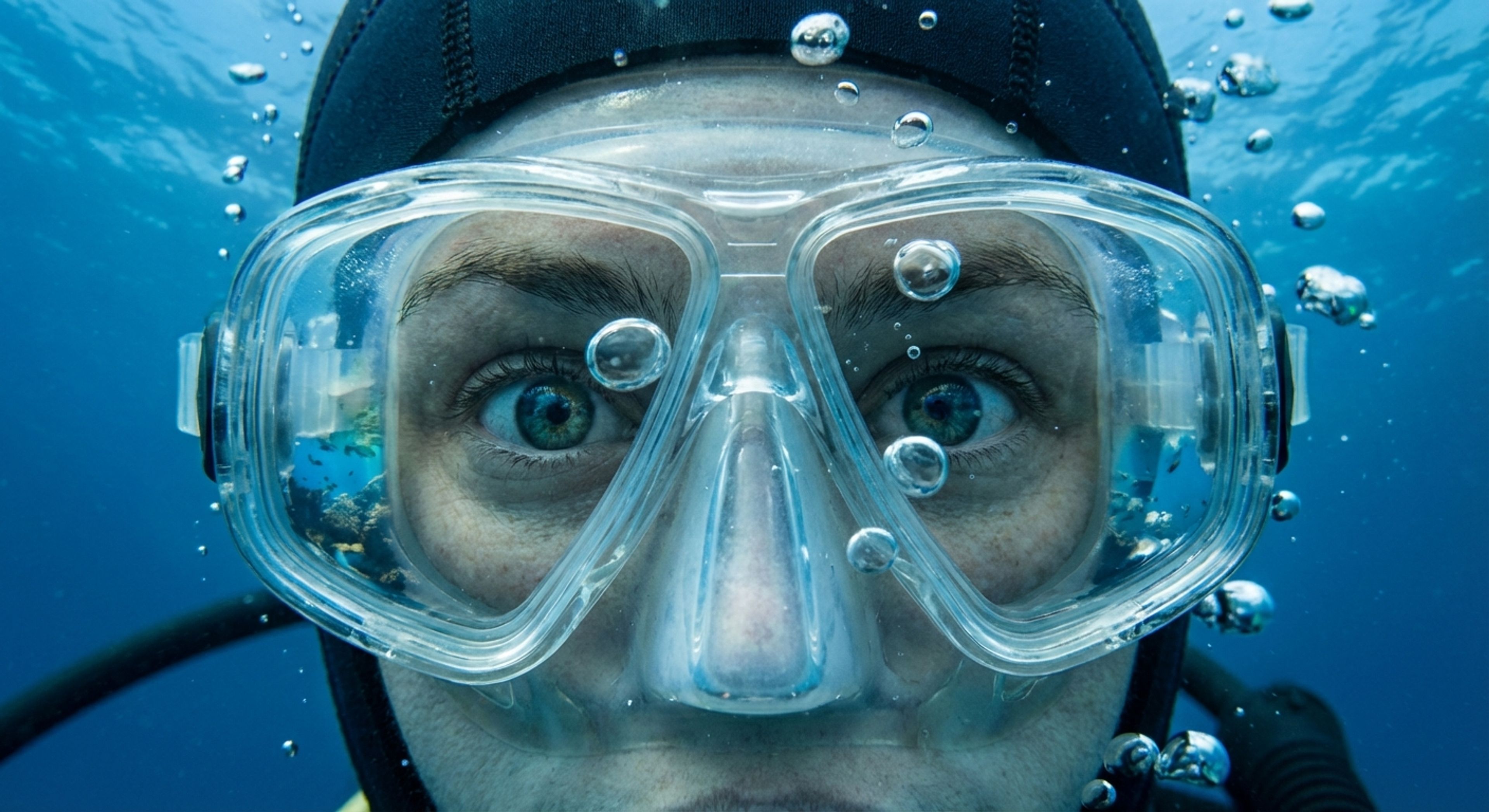
There is a moment. I call it the "Click." It happens when a student finally gets neutral buoyancy. They stop fighting the bottom. They hover. Or when they see a shark for the first time. Their eyes go wide inside the mask. They stop breathing for a second (bad rule, but they do it).
In that second, their life changes. They realize the world is bigger than their office job, their mortgage, their traffic jams in Manila. They realize they are just a visitor on this planet.
You did that. You opened the door for them.
If you can feed off that energy, you will never burn out. You are not a tank carrier. You are not a servant. You are a priest of the ocean. You are showing them God's aquarium.
I had a student once. Big tough guy. Tattoos. Scared of nothing. But underwater? Panicked. Flailing arms. I held his vest. I looked in his eyes. I signaled "Breathe." We stayed there for ten minutes. Just breathing. When we surfaced, he was crying. He said it was the first time in ten years his mind was quiet. That is why I dive. Not for the tips. For the quiet.
A Final Word from Tatay
If you try all this... if you hunt for the nudibranchs, if you switch your fins, if you look for the "Click"... and you still hate it? If you still wake up angry at the ocean?
Then quit.
I am serious. Go back to the city. Work in a call center. Work in a bank. Sit in the air conditioning and wear a tie.
The ocean is dangerous. It does not care about you. It does not care about your feelings. If you are distracted because you hate your job, you will make a mistake. You will forget a safety check. You will lose a diver in the current.
The ocean deserves respect. It deserves your full heart. If you cannot give it, leave it to us old dogs. We will still be here, smoking our cigarettes, watching the tide change, waiting for the monsoon to pass.
But I think you stay. I think you are just tired.
Go sleep. Eat some chicken adobo. Drink a cold beer. Tomorrow, leave the camera on the boat. Leave the fancy computer. Go find a nudibranch. Remember why you fell in love with the blue.
Now, go wash the gear. The regulators are soaking too long.