

Can Non-Swimmers Scuba Dive? Breaking the Silence of the Sea
My friend, sit down and have some tea. You whisper that you cannot swim, that the water is a stranger to you? Let me tell you a secret from the Red Sea: the fish do not swim for medals, and neither should you.

My friend, welcome. Ahlan wa sahlan. Come, sit here on the carpet. The wind is coming from the north today, which means the water at the Lighthouse reef is calm like a sleeping baby. Do you smell that? It is the mix of the salt spray and the apple tobacco from the sheesha pipe next door. This is the scent of Dahab.
You look at the blue water with longing in your eyes, but I see the hesitation in your shoulders. You hold your breath when a wave crashes too loud. I know this look. I have seen it a thousand times.
You lean in and whisper to me, "Malik, I want to see the fish. I want to see the coral gardens you talk about. But... I cannot swim."
You expect me to laugh? You expect me to send you back to the swimming pool in Cairo or London? No. I pour you another tea. Because this is the biggest lie you tell yourself. The ocean does not require you to be Michael Phelps. The ocean only asks you to be calm.
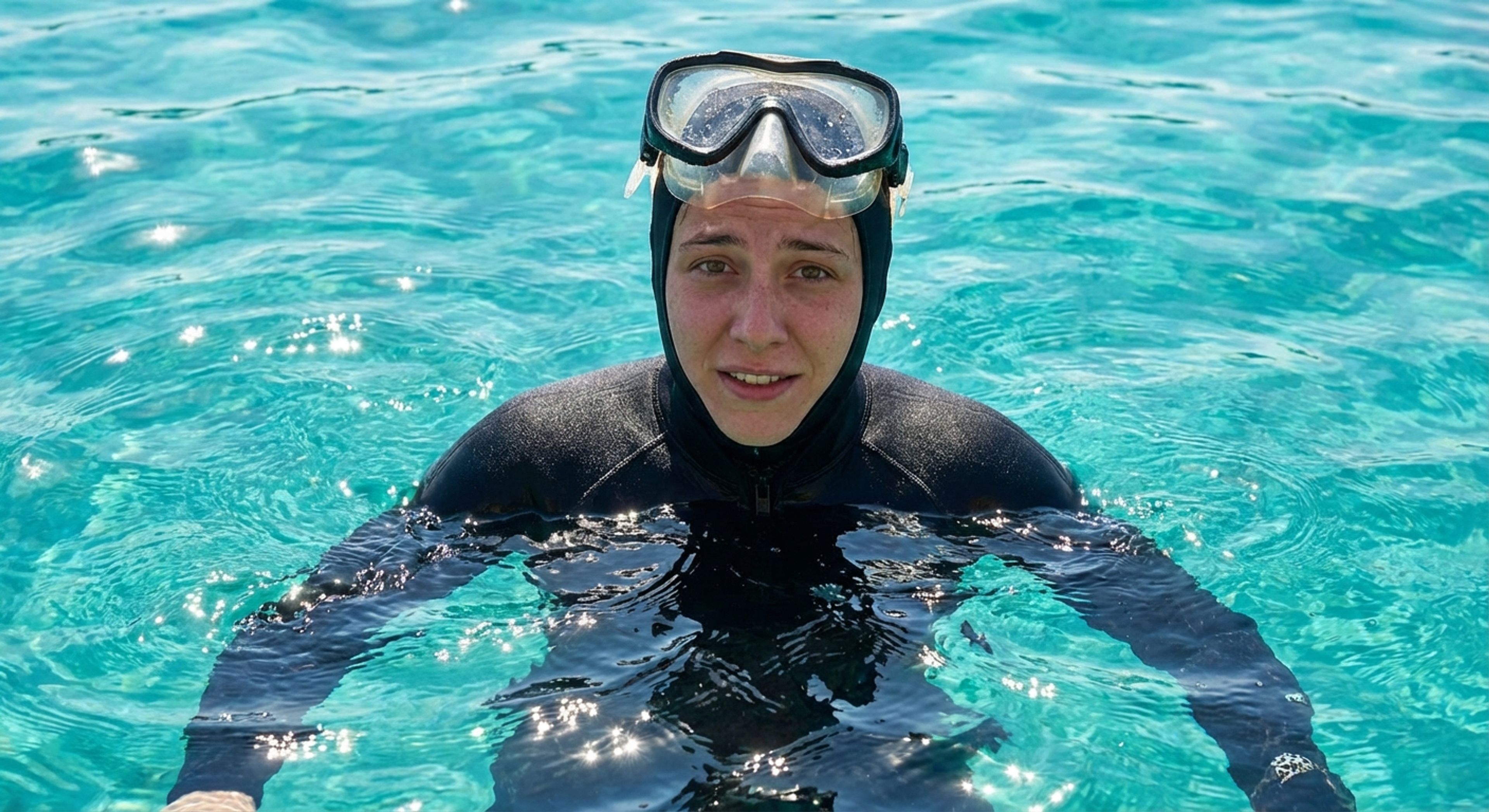
The Great Misunderstanding
Let us separate the facts from the ghosts in your head. When people say "I can't swim," usually they mean they cannot do the butterfly stroke across a pool without gasping for air. They mean they do not know the perfect technique to move their arms like a windmill.
In diving, we do not want you to move your arms like a windmill. If you wave your hands underwater here in the Red Sea, you will scare the little Anthias fish, and I will be very upset with you.
Diving is the art of doing nothing. It is the art of being lazy.
There is a difference between "knowing how to swim" and having "water comfort." Water comfort means you can put your face in the water and not panic. It means if water goes up your nose, you cough, you clear it, and you continue. You do not rocket to the surface screaming.
I have taught Olympic swimmers who were terrible divers. They try to fight the water. They kick hard. They use their lungs like bellows. Within ten minutes, their air tank is empty because they are working too hard.
Then I have taught grandmothers who cannot swim one lap in a pool. But in the sea? They are calm. They trust the equipment. They float like the pufferfish. They are the better divers.
The Rules of the Game (PADI and SSI)
I must be honest with you. I am a guide, not a policeman, but the agencies like PADI and SSI have rules. They need to know you will not drown if the boat leaves you behind (which I would never do, my friend, I count my divers like a mother hen counts chicks).
To become an Open Water Diver, you must pass a watermanship assessment. It sounds scary. It is not.
Here is what you must do:
- The Float: You must float or tread water for 10 minutes without using any aids. No mask, no fins, no wetsuit (unless weighted to be neutral). You can float on your back. You can dog-paddle. You can look at the sky and dream of dinner. You just must not touch the bottom or the side of the pool.
- The Swim: You have two choices.
- Option A: Swim 200 meters. No time limit. Any style. You can crawl, you can do the breaststroke, you can do a style you invented yesterday. You just cannot stop.
- Option B (The Secret Weapon): Swim 300 meters using a mask, a snorkel, and fins.
Option B is why I tell you there is hope.
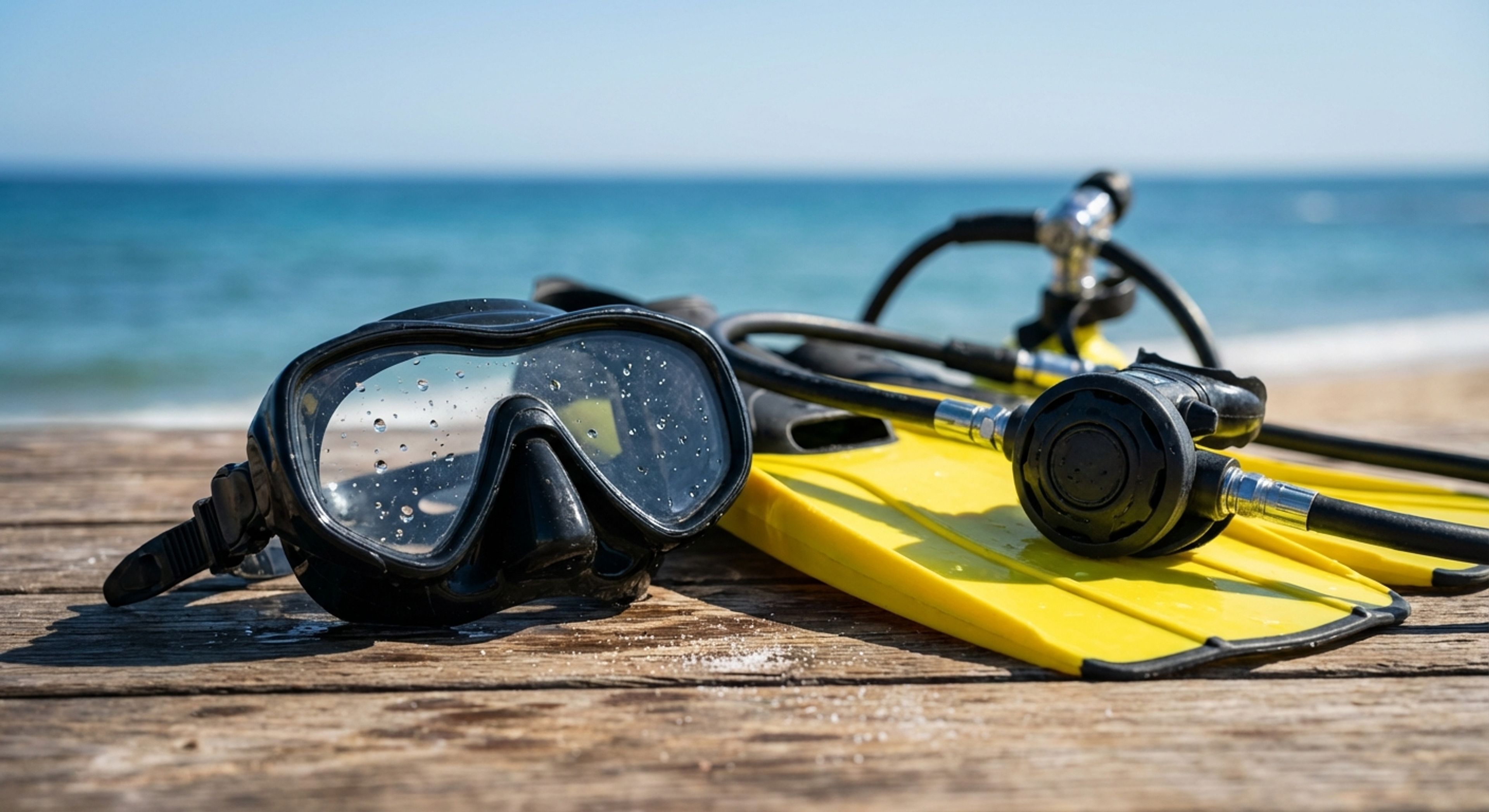
If you have fins on your feet, you are no longer a clumsy human. You are half-fish. The fins give you power. The mask lets you see. The snorkel lets you breathe without lifting your head. If you can kick your legs and breathe through a tube, you can pass this test.
| Requirement | Swim (No Gear) | Swim (With Gear) | Time Limit |
|---|---|---|---|
| Distance | 200 Meters | 300 Meters | None (continuous) |
| Style | Any | Mask, Snorkel, Fins | N/A |
| Difficulty | High for non-swimmers | Low/Medium | N/A |
The Story of Thomas the Rock
Let me tell you a story. Three years ago, a man named Thomas came to my shop. He was from Germany. Big guy, strong, but he looked at the water like it was full of acid.
He told me, "Malik, I sink. I am made of stone. I cannot swim."
He wanted to dive because his wife loved it, and he didn't want to sit on the beach alone anymore. He felt ashamed.
We went to the shallow area of the Lighthouse. The water there is waist-deep. I put him in a wetsuit. Do you know what neoprene does? It is full of bubbles. It floats. Then I put a BCD (Buoyancy Control Device) on him. It is basically a life jacket that we can control.
I told Thomas, "Lay back."
He panicked. "I will sink!"
"Thomas," I said. "You have enough rubber on you to float a camel. Lay back."
He laid back. He floated. He could not sink if he tried. We spent two days just snorkeling. Not diving. Just getting him used to the feeling of his face in the water. That was the barrier. It wasn't his muscles; it was his brain telling him DANGER! NO AIR!
When it came time for the 300-meter snorkel test, he was nervous. He put on his fins. I swam next to him.
"Just kick, Thomas. Slowly. Left, right. Breathe."
He did it. He stopped thinking about "swimming" and started thinking about "gliding." When he finished, he lifted his head and he was crying. Not from sadness. He realized the prison was in his mind, not in his legs.
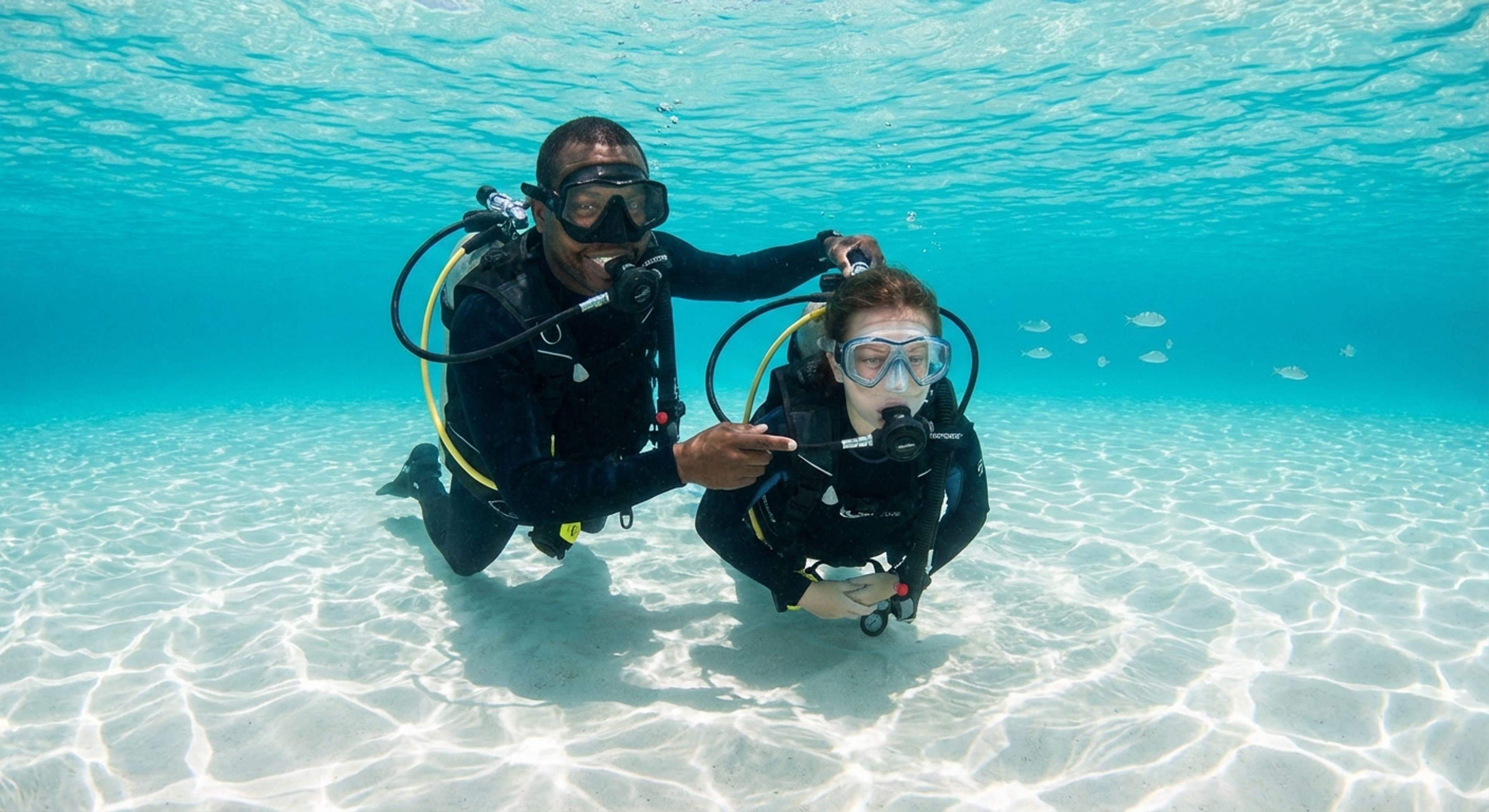
The Gear does the Work
My friend, you must understand the equipment. We have technology.
When you are a swimmer, you fight gravity. You must move to stay up.
When you are a diver, you are neutral. We add lead weights to you because the wetsuit makes you float too much. Can you imagine? You are worried about sinking, and my job is to make you heavy enough to go down.
Under the water, you do not use your arms. You fold them across your chest, or you hold your gauges. You only move your legs gently. If you stop moving, you do not sink. You hover. Like a genie on a carpet.
If you get tired at the surface? You push a button on your inflator hose. PSSSHHHT. Air from the tank goes into your jacket. Now you are a boat. You can sleep there if you want (but please, do not snore, it scares the dolphins).
The True Barrier: Panic vs. Peace
The reason the dive agencies want you to swim a little bit is not for athleticism. It is for comfort. They want to see that if your mask falls off, you do not inhale the ocean.
If you cannot swim because you have a physical limitation, we can work with that. We have webbed gloves, specialized techniques, and patient instructors.
But if you cannot swim because you are terrified of the water? That is different. That is the wall we must climb.
You must ask yourself: Are you afraid of the water, or are you afraid of drowning?
If you are afraid of drowning, good. That is healthy. I am also afraid of drowning. That is why I check my equipment. That is why I watch my air gauge.
But if the fear makes you freeze, makes you stiff as a board? Then we must start slow. We do not go to the Blue Hole yet. We go to the sandy bay. You stand up. You put your face in. You breathe. You realize the water holds you.
Malik's Advice for the Non-Swimmer
So, you want to dive? Yallah, let’s do it. But here is my prescription for you:
- Do not lie to your instructor. Tell them immediately: "I am not a strong swimmer." If they are a good instructor, they will smile and say, "No problem." If they roll their eyes, come to Dahab. Find me. I will teach you.
- Try snorkeling first. Buy a mask and snorkel. Go to a pool. Just float. Learn that you can breathe with your face down. This is 90% of the battle.
- Choose the right location. Do not learn in cold, dark water with big waves. Come to the Red Sea. Come to Thailand. Go where the water is warm and clear and shallow.
- Take your time. If the course takes 3 days for others, maybe it takes 5 days for you. Who cares? The fish are not checking your schedule.
The ocean is big, my friend. It is older than the desert. It does not care if you won a gold medal or if you failed gym class. It only asks for respect.
Finish your tea. The glass is empty. Tomorrow morning, meet me at the shop. We will put you in a wetsuit, we will go to the shallow water, and you will see. You are not a stone. You are just a fish who forgot how to float.