
Blind as a Bat? The Real Talk on Contacts vs Prescription Masks
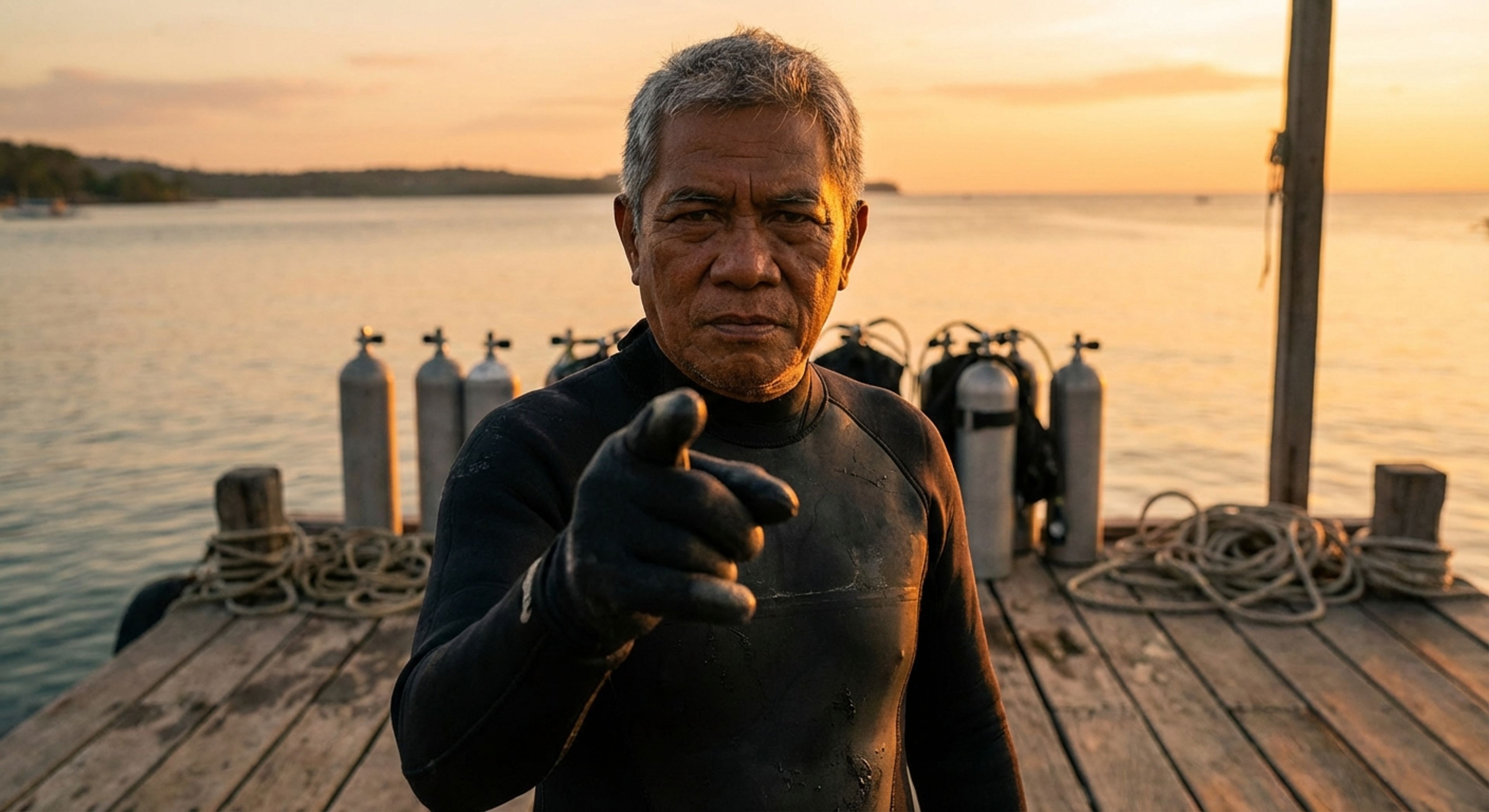
You spend thousands of dollars to fly to the ocean, buy expensive gear, and then you cannot see the shark two meters in front of you? Hay naku. Uncle Santiago explains why relying on contact lenses is a gamble and why old-school glass is better.

Hay naku. I see this every day. Every single day in Batangas.
A young diver comes to the shop. Fancy gear. Computer that costs more than my house. Fins that look like broken fishtails. But then on the boat, they are crying. Why? Because they lost a contact lens when they cleared their mask.
"Tatay Santiago," they say. "I cannot see the nudibranch. Everything is blurry."
Susmaryosep. You travel across the world. You pay for the boat. You pay for the air. You pay me to guide you against the current. And you miss the Whale Shark because you are too vain to wear glasses?
Listen to me. The ocean does not care if you look cool. The ocean only cares if you are ready. If you have "myopia", what we call nearsightedness, you have a choice. You can stick plastic in your eye, or you can buy a proper mask.
I have been diving since before you were born. I have seen divers panic because they suddenly went blind at 30 meters. Let us talk about this properly. No fancy words. Just the truth.
The Plastic in the Eye: Contact Lenses
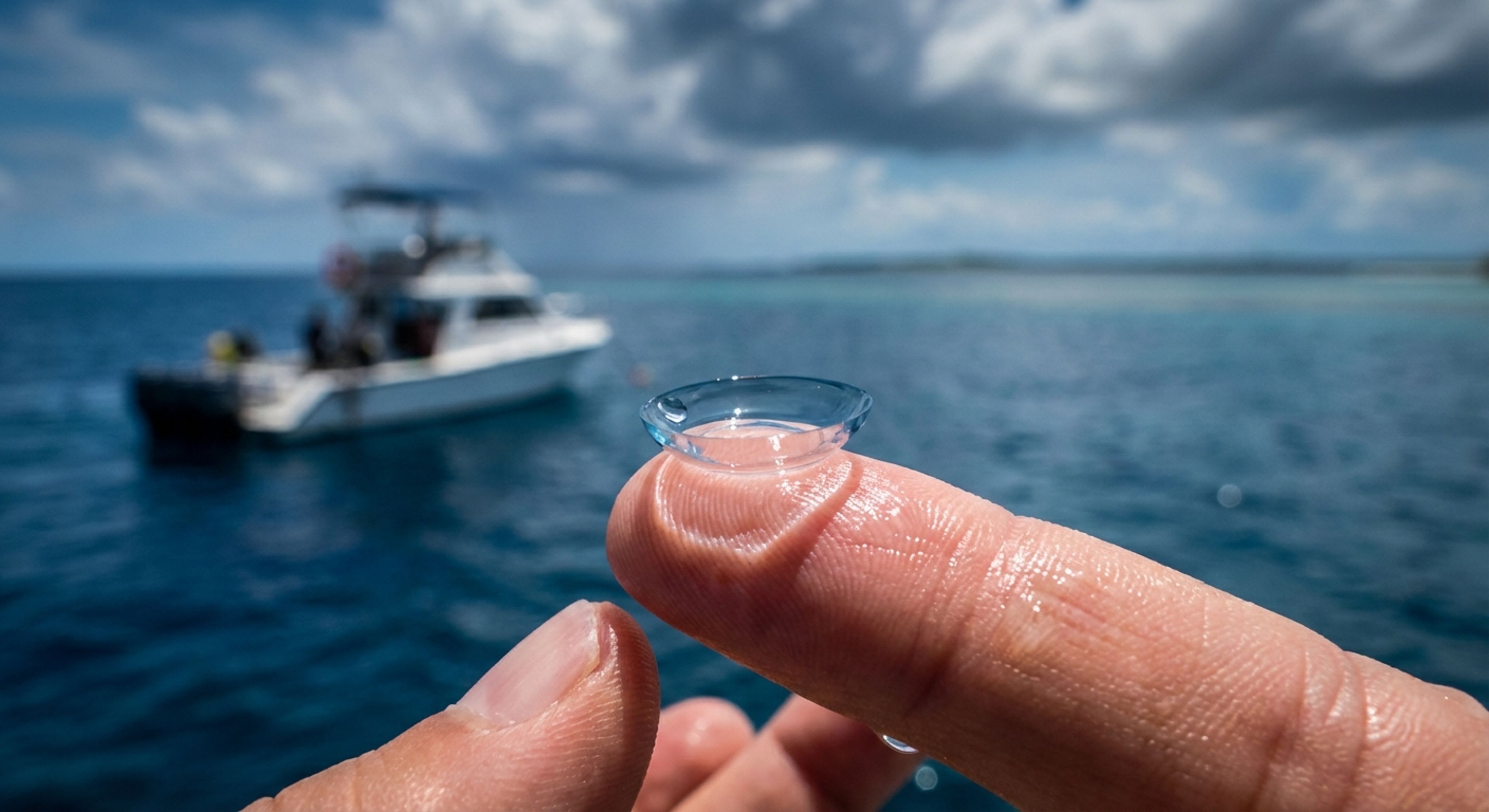
I know, I know. You young people love your disposable contact lenses. You say it is easy. You say, "Santiago, I can wear my sunglasses on the boat."
Sure. It is convenient. Until it is not.
If you wear soft contact lenses, especially the daily disposables, you think you are smart. You throw them away after the dive. No cleaning. But here is what happens underwater.
The Risk of the "Pop"
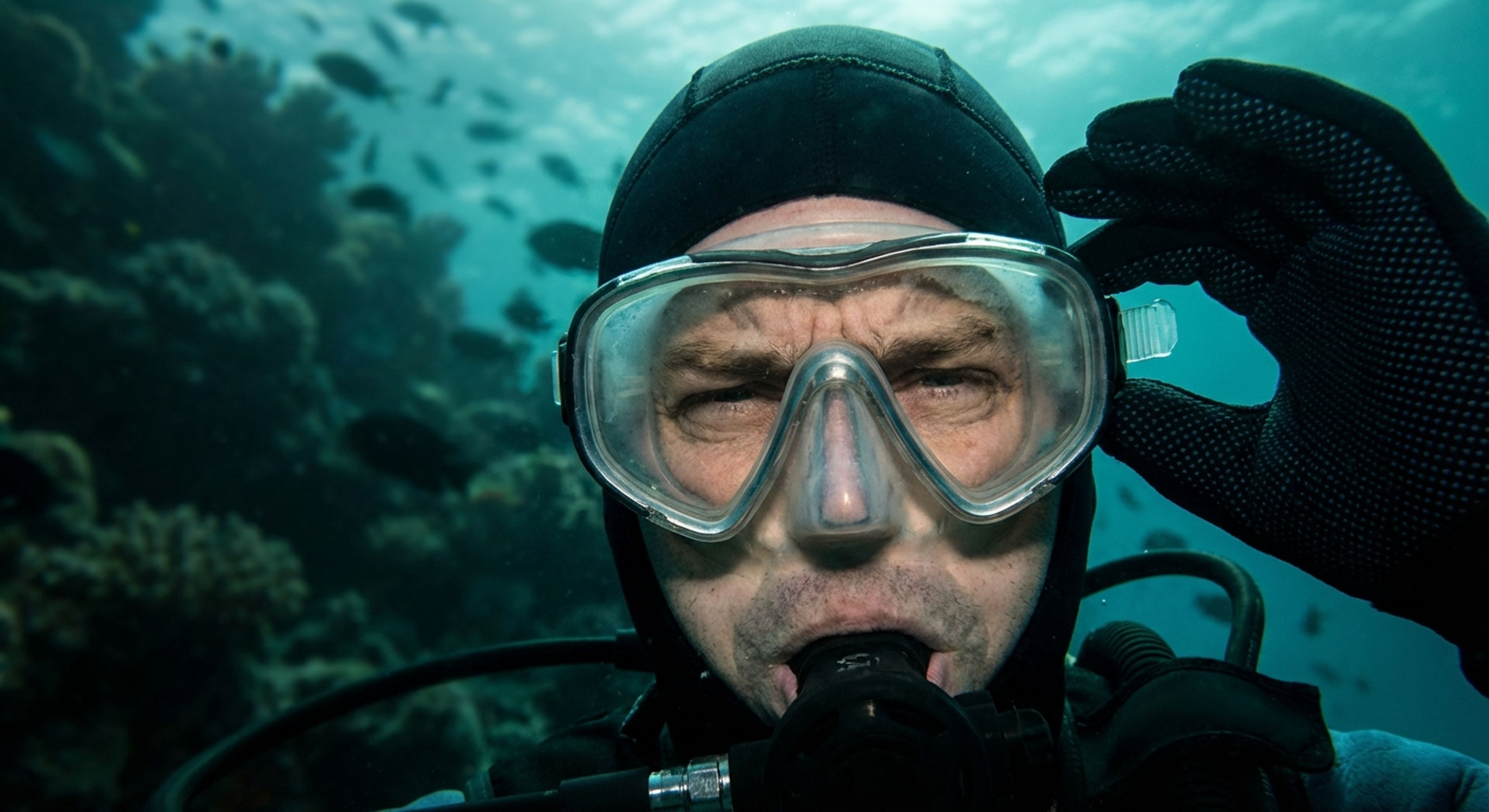
We are at 20 meters. We hit the current. Maybe your mask leaks a little bit. It happens. You snort, you blow out your nose to clear it. But you keep your eyes open because you are scared.
Whoosh. The water swirls inside the mask.
If the water hits your eye, the contact lens can wash out. Just like that. Pop. Gone to feed the fishes. Now you have one good eye and one bad eye. You lose depth perception. You cannot read your pressure gauge properly. Is it 100 bar or 10 bar? This is how accidents happen.
The Bacteria Soup
Also, think about the water. Even clear blue water has tiny things living in it. Bacteria. Plankton. Protozoa.
When you dive, pressure changes. Gas bubbles can form between the lens and your eyeball. If dirty seawater gets trapped under that lens, it sits there. It is a warm, moist party for bacteria.
I had a student once. Japanese boy. Very polite. He dove with contacts for a week. He did not take them out immediately after diving. His eye turned red like a tomato. Infection. He missed three days of diving. Waste of money.
If you must use contacts, you listen to Tatay:
- Use soft lenses only. Hard lenses (Rigid Gas Permeable)? Never. Under pressure, gas bubbles can get trapped behind them and cause the lens to suction to your eye or blur vision. Very painful.
- Daily disposables. Throw them away immediately after the dive. Do not sleep in them.
- Keep eyes closed. When you clear your mask, close your eyes tight! Do not look around.
The Proper Way: Prescription Masks
This is what I recommend. This is what serious divers use.
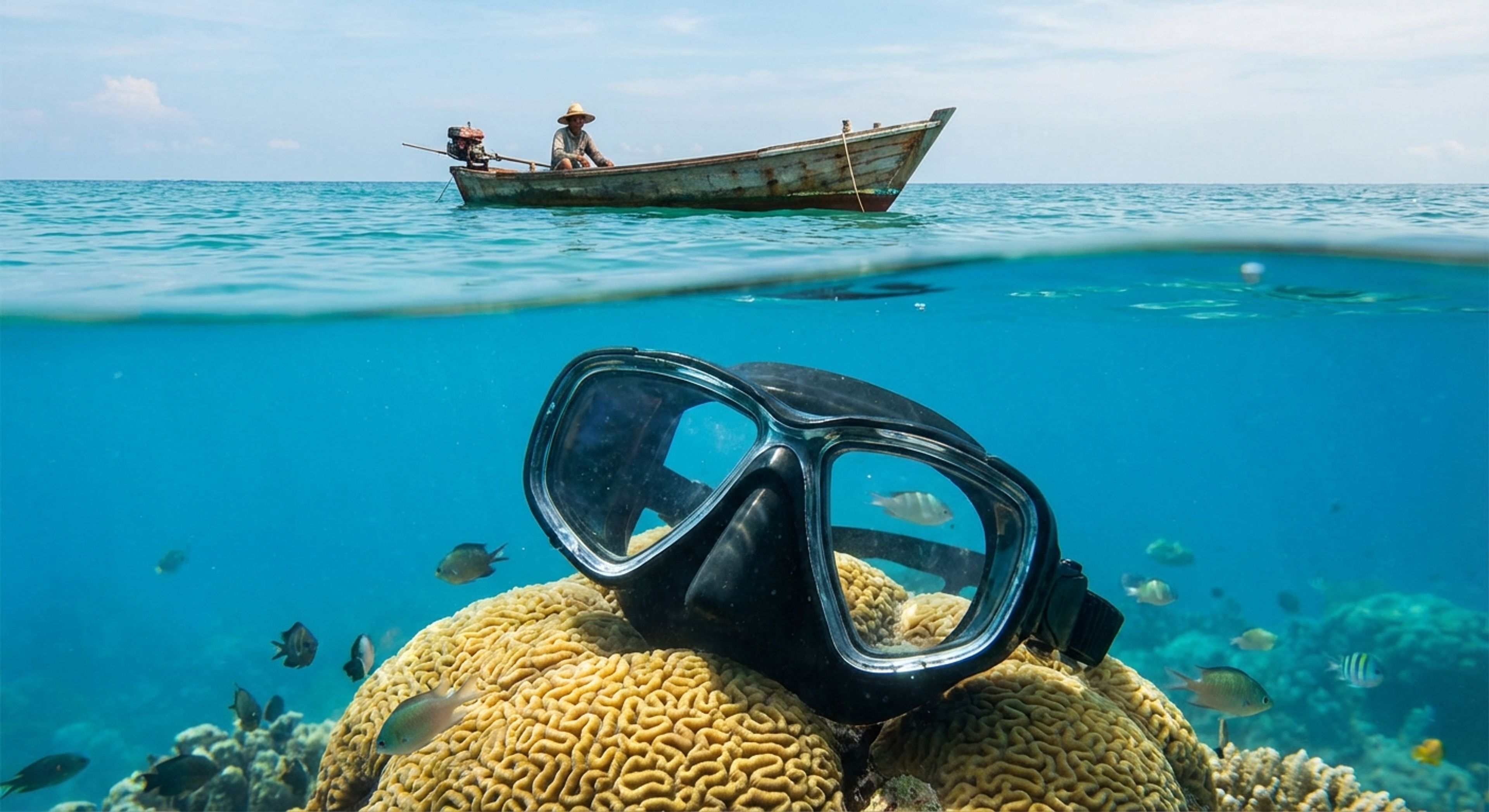
A prescription mask is a mask where the glass is made for your eyes. Or sometimes, they bond a corrective lens onto the main glass.
Why is this better? Because it is solid. It is reliable. It does not wash away unless you lose the whole mask. And if you lose your mask at depth, you have bigger problems than blurry vision, my friend.
Some people say, "But Santiago, it is expensive!"
Expensive? A good mask is $100. Lenses are maybe another $100. How much is your iPhone? $1000? And you put the iPhone in a waterproof case, right? Treat your eyes with the same respect.
When you wear a prescription mask, everything is sharp. The coral polyps. The tiny pygmy seahorse. You see the texture of the rock. You are not guessing.
The "Look"
Okay, on the boat, you are blind when you take the mask off. This is the only bad thing. You look like a mole rat squinting at the sun.
Who cares? You are a diver. We are not models. We are there to work and to see.
Comparison: The Lazy Way vs. The Hard Way
Here. I made a table. Read it.
| Feature | Contact Lenses (Soft/Daily) | Prescription Mask |
|---|---|---|
| Cost | Cheap initially (per box) | Expensive upfront ($150-$300) |
| Risk of Loss | High. One mask flood and it's gone. | Low. Only if you lose the mask. |
| Infection Risk | High. Trapped seawater is bad. | Zero. No contact with eyeball. |
| Topside Vision | Perfect. You can see on the boat. | Poor. You need your glasses on the boat. |
| Clarity | Good, but can dry out or shift. | Excellent. Like wearing glasses. |
| Durability | One use only. | Years. My mask is older than my dog. |
| Fogging | Normal mask fogging. | Normal mask fogging. |
The Astigmatism Problem
Now, some of you have "astigmatism." Your eye is shaped like a rugby ball, not a football.
Standard drop-in prescription lenses usually only correct "Sphere" (nearsightedness). Like -2.0 or -4.0. They do not fix the cylinder.
If you have high astigmatism (over 1.5 or 2.0), the cheap lenses will not work. You will see the fish, but the fish will look like it is vibrating.
You have two choices:
- Custom Bonded Lenses: You go to a specialist. They take your exact prescription from the doctor. They glue the glass onto the mask lens. This is expensive. Maybe $300 or more. But it is perfect.
- Contacts with Toric Lenses: If you cannot afford the custom mask, you are stuck with contacts. But remember the risks I told you.
Always Have a Backup (The "Bahala Na" Warning)
In the Philippines, we say "Bahala na." It means "leave it to God" or "come what may."
Do not do this in diving. God is busy. You must look after yourself.
If you wear contacts, bring extra pairs on the boat. Not in the hotel. On the boat! If one pops out, you fix it between dives.
If you wear a prescription mask, bring your old glasses on the boat. Put them in a hard case. When you surface, you swap mask for glasses. Otherwise, you might walk off the edge of the boat.
And listen. This is a pro tip from Santiago. If you are very blind, like -6.0 or worse... Bring a spare mask with prescription lenses.
"Two masks, Santiago? That is heavy."
Heavy is better than blind. I once guided a man who broke his strap at 15 meters. He had to use my spare mask. My spare mask has no prescription. He spent the rest of the dive holding my hand like a baby because he could not see the reef. He ruined the dive for everyone.
Don't be that guy.
The Verdict
Technology is fine. I like my regulator. I like my torch. But for eyes? I trust glass.
If you are a casual diver, maybe you dive once a year in warm water, okay. Wear your daily contacts. Close your eyes when you clear. Be careful.
But if you want to be a real diver? If you want to dive in currents? If you want to do mask removal drills without fear? Get a prescription mask.
The ocean is the most beautiful thing on this earth. Do not insult it by looking at it through a blurry piece of plastic that might wash away.
See clearly. Dive safe. And fix your trim, your legs are dragging on the coral.