

Dive Computer Wars: Suunto vs Garmin vs Shearwater
In the black water of a Yucatán cenote, your dive computer isn't just a gadget; it is the only thing negotiating your survival with physics. We break down the heavyweights of the industry, Suunto, Garmin, and Shearwater, to see which one deserves to accompany you into the underworld.
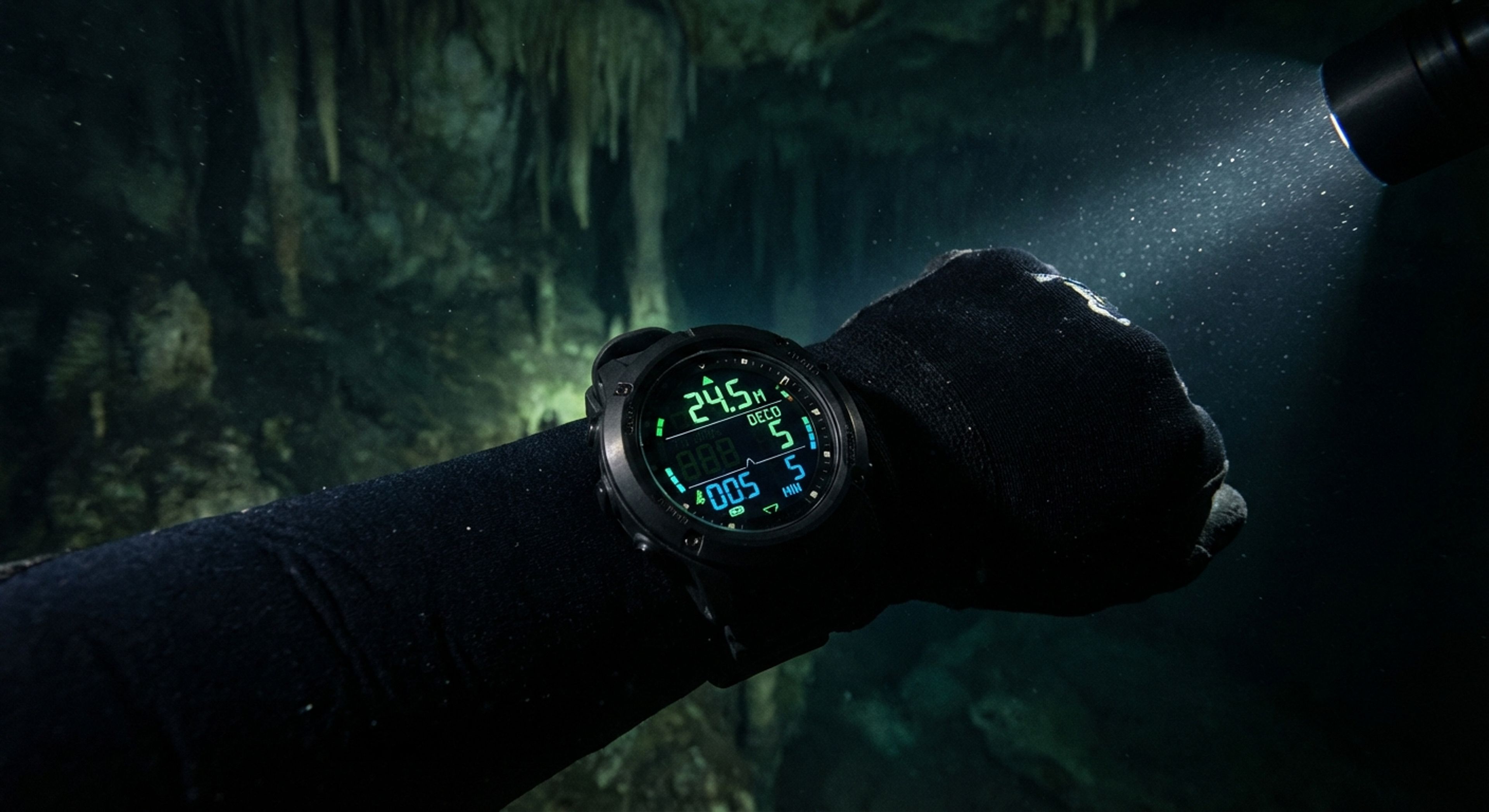
I was three hundred meters inside the cave system at Cenote Angelita when my light flickered across my wrist. The numbers glowing back at me were not just data. They were the specific coordinates of my existence. Depth: 6 meters. Time to Surface: 45 minutes. Gas Switch: Oxygen.
In the silence of the aquifer, where the only sound is the rhythmic hiss of the regulator and the beating of your own heart, you do not want a toy. You want a weapon against the bends. You want a prophet that tells the truth about nitrogen loading in your tissues.
Divers love to argue about gear. It is our favorite pastime when we are dry. But the debate between Suunto, Garmin, and Shearwater is not just about brand loyalty. It is about philosophy. It is about how you choose to interact with the physics that want to kill you.
Today, we strip away the marketing noise. We look at the algorithms, the screens that must cut through the murk, and the battery life that must outlast the longest exploration.
The Ghost in the Machine: Algorithms
The most critical difference between these units is invisible. It is the math. The algorithm is the set of rules the computer uses to decide when you need to stop and for how long.
Suunto (RGBM)
Suunto has traditionally relied on the RGBM (Reduced Gradient Bubble Model). It is a proprietary algorithm. In my world, proprietary is a dirty word. I cannot see the math. I cannot adjust the math.
Suunto is the strict grandmother of diving. It assumes you are going to make a mistake, so it pads your safety stops. For recreational divers doing two dives a day in warm Caribbean water, this is fine. It is safe. It is conservative.
But in the technical world? It is a nightmare. I remember a dive where a student of mine was using a Suunto EON Core. We were doing a mild decompression profile. My Shearwater cleared me in ten minutes. His Suunto locked him into a twenty-minute obligation because he had a slightly fast ascent rate for three seconds earlier in the dive.
Suunto punishes you for misbehavior. If you violate a stop or ascend too fast, it holds a grudge and penalizes you with time. In a cave, I do not need a moral judgment. I need raw data.
Shearwater & Garmin (Bühlmann ZHL-16C)
This is the gold standard. The Bühlmann ZHL-16C algorithm is open, transparent, and trusted by nearly every technical diver on the planet. Both Shearwater and Garmin use this.
The beauty here is Gradient Factors (GF). You can customize exactly how conservative you want the computer to be.
- Recreational Setting (High Conservatism): 45/95.
- Technical Setting (Standard): 30/70.
- Aggressive Setting: 50/80.
You tell the computer how much risk you accept. It treats you like an adult. When I am pushing a gap in a sidemount configuration, squeezing my tanks through rock, I need to know my computer is calculating based on physics, not a hidden safety buffer designed for a tourist in Cozumel.
Winner: Shearwater and Garmin. Transparency wins. Always.
Visibility in the Underworld: Screen Tech
When you hit the halocline, that mixing zone of fresh and saltwater, everything goes blurry. It looks like oil mixing with water. Your vision distorts. If your computer screen is dim or low contrast, you are diving blind.
MIP (Memory in Pixel) vs. AMOLED
Garmin's older Descent series (Mk1, Mk2) and the G1 use MIP screens. They are great in direct sunlight. If you dive mostly on sunny boat decks, they are readable. But inside a cave? You need the backlight constantly. It washes out the colors slightly.
Suunto and Shearwater (and the newer Garmin Mk3) have moved to bright, vibrant color screens.
- Shearwater Perdix 2: It uses a high-contrast LCD. It is not the prettiest screen, but it is the most functional. The font size is massive. The colors are limited to what you need: Green (Good), Yellow (Warning), Red (Critical). It cuts through the dark like a laser.
- Garmin Descent Mk3: The AMOLED screen is gorgeous. It is like wearing a high-end smartphone on your wrist. The resolution is so high you can see topography maps. It is beautiful, yes. But sometimes, beauty is a distraction.
- Suunto EON Steel: The screen is excellent. Wide angle, high contrast BrightSee™ technology. Suunto knows how to make a display readable.
Winner: Tie between Shearwater (for pure readability) and Garmin Mk3 (for resolution).
The Energy Problem: Battery Life
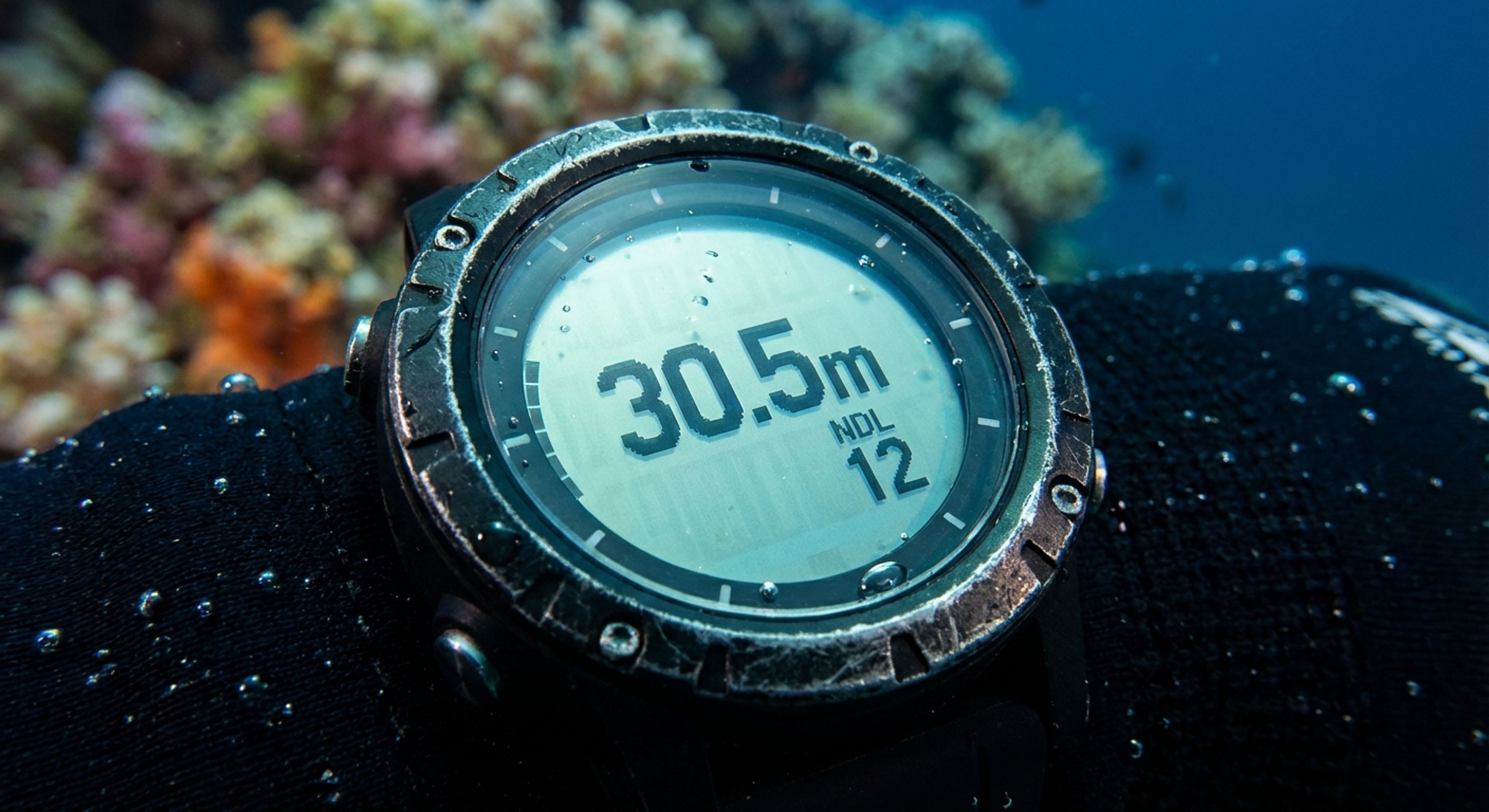
There is a specific fear I have. It is the fear of a blank screen at 40 meters.
The AA Battery Cult
For years, the Shearwater Perdix was the king because it used a user-replaceable AA battery. You could buy a battery at a gas station in the middle of the Mexican jungle and go diving. No chargers. No cables.
The new Perdix 2 still allows this. This is redundancy. This is reliability. If the battery dies, I swap it in 30 seconds.
The Rechargeable Era
Garmin and Suunto are rechargeable.
- Garmin Descent G1 Solar: Incredible battery life. I have worn one for a month as a watch without charging. But for diving? You get about 25 hours.
- Suunto EON Steel: A brick. It lasts for 20-40 hours of dive time. But if you forget the proprietary cable? You are not diving.
The Garmin Mk3i has improved this significantly, but you are still tethered to a wall outlet eventually. In the remote jungle camps where we stay to access deep cenotes, electricity is not guaranteed.
Winner: Shearwater. Being able to use a generic AA battery is a logistical superpower.
The Lifestyle Compromise: Smartwatch Integration
Here is where the divide happens.
Do you want a computer that tracks your sleep, your heart rate, your golf swing, and also works underwater? Or do you want a computer that lives in your gear bag until it gets wet?
Garmin is the undisputed master of the "Lifestyle" computer. The Descent Mk3 or G1 is a fantastic smartwatch. It has GPS, maps, notifications, Spotify. If you are a triathlete who also dives, there is no other choice. It is sleek enough to wear to a business dinner.
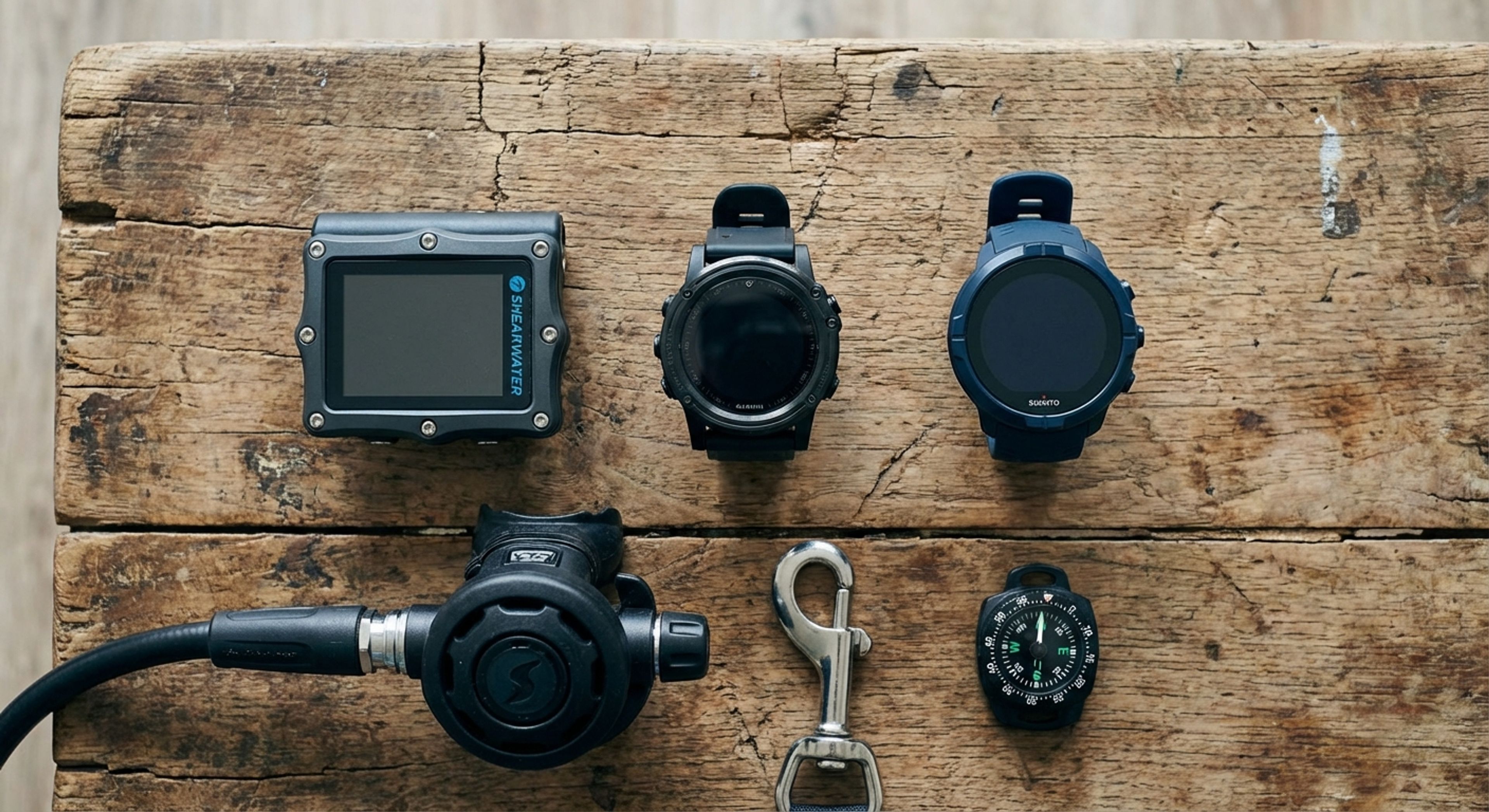
Shearwater does not care about your steps. The Shearwater Teric is watch-sized, yes, but it is chunky. It feels industrial. It does not play music. It does not tell you if you slept well. It only cares about decompression.
Suunto tries to do both but masters neither. The D5 is a nice watch, but the battery life is poor when connected to a phone.
Opinion: I do not want my dive computer to tell me I have a text message. When I am in Xibalba, the world above does not exist. I prefer my dive gear to be dive gear. But I admit, the convenience of the Garmin is seductive.
The Verdict: What Should You Buy?
The "best" computer depends on what you are doing in the water.
1. The Entry-Level / Recreational Diver
You dive twice a year on vacation. You want something simple, readable, and cheap.
- Recommendation: Shearwater Peregrine or Suunto Zoop Novo.
- Why: The Zoop is a tank. You can drop it from a truck and it will work. The Peregrine brings the amazing Shearwater screen and algorithm to a lower price point. Do not buy a cheap Garmin; the screen on the older models is too small for aging eyes.
2. The Daily Wear / Hybrid Diver
You are a divemaster, or you dive every weekend, but you also run, cycle, and work in an office.
- Recommendation: Garmin Descent G1 or Mk3s.
- Why: The G1 is rugged, solar-powered, and does everything a smartwatch does. It supports technical diving modes, so you won't outgrow it. It is the best "bang for your buck" if you want features.
3. The Technical / Cave Diver
You are following me into the dark. You are carrying three tanks. You are calculating gas switches.
- Recommendation: Shearwater Perdix 2 or Shearwater Petrel 3.
- Why: Large screen. User-replaceable battery. Indestructible construction. Bühlmann with Gradient Factors. It is the uniform of the technical diver for a reason.
Comparison at a Glance
| Feature | Shearwater Perdix 2 | Garmin Descent Mk3i | Suunto EON Steel |
|---|---|---|---|
| Algorithm | Bühlmann ZHL-16C (Open) | Bühlmann ZHL-16C (Open) | Suunto Fused™ RGBM (Closed)* |
| Screen | LCD (High Contrast) | AMOLED (High Res) | Bright Color LCD |
| Battery | User Replaceable AA | Rechargeable (Proprietary) | Rechargeable (Proprietary) |
| Air Integration | Yes (Swift) | Yes (SubWave) | Yes (Tank POD) |
| Smart Features | None | Full Smartwatch | Basic Notifications |
| Vibe | Industrial Tool | High-Tech Luxury | Modern Euro-Style |
*Note: Recent updates to the EON Steel Black now allow for Bühlmann options, but the brand DNA remains rooted in RGBM.
Final Thoughts from the Shadows
I own a Garmin. I wear it when I run on the beach in Tulum. But when I gear up for a traverse from Cenote Chan Hol, I strap the Shearwater Perdix to my forearm.
There is a tactile satisfaction in its buttons. There is a comfort in its simplicity. It does not try to be my friend. It does not try to be my fitness coach. It is a cold, calculating machine that respects the darkness as much as I do.
Choose the tool that fits your mission. If your mission is looking good on a boat, get the Garmin. If your mission is coming back from the deep, get the Shearwater.
Just make sure you know how to read it. Because down there, ignorance is the only thing more dangerous than failure.