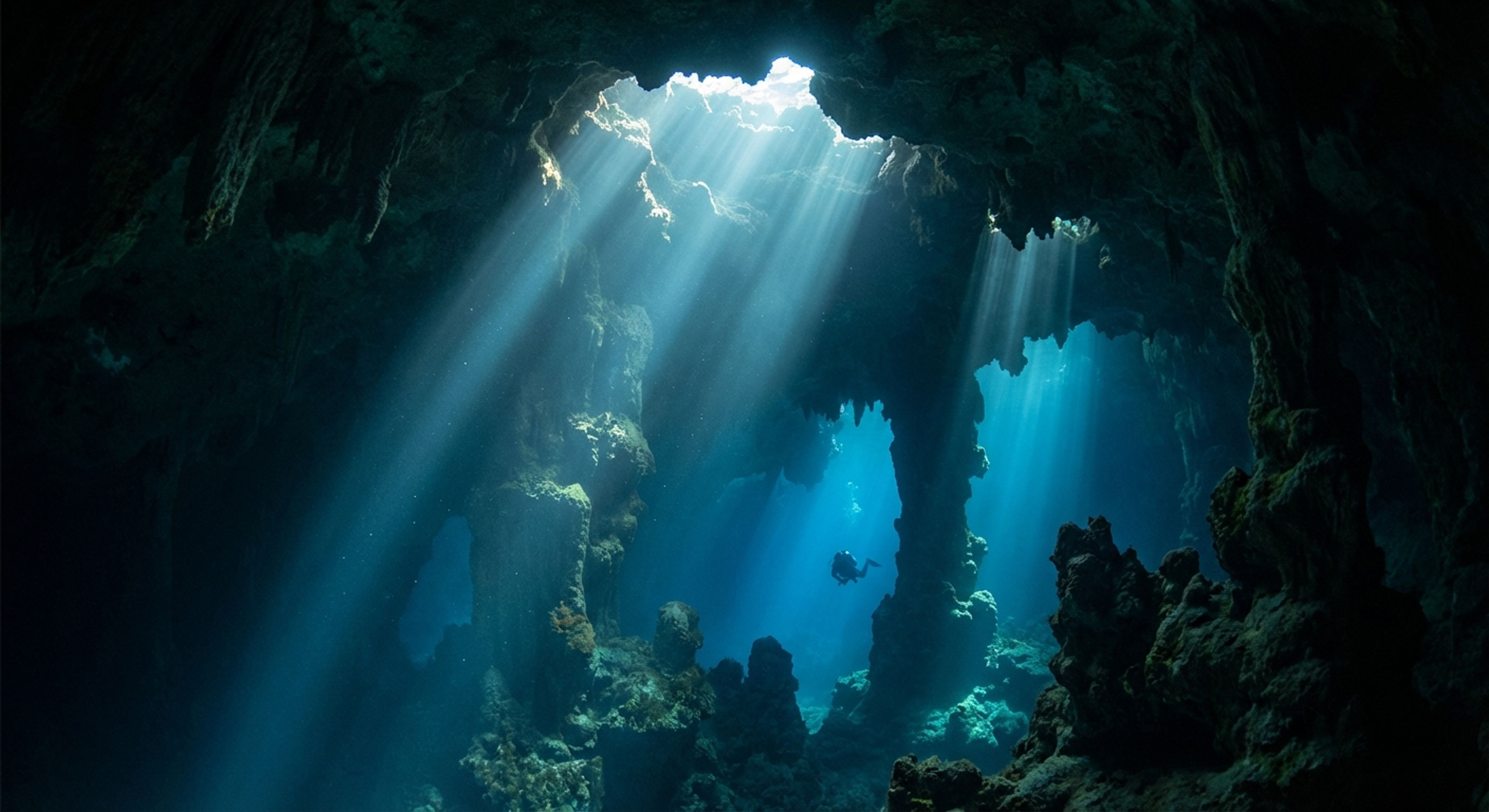

Blood in the Water: Moon Cycles, Sharks, and the Silence of Xibalba
The underworld demands focus, and distraction can be deadly. Here is the truth about diving while bleeding, stripped of polite whispers and replaced with cold, technical reality. We talk sharks, hygiene, and decompression stress.
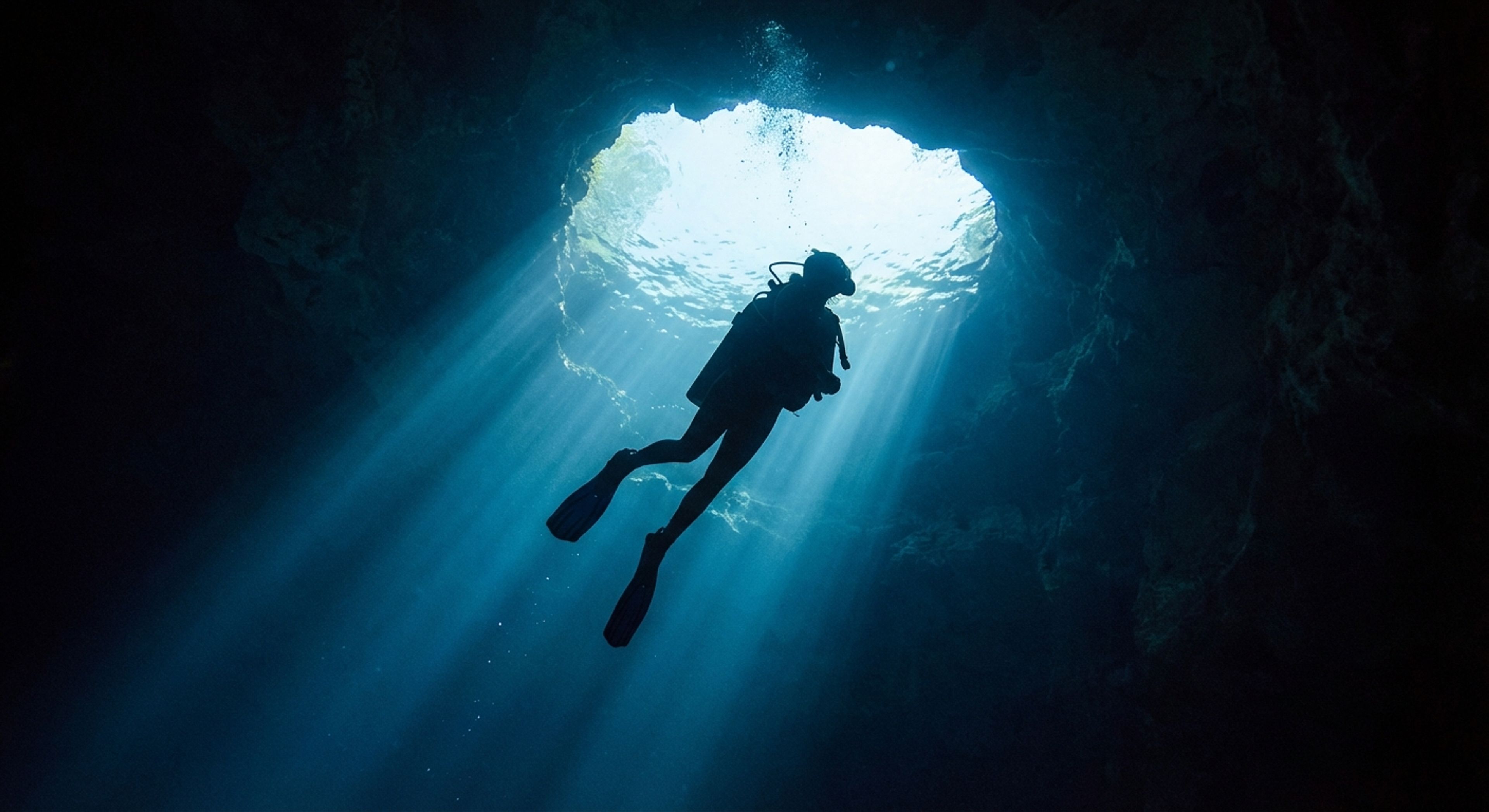
The limestone walls of the Yucatán hold many secrets, but they do not care about your biology. When I descend into the throat of a cenote, passing the halocline where fresh water meets the dense salt below, I am no longer a woman on land. I am a system of life support. I am buoyancy and trim. I am a visitor in Xibalba, the Mayan underworld.
Yet, I get asked the same question in hushed tones by students trembling in their wetsuits on the surface. They pull me aside, away from the boat captains and the gear technicians.
"Sofia," they whisper. "I have my period. Is it safe?"
They aren't asking about cramps. They are asking about monsters. They are asking if the smell of their blood will turn the ocean against them.
It is time to kill this superstition. We are technical divers. We deal in physics and physiology, not old wives' tales.
The Shark Myth: Predators Don't Want You
Let's address the fear that sits in the back of your mind. You have seen the movies. You believe that a single drop of blood in an Olympic-sized swimming pool will summon a Great White from miles away.
This is what we call basura. Garbage.
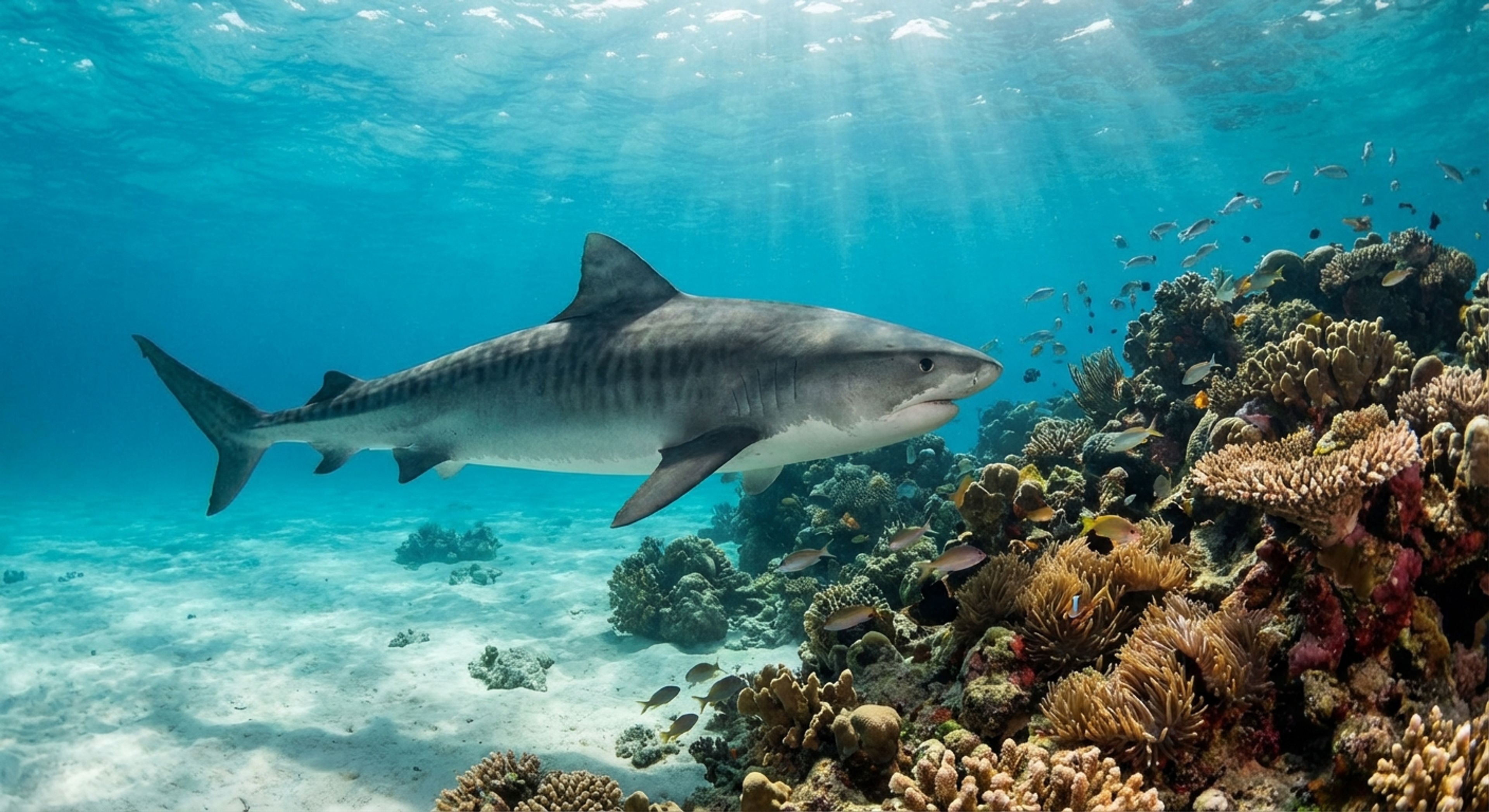
I have spent thousands of hours underwater. I have drifted with Bull Sharks in Playa del Carmen and Tiger Sharks in the Bahamas. I have done this while bleeding. The sharks did not care. They did not circle. They did not frenzy.
Sharks are sensory machines, yes. They can detect fluids in the water. But they are looking for specific chemical markers. They want the amino acids found in the gastric fluids of fish. They want the smell of a struggling grouper or the fatty blubber of a dying seal. Menstrual blood is complex. It is a mix of blood, uterine lining, and mucus. To a shark, this does not smell like dinner. It smells like nothing of interest.
There is zero scientific evidence showing that sharks are attracted to menstruating women. Statistics show that more men are attacked by sharks than women. Perhaps the sharks simply prefer the taste of testosterone and ego.
Do not let a movie script dictate your dive plan. If you are in the ocean, the sharks are already there. They are watching you. They were watching you last week when you weren't bleeding, and they will watch you next week too. You are not on the menu unless you are dragging a stringer of dead lionfish on your hip.
Technical Management: The Logistics of the Bleed
In the cave, we plan for every failure point. Lights, gas, regulators. Your period is just another variable to manage. If you ignore it, it becomes a distraction. Distraction leads to death in overhead environments.
You have two main tools here. The tampon and the cup.
The Problem with Tampons
I used tampons for years. They are convenient on land. Underwater, they have a mechanical flaw.
We call it the "wicking effect."
When you are submerged, especially at depth, water presses against everything. If the string of your tampon is tucked outside your labia but inside your suit, it acts like a wick. It pulls seawater or freshwater up into your body.
In the ocean, this means salt water and microscopic plankton are getting wicked up internally. In a cenote, the water is cleaner, but it is still foreign water introducing bacteria to a sensitive environment. When you surface and the pressure releases, that water stays trapped. It causes irritation and disrupts your natural pH balance.
If you must use them, change them immediately after every dive. Do not sit in your wet neoprene and let that bacteria brew. That is how you get an infection that ruins the rest of your expedition.
The Mechanics of the Cup
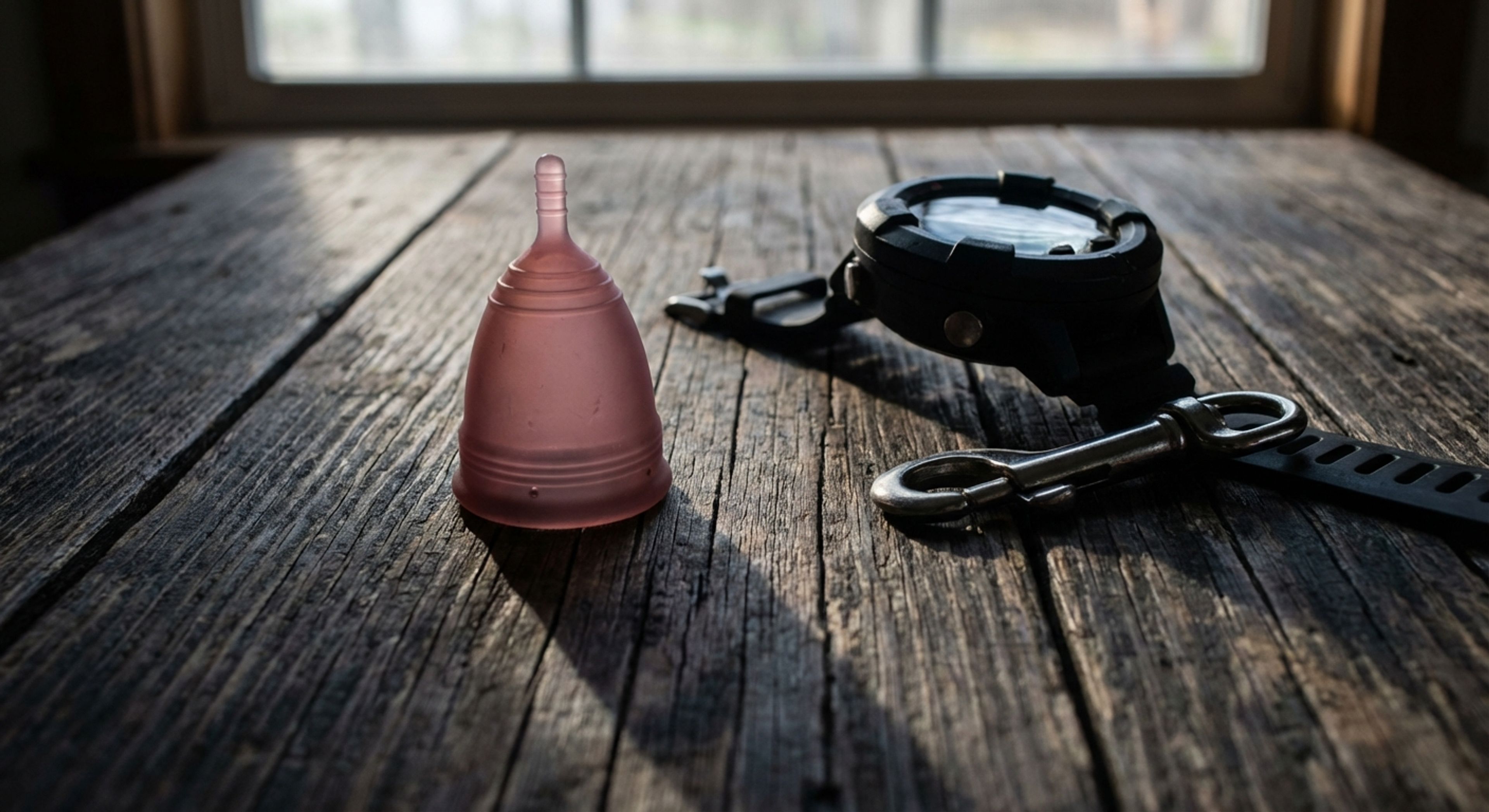
Many of my fellow cave divers have switched to silicone cups. Technically, they are superior.
There is a myth that the pressure change will cause the cup to suction onto your cervix so hard you cannot remove it, or that the air inside the cup will compress and cause damage (barotrauma). This is poor physics.
The air pocket inside a cup is negligible. Your body is composed mostly of liquid and tissue, which are non-compressible. The cup sits inside this non-compressible environment. I have taken a cup to 60 meters depth on trimix runs. There was no explosion. There was no vacuum seal of death.
The advantage is the seal. It keeps the blood in and the ocean out. No wicking. No soggy string. You can dive a long profile, a two-hour cave traverse, without worrying about leaking into your expensive drysuit undergarments.
However, you must be comfortable with your anatomy. Removing a cup in a rocking boat toilet while wearing a half-stripped wetsuit requires the balance of a gymnast and the patience of a saint. Crucial note: Always break the seal with your finger before pulling. Do not just yank, or you will create suction that is uncomfortable. Practice this on land first.
Physiology: The Silent Risks
The sharks are fake news. The gear is manageable. The real danger is what is happening to your blood chemistry and your air consumption.
Dehydration and DCS
This is the part that actually scares me. Not the sharks, but the bubbles.
When you are on your period, you are losing fluid. You might feel bloated, so you think you are retaining water, but your intravascular volume (the fluid actually inside your veins) can be lower. You are prone to dehydration.
Dehydration is a primary contributing factor to Decompression Sickness (DCS).
If your blood is thick and sludgy from dehydration (hemoconcentration), off-gassing nitrogen becomes less efficient. The bubbles get trapped. I have seen divers get bent on profiles that should have been safe, simply because they did not drink enough water.
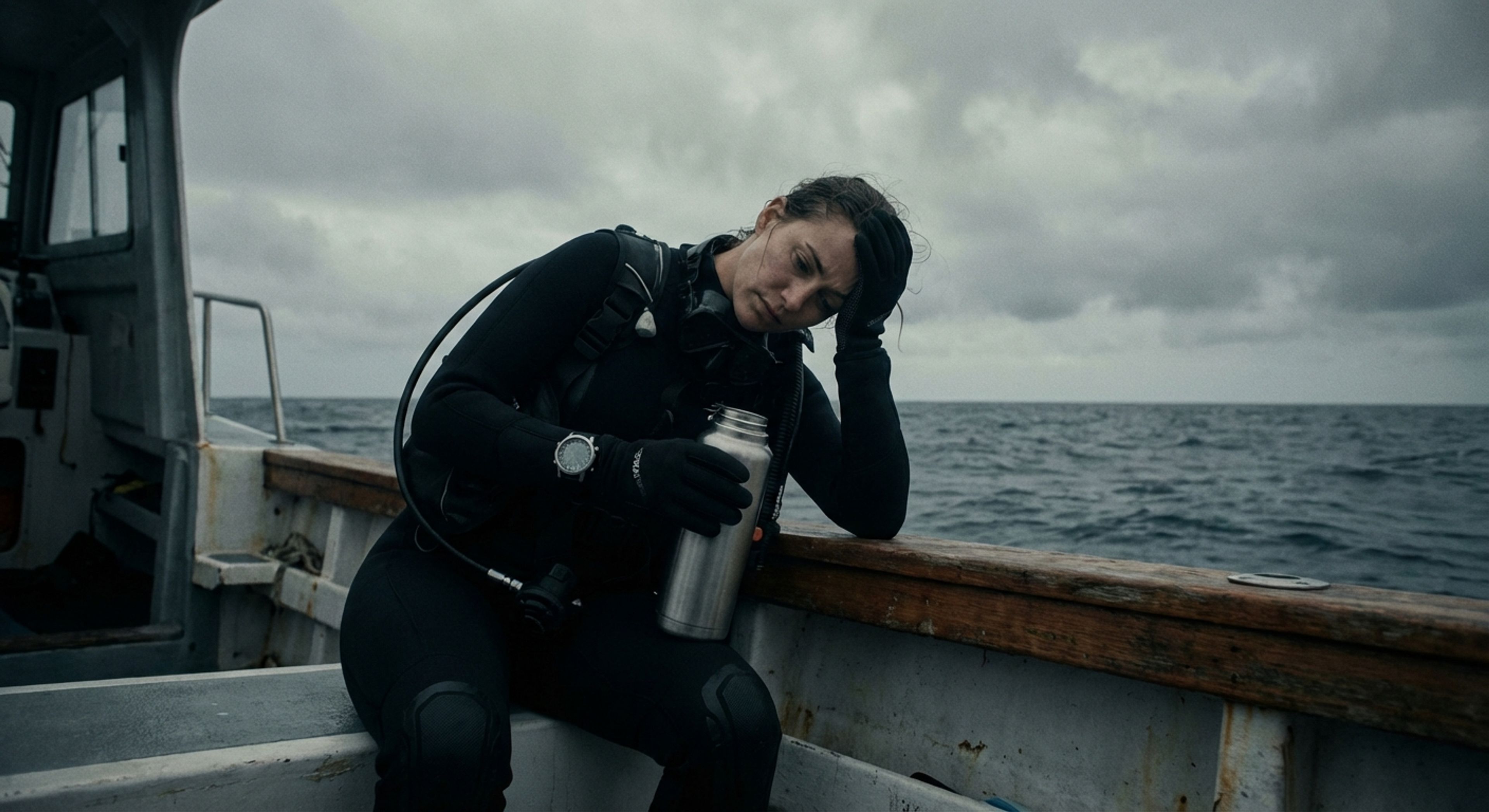
In the humid heat of the Yucatán jungle, you sweat before you even touch the water. Add the fluid loss of menstruation. You are walking a thin line. You must drink water like it is your job. Add electrolytes. If your urine is dark, you do not dive. Period.
Iron Levels and Air Consumption
We need to talk about fatigue. Menstruation lowers your iron levels. If you are prone to anemia, your red blood cells are carrying less oxygen.
What happens underwater? You breathe harder. Your Surface Air Consumption (SAC) rate increases. You burn through your gas faster than normal. On a shallow reef dive, this is an annoyance. In a cave or deep dive, gas management is life. If you notice you are windinged easily or your pressure gauge is dropping faster than usual, adjust your plan. Do not fight the regulator.
Cold and Cramps
The cenotes sit at a constant 25 degrees Celsius (77°F). It sounds warm. It is not. Water conducts heat away from the body 20 times faster than air. After ninety minutes in the dark, the cold seeps into your bones.
Menstruation affects your circulation. Many women report feeling colder when they are on their cycle due to hormonal shifts. The cramping can also be exacerbated by the cold.
Pain is a psychological stressor. In technical diving, we have a limited "task load" capacity. If 20% of your brain is focused on the dull ache in your uterus, that is 20% less brain power available to notice that your primary regulator is breathing a little wet or that your buddy has drifted too far.
I remember a dive in Cenote Carwash. I had terrible cramps. I took ibuprofen, but the pressure of the water seemed to squeeze my lower abdomen. I was distracted. I missed a subtle change in the guideline markers. I corrected it quickly, but it shook me. The pain had stolen my focus.
Now, if the pain is bad, I call the dive. The cave will be there next month. I do not need to prove my toughness to the stalactites.
The Spiritual Weight
The Maya believed the cenotes were portals to the afterlife. They believed blood was a sacred offering. There is a heaviness in these places.
I do not believe we defile the water by diving while bleeding. I believe we bring life into a place of death. It is a powerful contrast.
But you must listen to the machine that is your body.
If you feel weak, if you feel heavy, if your head is fogged with fatigue, stay on the dry land. Watch the light beams dance on the surface. Eat some chocolate. Fix your gear.
There is no shame in sitting out. The ocean is ancient and patient. It does not care if you miss one day. But if you push yourself when your physiology is compromised, you risk becoming a permanent resident of the underworld.
Dive safe. Bleed if you must. But keep your head clear.