

Diving Taiwan: Four Seasons of Islands and Coasts
From the unbelievable glass waters of Green Island to the macro wonders hidden in the rocky shallows of the Northeast Coast. Taiwan offers a relentless underwater rhythm that demands respect and perfect buoyancy.
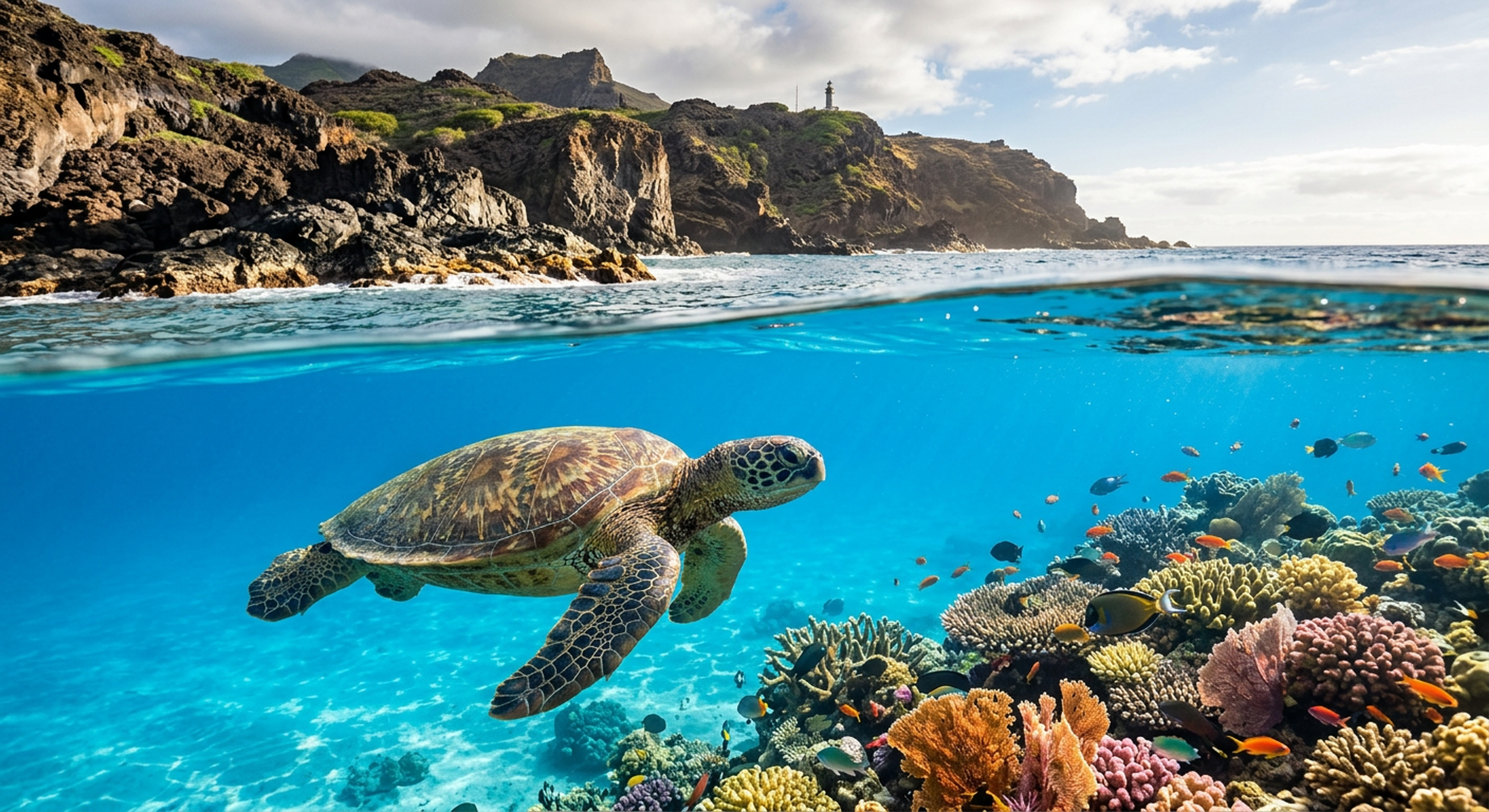
The smell of thick wet neoprene drying in the humid Pacific sun hits you first. Then comes the unmistakable tang of heavy sea salt drying on your lips after pulling off your mask. I am sitting on the back of a rocking local dive boat off the southwestern coast of Taiwan. The water here is not the placid, predictable turquoise of my home in the Baa Atoll. It has a completely different energy. It is darker, wilder, and pulsing with a lunar rhythm that commands absolute respect.
I have spent years orchestrating luxury liveaboards in the Maldives where guests expect dry towels, warm ginger tea, and a seamless giant stride into perfectly calm atolls. Taiwan is different. Taiwan makes you work for it. And I secretly love that. The diving here is raw. The island sits right on the edge of massive oceanic currents. The Kuroshio Current sweeps up from the equator bringing warm water, insane visibility, and pelagic life that rides the invisible highways of the sea. If you know how to read the tidal charts, this island nation opens up like a secret nautical map.
Let me walk you through the four major hubs of Taiwanese diving. We will look at the graceful drift of Xiaoliuqiu, the deep indigo of Orchid Island, the dizzying clarity of Green Island, and the punishing but rewarding shores of the Northeast Coast.
Xiaoliuqiu: The Gentle Drift
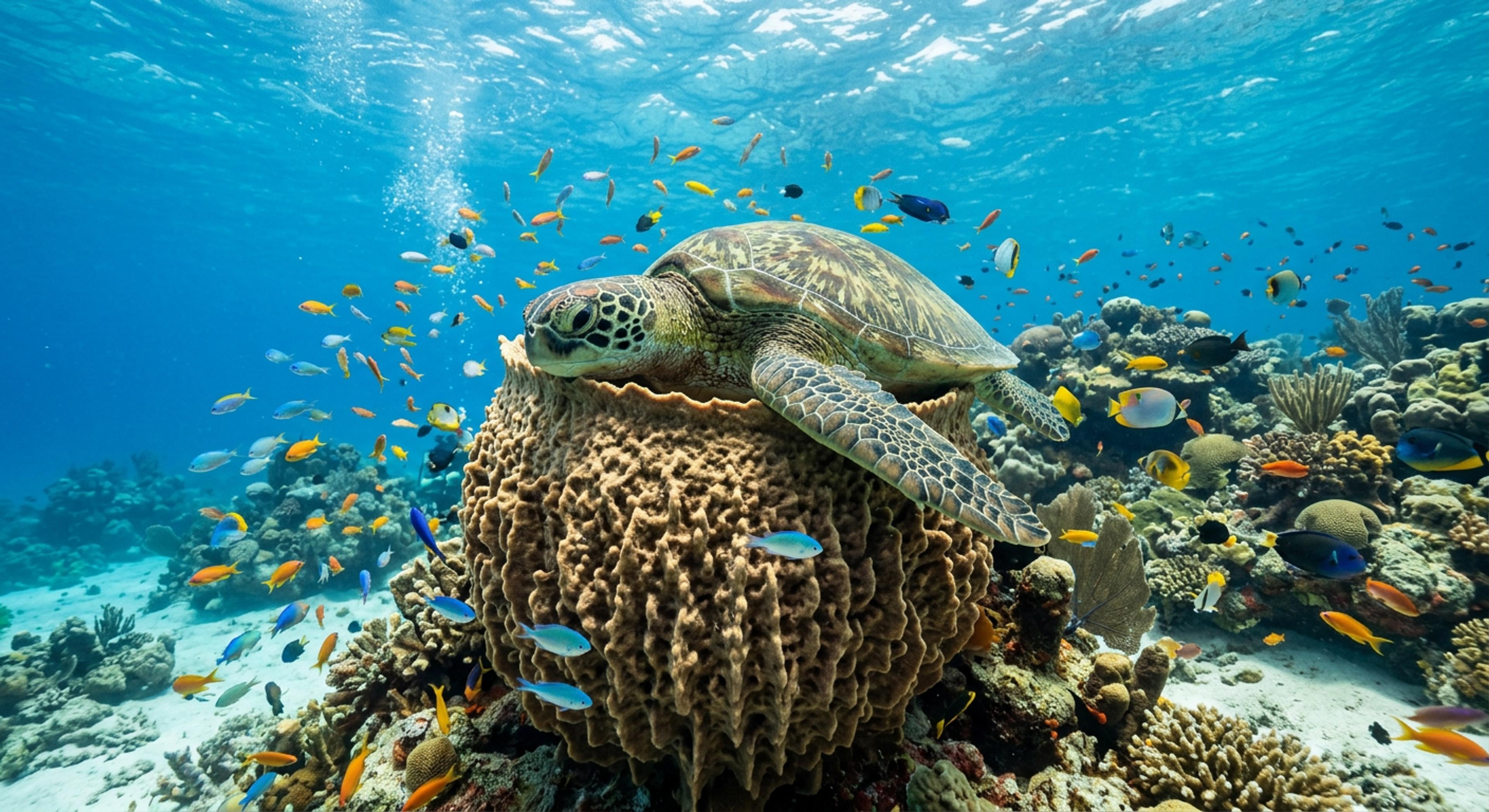
Let us start where the water is warmest year round. Xiaoliuqiu, also known as Lambai Island, is a small coral island just off the coast of Pingtung. The sheer density of green sea turtles (Chelonia mydas) here borders on the absurd. You drop down to fifteen meters and suddenly you are surrounded by ancient reptiles napping on sponges or munching lazily on algae.
I will admit I am horribly spoiled. I see mantas and turtles daily back home. But the turtles in Xiaoliuqiu have a specific sort of localized confidence. They do not care about you. They will drift right past your camera port completely unfazed by your exhaust bubbles. The diving here is mostly gentle reef slopes. It is a relaxing, rhythmic drift. The currents are manageable if you time your entry with the slack tide.
The shallow reefs here are dominated by soft corals that sway in the surge. You do not come to Xiaoliuqiu for sheer drop-offs or heart-pounding current hooks. You come here to perfect your trim, float weightlessly over the coral gardens, and watch the slow, heavy ballet of the sea turtles. The water temperature rarely drops below twenty-four degrees Celsius even in the dead of winter. It is the easiest, most forgiving diving in Taiwan.
Green Island: Glass Water and Tiny Dragons
If Xiaoliuqiu is a gentle flow, Green Island (Lyudao) is a high-speed current ride with moments of intense, microscopic focus. Green Island is a volcanic rock sticking out of the Philippine Sea. The visibility here is legendary. Locals call it glass water. On a good day in the summer you can easily see forty meters horizontally. The blue is so pure and penetrating it almost hurts your eyes.
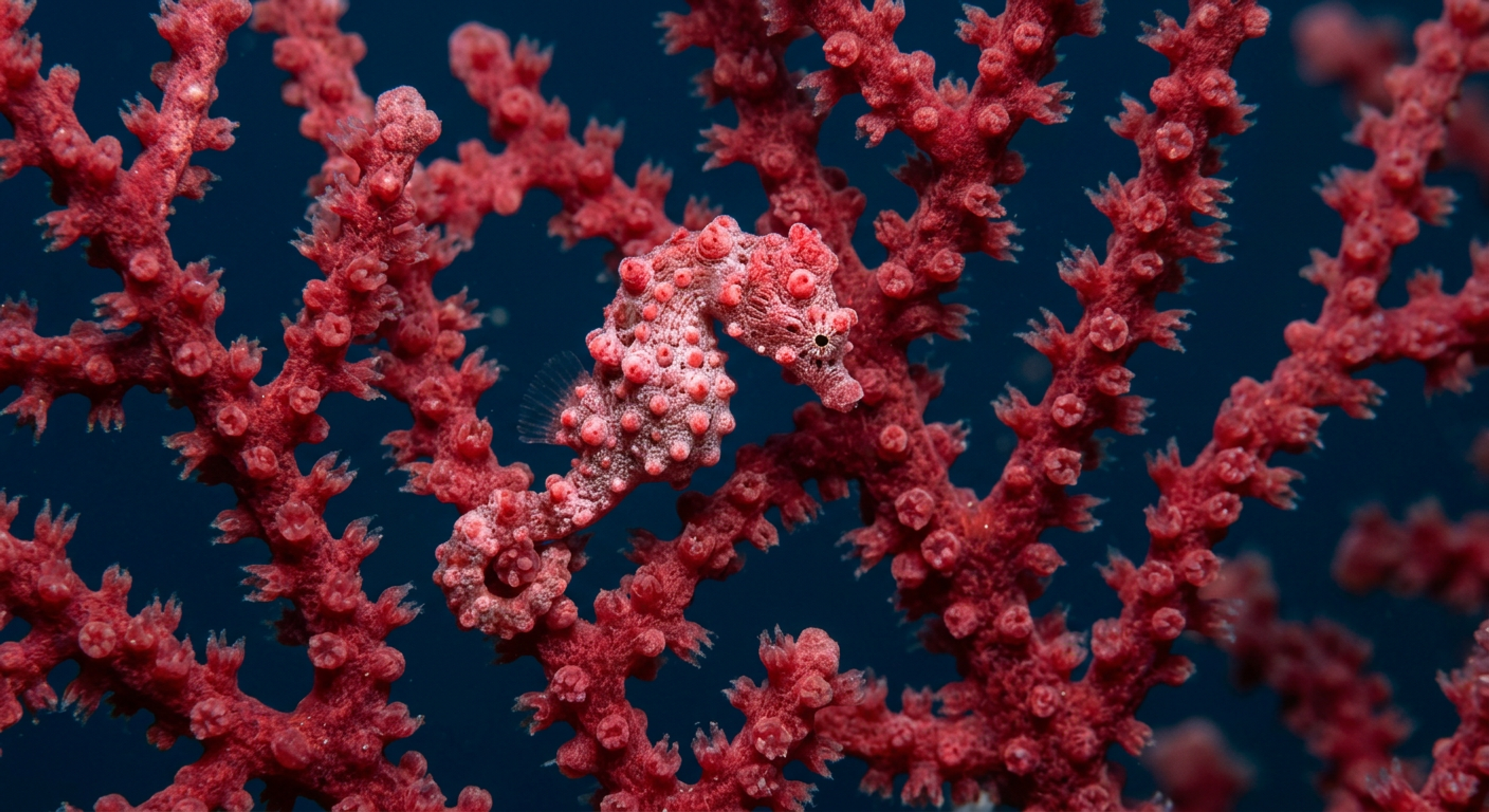
But it is not just about staring out into the endless void. Deep on the Gorgonian sea fans at thirty meters you will find Hippocampus bargibanti. The Bargibant's pygmy seahorse. Finding these tiny creatures requires absolute precision and perfect buoyancy control. You cannot kick up sand. You cannot grab the fragile coral. You just hover in the water column taking shallow breaths and waiting for your eyes to adjust to the pink and red polyps until the tiny dragon reveals itself. It is an exercise in immense patience.
The currents at advanced sites like Shark Point can be punishing. The ocean does not care if you have an expensive camera rig or a shiny new backplate. It will pull you into the blue if you ignore the downcurrents. You must listen to the local dive guides. They know the water's mood swings better than any dive computer. They watch the surface ripples and the movement of the anthias. When the fish tuck close to the reef you know the water is about to move.
For a more relaxed dive there is the famous Shilang dive site. Here you will find an underwater postbox sitting at about eleven meters deep. Yes, you can actually buy special waterproof postcards on the island, write them, and mail them underwater. It is a brilliant little novelty that breaks up the serious technical diving on the outer reefs.
Orchid Island: The Deep Blue and the Iron Ghost
Orchid Island (Lanyu) is even further out into the Pacific. The water here is a dark, heavy indigo. It feels incredibly vast. The indigenous Tao people who live here have a profound ancestral connection to the ocean. Their lives revolve around the seasonal migrations of flying fish. As a guest in their waters you must respect their traditions. During the flying fish season in the spring scuba diving is restricted in certain areas to avoid disrupting the catch.
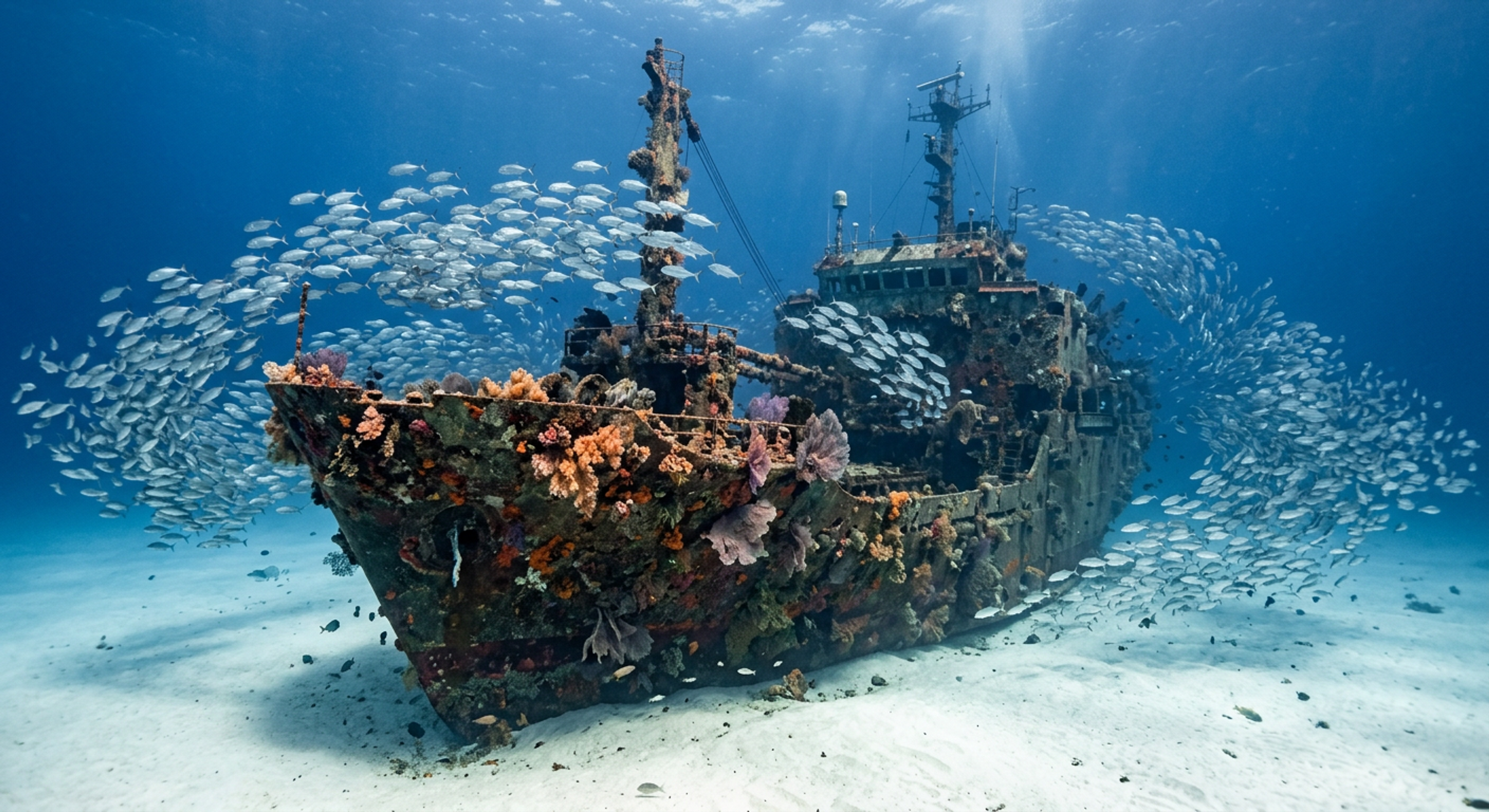
The absolute highlight for me here is the Badai Bay Shipwreck. It is a massive Korean freighter that went down in 1983. The ship rests in the sand at about thirty-five meters deep, though the upper deck structure rises much shallower. This allows Advanced Open Water divers to explore the coral-encrusted massive winches and cargo holds while staying safely within their training limits.
Diving this wreck feels solemn. The descent through the heavy blue is quiet. You only hear the rhythmic sound of your own regulator. Then the massive shadow of the ship slowly materializes below you. Penetration is strictly for trained technical and wreck divers, but the exterior alone offers enough drama to fill a logbook. Schools of giant trevally sweep past the bow hunting in the currents.
The current here can rip with terrifying speed. It is strictly an advanced dive. You must monitor your air consumption aggressively and stay strictly within your no decompression limits. Decompression sickness is not a joke anywhere, but it is especially serious when the nearest hyperbaric chamber requires a helicopter ride back to the main island. You must deploy your surface marker buoy early and make your safety stops in the blue while drifting away from the wreck as the current carries you.
Northeast Coast: The Cold Macro Hunt
Now we move up to Taipei's backyard. The Northeast Coast (Dongbeijiao) is a completely different animal. There are no white sand beaches here. It is all jagged volcanic rocks, slippery shore entries, and lugging heavy steel tanks up concrete steps in the blazing sun.
I will be completely honest. I hate shore entries. My knees complain every single time I have to stagger over algae-covered boulders in full gear. Give me a giant stride off a polished teak deck any day. I remember my first time diving at Bitoujiao. I slipped on the ramp, bruised my shin on a rock, and questioned why I left the comfort of the Maldives for this punishing coastline.
But then you put your face in the water.
During the brief weather windows in spring before the summer heat fully arrives the water is cold. The temperature drops to twenty degrees Celsius or lower. You need a good five-millimeter wetsuit, a hood, and gloves. The visibility is often terrible. You might get five meters on a good day. There is heavy surge that pushes you back and forth across the bottom.
Why do we endure this? Because the macro life is absolutely brilliant. The rocky crevices are packed with colorful nudibranchs, skeleton shrimp, tiny blennies, and elusive blue-ringed octopuses. It is treasure hunting in the muck. You crawl along the bottom fighting the relentless surge and suddenly you spot a neon blue and yellow Felimare nudibranch grazing on a sponge and it makes the bruised shins and the sweating in the parking lot and the freezing fingers completely worth it.
The Seasonal Breakdown
You cannot just show up in Taiwan and dive anywhere. The island has distinct seasons dictated by the monsoon winds. You cannot dive the Northeast Coast in the middle of a winter northeast monsoon unless you want to get violently smashed against the rocks. You have to plan your trips according to the wind and the warmth.
Here is my personal cheat sheet for timing your dives in Taiwan.
| Location | Best Diving Season | Water Temp (°C) | Visibility | Key Highlights | Dive Style |
|---|---|---|---|---|---|
| Xiaoliuqiu | Year round (Best Nov-Apr) | 24 - 28 | 10 - 20m | Sea turtles, gentle drift, soft corals | Relaxed, Beginner friendly |
| Green Island | May to September | 26 - 29 | 30 - 40m+ | Pygmy seahorses, crystal water, sheer walls | Advanced currents, Deep dives |
| Orchid Island | June to September | 26 - 29 | 30 - 40m+ | Badai Bay Wreck, sea snakes, pelagics | Very Advanced, Strong currents |
| Northeast Coast | May to September | 23 - 27 | 5 - 15m | Nudibranchs, frogfish, macro critters | Shore entries, Macro photography |
Notice how the offshore islands of Green Island and Orchid Island are best during the summer. You want to hit them before the late summer typhoons start rolling through the Pacific. Xiaoliuqiu is protected enough to dive in the winter making it a perfect escape when Taipei is freezing and raining.
Taiwan demands versatility. One day you are floating weightlessly in warm blue water watching a turtle sleep and the next you are freezing in a rocky gully looking for a slug the size of your fingernail. It keeps your skills sharp. It forces you to respect the changing tides and the shifting winds. Check your o-rings, test your regulators, and make sure your surface marker buoy is packed tight. The Kuroshio Current is waiting.