

Scuba Tipping Etiquette: The Global Guide for Divers
From the Red Sea to the Caribbean, tipping culture varies wildly. Here is how to navigate the awkward envelope exchange without offending your crew or your wallet.
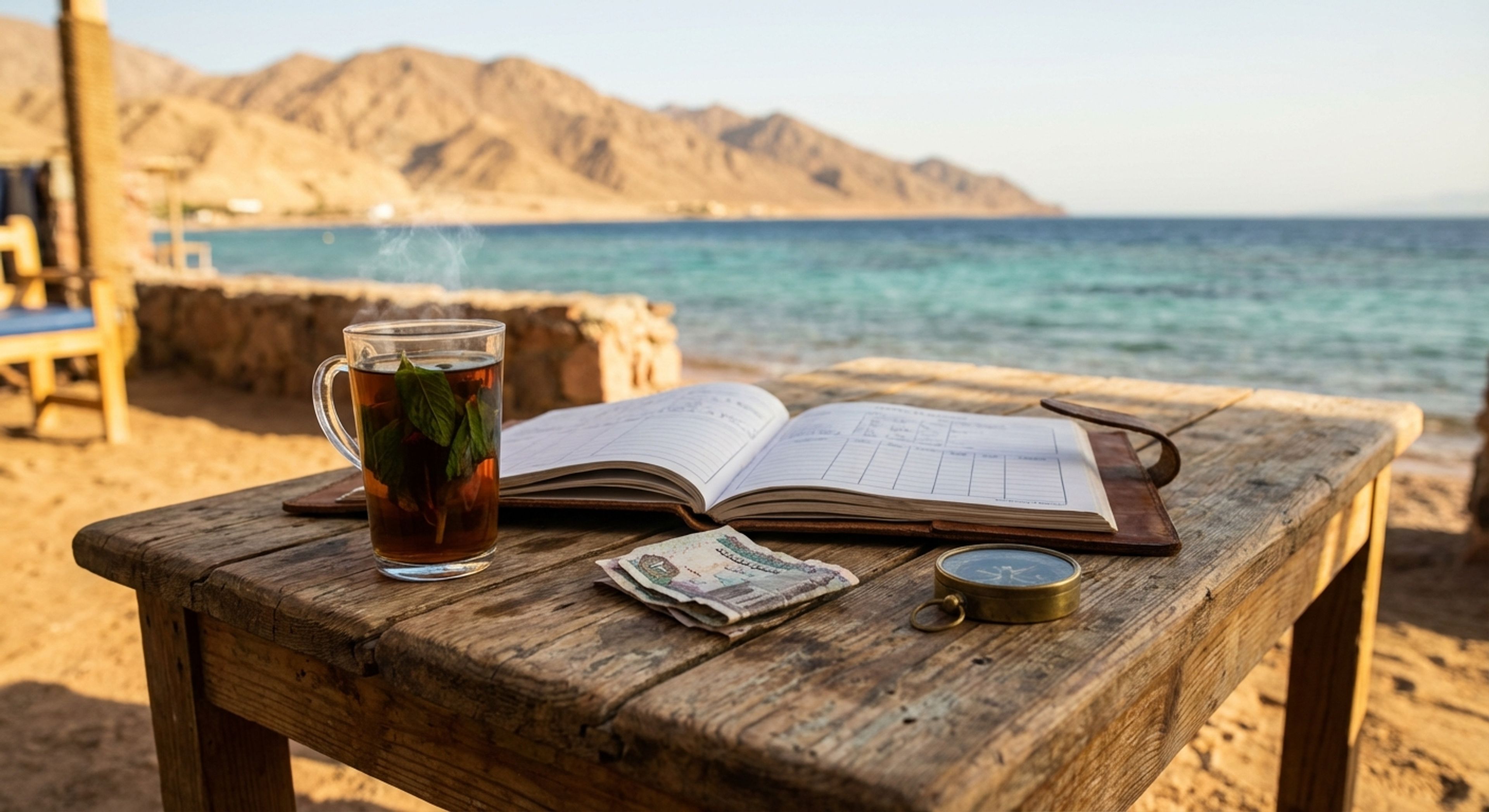
My friend, welcome. Sit down. Let me pour you some tea. It is Bedouin tea, heavy with sugar and fresh habak grown in the mountains behind us. The wind is coming from the north today so the Blue Hole will be calm. Perfect for drifting from The Bells.
We talk often about buoyancy. We talk about air consumption. We talk about the nitrogen loading in our tissues. But there is one thing divers are often too shy to ask me about until the very last minute. They whisper it while drying their hair, or they fumble with their wallets looking nervous.
"Malik," they say. "How much should I tip?"
It is a heavy question. Money is always heavy. In the desert, we say that water is life, but in the tourism world, cash is the water that keeps the engine running. I have guided divers from Tokyo, from Texas, from Berlin. Everyone has a different idea of what is polite.
So let us clear the air. Let’s talk about how to say "shukran", thank you, without making mistakes.
The Invisible Hands
Before we talk about dollars or euros, you must understand who you are tipping.
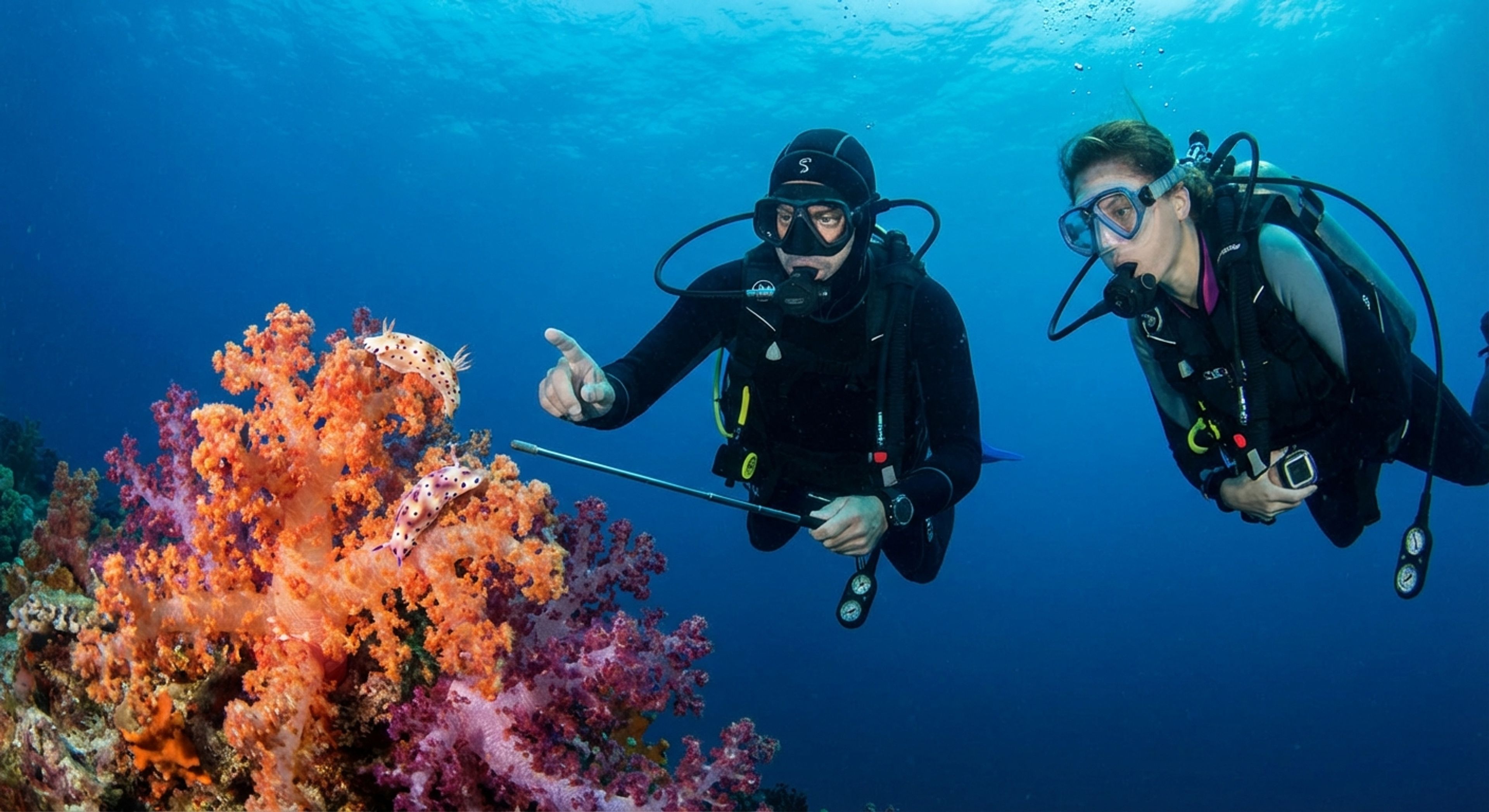
Most divers only see the Divemaster or the Instructor. You see me because I am the one pointing at the Nudibranch. I am the one checking your air. We become friends. We laugh underwater.
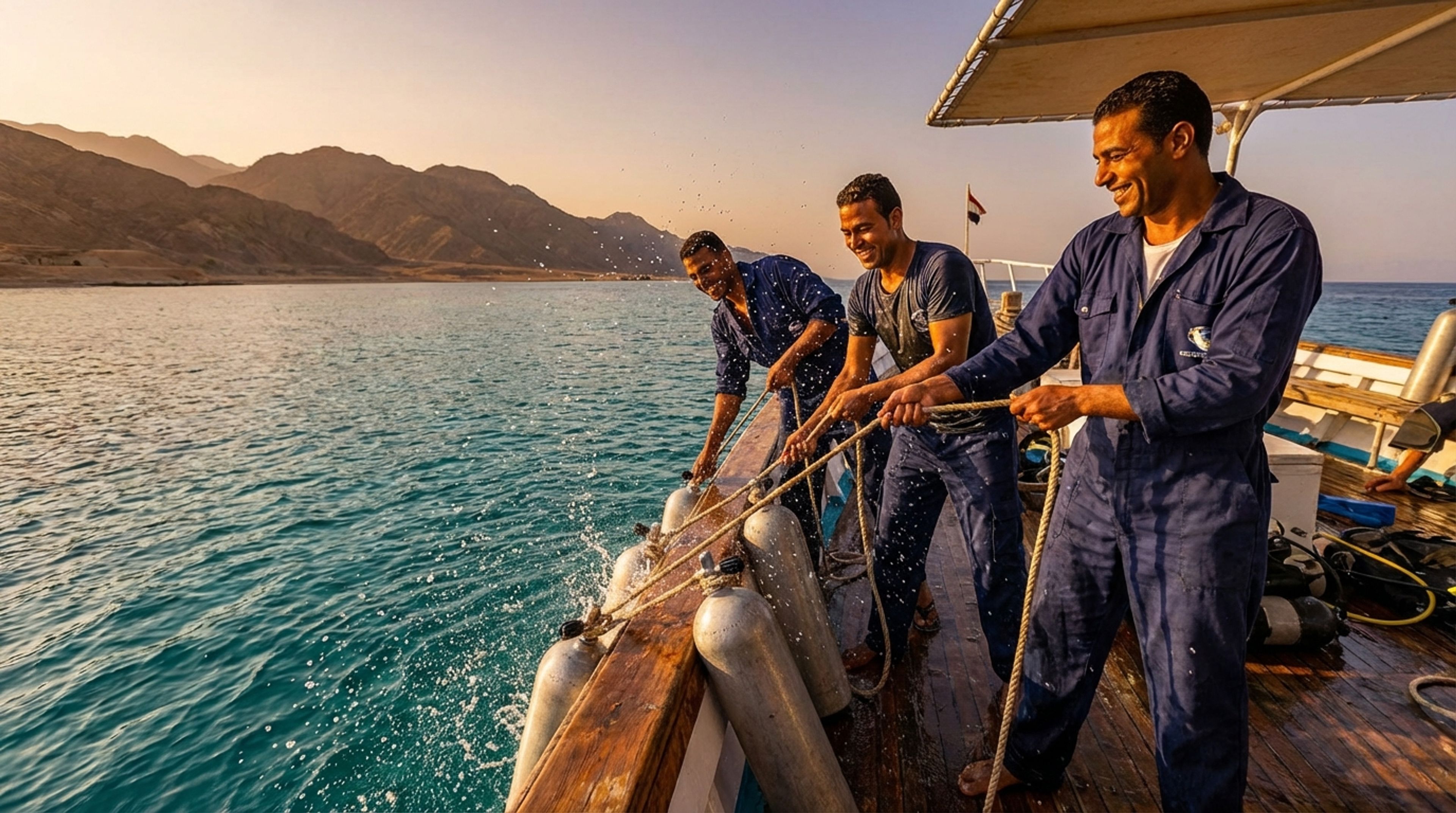
But who filled your tank at 5:00 AM while you were sleeping? Who drove the boat through the chop so your stomach did not turn? Who rinsed the vomit off the deck when the sea got angry?
The "compressor boy" and the boat captain often earn the least. They live in the shadows. They smell of diesel and oil so you can smell of salt and sunscreen. When you think about tipping, you must think of them. If you give all your money to the guide, you are feeding the mouth but starving the hands.
I remember a guest from London years ago. He had a wonderful week. He saw a massive Napoleon Wrasse at the Canyon. At the end, he slipped me a hundred euros. A fortune. He whispered, "For you, Malik. Only you."
I took it. I smiled. But later, I had to go to the kitchen and split it with Ahmed the captain and little Omar who carries the heavy boxes. It was the right thing to do. But it is better if you, the diver, understand this ecosystem from the start.
The Geography of Gratitude
The ocean is one body of water, but the rules of the land are different everywhere. What is polite in Dahab might be an insult in Tokyo.
Southeast Asia (Thailand, Indonesia, Philippines)
I have many friends working in Raja Ampat and Komodo. The water there is warm, and the people are warmer. In these places, the cost of living is low compared to the West, but the wages are also very low.
Tipping here is not "mandatory" like a tax, but it is deeply expected and relied upon. The local guides often support entire extended families in the village.
- The Culture: Non-confrontational. They will never ask you for money directly. It is considered rude to beg.
- The Strategy: Look for the Communal Tip Box. It is usually in the dive shop or on the main boat. This is the fairest way. It ensures the boat boys, the cooks, and the tank fillers get a share.
- The Amount: If you are on a Liveaboard, budget 10% of the cruise price. For day diving, $5 to $10 USD per tank is a generous gesture that will make you a legend.
The Americas (USA, Caribbean, Mexico, Central America)
I once visited Cozumel. Beautiful drift dives. But the culture there is aggressive. In the US and its neighbors, tipping is not a bonus. It is the salary.
If you go to Florida or Hawaii or the Caribbean, the crew might be earning almost nothing per hour on paper. They survive on your tips.
- The Culture: Transactional and direct. If you do not tip, they will look at you like you stole their regulator.
- The Strategy: 15% to 20% of the charter cost. This is standard. It is just like a restaurant.
- The Method: You can hand cash directly to the captain or the lead DM at the end of the trip. They usually distribute it. Do not be shy here. Cash is king. US Dollars are accepted almost everywhere in this region.
Australia
The Great Barrier Reef. A dream for many. But Australia is expensive. The wages there are high. A dive instructor in Cairns creates a good living compared to a dive instructor in Honduras.
- The Culture: "Mateship." Tipping is not mandatory. It is a true bonus.
- The Strategy: You are not paying their rent; you are buying them a beer. If the service was excellent, leave $20 or $50 AUD for the crew beer fund. They will cheer for you. If you leave nothing, they will still say "Good on ya" and mean it.
Europe and The Red Sea (My Home)
Here in Egypt, and across the Mediterranean, it is a mix. In Europe (Italy, Spain, Greece), service charges are often included, but the crew works long seasonal hours.
In the Red Sea, we have "Baksheesh." It is part of our blood. It is a way of greasing the wheels of life.
- The Culture: We expect it, but we value the relationship more. We want you to come back next year.
- The Strategy: For a week of diving in the Red Sea, 50 to 100 Euros per guest into the crew box is standard.
- The Currency - A Critical Rule: Please, use paper notes (Euros, US Dollars, or British Pounds). Do not give coins. In Egypt, banks will not exchange foreign coins. If you give a deckhand a 2 Euro coin, it is just a piece of metal to him. He cannot spend it. Give paper.
The "Box" vs. The Handshake
This is the question I get most often. "Malik, should I put it in the box or give it to you?"
My friend, I will be honest.
If you put it in the Communal Box, you are a saint. You are feeding the team. You are ensuring that when you come back, the boat is clean and the tanks are full because the crew is happy. This is the best way for the general tip.
However.
If a specific guide found you a Seahorse the size of a grain of rice, or held your hand when you had a panic attack at 18 meters, or fixed your leaky O-ring five minutes before the jump... you can do the Handshake.
The Handshake is a secret. You fold a small note, maybe 10 or 20 Euros, into your palm. When you say goodbye, you shake my hand and press the money into my palm. You look me in the eye and say, "Thank you for looking after me."
This money stays with the guide. It is for the extra care. But do not use this instead of the box. Use it in addition to the box. The box pays for the work. The handshake pays for the soul.
| Region | Expectation Level | Suggested Amount (Day Trip) | Suggested Amount (Liveaboard) | Preferred Method |
|---|---|---|---|---|
| USA / Caribbean | Mandatory (Salary) | $10 - $20 per tank | 15% - 20% of trip cost | Cash to Captain/Lead |
| Southeast Asia | High (Cultural) | $5 - $10 per tank | 10% of trip cost | Communal Tip Box |
| Red Sea / Egypt | High (Baksheesh) | €5 - €10 per tank | €70 - €100 per week | Communal Box + Handshake |
| Australia / NZ | Low (Bonus) | Cost of a few beers | 5% or Beer Money | Crew Jar |
| Europe | Moderate | €5 per tank | 5% - 10% | Cash |
When NOT to Tip
I love money. I have three children to feed. But there are times you should keep your wallet closed.
Do not tip if safety was ignored. If the guide was drunk. If the captain was reckless. If the equipment was dangerous. Tipping is for service, not for surviving negligence.
However, do not punish the crew for the ocean.
I have seen divers get angry because the water was cold. Or because the visibility was bad. Or because we did not see a shark.
My friend, I am Malik, not Poseidon. I cannot control the currents. I cannot radio the sharks and tell them to show up for your appointment. The crew works harder when the weather is bad. When the waves are high, the captain fights the wheel for hours. When the current is strong, the guide swims twice as hard to keep you safe.
If the dive was a disaster because of nature, but the crew kept you safe and smiling... that is when they deserve the biggest tip of all.
A Final Thought from the Desert
The sun is setting now behind the Sinai mountains. The light is turning the water purple.
Here is the truth. The best tip you can give is respect.
I have had millionaires throw money at me without looking in my eyes. I felt poor. I have had students who had very little money, who bought me a coffee and wrote a letter to my boss saying I was a good teacher. I felt like a king.
Prepare your budget before you leave home. Factor the tip into the cost of the holiday. If you can afford the flight and the fancy regulator, you can afford to support the locals who make your dream possible.
Pack some crisp bills (no coins!). Keep them in a dry bag. And when the trip is over, give with an open hand and a smile.
Now, finish your tea. Tomorrow we dive. I know where a Red Sea Walkman hides in the sand near the Lighthouse. I will show you.