

Drift Diving: How to Fly Underwater Without Growing Wings
Strap in and hold on tight because we are talking about the ultimate lazy man's adrenaline rush. Learn how to smash a negative entry, ride the rip like a legend, and why seeing big sharks in a strong current is the best thing you'll ever do.
G'day legends!
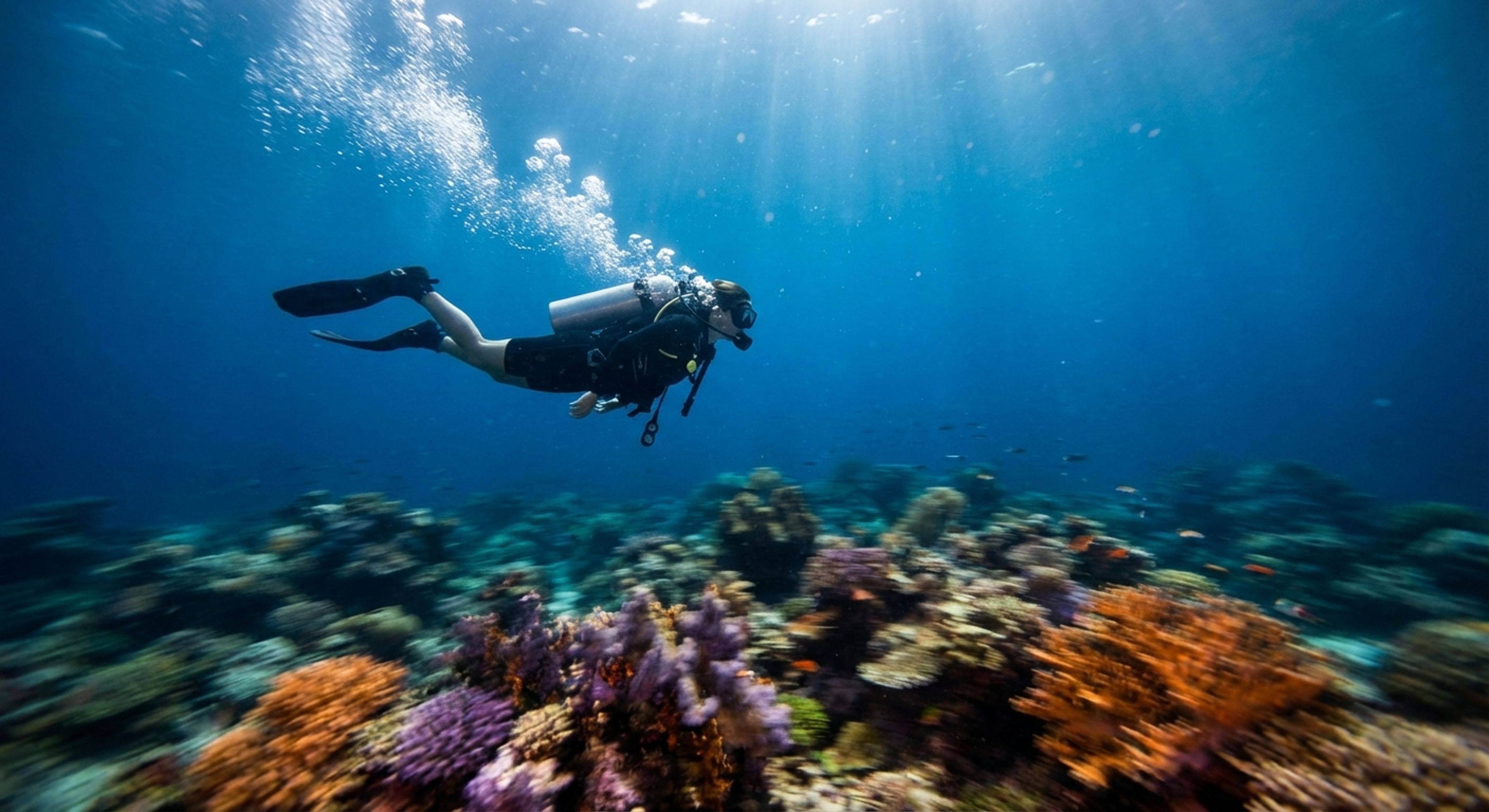
Imagine this. You jump off the boat and before you can even check your gauge you are moving at the speed of a freight train. You aren't kicking. You aren't struggling. You are just suspended there in the blue with your arms crossed like a boss watching the world zoom past you at a million miles an hour.
That is drift diving, mate. And let me tell you it is the closest you will ever get to being Superman without wearing your undies on the outside of your pants.
I remember my first proper drift dive up in the Great Barrier Reef. I thought I was fit. I thought I could out-swim the ocean. Yeah right. The current grabbed me and flung me over a coral bommie like a ragdoll. It was absolutely GNARLY. I came up laughing so hard I nearly choked on my reg. Since then I chase the current. If the water isn't moving I'm basically asleep.
Today we are talking about how to handle the rip. We are going to cover the scary stuff like negative entries and shooting your sausage (SMB) without tangling yourself in a knot. So crack a cold one later but right now pay attention because this is how we fly.
The Negative Entry: Dropping Like a Stone
Listen to me very carefully. When the skipper yells "DIVE DIVE DIVE" on a drift dive you do not sit there adjusting your mask strap. You do not fiddle with your camera. You go.
The biggest mistake rookies make is jumping in positive. They hit the water with air in their BCD and bob around on the surface like a cork. Guess what happens? The surface current grabs you and drags you 200 meters away from the reef before you can even deflate. By the time you get down the rest of the group is halfway to Fiji.
For a serious drift dive we do a Negative Entry.
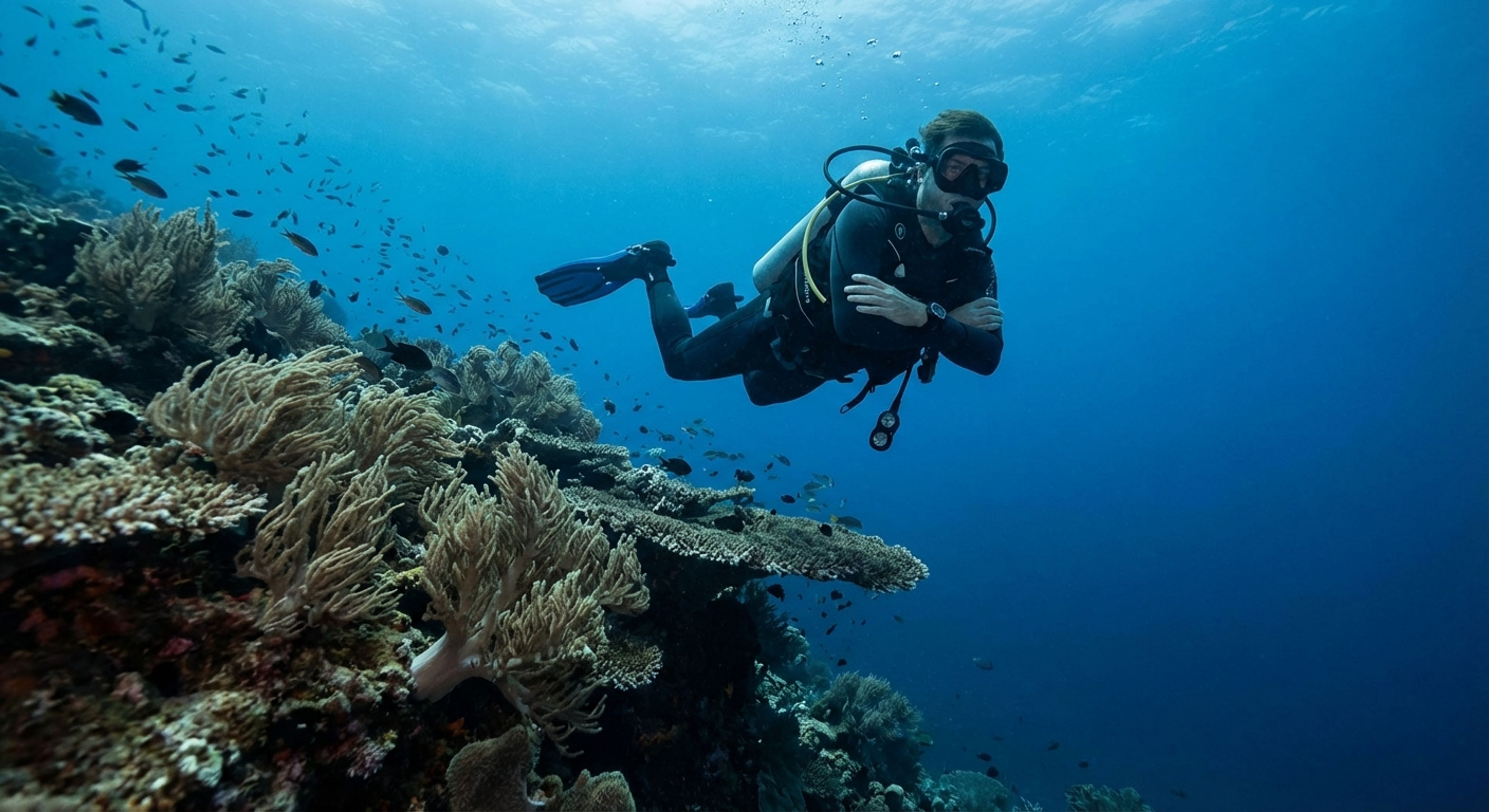
It sounds intense because it is. You completely empty your BCD on the boat. You take a breath from your reg. You roll back. As soon as you hit the water you exhale hard, clear your ears immediately, and kick down. You don't stop to wave at the boat. You get your butt down to the meeting point which is usually at 10 or 15 meters.
Pro tip: You have to equalize your ears fast and often. Because you are dropping like a stone, your ears will scream if you aren't clearing them every meter.
It feels chaotic the first time. You hit the water, bubbles everywhere, and you just plummet. But when you look up and see the whole team descending together like a squad of navy seals? Mate, it is a thing of beauty.
The Ride: Why Work When You Can Float?
Once you are down and neutral the magic happens.
Normal diving is great but you have to work for it. Kick, kick, kick. In a drift you are lazy. The ocean does the work. You just achieve neutral buoyancy, tuck your fins up, and glide.
The sensation of speed is massive. You fly over canyons and plateaus. You see huge gorgonian fans bent over sideways from the force of the water. It feels like you are flying a fighter jet through a canyon.
I reckon the best part is the silence mixed with the speed. You are moving fast but there is no wind noise. Just the sound of your own breathing and the crackle of the reef.
Big Current Means Big Fish
Here is a secret the ocean doesn't tell you on the brochure. The big stuff loves the rough stuff.
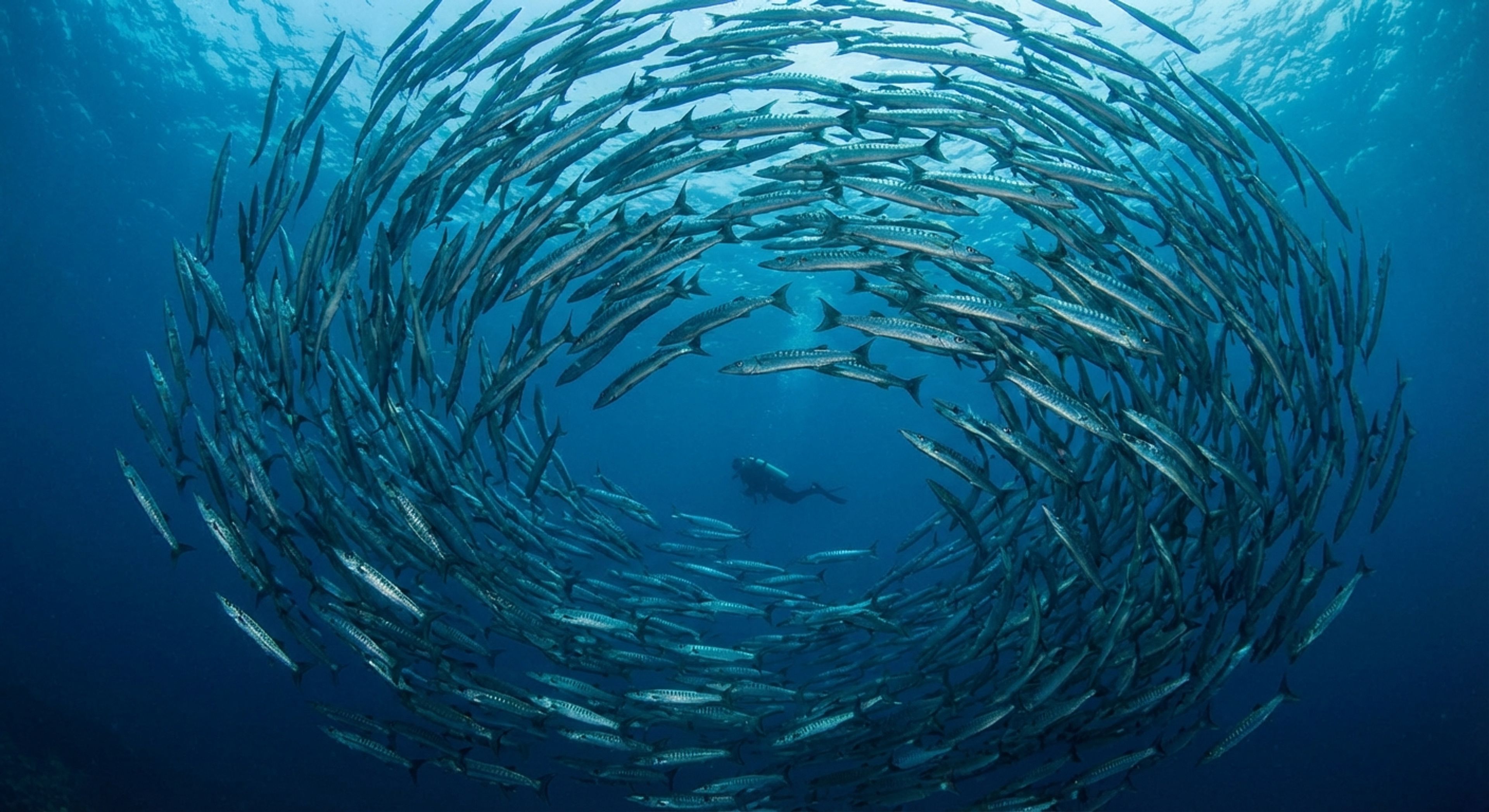
Sharks. Trevally. Tuna. Barracuda. They don't hang out in stagnant ponds. They hang out where the water is moving because that is where the food is. The current pushes nutrients up from the deep and the food chain goes mental.
I was diving in Komodo a few years back at a site called The Shotgun. The current was ripping so hard it felt like it would rip my mask off. We hooked into the reef (using a reef hook is a whole other skill, mate) and just watched.
Because we were in the current we saw twenty or thirty grey reef sharks just hanging there. They weren't swimming. They were just facing the current and letting water ram over their gills. It was like a shark highway. If we had been diving a calm bay we would have seen a few nice clownfish. Boring.
If you want to see the apex predators you have to be willing to get pushed around a bit.
The Comparison: Lazy vs Crazy
Here is a quick breakdown for you on why drift diving is a different beast compared to your standard chill dive.
| Feature | Standard Moored Dive | Drift Dive |
|---|---|---|
| Entry | Giant stride/Back roll, meet on surface, descend slowly. | Negative entry, no surface time, descend immediately. |
| Effort | High. You kick to move. | Zero. The ocean moves you. |
| Navigation | You navigate out and back to the boat (reciprocal heading). | No navigation. You go with the flow and the boat follows the bubbles. |
| Wildlife | Macro stuff, turtles, chill fish. | SHARKS, schools of pelagics, hunting action. |
| Boat Pickup | You return to the mooring line or swim to the boat. | The boat chases you down in the open ocean (live boating). |
Don't Be A Hero: Stick To Your Buddy
This is the serious part so listen up.
In a drift dive separation is a nightmare. If you stop to look at a nudibranch for ten seconds and your buddy keeps drifting? By the time you look up he is gone. The current can move people at 2 or 3 knots. That is faster than you can swim.
If you lose the group in a strong current you are on your own in the blue.
We stay tight. I like to be close enough to grab my buddy's fin if I have to. Maximum one arm's length away. We don't communicate by yelling. We use hand signals but in a drift you need to be looking around constantly.
If the current splits around a rock or a corner you need to make the decision together. Go left or go right. If you go left and he goes right you might end up on different sides of an island. That is a long swim back to the pub, mate.
The Exit: Shooting the SMB
You cannot just surface whenever you feel like it. You are drifting in open water. There could be boat traffic. There could be big waves. The boat captain needs to see you before you break the surface.
This is where the SMB (Surface Marker Buoy) comes in. It is that orange sausage thing in your pocket.
We usually shoot it from 5 meters during the safety stop. You deploy it underwater.
- Look UP. Ensure no boats are directly overhead.
- Unroll. Unlock your reel/spool.
- Inflate. Use your occy (secondary regulator) or your exhaust bubbles to fill the bag.
- Let it rip. Hold the reel, not the bag!
Doing this in a current is tricky. You are moving. The line is spinning out. You have to make sure you don't get tangled in the reel. I've seen blokes get wrapped up and dragged to the surface like a caught fish. Not cool. Keep the line taught and away from your gear.
Once that orange tube pops up on the surface the boat captain spots it and drives over. You drift along doing your 3-minute safety stop hanging off the line like a paratrooper. When you pop up the boat is right there waiting.
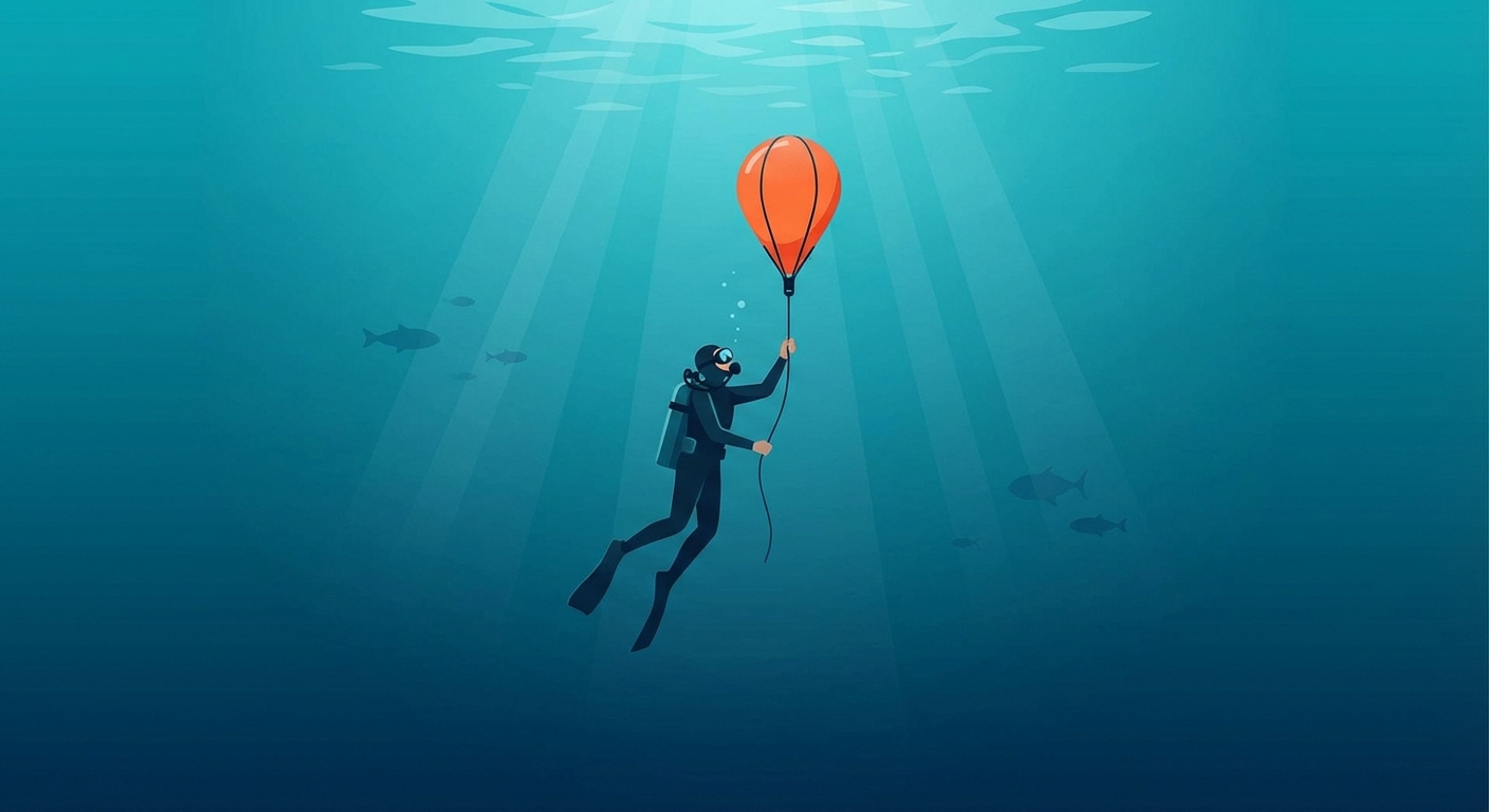 . The diver is holding a reel, looking up as the inflated buoy shoots toward the surface. Bubbles rising, blue water background.)
My Washing Machine Experience
I have to tell you about this one dive in Palau. Blue Corner. Legendary spot.
We dropped in and the current was absolutely ferocious. We hooked in at the edge of the wall and watched the sharks. That part was easy. But then we had to unhook and drift into the lagoon.
The water was swirling like a toilet bowl. We call it the "washing machine." I got flipped upside down. My bubbles were going sideways. I looked at my dive computer and I was actually going up when I thought I was swimming down. It was disorienting and chaotic and absolutely brilliant.
I managed to grab my buddy by the BCD strap, keeping that contact is vital, and we tumbled through the turbulence together until it spit us out into the calm lagoon water. We surfaced yelling and high-fiving. It felt like we had just survived a round in the ring with a kangaroo.
Get Out There
Drift diving isn't for the faint of heart. You need good buoyancy. You need to be comfortable in the water. But once you get a taste of that speed? Once you feel what it's like to fly over the reef without moving a muscle? You will never want to kick your fins again.
It is freedom. It is power. It is the ocean reminding you that you are small and it is massive.
So get your gear checked. Practice your negative entry. And for the love of god buy a decent SMB.
I'll see you in the blue. Or maybe I'll just wave as I drift past you at three knots.
Cheers!
Rocket