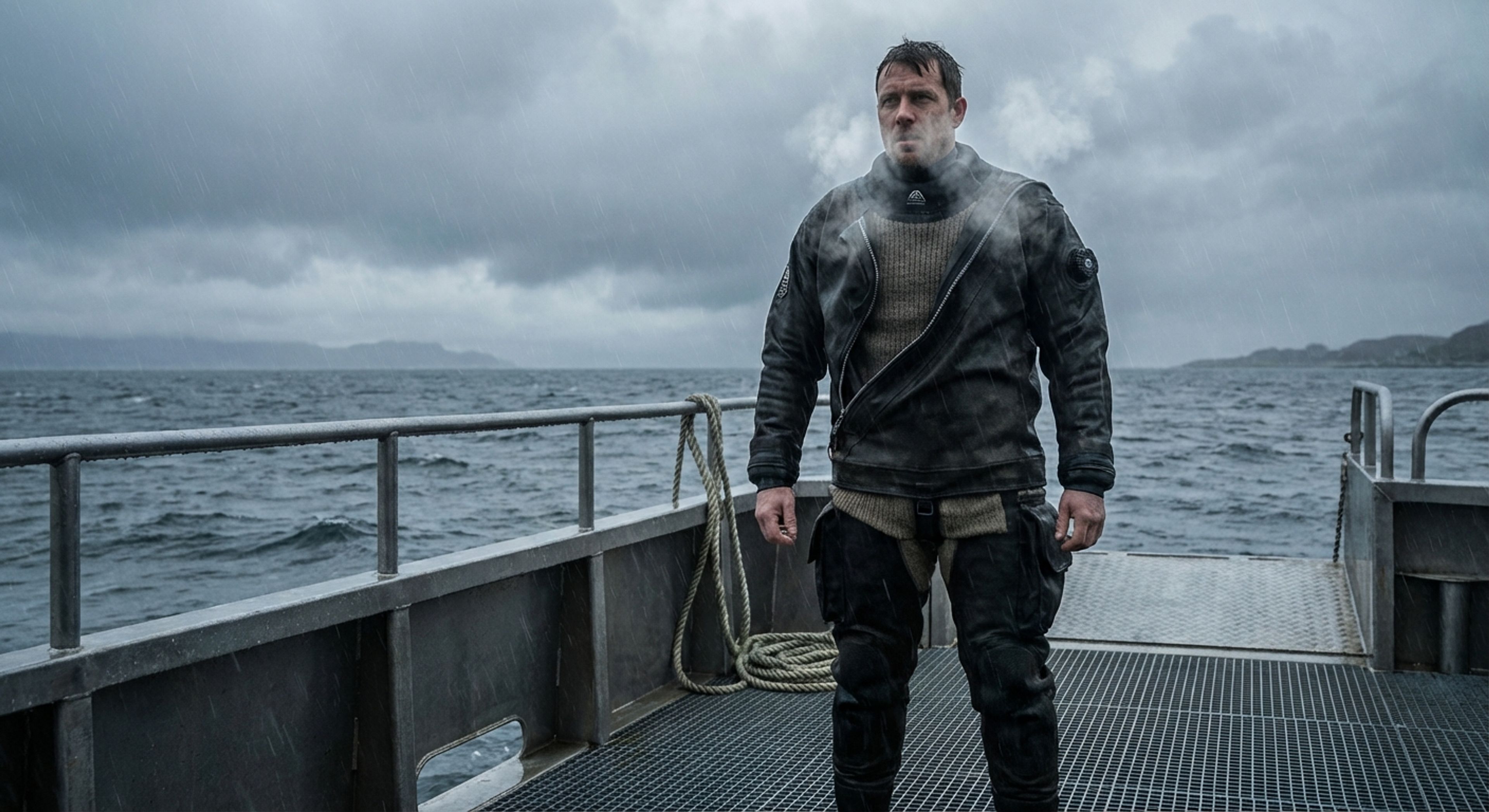

Drysuit Diving Guide: The Only Way to Survive Real Cold
Stop shivering in neoprene sponge. Learn the thermodynamics of drysuit diving, how to manage the lethal air bubble, and why being dry is the only professional option.
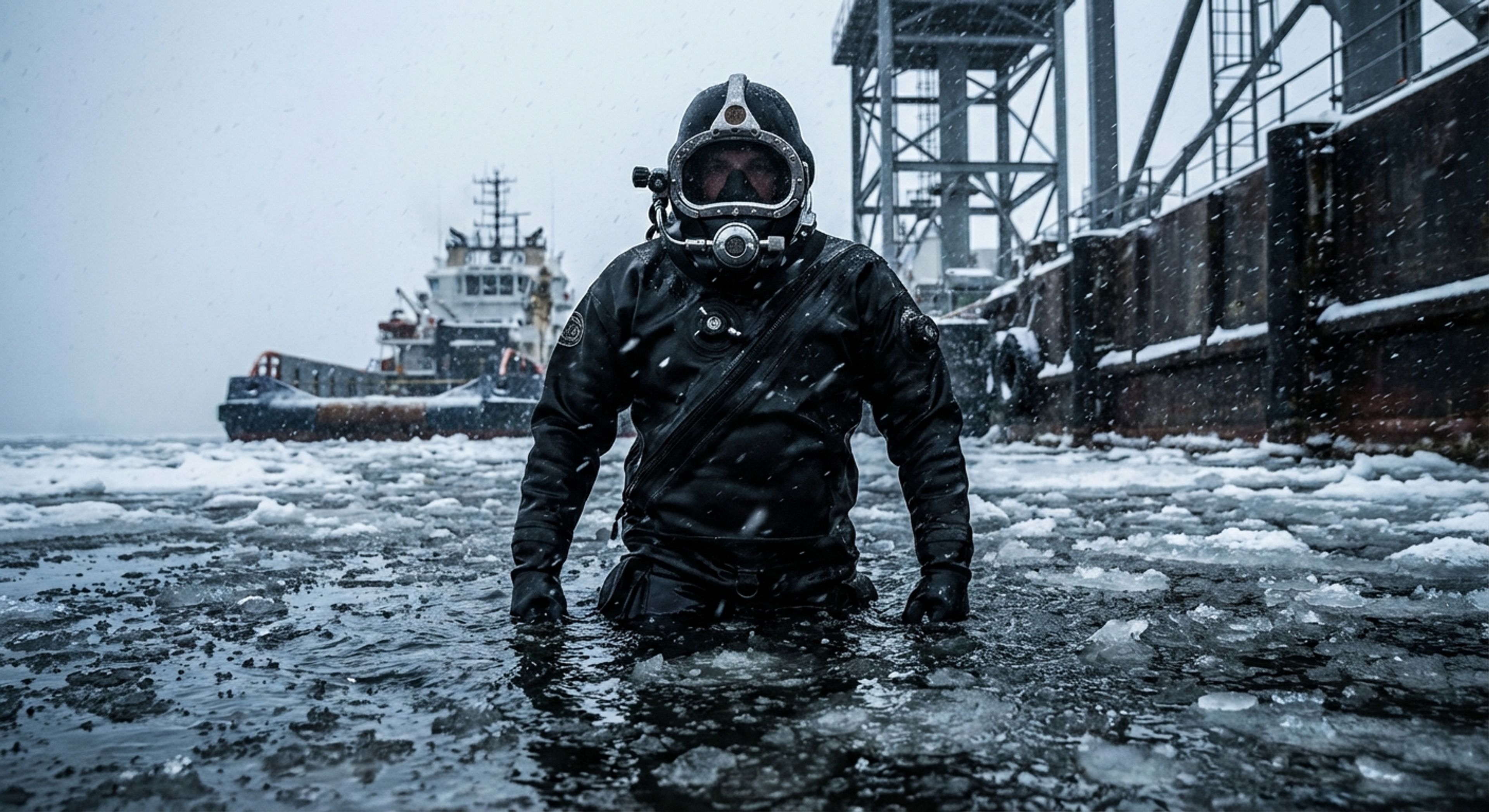
If you are diving in water warmer than 20 degrees Celsius, stop reading. You are just swimming. Go put on your board shorts and look at the pretty colorful fish.
For the rest of us, diving is work. It is an industrial application of human physiology in an environment that wants to kill us. The primary weapon the ocean uses against a diver is not pressure and it is not nitrogen narcosis. It is cold. The cold makes you stupid. It slows your reaction times. It stiffens your fingers so you cannot manipulate your bolt snaps or isolation valves. Eventually, it stops your heart.
I see recreational divers trying to brave 10-degree water in 7mm wetsuits. They call it "brave". I call it a liability. They come up shivering, lips blue, unable to speak clearly. That is not diving. That is surviving a mistake.
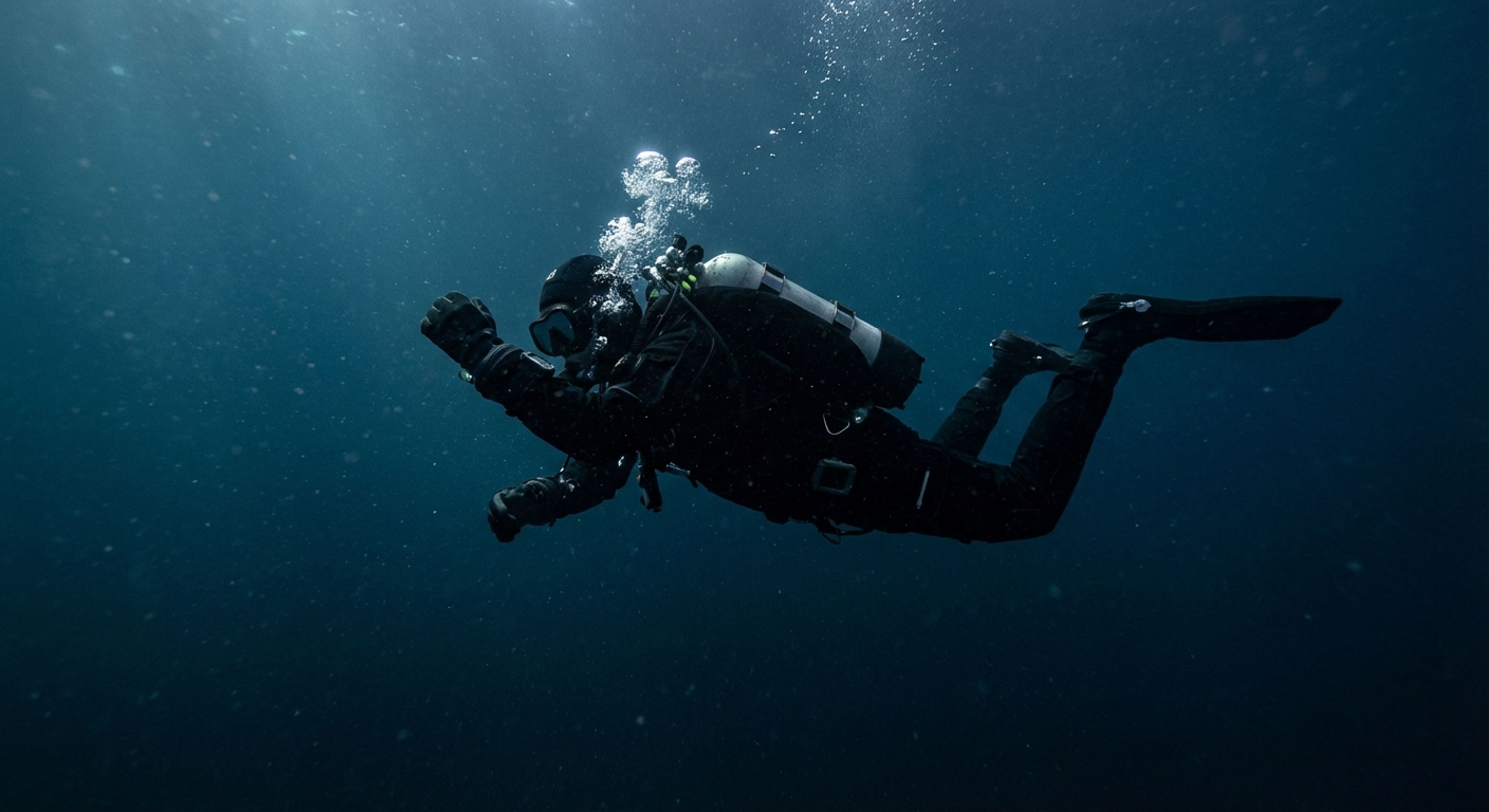
The drysuit is not a luxury. It is a life support system. It is the only barrier between your body's core temperature and the infinite heat sink of the North Atlantic.
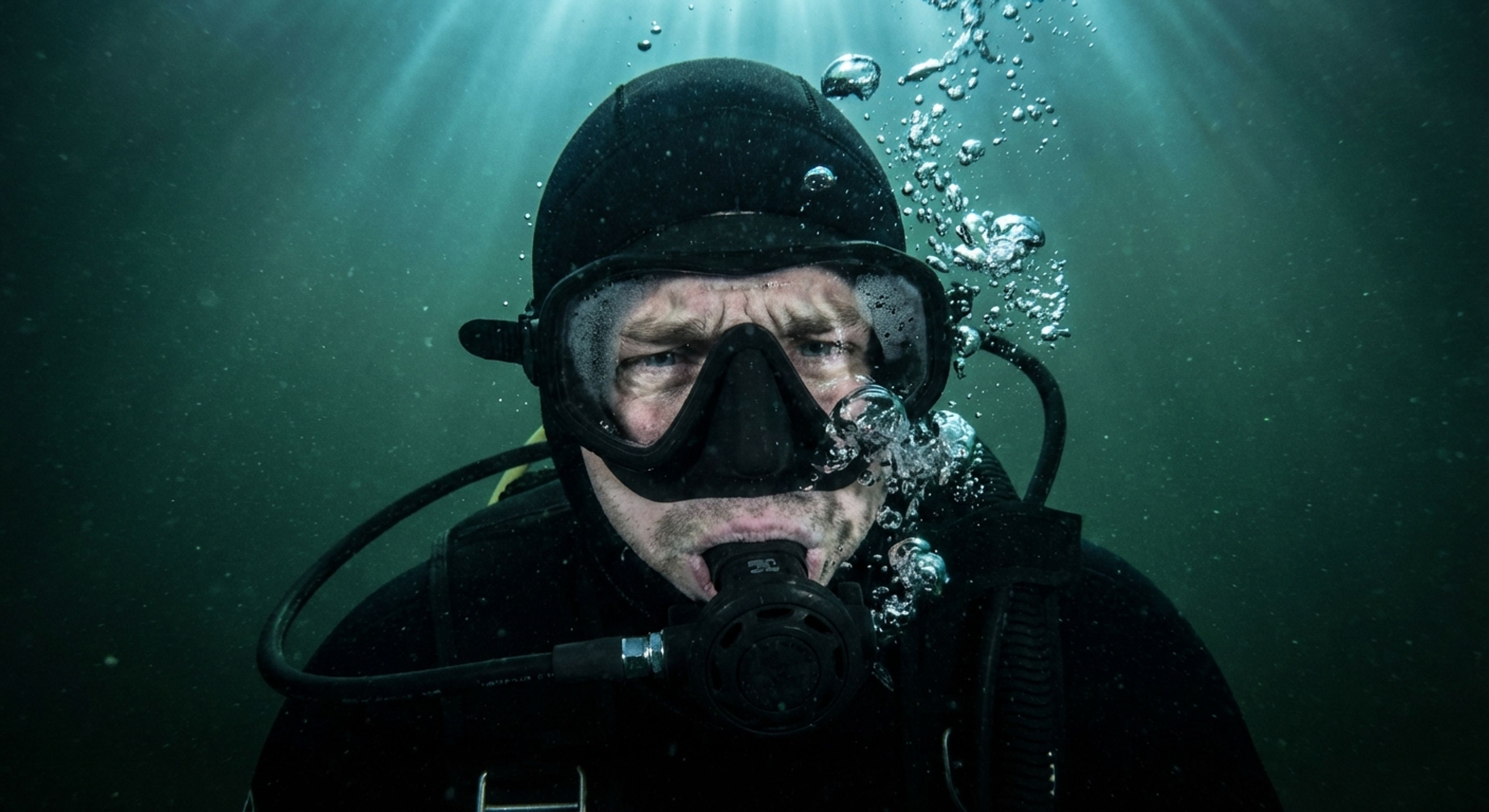
The Physics of Freezing: Water vs. Air
To understand why a wetsuit is garbage for real work, you have to respect thermodynamics. Heat moves. It always moves from hot to cold. Your body is a 37-degree radiator and the ocean is a coolant bath.
A wetsuit works by trapping a thin layer of water against your skin. Your body burns calories to heat that water up. The neoprene foam provides insulation to keep that water warm. But there is a fatal flaw in this design.
Pressure crushes neoprene.
At the surface, your 7mm suit is 7mm thick. At 30 meters depth, that suit is crushed down to maybe 2mm or 3mm. You have lost your insulation exactly when the water gets colder. You are wrapping yourself in a crushed rubber sheet that offers zero thermal protection.
A drysuit operates on a completely different principle. It keeps the water out entirely. The insulation does not come from the suit itself. It comes from the gas trapped inside the suit and the undergarments you wear.
Water conducts heat away from your body 25 times faster than air. That is the number you need to remember. 25 times.
In a drysuit, you are surrounded by a layer of gas. Air. Argon. Whatever you are inflating with. Gas is a terrible conductor of heat. That is good. It creates a thermal break. No matter how deep you go, as long as you can equalize the suit and maintain that gas layer in your undergarments, you retain your warmth. The physics do not change at 100 meters. The suit does not crush and lose efficiency like cheap foam.
The Shell vs. The Insulation
There are two main schools of thought on drysuit materials: Neoprene and Membrane (Trilaminate).
I hate neoprene drysuits. They are heavy. They take days to dry. They still suffer from compression issues at depth which changes your buoyancy characteristics aggressively. They are for sport divers who don't want to buy proper underwear.
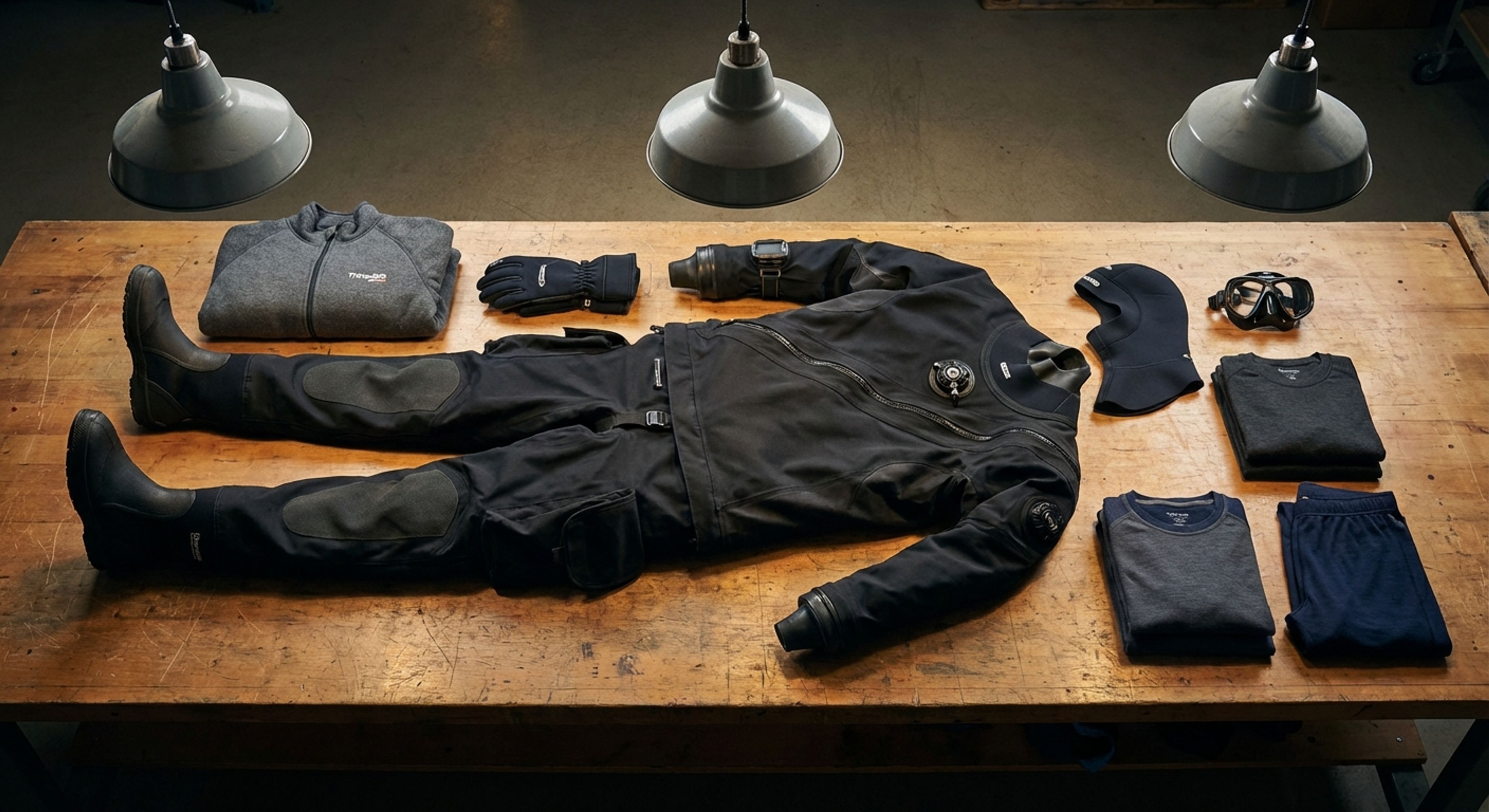
Trilaminate is the standard. It is a thin shell. It has zero inherent insulation. It is just a waterproof bag. This means you can tailor your insulation to the mission.
The Undergarment Strategy
If you buy a $3,000 drysuit and wear a cotton t-shirt underneath, you are an idiot. Cotton kills. When you sweat, cotton gets wet and loses all insulation value. It essentially becomes a cooling towel against your skin.
You need synthetic materials or merino wool. You need loft.
The warmth in a drysuit comes from the air trapped in the fibers of your undergarment. We call this "loft". When the pressure increases, the suit presses against you. You need an undergarment that resists compression. Thinsulate is standard. 200g for moderate water. 400g for the darkness.
Here is the hierarchy of warmth:
- Base Layer: Wicks sweat away from the skin. Merino wool is best. It stays warm even if damp.
- Mid Layer: This is your loft. Fleece or specialized Thinsulate jumpsuits.
- The Shell: The drysuit itself.
I remember a job in the fjords near Trondheim. We were doing welding inspection at 40 meters. The water was 4 degrees. My tender sent me down. I was wearing a heavy 400g halo undergarment. I was down there for 90 minutes. I was bored, but I was not cold. The recreational guy on the boat next to us did a 20-minute bounce dive in a wetsuit and had to be helped out of his gear because his hands stopped working.
Equipment matters.
| Feature | Wetsuit | Drysuit (Trilam) |
|---|---|---|
| Insulation Medium | Water layer | Air/Argon gas layer |
| Depth Performance | Loses warmth (compresses) | Consistent warmth |
| Buoyancy | Changes drastically at depth | Manageable via inflation |
| Comfort | Wet, clammy | Dry, comfortable |
| Cost | Cheap | Expensive investment |
The Bubble: Managing the Beast
Here is why people are scared of drysuits. They are scared of the air bubble.
In a wetsuit, you are neutral. In a drysuit, you are inside a balloon. You inject gas into the suit to stop the "squeeze" (where the suit sucks against your skin like a vacuum seal). This gas moves.
If you are horizontal, the gas is distributed along your back. This is good. This is trim.
If you drop your feet, the air rushes to your shoulders. You vent it. Easy.
The nightmare scenario is when you let your feet get above your head. The air rushes to your feet. Your boots inflate like balloons. You cannot kick down because the air makes your legs positively buoyant. You flip upside down.
We call this the "Polaris Missile". You rocket to the surface feet first. You cannot reach your exhaust valve because it is on your shoulder and you are upside down. You blow your decompression limits. You risk lung expansion injury. You look like a fool.
Preventing the Inverted Ascent
It comes down to core strength and situational awareness.
- Gaiters: Some divers wear gaiters around their calves to limit how much air can enter the boots. It helps.
- Trim: Keep your knees bent. Keep your glutes clenched tight. Do not let your feet float up.
- The Recovery: If you feel air rushing to your feet, you must act instantly. Tuck into a ball. Do a forward somersault. Force the air back to the highest point which will become your shoulders again. Then vent.
If you cannot do a forward roll underwater with gear on, you have no business in a drysuit. Go back to the pool.
Valve Management: The Industrial Interface
Your suit has two valves.
The Inflator: Usually on the center of the chest. It connects to your low-pressure inflator hose. You push the button, gas goes in. You only add enough gas to take the squeeze off and restore the loft of your underwear. Do not use the drysuit as a BCD (Buoyancy Control Device). Use your wing for buoyancy. Use the suit for squeeze. If you try to balance your buoyancy solely with the suit, you will have too much air moving around inside. A large bubble is an unstable bubble.
The Exhaust: Usually on the left shoulder. This is a pressure relief valve. It can be set to "Open" or "Closed" or somewhere in between.
When we are working, we usually leave the valve fully open or backed off just one click. To vent gas, you simply lift your left elbow. The gas finds the highest point and exits. It requires a subtle movement. A twitch of the shoulder.
Novices screw this up. They close the valve tight because they fear leaks. Then they ascend. The gas expands. The valve is closed. They balloon up and rocket to the surface.
Keep the valve open. Trust the check valve design. Water will not come in. Gas will go out.
The Cost of Being Dry
Drysuits are high maintenance. A wetsuit you rinse and hang. A drysuit requires care.
The zipper is the weak point. If you bend the zipper too hard, it breaks. If you don't wax it, it seizes. A broken zipper on a drysuit means the dive is over. You flood. And let me tell you, a flooded drysuit is a catastrophe. You lose all that positive buoyancy from the air. You are suddenly dragging a massive volume of water around. It kills your thermal protection instantly.
The seals (neck and wrist) are made of latex or silicone. They rot. They tear. You need to powder them. You need to trim them to fit your blood flow but not leak. Too tight and you pass out from carotid artery compression. Too loose and you get wet.
But the hassle is worth it.
I remember surfacing after a long deco stop in February. The air temperature was -2 degrees. The wind was howling. I climbed the ladder. My support crew unzipped me. I stepped out of the suit completely dry. I was wearing my wool base layers. I was warm. I drank coffee immediately.
The wetsuit divers were huddled in the cabin, shaking, stripping off wet neoprene, miserable.
That is the difference. One is a professional adapting to the environment. The other is a victim of it.
If you are serious about the ocean, get dry. It is the only redemption you will find in the cold dark.