

Egyptian Red Sea Liveaboards: Best Value BDE Diving
Swap the steep prices of luxury diving for the raw ballet of Egypt's deep waters. Here is why the BDE route offers the best value liveaboard experience on the planet.
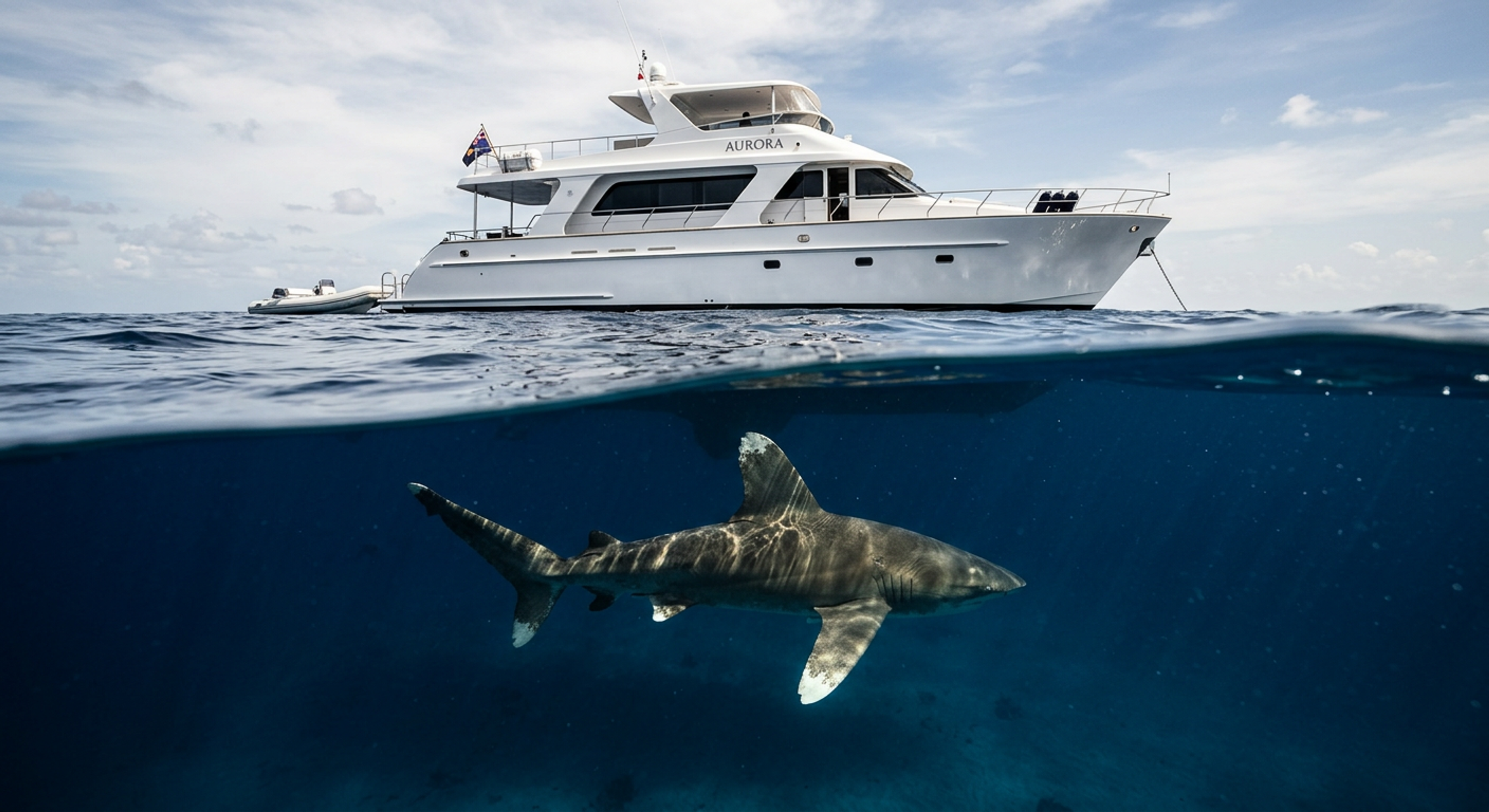
The desert wind off the Egyptian coast feels like a blast furnace. It strips the moisture from your lips the moment you step out onto the teak deck of the liveaboard. Fine, gritty sand gets trapped in the heavy plastic zippers of your wetsuit. The sun is utterly unforgiving on your exposed skin. Then you hear the dive bell ring. You shuffle to the edge, breathe from your primary regulator, and take a giant stride off the dive platform. The water hits you. It is a sudden, shocking embrace of crystalline indigo. The dry, suffocating heat vanishes instantly. You are weightless in water so intensely clear it feels exactly like flying over an alien planet.
As a Cruise Director in the Maldives, I know I am incredibly spoiled. I spend my working days surrounded by plush, polished wood cabins and the gentle giants of Hanifaru Bay. My guests pay a heavy premium for that velvet touch of Indian Ocean luxury. They want warm towels and champagne at sunset. But when my own dive buddies (the gritty, salt-stained divemasters who live for the current) ask me where to go for the sheer density of pelagic action without emptying their bank accounts, I point them straight to the Red Sea. Specifically, I tell them to book the Egyptian BDE route.
The Economics of the Deep Blue
Let me be brutally honest about the dive industry right now. High-end diving has become absurdly expensive. You can easily drop five thousand dollars on a standard week in many remote tropical destinations. Egypt flips that script completely. The Red Sea offers what I consider the highest return on investment in the entire diving world. You get the polish of a well-oiled liveaboard operation for a fraction of what you would pay in the Pacific or my home waters.
Why is it so affordable? The infrastructure is massive. Hundreds of boats run out of Hurghada and Port Ghalib. This intense competition drives the prices down and pushes the standard of hospitality incredibly high. You get fresh mango juice waiting for you after a long, exhausting dive. You get hot towels on the deck. You get dive guides who know the tidal charts and lunar cycles as intimately as I know the incoming channels of the Baa Atoll. Luxury does not always require a second mortgage. Sometimes, it just requires knowing exactly where to look and being willing to fly into the desert.

The BDE Ballet
If you want the true Red Sea experience, you do not stay near the shore. The coastal reefs are heavily trafficked. You need to head out into the middle of the sea. The classic BDE route (Brothers, Daedalus, Elphinstone) is a strict rite of passage for serious divers. These three offshore marine parks sit right in the path of sweeping, unbroken ocean currents. They are magnets for marine life.
Be warned that this route is not for beginners. Egyptian law mandates a minimum of fifty logged dives for these specific offshore marine parks, and for good reason. The currents here do not care about your comfort.
The journey out to the marine parks usually begins in the late afternoon. The boat leaves the dusty coastline behind and steams east into the darkening sea. That first night crossing can be exceptionally rough. The Red Sea is notorious for a short, sharp chop that rattles the cabin doors, spills your water glass, and tests the strongest sea legs. But you wake up to the sound of the engines throttling down. You smell the rich scent of dark roasted espresso drifting from the galley. You look out the porthole and see nothing but endless blue water and a single, isolated lighthouse standing on a tiny patch of rock. You have arrived.
The Brothers Islands
Big Brother and Little Brother are just tiny slivers of rock piercing the surface. Below the waterline, they are plunging walls adorned with brilliant soft corals. I have a deep appreciation for the wrecks here. The Numidia (a massive cargo ship that struck the reef in 1901) and the Aida cling to the sheer vertical faces of Big Brother. Diving them feels like a controlled freefall. You drift past the twisted metal structures. The wood decks rotted away decades ago. Now, the steel ribs are entirely overgrown with purple and orange alcyonarian corals. You glide through the skeletal remains while keeping one eye focused on the blue void for passing thresher sharks.
Little Brother is a much smaller formation, but it packs a remarkably heavy punch. The current splits violently at the northern tip. This creates a high-energy zone where hunting giant trevally and grey reef sharks congregate. Dropping into this split requires flawless negative entry techniques. You smell the pungent exhaust of the zodiac outboard motor. The boatman screams "Go!" and you empty your BCD, roll backward, and kick hard for the reef wall while tasting the unburnt fuel mixed with salt spray. There is no surface loitering. If you delay your descent, the current sweeps you into the blue, and your dive is over before it even begins.
I absolutely love this raw, kinetic energy. In the Maldives, we read the lunar calendar to predict the incoming tides for our channel dives. Here, the ocean moves with a constant, unyielding force that strips away your ego. It forces you to be a better diver. You learn to tuck in close to the coral. You use the micro-eddies to conserve your air. You watch the pelagic ballet unfold just an arm's length away.
Daedalus Reef
A hundred kilometers south of the Brothers lies Daedalus. It is famous for a striking lighthouse built by the British in the 1860s and a resident population of scalloped hammerheads. You roll backward off the zodiac at dawn. The water is a deep, moody twilight blue. You drop straight to thirty meters and wait.
This is where your buoyancy control is tested. You must hover in the blue, away from the reef wall, but close enough to swim back if the current shifts. If the conditions are right, the hammerheads appear from the gloom. It is a slow and deliberate movement. They weave back and forth on the edge of your vision. You hold your breath unconsciously. You do not want the loud, rumbling sound of your exhaled bubbles to break the spell. Seeing a school of fifty scalloped hammerheads silhouetted against the morning sun is a sight that permanently alters your brain chemistry.
Safety is paramount here. Every diver must carry a Surface Marker Buoy (SMB). If you get separated from the group in the blue, that inflatable orange tube is your only lifeline to the zodiacs waiting on the churning surface above.

Elphinstone Reef
Elphinstone is a cigar-shaped reef famous for aggressive, high-speed drifts. You drop in at the north plateau, sink fast, and let the ocean take you. The sheer speed of the water movement here is thrilling. It is a nutrient superhighway that feeds everything in its path.
Down at the southern tip, the reef drops down to a deep, jagged plateau. Below fifty meters, there is a famous archway carved through the living rock. Technical divers with heavy twinsets and trimix cylinders drift down into that darkness, but even recreational divers hovering safely at twenty-five meters feel the immense scale of the drop-off. The reef wall just vanishes into a black void. Staring down into that abyss gives you a distinct, dizzying sense of vertigo. It is a heavy reminder of the sheer volume of water moving through this sea.
The Ruler of the Open Water
You simply cannot talk about the BDE route without talking about Carcharhinus longimanus. The oceanic whitetip shark is the undisputed ruler of these offshore reefs. They are not like the shy, skittish blacktip reef sharks of the shallow lagoons. They are inquisitive. They are bold. They own the top ten meters of the water column.
I remember a late afternoon dive at Elphinstone a few years ago. We were hanging in the blue water at five meters doing our mandatory safety stop. The surface was choppy above us. Out of the corner of my eye, I saw the distinctive oversized, white-mottled pectoral fins. An oceanic whitetip circled our group. She did not dart away when we turned to look at her. She closed the distance with a smooth, terrifying grace.
Diving with longimanus requires strict protocol. You stay vertical in the water column to look larger. You keep your hands folded tightly against your chest. You maintain unbroken eye contact. You never, ever swim away rapidly.
She came within an arm's reach of my mask. Her eye was a cold, calculating black disk. It was not a mindless, empty gaze. She was actively evaluating us, processing our electrical signals, deciding if we were injured prey or clumsy apex predators. There is a specific kind of freezing adrenaline that floods your veins when a predator of that caliber looks right through you. It is entirely humbling. It reminds you exactly where you stand in the food chain.

A Riot of Color in the Deep
Between the high-voltage shark encounters, the reef itself demands your absolute attention. The high salinity of the Red Sea creates visibility that often exceeds forty meters. This water clarity acts like a massive magnifying glass for the coral structures.
The vertical walls of Daedalus and the Brothers are dripping with Dendronephthya soft corals. I am used to the massive, ancient hard coral gardens of the Indian Ocean, but the sheer volume of soft, swaying pinks, reds, and purples in Egypt is astonishing. When the tidal current picks up, these corals inflate with seawater. They bloom into a dense, vibrant forest. Thousands of tiny anthias dart in and out of the branches in erratic orange clouds, snapping at microscopic plankton. It is a complete visual overload that makes your eyes ache in the best possible way.

Weighing the Value
To truly understand why I send my most demanding dive friends to Egypt, you have to look at the numbers. Let us compare a typical high-end liveaboard in my home waters of the Maldives with a similar class vessel running the BDE route in the Red Sea. Both offer exceptional service, comfortable air-conditioned cabins, spacious dive decks, and full nitrox capabilities. But the difference in your out-of-pocket expense is massive.
| Feature | Egyptian Red Sea (BDE) | Maldives (Central Atolls) |
|---|---|---|
| Average Cost (7 Nights) | $1,200 to $1,800 USD | $2,500 to $4,000 USD |
| Required Experience | 50 Logged Dives (Advanced) | Open Water (varies by route) |
| Primary Attractions | Oceanic Whitetips, Hammerheads, Soft Corals, Deep Wrecks | Manta Rays, Whale Sharks, Channel Drifts |
| Water Temperature | 22°C to 29°C (seasonal variations) | 28°C to 30°C (year-round) |
| Visibility | 30 to 40+ meters | 15 to 30 meters |
| Dive Style | Deep walls, blue water hangs, negative entries | Channel dives, shallow cleaning stations, reef hooks |
| Best Season for Pelagics | September to November | August to November |
You are getting world-class, heart-pounding pelagic diving for less than half the price of a standard tropical holiday.
The only real catch is the water temperature. In the Maldives, I dive in a thin Lycra rash guard. In the Red Sea during November, the wind chill on the zodiac ride back to the mothership will have you shivering violently. Your teeth will chatter. You need a premium five-millimeter wetsuit with a built-in hood, and you absolutely need a heavy, fleece-lined windbreaker waiting for you on the boat. The salt dries instantly on your skin in the desert wind, leaving a tight, itchy crust on your face. But that mild physical discomfort is a very small price to pay for the spectacular show happening below the surface.
There is a unique, addictive rhythm to a Red Sea liveaboard. You wake up in the pitch dark. You drink a shot of dark espresso. You pull on a cold, damp wetsuit. You jump into the churning sea while the sun is still just a bloody red smudge on the eastern horizon. You spend the entire day tracing the edges of sheer vertical walls. You smell the distinct, rubbery scent of drying neoprene baking on the top deck in the afternoon. You watch the desert stars emerge over an empty ocean, miles away from the distracting lights of the coast.
The BDE route forces you to pay absolute attention to the ocean. The currents are wild and unpredictable. The sharks demand your utmost respect. The drop-offs plunge into an abyss that swallows the light entirely. It is an environment that commands your total focus, offering up the most striking marine encounters available today without demanding a small fortune in return. Pack your SMB, bring a thick wetsuit, and prepare for the current. The deep walls are waiting for you.