

Stop Buying Heavy Gear First! Listen to Tatay Santiago
You just got your Open Water card and now you want to buy a Titanium regulator? Susmaryosep. Sit down and listen to what you actually need to buy first before you waste your money.
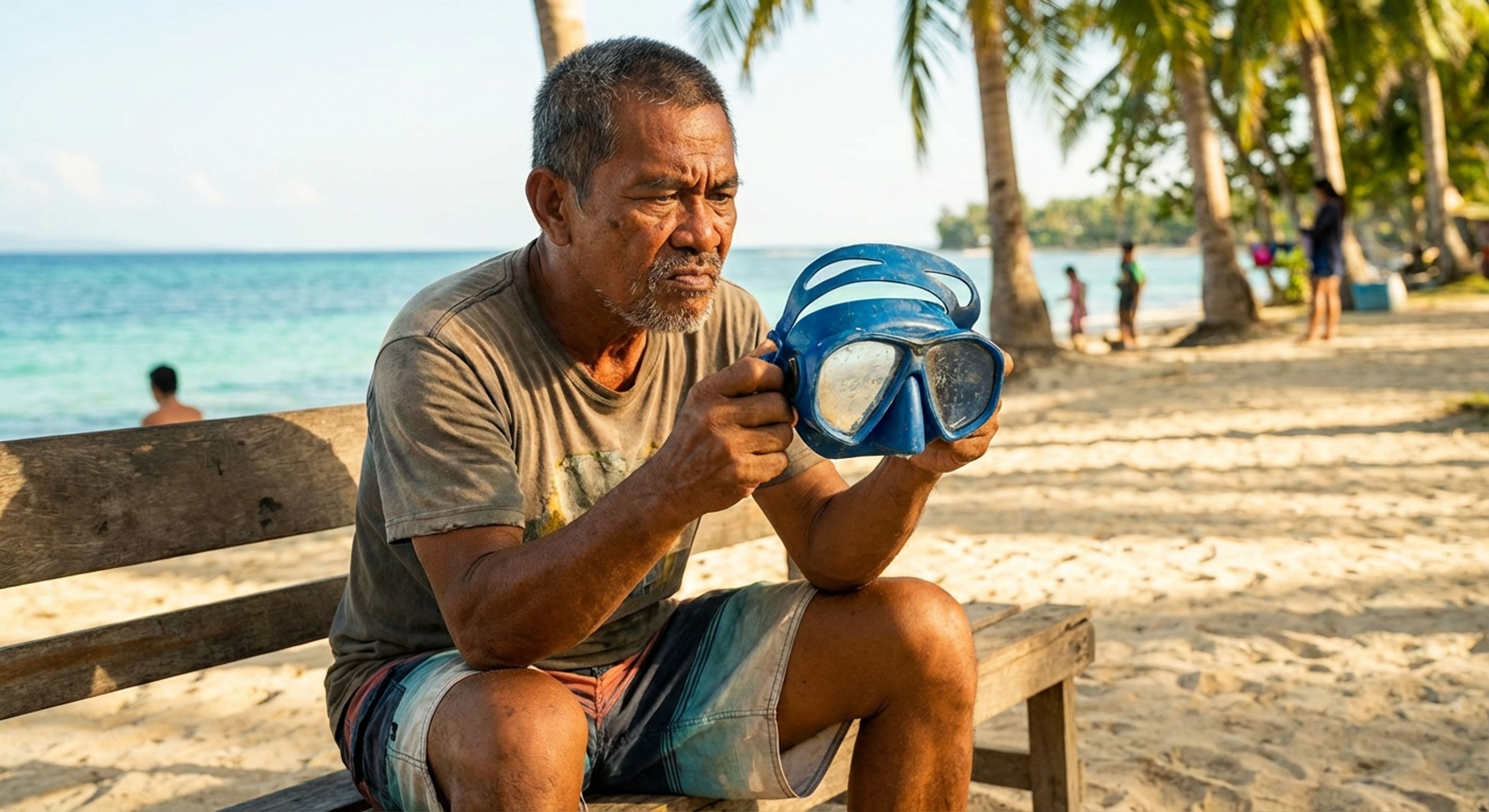
Hay naku. Every week I see them on the boat here in Anilao. New divers. Fresh Open Water students. They come from the city with the shiny boxes and the smell of expensive cologne.
Last week, I had this boy from Manila. Let's call him Jun-Jun. He walks onto the banca boat like he owns the Verde Island Passage. He has a brand new BCD, a heavy wing style meant for technical diving deep in caves. He has a regulator that costs more than my kitchen renovation. He looks like a Navy SEAL commando.
But then we jump in.
Five minutes later, we are at 12 meters near Sombrero Island. Is he enjoying the coral? No. He is panicking. Why? Because he is using a cheap rental mask that does not fit his face. It fills with water. He cannot see. He breathes water through his nose. He shoots to the surface like a cork, very dangerous! Lung overexpansion injury waiting to happen.
All that expensive gear on his back, 100,000 pesos worth of equipment, but he failed the dive because he did not buy the basics.
Listen to Tatay Santiago. I have been diving these waters since before you were born. We didn't have fancy computers then, just a Seiko watch and a prayer. But today is different. You want to buy gear? Good. But do not be stupid. Do not buy the heavy metal first.
Here is the list. Follow it, or don't blame me when you have a bad dive.
1. The Mask: Your Window to the World (And Hygiene!)
This is number one. Absolutely number one.
If you cannot see, you cannot dive. It is that simple. When you are blind underwater, stress goes up. When stress goes up, you breathe fast. When you breathe fast, you run out of air or you bolt to the surface. It is a safety chain reaction.
And let us talk about the "yuck" factor.
When you rent a mask, do you know where it has been? I will tell you. In the rinse bucket. That bucket is not water. It is "soup." It is 50% water, 30% spit, and 20% snot from the last fifty divers who used it.
Sus! You put that on your face? Near your eyes? Near your nose?
Every diver spits in their mask to stop the fog. I spit in my mask. But it is my spit. When you rent, you are rubbing a stranger's saliva on your eyeballs. Maybe they had a cold. Maybe they ate garlic. Maybe they have pink eye.
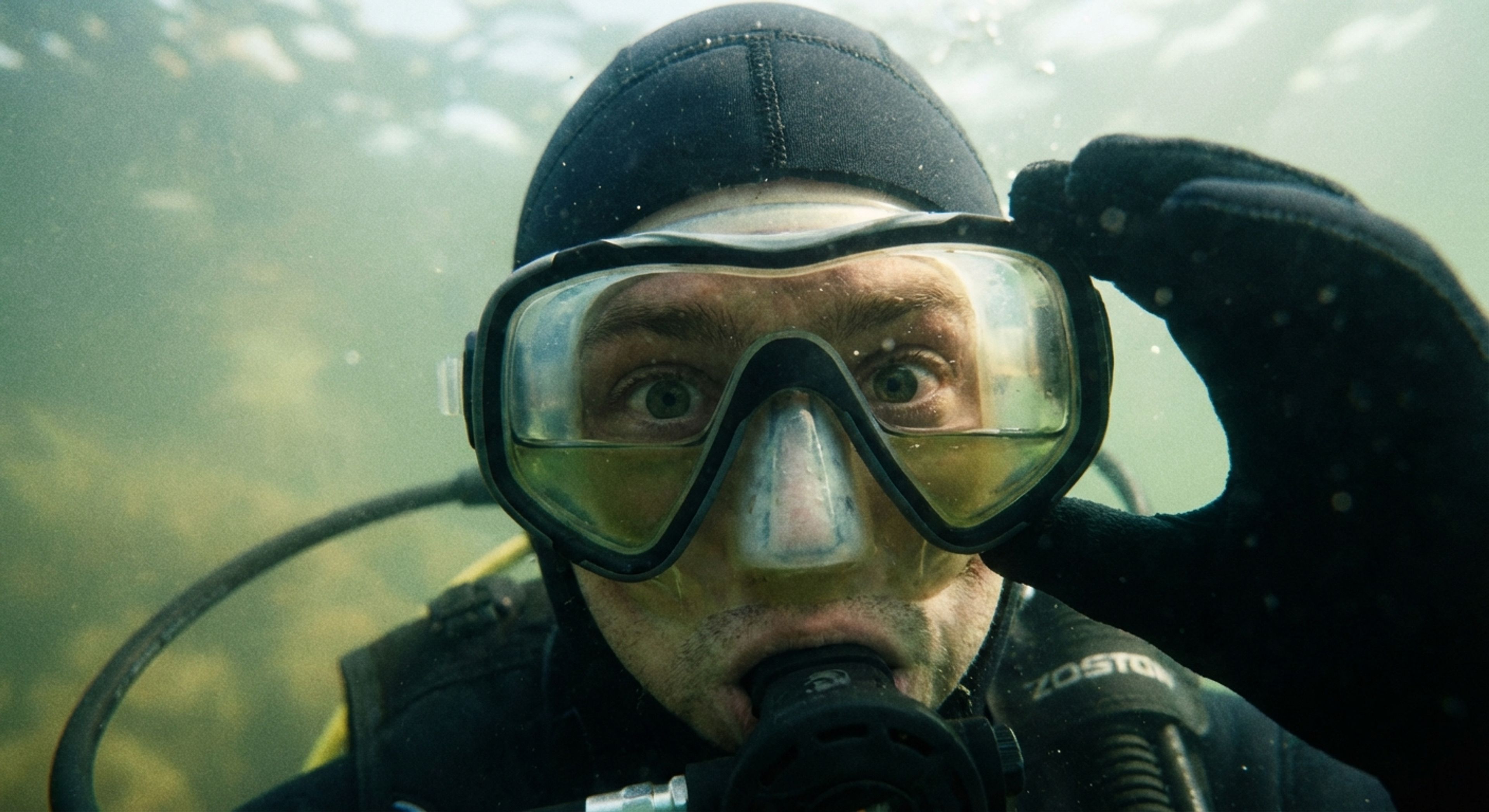
Also, the fit. Everyone has a different face. Some have big Filipino noses. Some have wide cheeks. Rental masks are made to fit "average" people. No one is average.
Santiago's Tip for New Masks: When you buy your mask, there is a chemical layer on the glass from the factory. If you dive with it immediately, it will fog no matter how much you spit. You must scrub the inside of the glass with toothpaste, the white gritty kind, not the gel. Scrub it hard with your finger, rinse, and do it again. Do this three times. The shop guys forget to tell you this, and then you blame the mask.
The Fit Test: Go to the shop. Do not buy online! Put the mask on your face without the strap. Look up slightly. Suck in through your nose gently. Stop inhaling. If the mask stays on your face and seals tight, it is good. If air leaks in, throw it away. Buy black silicone, not clear. Clear silicone turns yellow like old teeth after one year in the sun, and it lets in too much glare.
2. The Dive Computer: Your Life Insurance
I hate these beeping Tamagotchis. Back in the day, we used the US Navy Tables. We used our brains. We knew our depth limits.
But you? You young divers rely on the Dive Master for everything.
"Tatay Santiago, how deep are we?" "Tatay Santiago, how much time left?"
What happens if the current separates us? What happens if you get lost looking at a turtle?
If you do not have a computer, you are flying blind. You do not know your nitrogen limit. You do not know if you are about to get decompression sickness (the bends).
Rental computers are garbage. Usually, the shop gives you one that is hard to read, or the battery is blinking low, or the buttons are so stiff you need a hammer to press them. Sometimes they don't even have rental computers! They just tell you "Follow the guide."
Never follow the guide blindly.
This is a critical safety rule. I might be deeper than you. I might have a different tissue loading because I have been diving every day for three weeks and you just arrived. My computer says I am safe, but your body is different. If you follow my profile exactly, maybe I am fine, but you end up in the recompression chamber.
Buy a simple computer. You don't need the one that connects to your iPhone and orders pizza. Just get one with big numbers.
- Current Depth
- Dive Time
- NDL (No Decompression Limit) - The most important number!
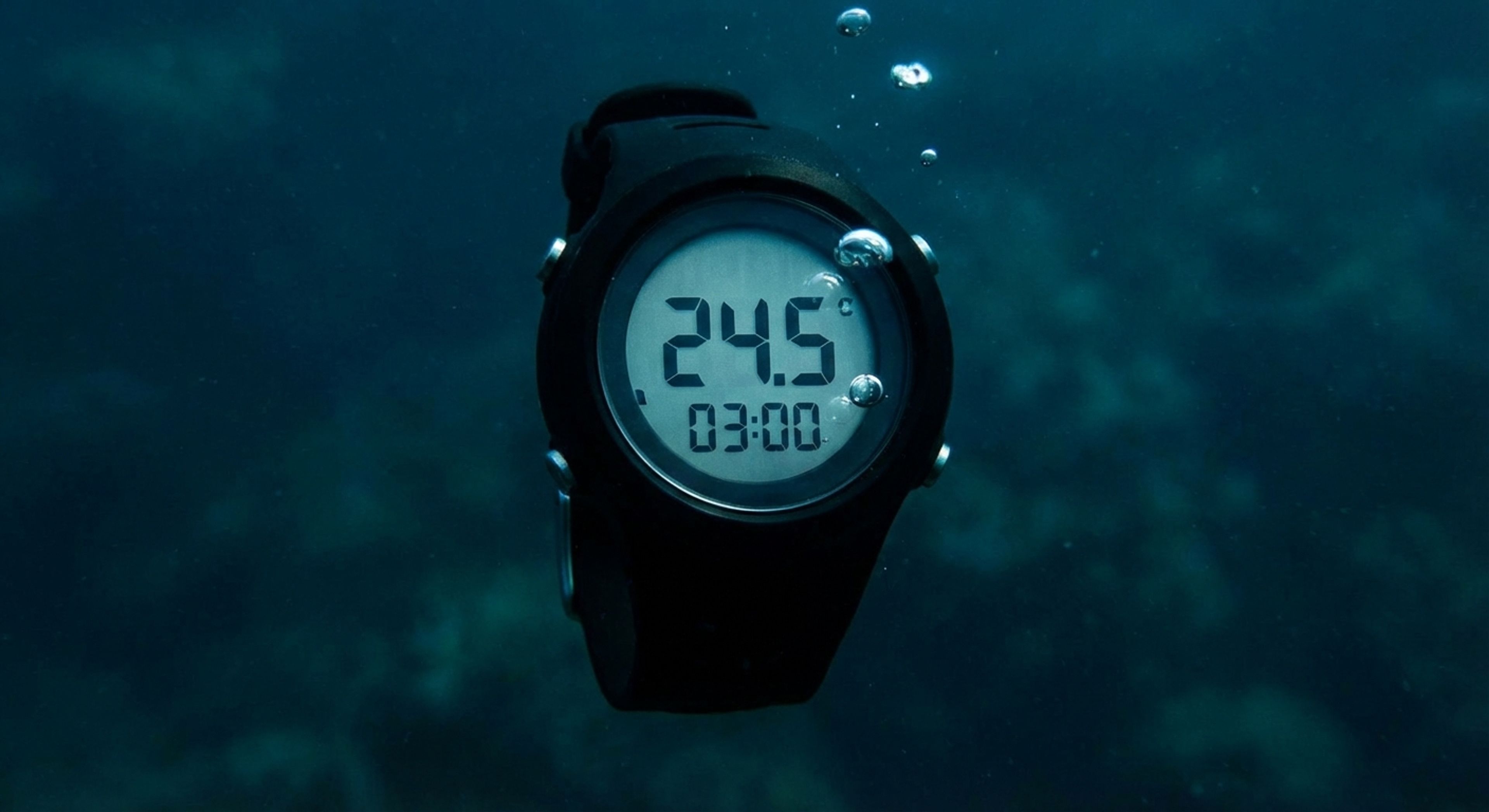
Owning your computer means you know how to use it. You know what the beeps mean. You are responsible for your own safety. This makes you a real diver, not just a tourist.
3. The Fins: Your Engine against the Current
Okay, now you can see, and you know you won't die from the bends. Now you need to move.
Rental fins are usually terrible. They are made of cheap plastic. They are stiff as a board or floppy like a dead fish. They give you cramps in your calves.
And the boots! Hay naku. Wearing rental booties is like wearing someone else's gym socks after a marathon. Fungus. Athlete's foot. It's disgusting. Buy your own boots (5mm because rocks are sharp) and your own fins.
But listen to me closely. Do NOT buy those "split fins."
You know the ones? They look like a fish tail cut in half. The salesman will tell you, "Oh, it's so easy, no effort!"
Yes, no effort means no power!
Here in the Philippines, especially in Batangas or Puerto Galera, the current is tricky. The water moves. We have the "washing machine" currents. If you have those lazy split fins and the current hits you, you are going backwards. You will drift all the way to Malaysia.
You need a solid paddle fin. Something with backbone. You need to be able to do a frog kick (which you should learn, stop kicking the coral with your flutter kick!). You need to be able to kick against the ocean. The ocean is strong. You must be stronger.
4. The Wetsuit: The "Pee" Factor
I will tell you a secret. Everyone pees in their wetsuit.
There are two types of divers: those who pee in their wetsuit, and those who lie about it.
When you are cold, your body wants to pee. It is natural. It is called immersion diuresis. The water pressure squeezes your legs, blood goes to your chest, kidneys work harder.
Now, think about the rental wetsuit rack at the dive shop. That neoprene has soaked up the urine of a thousand strangers. The dive shop rinses it, yes. But do they sterilize it? No.
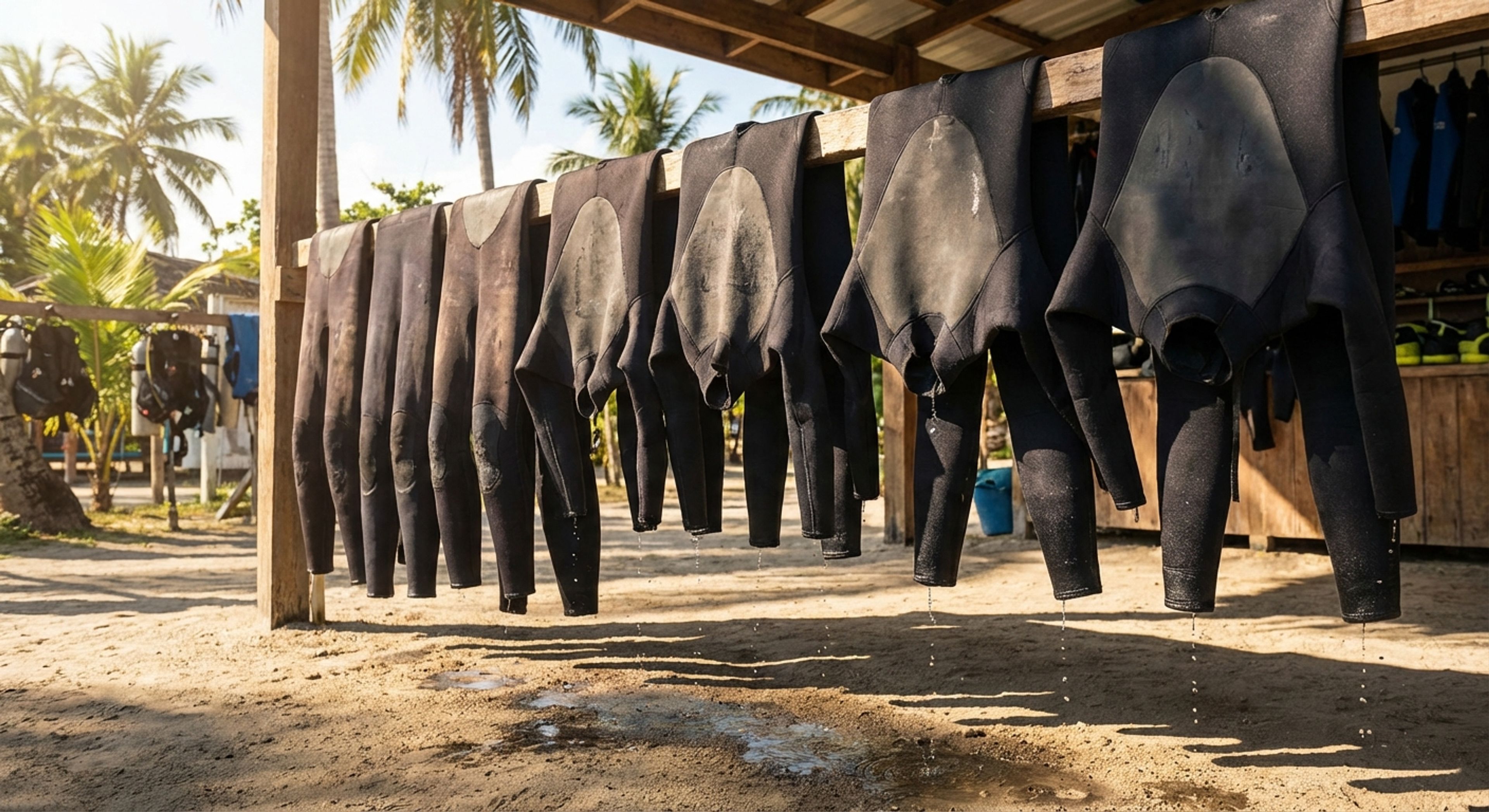
Also, rental suits never fit. The neoprene is old and compressed. A rental "Medium" is usually a "Large" that has been stretched out by fat tourists.
If the suit is loose, water flushes in and out. The warm water leaves, the cold water enters. You freeze. When you are cold, you breathe faster. You use more air. The dive ends early for everyone because you are shivering.
If the suit is too tight, you cannot breathe. You get claustrophobic.
Buy a 3mm full suit. Why full suit? Not just for cold. For the jelly-fish larvae. The stinging hydroids. The fire coral. Protect your skin. It fits your body. It keeps you warm. And it only has your own pee in it.
The Comparison: Why You Buy The Small Stuff First
Look at this table. I made it simple because I know you don't like to read manuals.
| Gear Item | Hygiene Problem? | Safety Critical? | Travel Friendly? | Santiago's Verdict |
|---|---|---|---|---|
| Mask | HIGH (Spit/Snot) | HIGH (Vision/Panic prevention) | Very Easy | BUY FIRST |
| Computer | Low | CRITICAL (Avoid the Bends) | Very Easy | BUY SECOND |
| Fins & Boots | Medium (Fungus) | High (Current management) | Medium | BUY THIRD |
| Wetsuit | HIGH (Urine) | Medium (Warmth/Protection) | Medium | BUY FOURTH |
| Regulator | Medium (Mouthpiece) | High | Heavy/Hard | RENT IT |
| BCD | Low | Medium | Very Heavy | RENT IT |
Why Not the Regulator and BCD?
"But Tatay," you say, "I want to look cool! I want the full set like the Instructor!"
Shut up.
A Regulator and BCD (Buoyancy Control Device) are heavy. Together, they can weigh 5 to 7 kilos. Have you seen the baggage fees for Cebu Pacific or AirAsia lately? You will pay more for your bag than your seat.
Also, these things are machines. They break. They have O-rings, hoses, inflators. They need service every year or two years. Service costs money. If you only dive once a year on vacation, the internal parts dry out and rot.
When you rent a Reg and BCD, the shop has to maintain it. If it leaks, or if the inflator button gets stuck (which happens with sandy rental gear), you give it back and say, "Give me another one." It is their problem, not yours.
Unless you are diving 20, 30 times a year, or you are rich and have a personal sherpa to carry your bag, just rent the heavy gear.
The Only Exception: The Mouthpiece
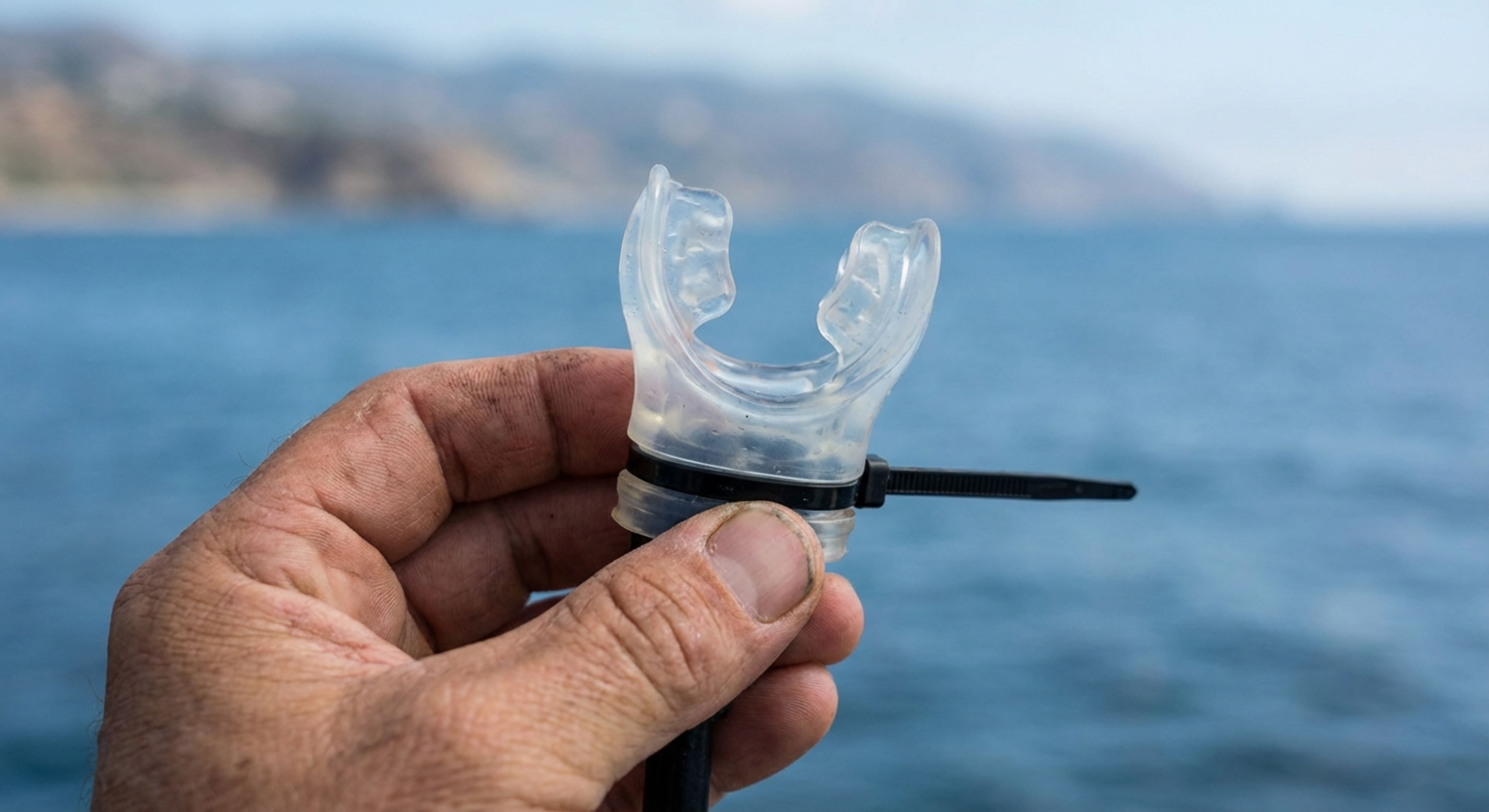
Buy your own mouthpiece for the regulator. It costs maybe 500 pesos. Keep it in your pocket. When you rent a regulator, ask the boat crew for a zip-tie and put your own mouthpiece on it. That way you don't chew on plastic that has been in 500 other mouths.
My Final Advice
Diving is not a fashion show. The fish do not care if your fins match your mask. The turtle does not care if your BCD is brand new.
Diving is about being underwater and coming back up alive.
Start with the mask. It changes everything. When you are comfortable, when you can see clearly without saltwater stinging your eyes, you relax. When you relax, your buoyancy gets better. You stop kicking the reef. You see more.
Don't be that guy on the boat with the 50,000 peso computer and the titanium regulator who has to abort the dive because his leg is cramping from a cheap rental fin.
Be smart. Spend money on comfort and safety first.
Now, go wash your gear properly. Not in the soup bucket! Rinse it with fresh water and dry it in the shade.
Hay naku, kids these days.