
Silence Within the Noise: How Apnea Improves Your Scuba
The regulator is not your lung. The tank is not your breath. Learn how the stillness of freediving can transform your scuba diving into a meditation of efficiency and grace.
You descend. I hear you before I see you.
Hiss. Bubble. Hiss. Bubble.
The rhythm of the machine.
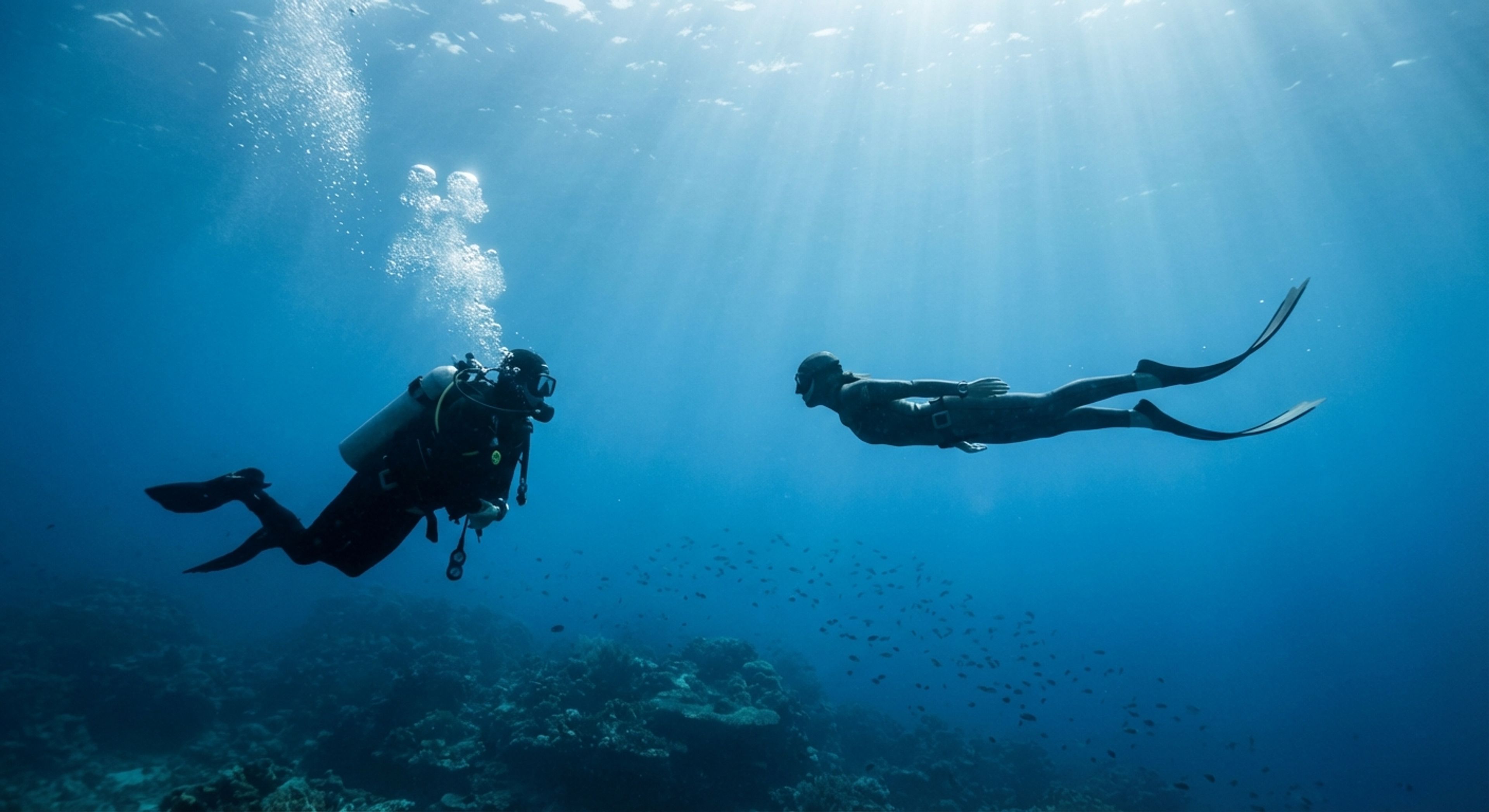
In Okinawa, the water is clear enough to see the soul of a diver. I watch scuba divers often. They look like astronauts. Heavy. Cluttered. Surrounded by hoses and metal. They fight the water. They kick hard. Their hands wave around. They consume air like a fire consumes wood.
I am a freediver. I wear only a wetsuit, a mask, long fins. I have one breath. That breath is a gift.
Many scuba divers ask me: "Hiroshi, how do you stay down so long? Why are you so calm?"
They think these are two different worlds. They are wrong. The ocean is one.
If you dive with a tank, you should learn the way of the empty lung. Practicing apnea, or freediving, will not just make you a better swimmer. It will change how you touch the sea. It will double your bottom time. It will make you silent.
The Heavy Lung vs. The True Lung
Scuba divers trust the regulator. They bite down on the rubber mouthpiece. They suck air in. They blow air out. It is mechanical.
Because the air is unlimited (until it is not), you breathe without thinking. Often, you breathe with your chest. Short, shallow breaths. This is the breath of stress. This is the breath of the office worker running for a train.
When you breathe with the chest, you use the intercostal muscles. It costs energy. It keeps the heart rate high. Your tank pressure gauge drops fast. You look at it. You worry. You breathe faster. The needle drops faster.
It is a circle of waste.
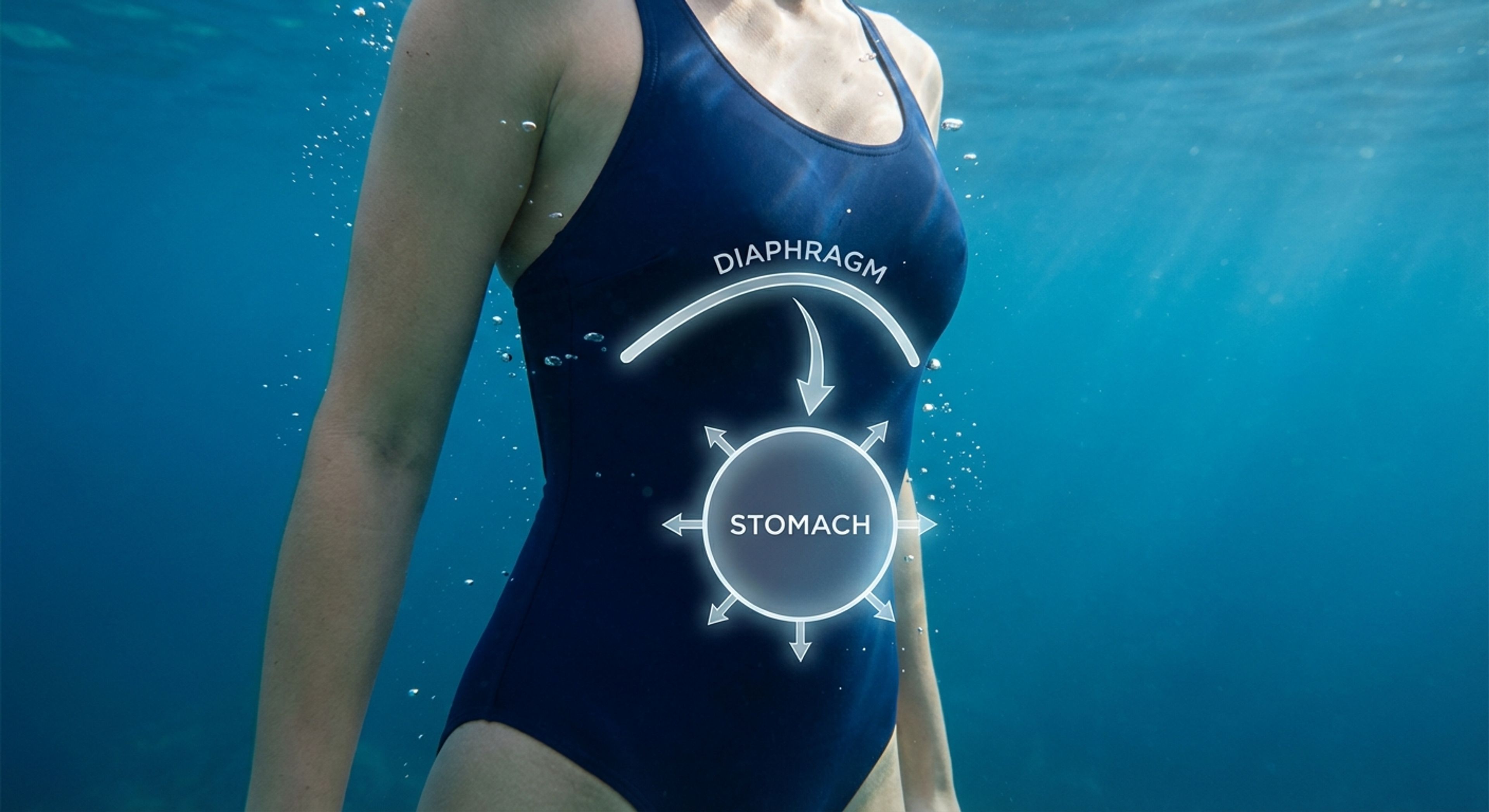
In freediving, we use the diaphragm.
This is the muscle of peace. It sits below the lungs. When we breathe in, the belly expands. The chest does not move. The shoulders do not rise.
Try this now. Sit. Put a hand on your stomach. Breathe in. Push your hand out with your belly. Breathe out. Let the hand fall.
This is how a baby breathes. This is how the ocean swells.
When a scuba diver learns this diaphragmatic breathing, magic happens.
- Gas Exchange: You pull air deep into the bottom of the lungs. This is where the blood is waiting. You get more oxygen with less effort.
- Calm Heart: This movement signals the vagus nerve. It tells the brain: "We are safe." The heart slows down.
- Consumption: Your SAC rate (Surface Air Consumption) improves. You stop being the guy who has to surface after 30 minutes. You stay for 60. You see more fish.
To Be Water, Not Stone
I watch the posture of tank divers. Many are vertical. Like seahorses.
They have too much weight on the belt. Their BCD is inflated. Their feet are down. They kick, and the water pushes them up, but they want to go forward. It is a fight.
Freediving is the art of streamlining. We call it hydrodynamics. We must be an arrow. If we are not an arrow, the water stops us. We run out of oxygen.
We learn to tuck the chin. We learn to keep the fins in the shadow of the body. We glide.
When you bring this to scuba, you stop swimming with your hands. Please. Stop swimming with your hands. It scares the fish. It wastes energy.
A freediver learns "finning awareness." You feel the water on the blade. You do not kick fast. You kick long. Slow. Power comes from the hip, not the knee.
When you move like this with a tank, you disturb nothing. The sand does not rise. The visibility stays clear. You look elegant. You look like you belong here.
The Mental Game: Embracing the CO2
In the deep, panic is the enemy.
For a scuba diver, panic usually comes from over-exertion. You swim against a current. You breathe hard. The regulator cannot give you air fast enough. You feel you are suffocating. You bolt to the surface. This is dangerous.
This feeling is not a lack of oxygen. It is CO2 buildup.
Freedivers know this feeling intimately. We train for it. We call it the "urge to breathe." It is warm. It is uncomfortable. But it is not a command. It is a suggestion.
Training in apnea teaches you to tolerate high CO2. You learn that discomfort is just a sensation. You do not have to react.
Imagine you are at 30 meters with a tank. A current hits you. Your heart starts to beat fast.
- The Old You: Panics. Sucks air. Hyperventilates.
- The Freediver You: Recognizes the feeling. "Hello, CO2." You stop kicking. You focus on the diaphragm. You take one slow, long exhale. You regain control.
The mind becomes still.
Comparison of Mindsets
Here is how the mind changes when you learn to hold your breath.
| Feature | Typical Scuba Diver | Scuba Diver with Apnea Training |
|---|---|---|
| Breathing | Chest / Shallow / Rhythmic | Diaphragm / Deep / Slow |
| Reaction to Stress | "I need more air immediately" | "I need to slow down and exhale" |
| Movement | Constant adjustments, hand usage | Gliding, heavy reliance on trim |
| Awareness | Focused on gear and gauge | Focused on sensation and surroundings |
| Air Consumption | High (The "Gas Guzzler") | Low (The "Zen Master") |
A Warning Written in Nitrogen
I must speak of safety. The ocean gives, but she takes.
You must understand the physics.
When you scuba dive, you breathe compressed air. Nitrogen dissolves into your tissues. Like sugar in hot tea. Your blood becomes heavy with gas.
When you freedive, you hold your breath. You go down fast. You come up fast.
Never freedive after scuba diving.
This is the golden rule. It is not a suggestion. It is life.
If you have nitrogen in your blood from a tank dive, and then you hold your breath and descend again, the pressure compresses those micro-bubbles. They become small enough to pass through filters in the lungs. They enter the arteries.
Then you ascend. The pressure drops. The bubbles expand. Massive expansion.
This is Decompression Sickness (DCS). The Bends.
It causes paralysis. It causes death. It causes a pain in the joints that feels like screaming.
The Safety Interval
You must respect the time.
- After one tank dive: Wait at least 12 hours before freediving.
- After two tank dives: Wait at least 18 hours.
- Better: Wait 24 hours.
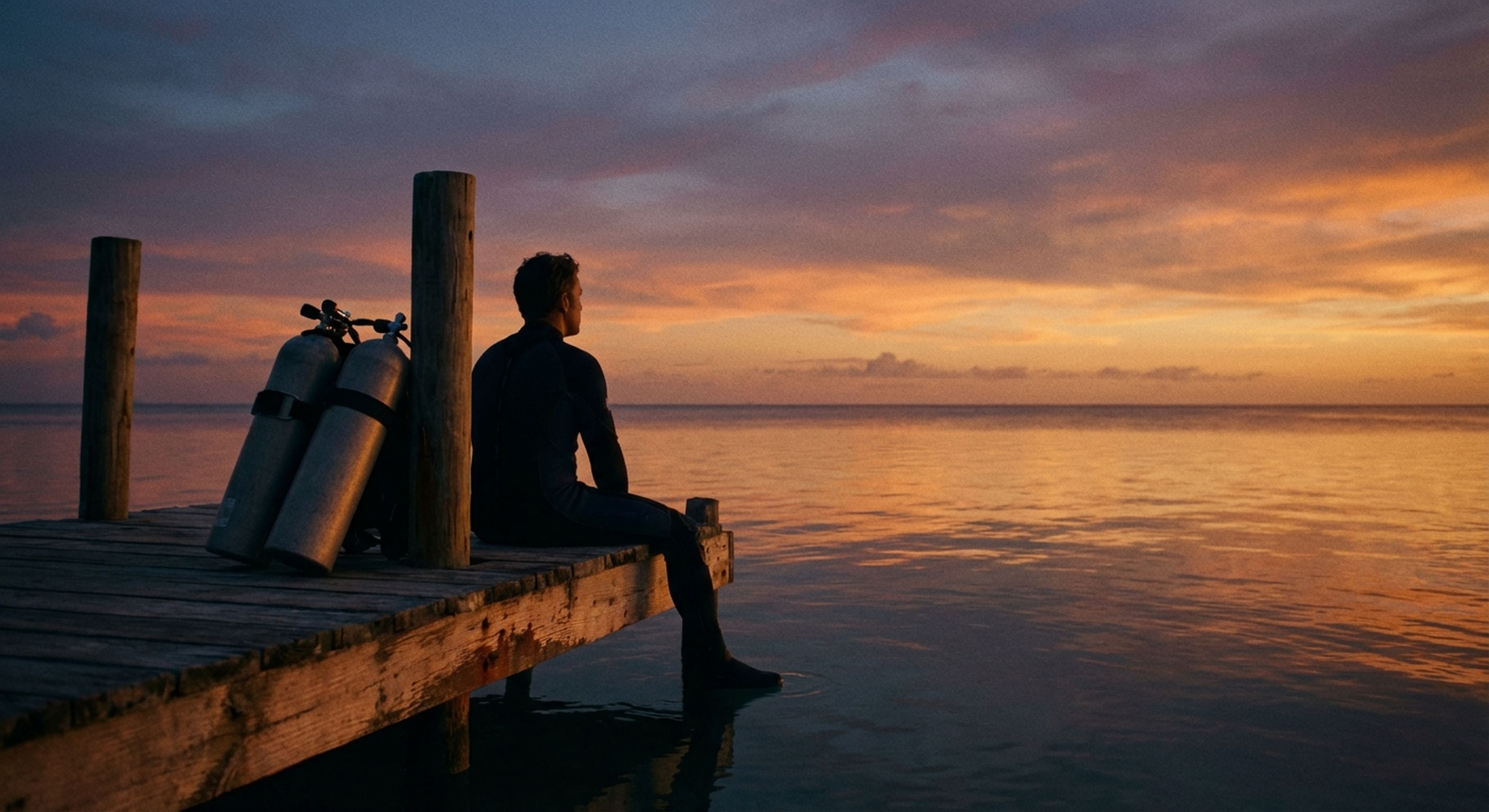
Use this time to meditate on the shore. Watch the sun sink into the blue void. Clean your gear. Eat good food. Sleep.
Let the nitrogen leave you. Do not rush back. The ocean will wait.
The Practice of Dry Land
You do not need wet hair to start this.
Practice apnea tables on your sofa. Download an app. It is simple.
- CO2 Table: Short rests. Teaches you to handle the urge to breathe.
- O2 Table: Long holds. Teaches you relaxation.
Do this three times a week.
Next time you put on the BCD and the heavy tank, close your eyes for a moment. Find the diaphragm.
Descend.
Do not be a machine. Be a fish that happens to have a tank.
Breathe slowly. Move slowly.
When you stop making noise, the ocean speaks to you.