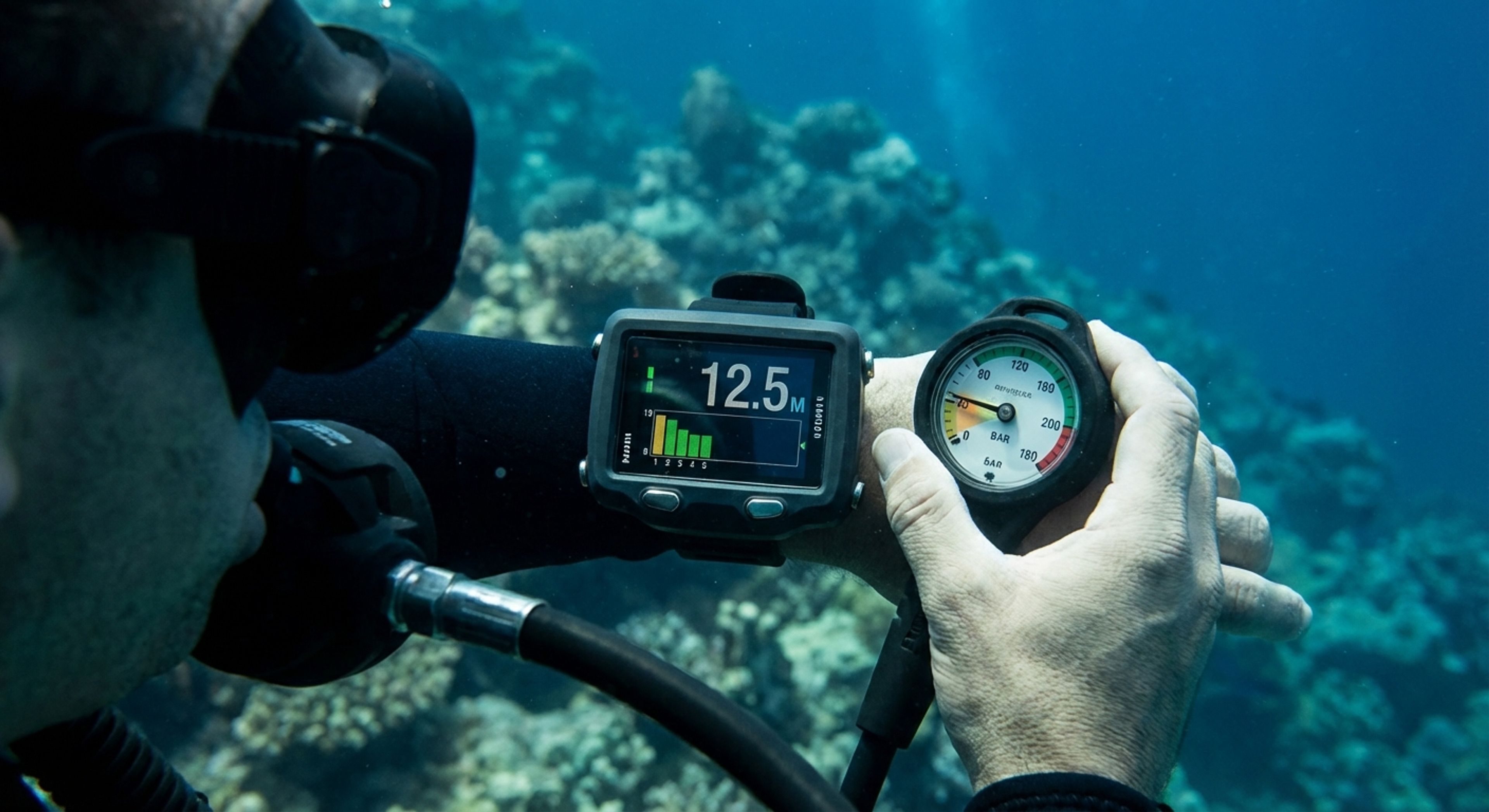

Stop Drinking the Tank: How Not to Be an Underwater Vacuum Cleaner
Hay naku, nothing makes me angrier than ending a dive after 20 minutes because one diver sucked their tank dry. Here is how you stop being an 'air vacuum' and stay underwater like a real fish.
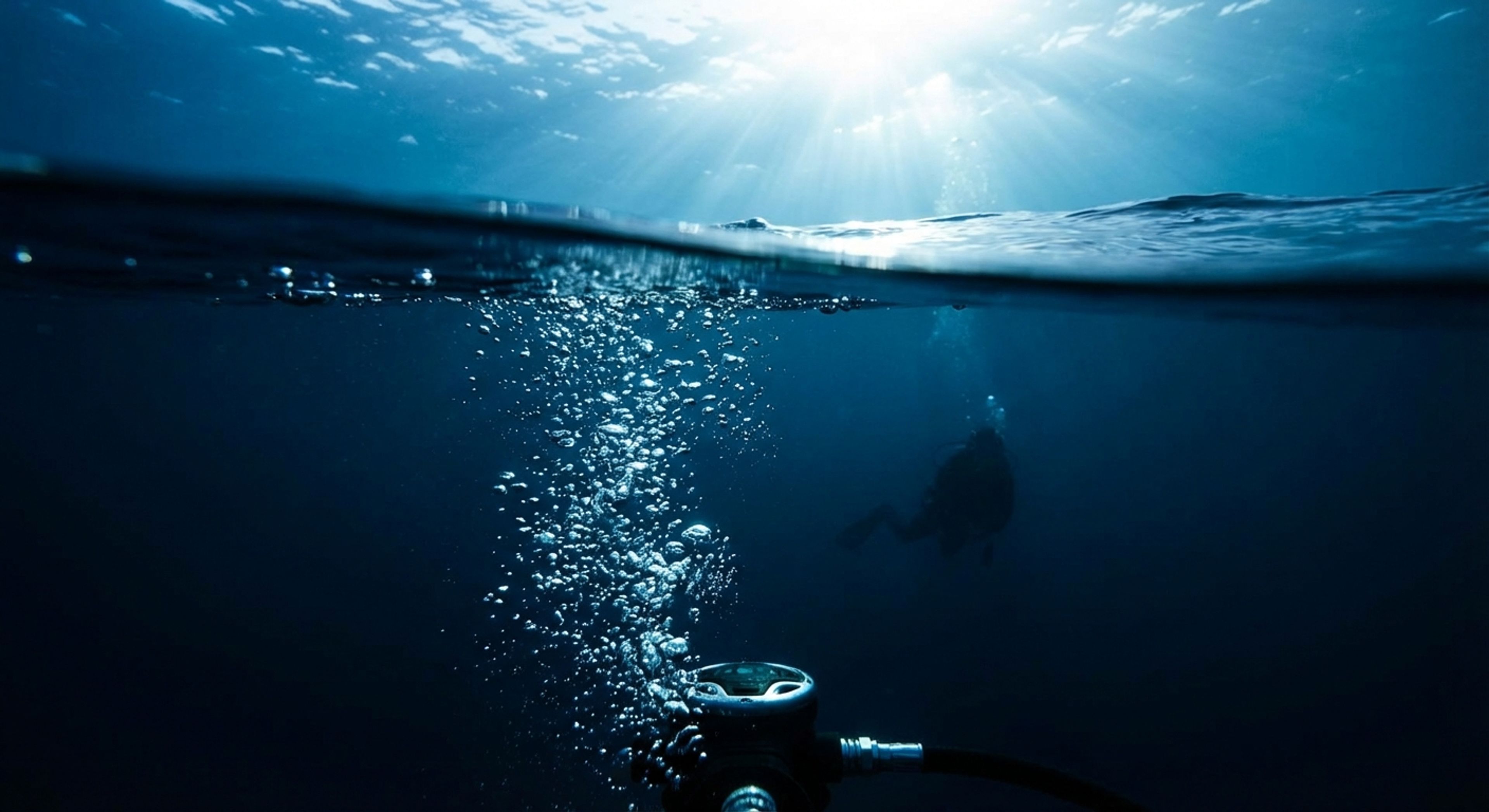
Yesterday, I took a group out to Beatrice Rock here in Anilao. Beautiful conditions. Current was mild, visibility maybe 20 meters. A perfect day. We drop down. I see a pygmy seahorse on a fan. I turn to show the group.
What do I see? One guy, he is flailing his arms like a drowning chicken. He looks at his gauge. His eyes go big like saucers. He signals me. "50 bar."
Susmariosep.
We were at 18 meters. We had been underwater for exactly 19 minutes.
Because of him, everybody has to go up. The dive is over. This is the worst sin in diving. If you are the "Gas Guzzler," the "Air Vacuum," nobody will want to be your buddy. They will smile at you on the boat, but inside, they are cursing you.
You think you need a bigger tank? No. You need better skills. You think you need a computer that costs $1,000? Hay naku, save your money. That computer just tells you exactly how fast you are failing.
Listen to Tatay Santiago. I have been diving since before you were born. I dive on a single aluminum 80 for 75 minutes and come up with 100 bar. It is not magic. It is discipline.
Here is how you stop drinking the tank.
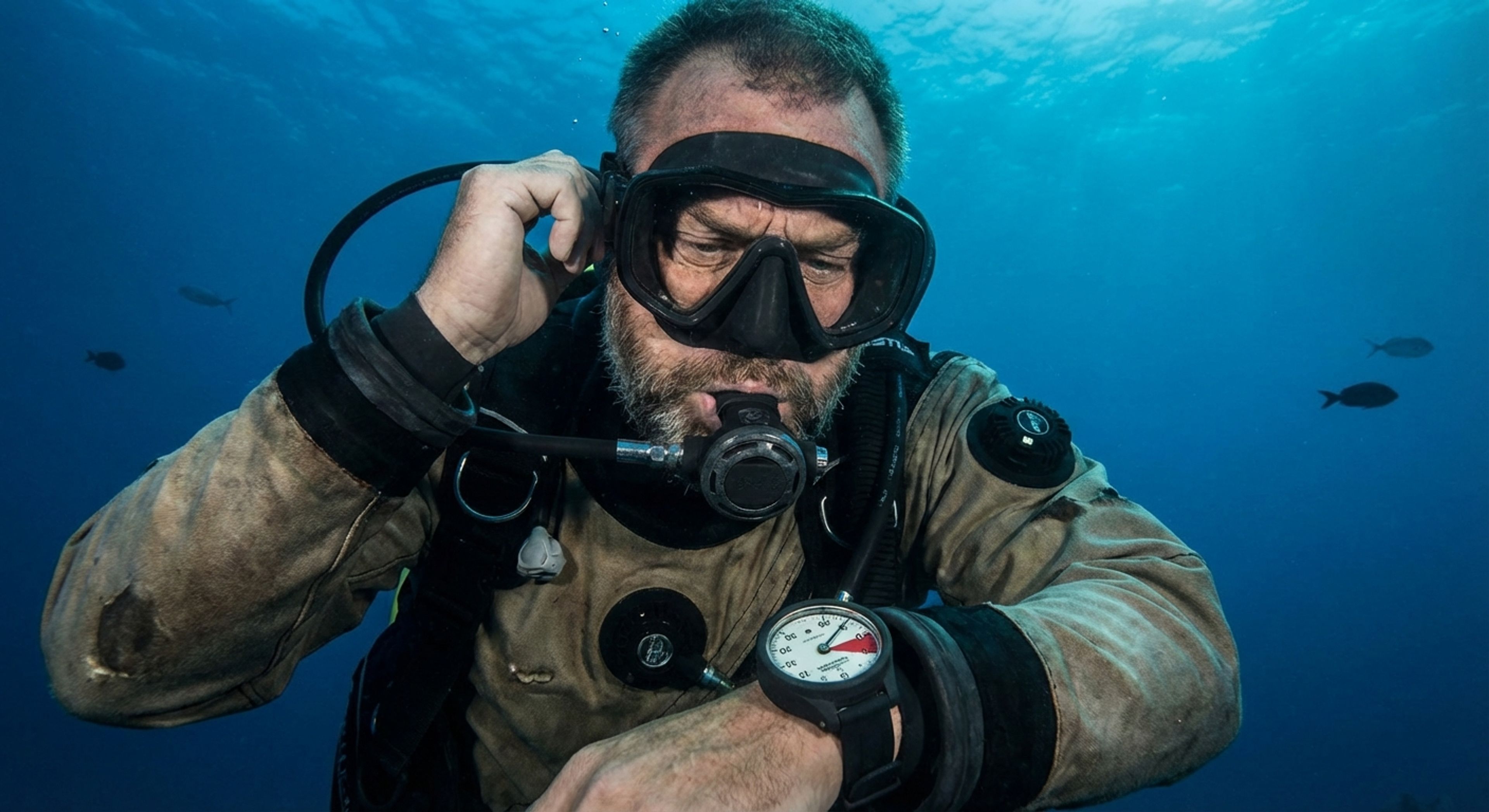
1. Stop Being Scared (The Mind)
The number one reason you suck air? Panic.
I see it in your eyes when you jump off the banca. You are breathing like you just ran a marathon. Huuu-haaa, Huuu-haaa. Your heart is boom, boom, boom.
When you are nervous, your body demands oxygen. It is instinct. Adrenaline pumps through your veins. Your lungs work overtime to feed the panic.
Why are you nervous? Maybe the water is deep. Maybe you think a shark will eat you (sus, you wish you were that lucky to see a shark).
Relax.
If you are not comfortable in the water, stop diving deep. Go back to the shallow reef. Sit in the sand at 5 meters. Just sit. Look at the clownfish. Breathe. Realize the ocean is not trying to kill you. The ocean does not care about you.
If you start the dive with high stress, your tank is gone before you even deflate your BCD. Before you descend, close your eyes. Visualize the dive. Slow your heart. If you cannot calm down on the boat, you will not calm down at 30 meters.
2. Stop Moving Like a Windmill
This is my biggest pet peeve.
New divers. They look like they are fighting the water. They use their hands to swim. They kick, kick, kick, kick.
Listen to me. Water is 800 times denser than air. Every time you move your hand to "scull" or balance, you burn energy. Burning energy requires oxygen. Oxygen comes from your tank.
If you are moving your hands, you are wrong. Cross your arms. Hold your elbows. Or hold your gauge. Do not flap. You are not a bird.
And your fins. Why are you kicking so much? I see divers kicking just to stay in one place! This is because your buoyancy is bad. You are negatively buoyant, so you kick up to stay level. You are fighting gravity with your legs.
The more muscle you use, the more air you breathe. The quadriceps (thigh muscles) are the biggest muscles in your body. When you work them hard, they are like a fire. They consume all your air.
The Trim: You must be horizontal. If you are vertical (seahorse position), every time you kick, you go up. Then you deflate BCD. Then you sink. Then you kick up. You are a yo-yo. A yo-yo breathes a lot of air.
Get flat. Glide. Kick once, glide for three seconds. Let the water carry you.
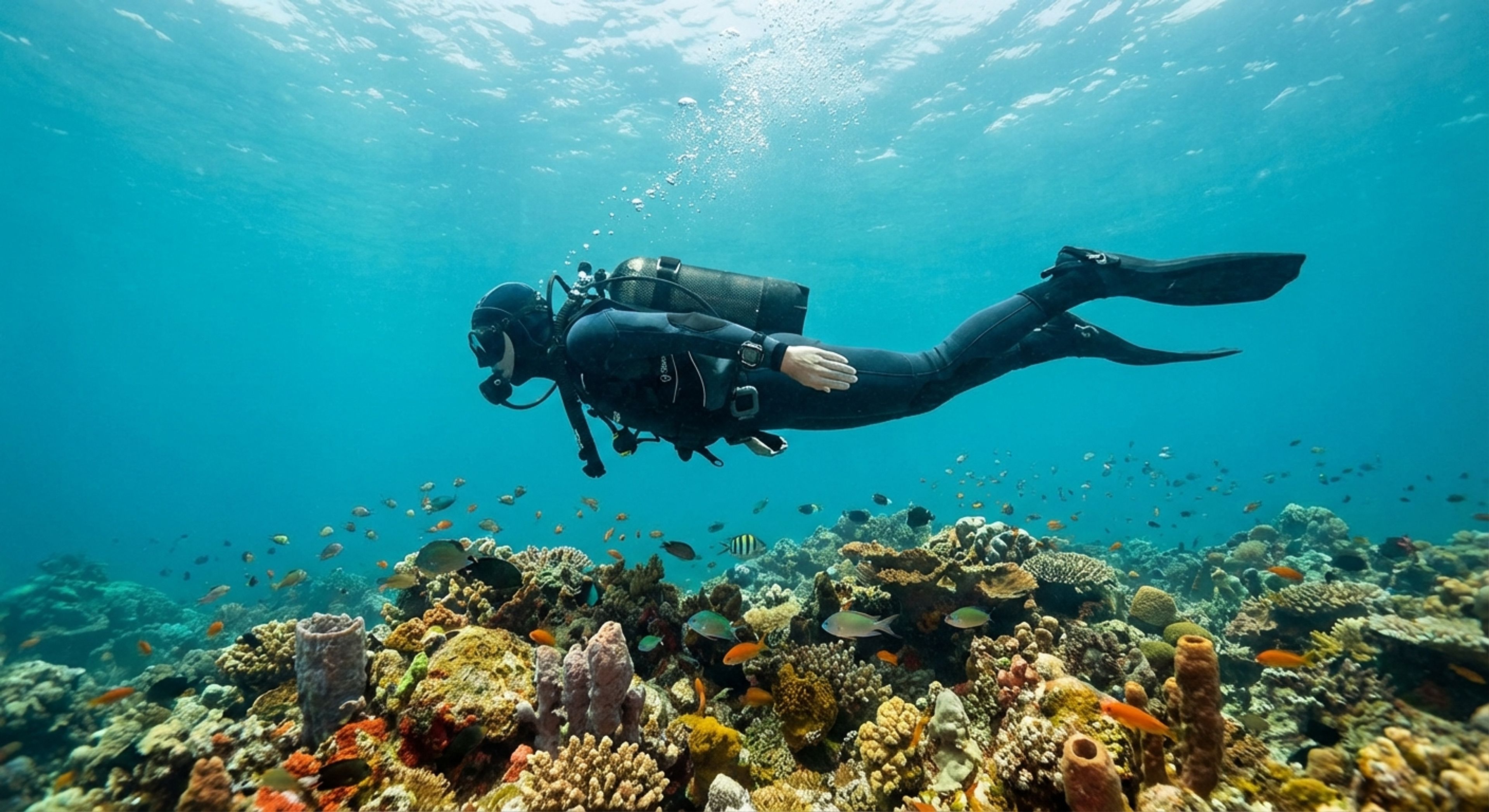
3. You Are Freezing (Even if You Don't Feel It)
"Oh, the water is 28 degrees, I don't need a wetsuit. I am a tough guy."
Shut up.
Water takes heat away from your body 20 times faster than air. Even in tropical water like here in the Philippines, your body is losing heat.
When your core temperature drops, even a tiny bit, your body reacts. It tries to warm you up. How? By increasing your metabolism. You start burning calories to create heat.
When you burn calories, what do you need? Oxygen.
You might not be shivering yet. But your body knows. Your breathing rate increases automatically. You cannot control it.
Wear a proper wetsuit. If you are thin, wear 3mm or 5mm. Wear a hood. A lot of heat leaves from your head. I don't care if it looks stupid. You know what looks stupid? Ending the dive in 25 minutes.
If you are warm, your heart rate stays low. Your air lasts longer. Simple.
4. The "Deep and Slow" Technique
Now we talk about the breathing itself.
Many new divers breathe shallow. Sip, sip, sip. Quick little breaths. This is useless.
In your regulator and your throat, there is "dead air space." This is air that goes in and out but never reaches your lungs to exchange oxygen. If you take shallow breaths, you are mostly moving this dead air back and forth. You are not getting fresh oxygen. So you feel air-starved. So you breathe faster. It is a cycle.
You must breathe DEEP.
Fill the stomach. Use your diaphragm. Then, exhale SLOW.
The exhale is the most important part. Count in your head. Inhale: One, Two, Three, Four. Exhale: One, Two, Three, Four, Five, Six.
The exhale should be longer than the inhale. This clears the CO2 (carbon dioxide) from your lungs. CO2 is what triggers the urge to breathe. If you don't exhale fully, CO2 builds up. Then you pant like a dog.
Yoga and Meditation: My daughter, she drags me to Yoga class in Manila. I tell her, "This is for people with no jobs." But I try it. And you know what? She is right.
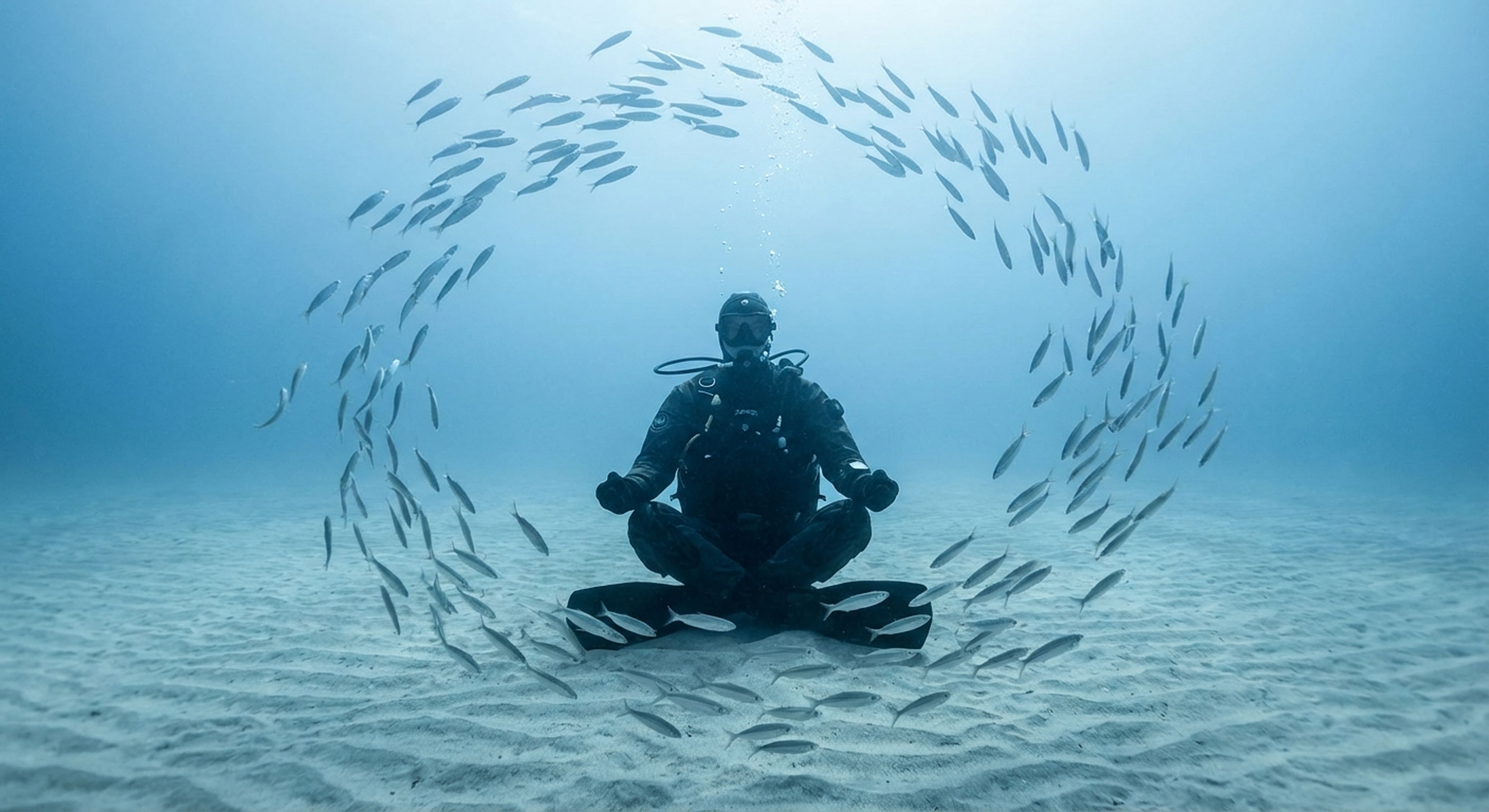
Pranayama. Breathing control. It is exactly what we need underwater. If you want to save air, practice yoga on land. Learn to expand your lungs fully and control the rhythm. If you can control your breath while twisting your body like a pretzel, you can control it while drifting along a wall.
5. Get Fit (Put Down the San Miguel)
I know, I know. Dive masters love beer. But if you are out of shape, your body is inefficient.
If your cardiovascular system is weak, your heart has to pump harder to move blood. Your lungs have to work harder to get oxygen.
When there is a current, and in Batangas, there is always current, the fit diver kicks gently and his breathing does not change. The unfit diver kicks hard, his heart rate spikes to 140, and he sucks the regulator like it is a milkshake.
You don't need to be an Olympian. But do some cardio. Run. Swim. Walk the dog. If walking up the stairs makes you winded, diving against a current will empty your tank in ten minutes.
The Golden Rule: NEVER Skip Breathe
Some "smart" divers will tell you: "Santiago, I just hold my breath for a few seconds to save air."
NO.
Do not do this. We call this "Skip Breathing."
- It is dangerous: If you hold your breath and ascend even a few feet, your lungs can over-expand. Boom. Lung injury. Embolism. You die or you go to the chamber.
- It causes headaches: When you hold your breath, CO2 builds up in your blood. CO2 is a poison. It gives you a splitting headache after the dive.
- It doesn't work: The CO2 buildup will eventually force you to take three or four rapid, deep breaths to recover. You save nothing. You actually use more air in the long run.
Keep the airway open. Keep the rhythm continuous. Like the waves. In, out. In, out. Never stop.
Comparison: The Master vs. The Hoover
Let us look at the difference.
| The "Air Vacuum" Diver | The "Santiago Style" Diver |
|---|---|
| Movement: Hands waving, bicycle kicking. | Movement: Hands still, frog kick, glide. |
| Position: Vertical (seahorse). | Position: Horizontal (skydiver). |
| Mental State: "Where is the boat? Is that a shark?" | Mental State: "Look at that nudibranch. Nice." |
| Breathing: Shallow, fast, from the chest. | Breathing: Deep, slow, from the belly. |
| Gear: Loose hoses, shivering in a rash guard. | Gear: Streamlined, warm wetsuit/hood. |
| Result: 25 minute dive. | Result: 60+ minute dive. |
Hay Naku, Just Go Dive
You cannot learn this from reading my blog only. You have to get wet.
The first 50 dives, you are learning how to survive. The next 50 dives, you are learning how to be comfortable. After 100 dives, you start to actually see the fish.
Don't worry if your air consumption is bad now. We all started there. Even me. (Okay, maybe not me, I was born with gills). But you must try to improve.
Check your weights too. If you are over-weighted, you have to put more air in your BCD. This makes you drag through the water. It makes you bigger. Drop two pounds. See if you can still sink. Less lead often means less air used.
Come to Batangas. I will watch you. I will carry a rattle. Every time you use your hands, I will shake the rattle at you. You will learn fast.
Now, go check your O-rings.