
Jacket vs Wing BCD: Stabilizing Your Existence Under Pressure
Your buoyancy compensator is the difference between being a stable platform and a flailing amateur. We analyze the physics of jacket style versus backmount wings in the cold, hard reality of the ocean.
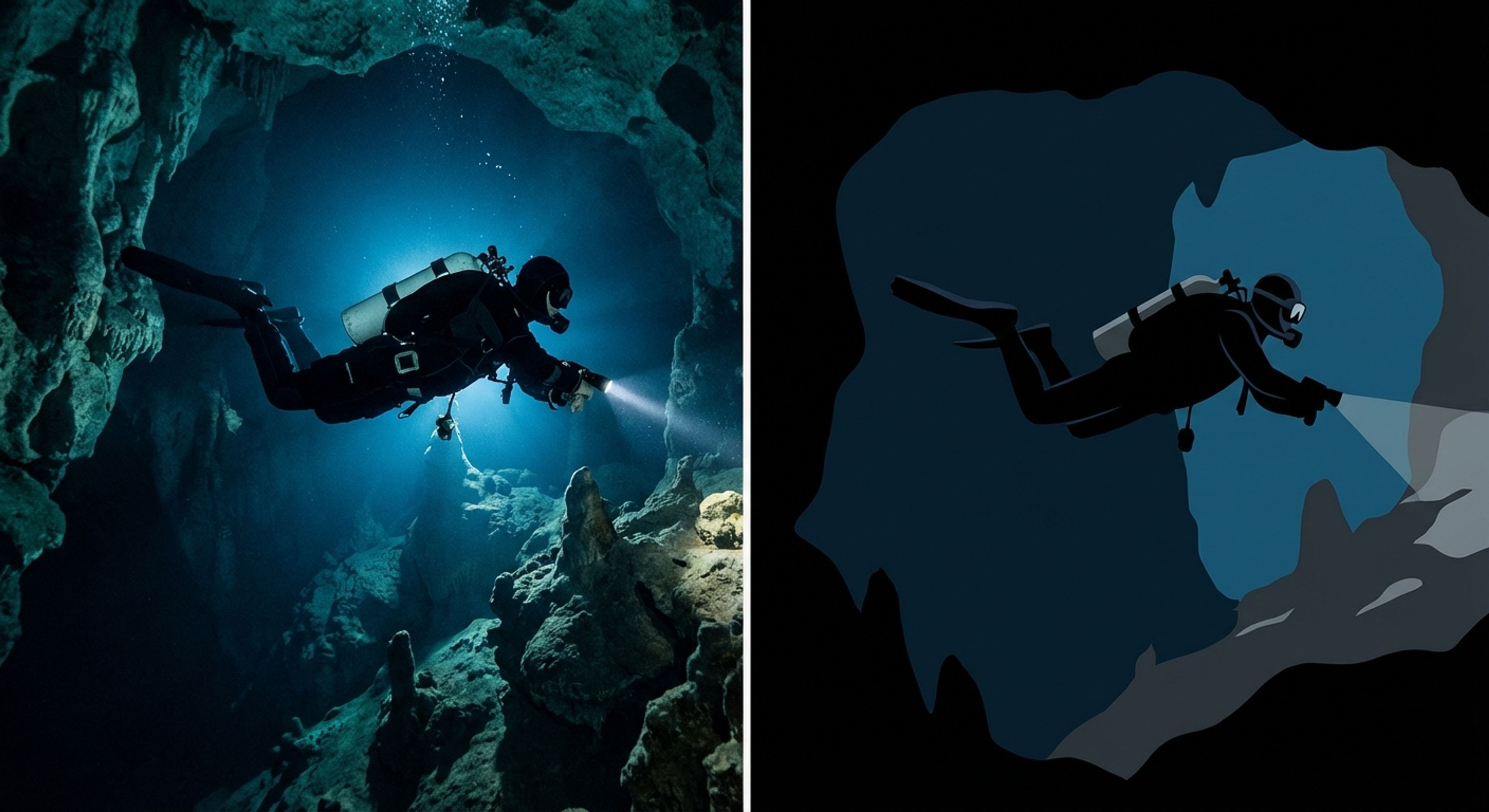
You are suspended in the void. The water is 4 degrees Celsius. The pressure is crushing your suit, compressing the nitrogen in your blood, and looking for any weakness in your system. In this environment, stability is not a luxury. It is survival.
When I am welding a pipeline connection in the North Sea, I do not have time to fight my equipment. I need to be a rock. I need to be a platform. Most recreational divers treat their Buoyancy Control Device (BCD) like a life jacket. They want to float. They want to bob around on the surface looking at the sun.
That is fine if you are swimming in a heated pool in the Maldives. But if you want to actually dive, if you want to master the physics of the underwater world, you need to understand the mechanics of where you put your air.
This is the eternal debate for the uninitiated: The Jacket Style (Vest) versus the Backmount (Wing). To me, the choice is obvious. But let us look at the hydrodynamics.
The Jacket BCD: The Tourist Trap
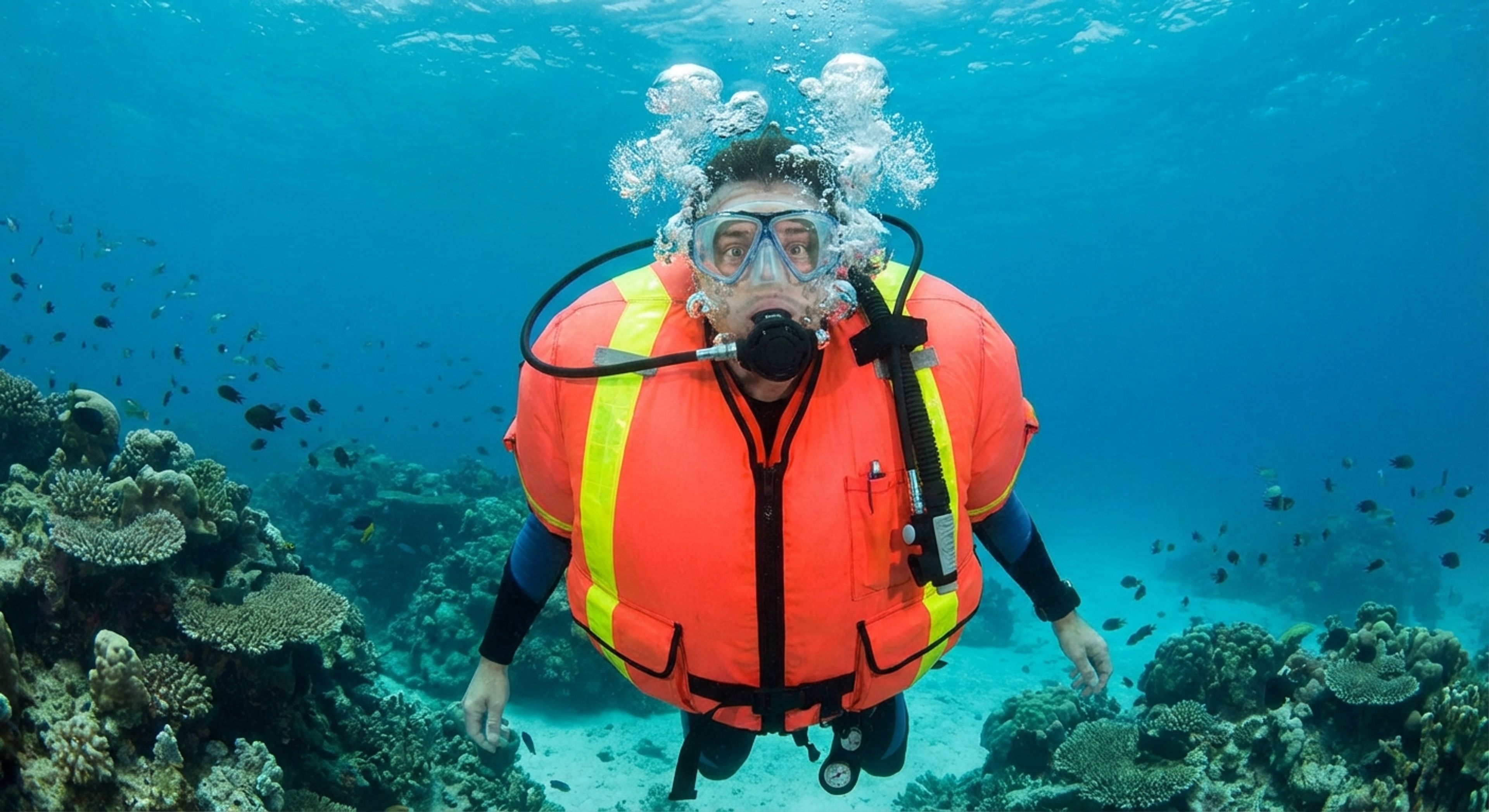
The jacket BCD is what you wore during your Open Water certification. It wraps around your torso like a waistcoat. It has air bladders on the back, on the sides, and sometimes even in front of the waist.
When you inflate it, the air surrounds you. It feels secure. It feels like a hug. For a nervous human descending into an alien environment, this "hug" offers psychological comfort.
The Vertical Problem
The physics of a jacket BCD are designed to keep you vertical. When the air is distributed around your waist and chest, the center of buoyancy creates a massive bubble around your core. On the surface, this is excellent. It holds your head out of the water so you can talk to the boat captain or panic comfortably.
Underwater, this is a disaster.
To move efficiently through water, you must be horizontal. You want the smallest frontal surface area possible to reduce drag. A jacket BCD constantly fights this. The air trapped around your sides creates instability, often inducing a roll or forcing your chest up. You spend your entire dive fighting your own gear, kicking your fins just to keep your legs up. This stirs up silt. It ruins visibility. It exerts energy.
In the commercial diving world, exertion means CO2 buildup. CO2 buildup at depth leads to narcosis and panic. Panic leads to death.
The "Squeeze"
When you fully inflate a jacket BCD at the surface, it constricts. It presses against your diaphragm. I have seen divers struggle to take a full breath not because of their regulator, but because their "comfortable" jacket was crushing their ribcage. Breathing is the only thing that matters down there. Anything that restricts it is a design flaw.
The Backmount Wing: The Precision Instrument
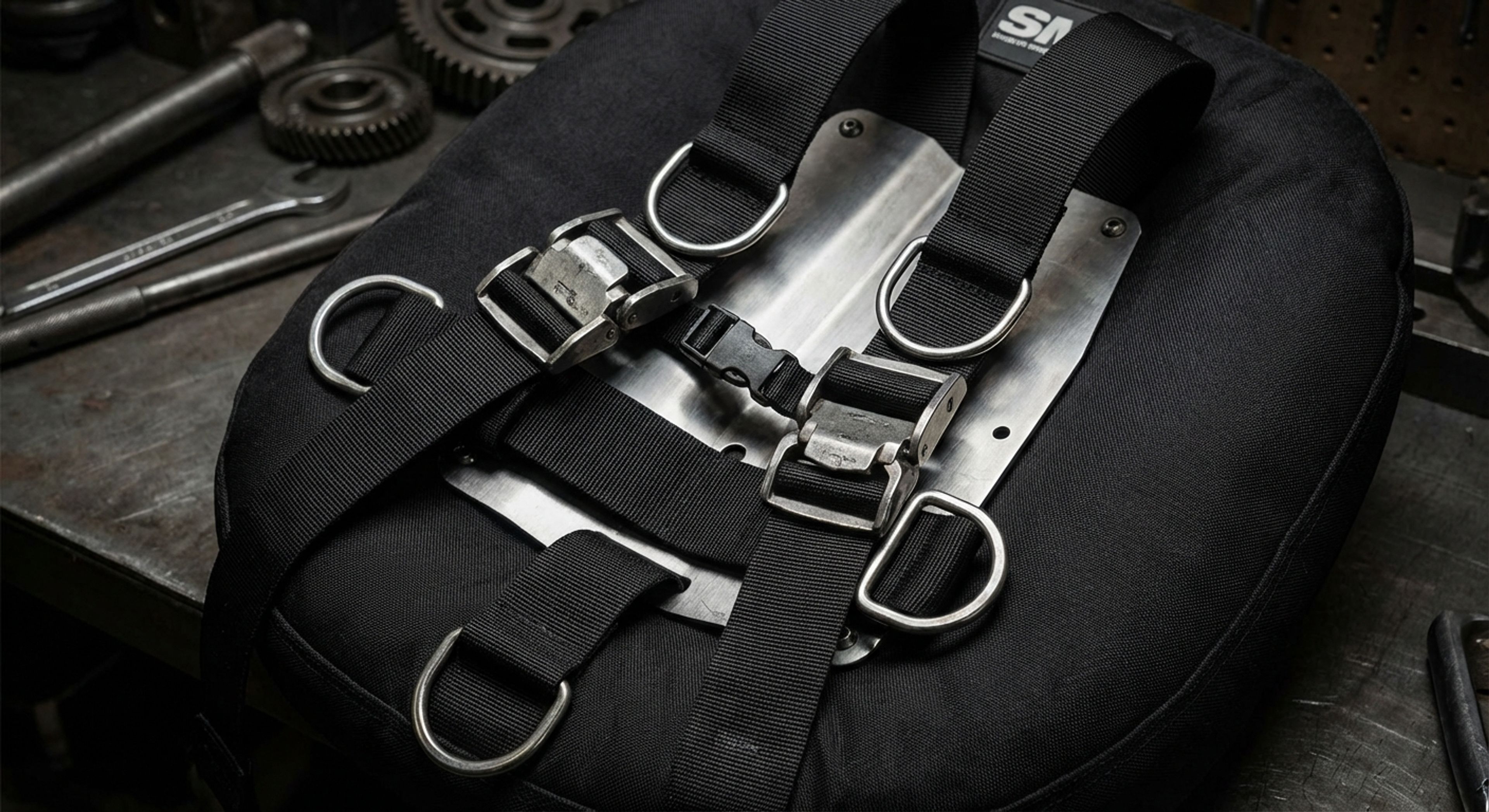
The backmount system, often called a "Wing," puts 100% of the air bladder behind you. It sits between your back and your cylinder.
Hydrodynamic Superiority
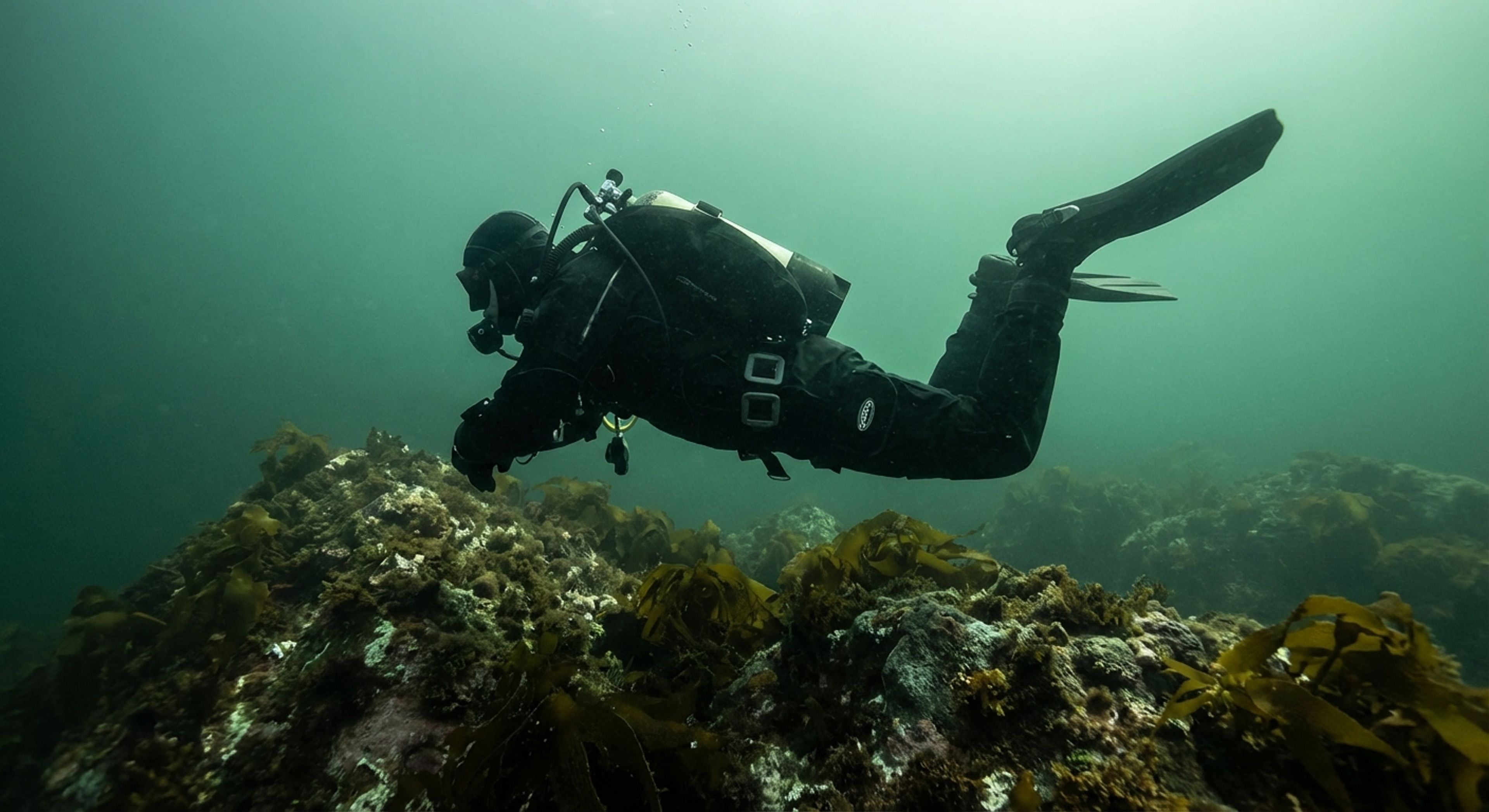
When the air is located strictly on your back, it creates a turning moment that pushes your torso down and lifts your hips. It naturally forces you into a horizontal, prone position. This is the "skydiver" pose.
In this position, you present the smallest profile to the water. You are streamlined. When I am working in a current, I don't want to be a sail. I want to be a torpedo. The wing makes this automatic. You stop fighting the water and you slide through it.
Freedom of Movement
Because there is no bladder under your arms or across your chest, your front is clear. You can cross your arms. You can reach your valves. You can manipulate tools, cameras, or stage bottles without fighting bulky pockets of nylon and air.
For photographers, this is critical. A photographer needs to hover motionless, inches from a nudibranch or a wreck structure. In a jacket, a slight shift in air distribution can roll you over. In a wing, the air is centered along your spine. You are stable. You are balanced.
Why Tech Divers and Photographers Choose Wings
It comes down to reliability and trim.
Technical diving involves carrying extra cylinders, traversing tight wrecks, or entering caves. If you wear a jacket BCD in a cave, you are asking for trouble. The bulky sides snag on rocks. The inability to stay perfectly flat means you will kick up sediment and reduce visibility to zero.
A backplate and wing system is modular.
- The Backplate: Usually a slab of stainless steel or aluminum. This acts as distributed weight. It moves the ballast from your hips (weight belt) to your center of mass. This improves trim.
- The Harness: One piece of continuous webbing. No plastic clips to break. No velcro to wear out. If a plastic buckle snaps at 40 meters, you have a serious problem. If a piece of webbing frays, you can see it months in advance.
- The Wing: Replaceable. If you puncture it, you buy a new bladder, not a whole new BCD.
Photographers love wings because it decouples their buoyancy from their breathing. In a jacket, the squeeze affects your fine-tuning. With a wing, you hang in the water column like a satellite.
The Comparison: Cold Hard Facts
I have compiled the data based on mechanical function and operational reality.
| Feature | Jacket BCD | Backmount / Wing |
|---|---|---|
| Surface Stability | High (Heads up, effortless) | Low (Pushes face forward, requires technique) |
| Underwater Trim | Poor (Forces vertical "seahorse" pose) | Excellent (Natural horizontal alignment) |
| Drag Coefficient | High (Bulky, lots of padding) | Low (Streamlined behind the diver) |
| Chest Compression | High (Squeezes when inflated) | None (Harness is independent of bladder) |
| Modularity | Low (All-in-one unit) | High (Change plates, wings, harness) |
| Failure Points | Many (Plastic clips, zippers, velcro) | Few (Steel hardware, single webbing) |
The Transition: Advice for the "Warm Water Swimmer"
Many new divers are terrified of wings. They hear "technical diving" and think it is too advanced. They think it is only for people who dive into holes in the ground.
This is nonsense.
A wing is actually simpler than a jacket. It has less clutter. The only challenge is the surface behavior.
The Face-Plant Fear
Because the air is on your back, a wing wants to float you face down on the surface. If you are unconscious, this is theoretically bad. If you are conscious, you simply lean back. It requires a small adjustment in your center of gravity. You kick your legs slightly forward and lean back into the harness. It is like sitting in a recliner. Once you learn this trick, the fear disappears.
How to Switch
If you are moving from a jacket to a wing, do not buy the most expensive "tech-looking" gear with red anodized aluminum and fifty D-rings.
- Start Simple: Get a steel backplate (if you wear a drysuit or thick neoprene) or aluminum (for warm water).
- Get a "Donut" Wing: Avoid horseshoe shapes if you are new; air can get trapped in one leg of the horseshoe. A donut shape allows air to circulate freely, making dumping gas easier.
- Redistribute the Weight: Use trim pockets on your tank bands or a weight system integrated into the harness. Get the heavy belt off your hips to save your back, but ensure you keep enough ditchable weight accessible. If your wing fails, you must be able to drop lead and swim up. We want reliability, not a suicide pact.
The Reality of Pressure
I remember a job off the coast of Norway. We were inspecting a jagged section of hull plating. The surge was violent, pushing us back and forth three meters with every swell. My dive partner was using a recreational jacket BCD he insisted on wearing because it had "big pockets."
Every time the surge hit, his bulky jacket caught the water. He was thrashing, his fins kicking up rust and silt, his breathing rate skyrocketing. He was fighting the ocean.
I was in my backplate and wing. I vented the air, got negative, and laid flat. The water moved over my streamlined profile. I could focus on the weld. He had to abort the dive because he burned through his gas in 20 minutes from the exertion.
The ocean does not care about your comfort. It respects physics.
If you want to be a passenger underwater, buy a jacket. If you want to be a diver, get a wing. Get horizontal. Get control.