

Liveaboard Diving: Surviving the Eat Sleep Dive Routine
The bell rings at dawn and the routine begins. Here is the truth about spending a week at sea, from the relentless schedule to choosing the right boat.
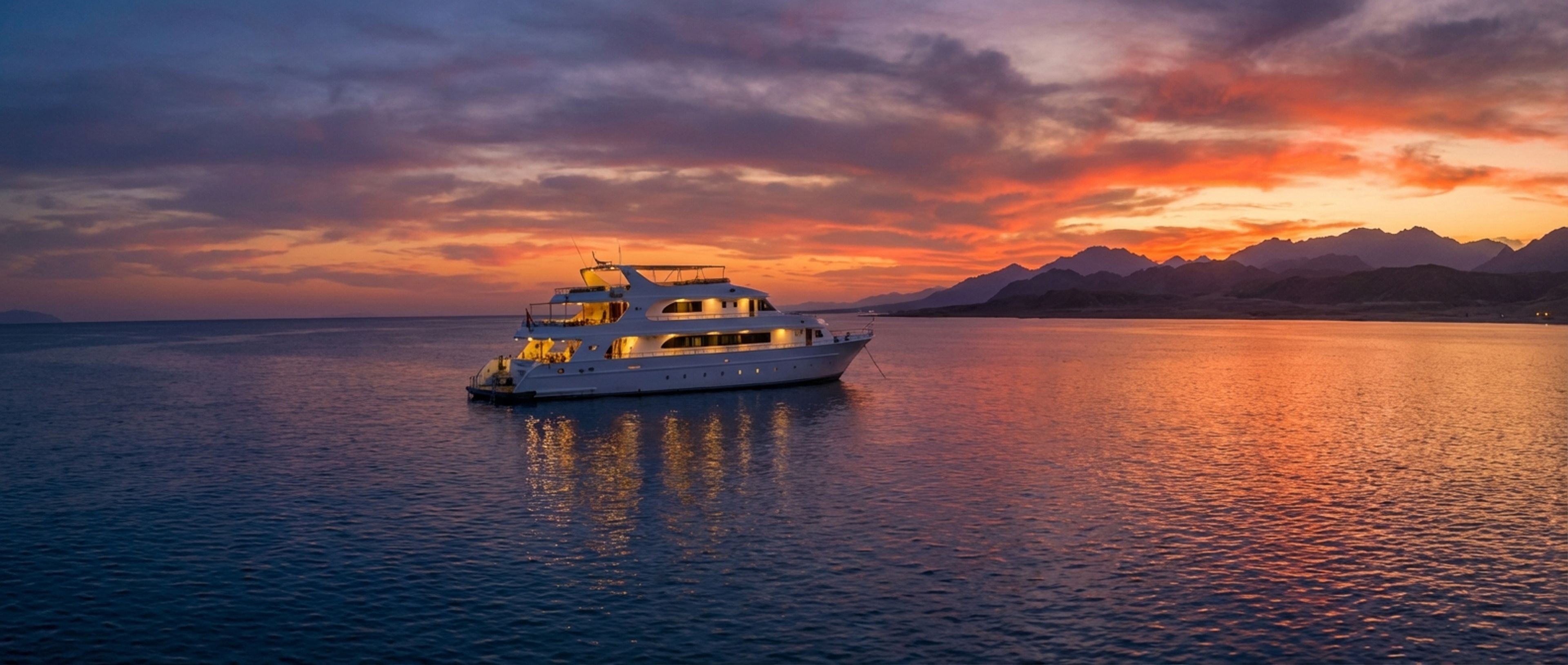
Ahlan, my friend. Welcome to the deep blue.
The desert behind me here in Dahab is silent. It is made of gold and dust and heat. But out there? Where the water turns from turquoise to a blue so dark it looks like ink? That is where the noise of the world stops.
You have asked me about the "Liveaboard." The safari boat. People wear t-shirts that say Eat. Sleep. Dive. It looks like a fun slogan. It is not just a slogan. It is a biological fact. It is a cycle that takes over your body until you forget what day of the week it is or what is happening in the news. You only know when the next bell rings.
I have spent years on these boats. I have seen the Brothers Islands when the waves were crashing over the top deck. I have seen the mirror-calm water of the deep South at dawn. If you are thinking of leaving land behind to live on the ocean for a week, sit down. Have some tea. I will tell you how it really works.
The Bell Rings: The Relentless Rhythm
On land, you wake up when you want. Maybe you go for a dive at 10 AM. On a liveaboard, the boat is the master. The routine is military, but the soldiers are smiling and wearing neoprene.
It usually starts before the sun has fully climbed over the Saudi mountains.
06:00 - The Wake Up: You hear a bell. Clang, clang, clang. Or maybe a knuckles-rap on your cabin door. "Briefing in ten minutes!" I shout. You are groggy. You pull on your swimsuit. You stumble to the salon for coffee and a biscuit. No big breakfast yet. You cannot dive on a full stomach, but you cannot dive on an empty one.
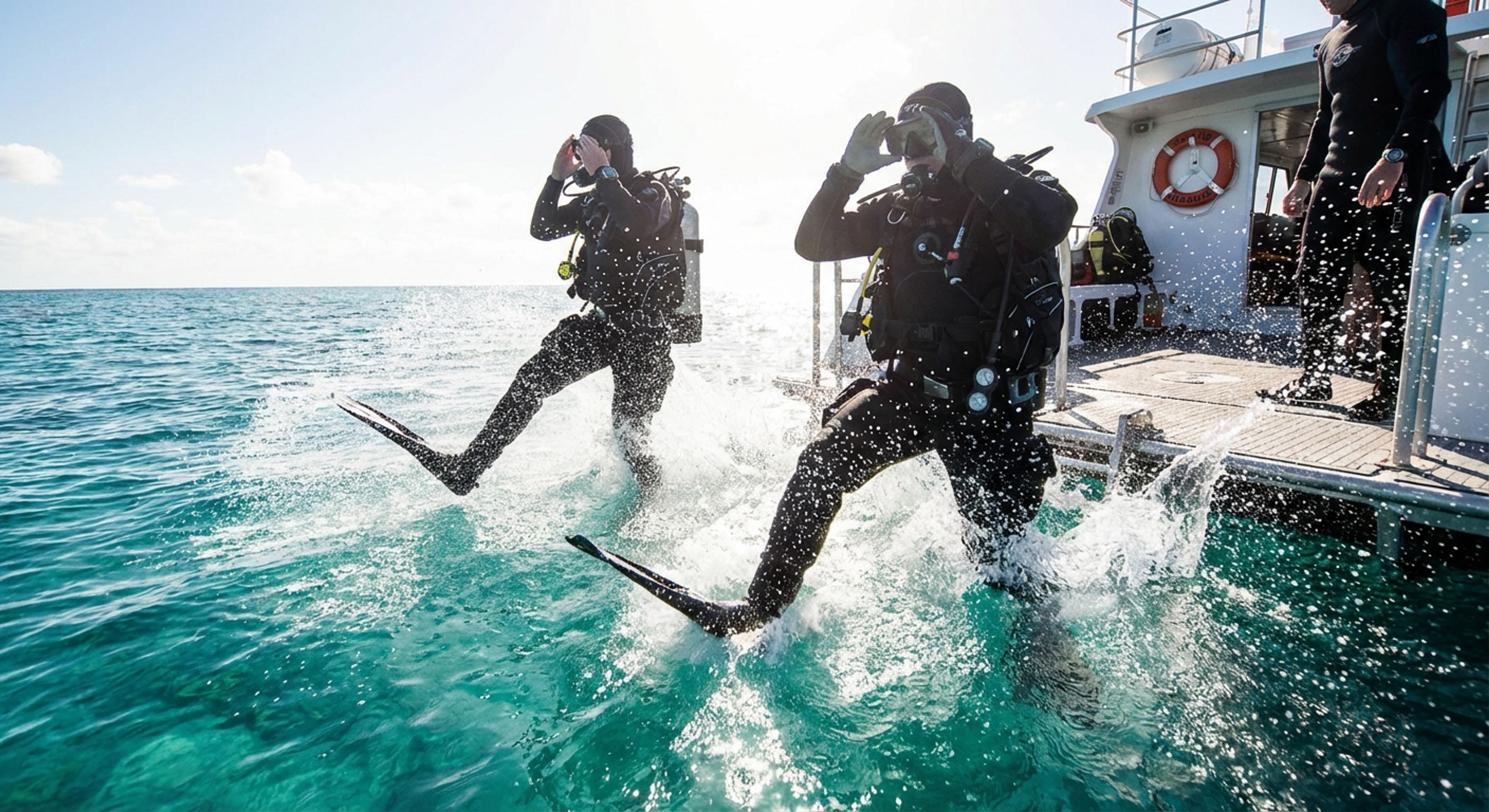
06:30 - Dive 1 (The Morning Glory): The first dive is always the best. The light underwater is sharp. The fish are waking up. Reef sharks are still patrolling the shallows before they go deep for the day. We jump. The water wakes you up faster than espresso.
08:00 - The First Feast: You climb the ladder. You are starving. The ocean sucks the heat from your bones, burning calories fast. You eat eggs, foul, falafel, toast, fruit. You eat like a giant.
10:30 - Dive 2: The bell rings again. The wetsuit is cold and damp. Putting on a wet wetsuit is the hardest part of the day. You moan. You complain. But once you jump? The magic returns.
13:00 - Lunch and The Nap: Another massive meal. Then, the most important part of liveaboard life. The Nap. You pass out. The boat creates a gentle rocking motion. The generator hums. It is the best sleep of your life.
15:00 - Dive 3: The afternoon dive. Maybe a drift dive along a wall. Maybe exploring a wreck like the Thistlegorm. The sun is lower. The colors change.
17:00 - Snacks: Cake. Popcorn. More tea. We always feed you. A fed diver is a happy diver.
19:00 - Dive 4 (The Night Dive): This is optional. Many skip it for a beer. But I say go. The reef at night is a different planet. Decorator crabs. Spanish Dancers. Hunting lionfish. Just remember: no alcohol before any dive. If you drink the beer, you stay dry.
20:30 - Dinner: The final feast. Then sleep. You are exhausted.
You do this for six days. It is intense. It is wonderful.
The Floating Hotel: Luxury vs. Economy
My friend, the Red Sea has boats for kings and boats for students. It is the same ocean. The shark does not care if you paid $1000 or $3000. But you will care when you are trying to sleep.
I have guided on wooden hulls that creaked all night and steel yachts that felt like spaceships. You must choose what your wallet can handle, but understand the trade.
The Economy Boat
This is for the purist. The cabins are small. You might share a bathroom with strangers. The air conditioning might rattle. The food is simple, rice, chicken, salad.
- Pros: The vibe is usually better. People talk to each other. It is about the diving, nothing else. It feels like an adventure.
- Cons: No space to hide. If someone snores, you hear it. Less stability in rough seas.
The Luxury Yacht
These are floating palaces. Steel hulls. Jacuzzis on the top deck. Cabins with windows as big as TVs. Nitrox is often free (if you are certified). The food is buffet style with chefs carving meat.
- Pros: You sleep well. There is space to be alone. The camera room has air guns and big tables for your expensive gear. Stable in the waves.
- Cons: It costs the price of a small car. Sometimes the guests are too fancy and do not talk to the guides!
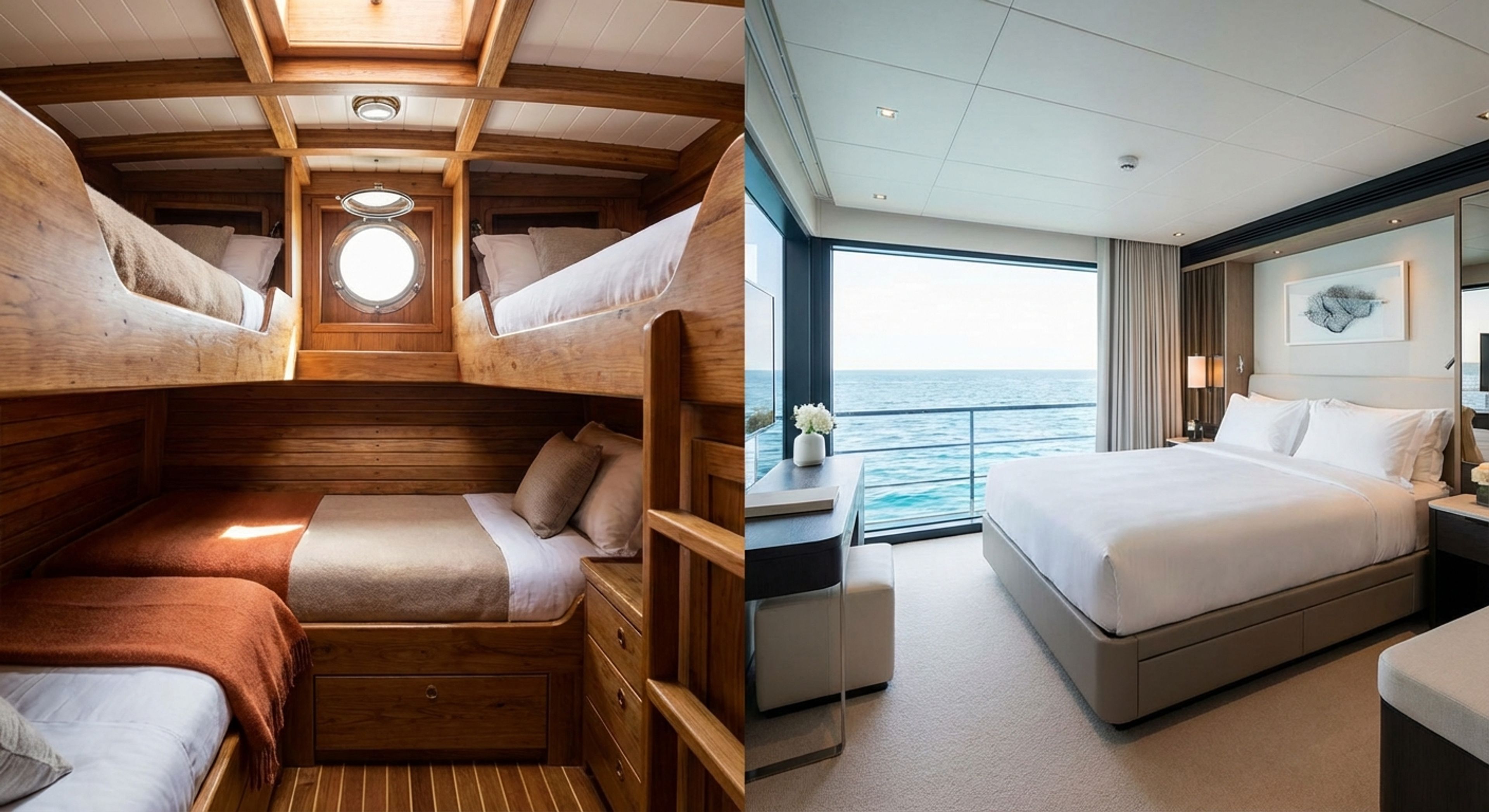
Here is a quick look at what you get:
| Feature | Economy / Budget | Luxury / Premium |
|---|---|---|
| Hull Material | Often Wood (Noisier, rolls more) | Steel (Stable, quiet) |
| Cabin | Bunk beds, shared bath sometimes | Queen beds, ensuite, fridge |
| Food | Tasty but repetitive | Buffet, fresh stations, snacks all day |
| Gear Area | Crowded, tanks close together | Individual stations, charging points |
| Guide Ratio | 1 guide for 8-10 divers | 1 guide for 4-6 divers |
Survival Rules: Etiquette and The Sickness
Living on a boat is social. You cannot escape. If you are annoying, everyone knows. If you are dirty, everyone knows.
The Golden Rule: The Dry Area
This is the most important law. Never, ever sit on the salon sofa in a wet swimsuit. Never walk into the carpeted hallway dripping water. The crew works hard to keep the boat dry. If you make the sofa wet, it stays wet. It starts to smell like old dog. Do not be that person. Dry off on the deck.
Socializing
We are trapped together. Be kind. Don't talk about politics. Talk about fish. Talk about the current. And please, be on time for the briefing. If the bell rings and you are still in the shower, 20 people are waiting for you. It is disrespectful. In the desert, time is loose. On the boat, the captain watches the tide. We cannot wait.
The Sickness (Mal de Mer)
I have seen big strong men cry because of seasickness. It is not a weakness. It is your inner ear fighting your eyes.
- Take the pill early. Do not wait until you feel sick. Take it the night before or immediately upon waking.
- Look at the horizon. Do not look at your phone. Do not read a book. Look at the line where the sky meets the sea. It stabilizes your brain.
- Stay outside. Fresh air is the cure. The cabin is the trap.
- Eat. An empty stomach is an acid factory. Eat dry bread or crackers.
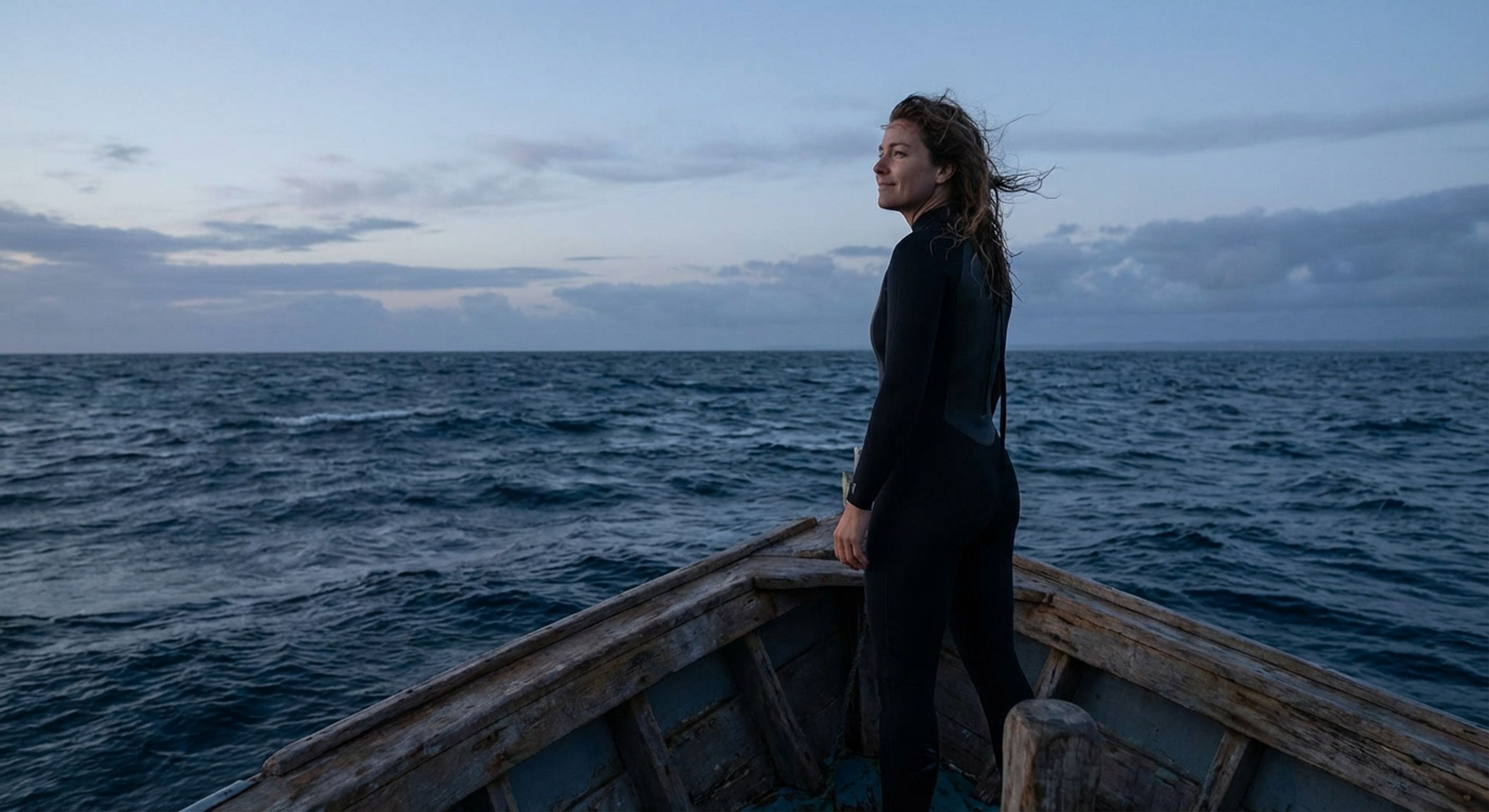
Is This For You?
My friend, I love the liveaboard life, but it is not for everyone.
If you are a brand new diver, be careful. Most liveaboards require you to be an Advanced Open Water diver with at least 30 to 50 logged dives. Doing 4 dives a day in strong currents, like we have at the Brothers, is stressful. You might get tired. Accidents happen when you are tired. If you are new, maybe do a land-based trip here in Dahab first. Get comfortable with your buoyancy.
But if you love the water? If you hate carrying your tank to the shore? If you want to wake up at Daedalus Reef with hammerhead sharks under your bedroom? Then you must go.
The liveaboard disconnects you. No internet (mostly). No traffic. Just the sun, the salt, and the nitrogen loading. You enter a trance. You become part of the ocean.
By the end of the week, your hair will be stiff with salt. Your skin will be dry. You will be exhausted. But you will close your eyes and still see the blue.
Come to the Red Sea. The boat is waiting. Yalla.