

Maldives Channel Diving: Riding the Washing Machine
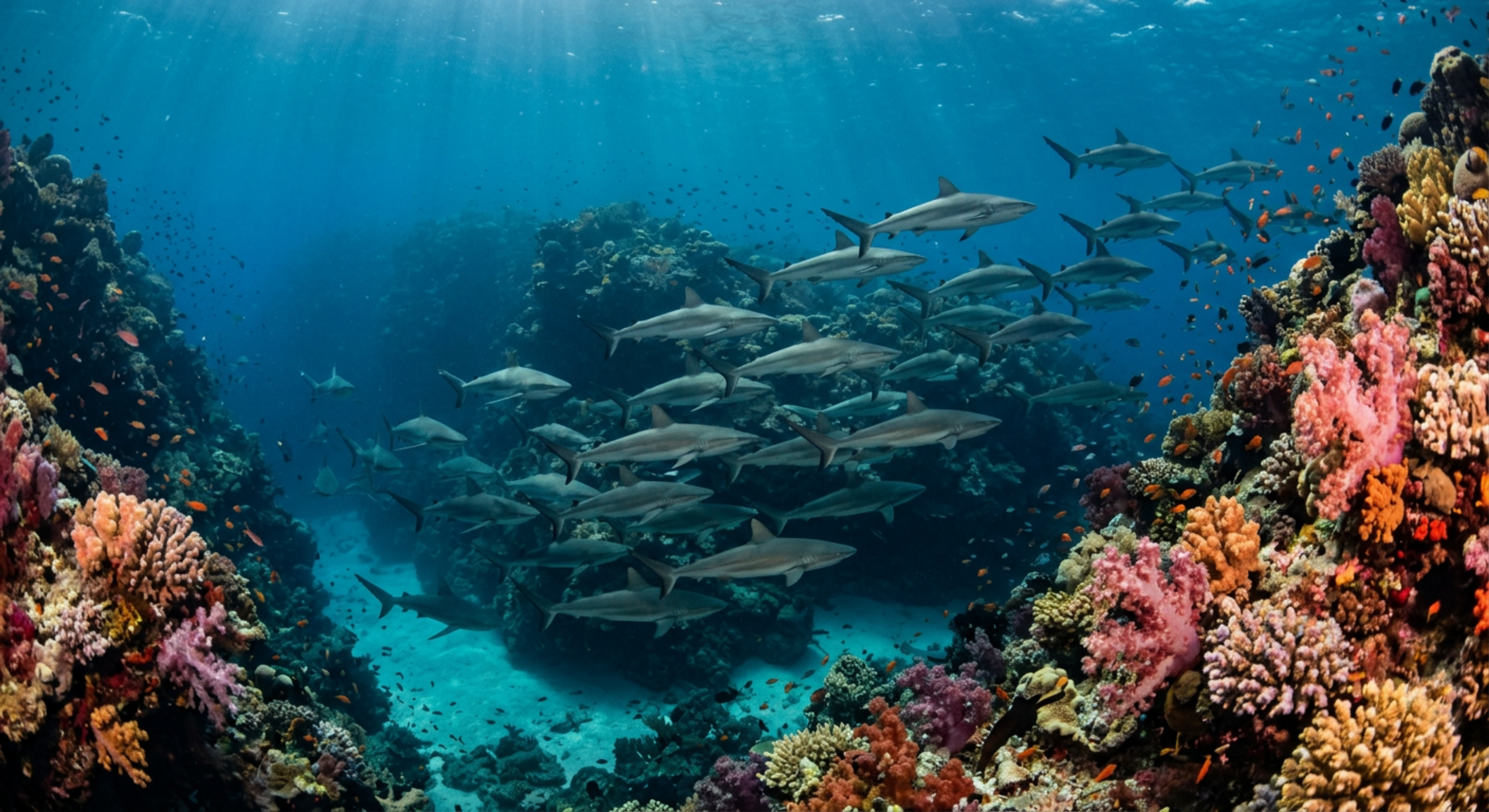
Channel diving in the Maldives is not for the faint of heart. When the tidal exchange pulls water through the atolls, we drop into roaring currents to watch hundreds of sharks gather in the deep blue.
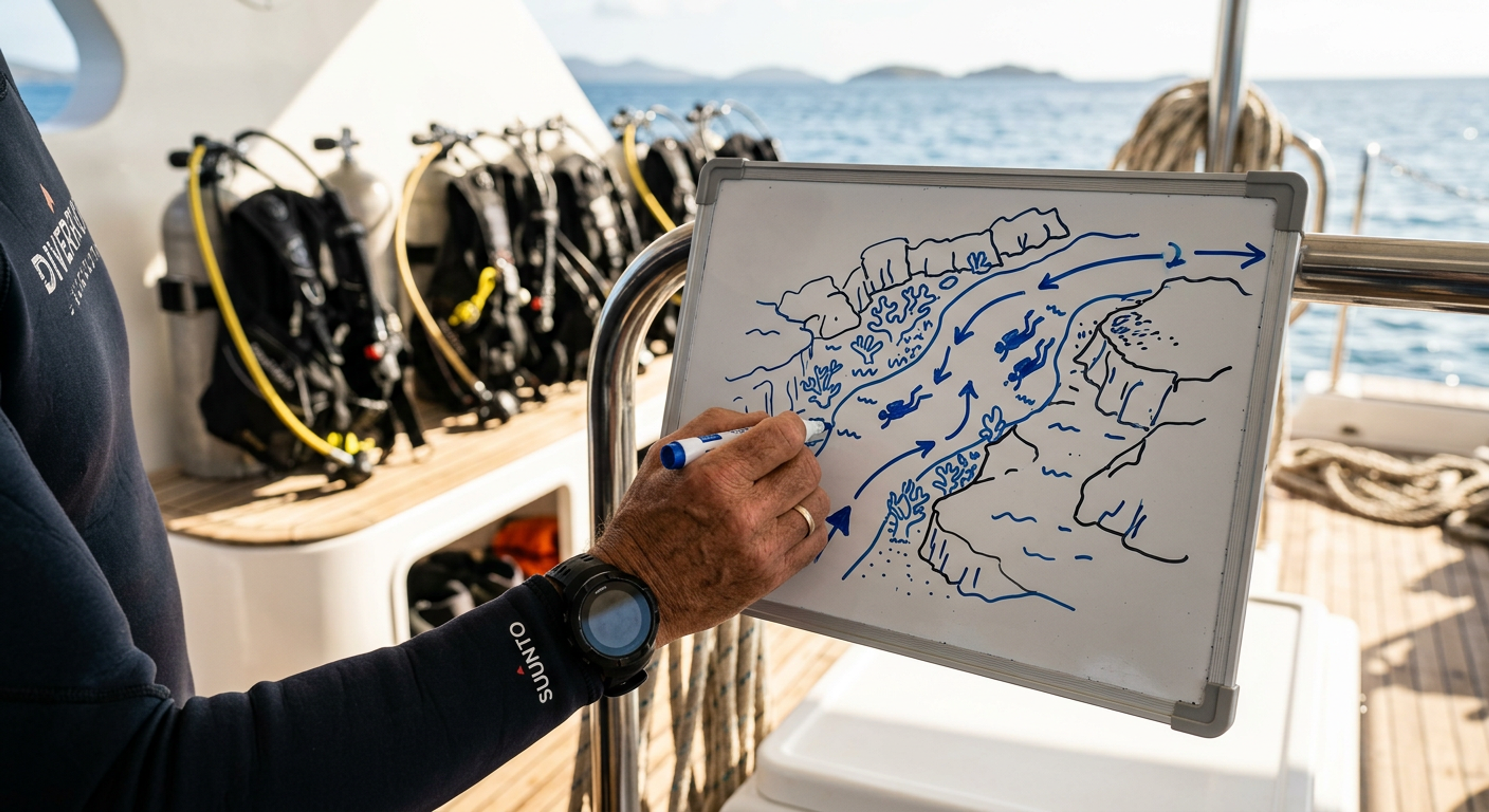
The dry erase marker squeaks against the whiteboard on the aft deck. I draw one thick blue arrow pointing straight into the mouth of the channel. Then I draw a red arrow spiraling in a chaotic circle just behind the coral ridge. The guests stare at my drawing in complete silence. They can hear the Indian Ocean slapping against the fiberglass hull of our luxury liveaboard. The smell of rich Maldivian coffee mixes with the damp rubber scent of curing wetsuits hanging in the morning sun.
"Welcome to the washing machine," I tell them. I tap the red spiral on the board. "If you fight this, you will lose. You will suck your scuba tank dry in ten minutes and miss the best show on earth."
I track the lunar cycles closer than I track my own birthdays. When the moon is full, the tidal exchange in the Baa Atoll is massive. Millions of gallons of water are forced through narrow gaps in the coral reef. We call these gaps kandus. They are deep channels connecting the wild open ocean to our calm inner lagoons.
Diving a kandu on an incoming tide is the closest a human can get to flying in a hurricane.
The Physics of a Kandu
To understand channel diving, you must understand the architecture of the Maldives. We are a double chain of coral atolls resting on a sunken volcanic ridge, rising sharply from the abyssal deep. The outer reef walls drop hundreds of meters into blackness. When the tide rises, the ocean tries to push into the shallow atoll lagoons. The water has nowhere to go except through the narrow channels breaking the reef line.
This creates a massive funnel effect. The current rips through the channel mouth at incredible speeds. It carries cold, clear, nutrient dense water from the deep ocean.
But water does not just move in straight lines. When a fast moving current hits a jagged coral ridge, it breaks. It shears. It creates invisible tornadoes underwater. You will encounter up currents that try to spit you to the surface like a cork. You will hit down currents that grab your fins and drag you toward the dark depths.
I actually enjoy the raw violence of it. There is a deep, primal thrill in surrendering your buoyancy to the ocean. You just have to know how to breathe, flatten your profile, and let the water carry you.
Surviving the Spin Cycle
I remember dropping into a channel near the eastern edge of Vaavu Atoll last season during a spring tide. The water tasted sharply of salt and adrenaline. My group descended rapidly to beat the surface chop. We wanted to get down to twenty five meters where the sharks gather.
As we reached the drop off, the current grabbed us. It felt like a massive, invisible hand closing around my chest. We drifted over the lip of the reef and suddenly my bubbles stopped going up. They swirled around my mask in a dizzying white foam.
This is the true washing machine. You lose all visual references. Up becomes down. Left becomes right.
In that moment, panicked divers will kick wildly. They flap their arms like frightened birds. This makes me furious. Panic kills divers. I immediately checked the numbers on my dive computer to monitor my descent rate. I established a flat, horizontal profile to reduce drag. I added a tiny burst of air to my buoyancy compensator to arrest the downward pull. I kicked steadily sideways, moving perpendicular to the chaotic water. You cannot beat a down current by fighting it vertically. You beat it with your mind, staying perfectly calm, and swimming sideways out of the vortex until the water smooths out over the sandy plateau.
The Cast of Predators and Giants
Why do we subject ourselves to this chaotic water? Because the predators absolutely love it. The incoming current is a conveyor belt of food.
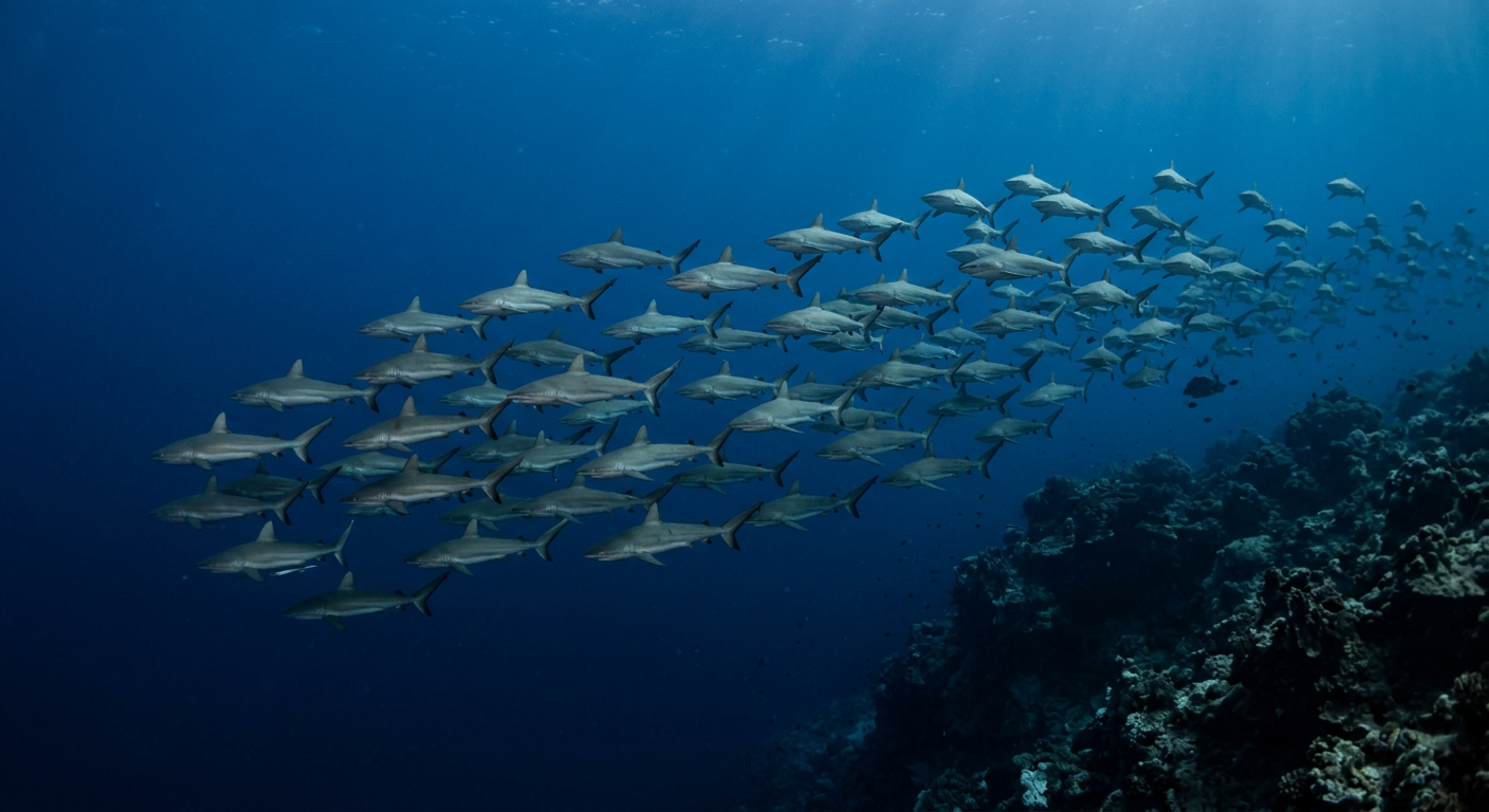
When the water is flying, you do not just see one or two sharks. You see walls of them.
The Nurse Shark Swarms
In the sandy depressions of the channel bottoms, the current slows down just enough to create resting pockets. Tawny nurse sharks gather here by the dozens. Sometimes I count over a hundred of them in a single pile. They lay on top of each other. It looks like a slow moving river of gray muscle and flicking tails.
They are incredibly tolerant of divers. You can drift right over their heads and they will just look at you with those pale, cat like eyes. The smell of the ocean here is almost metallic. It is the scent of raw predatory energy.
The Hovering Grey Reefs
Out on the very edge of the channel mouth, where the current is at its absolute strongest, the grey reef sharks patrol. They point their noses straight into the ripping water and hold perfectly still. They do not even flick a fin. The water simply flows over their gills.
It is deeply humbling to watch. A diver will be panting, clinging to a rock for dear life, while a two meter shark just hovers there effortlessly, mocking our clumsy human bodies.
Mantas and Whale Sharks
Then come the filter feeders. The massive influx of deep ocean water brings dense clouds of plankton. Reef manta rays use the channel mouths as cleaning and feeding stations. They have wingspans of up to four meters. They swoop through the roaring water with impossible grace. Watching a manta ray do a backward barrel roll in a screaming current is a sight that makes you forget your air consumption entirely.
While rare in the heart of the channel, occasionally along the outer drop off, the sun will simply vanish. You look up and see the shadow of a whale shark eclipsing the light. These spotted giants cruise through the turbulent water with slow, deliberate sweeps of their massive tails. They open their cavernous mouths and filter the ocean right in front of you. They are the true masters of the atolls.
The Art of the Reef Hook
To watch this spectacular show, you cannot swim. If you try to swim against a three knot current, you will exhaust yourself in two minutes. You must tether yourself to the earth.
This brings me to my absolute favorite piece of diving equipment. The reef hook.
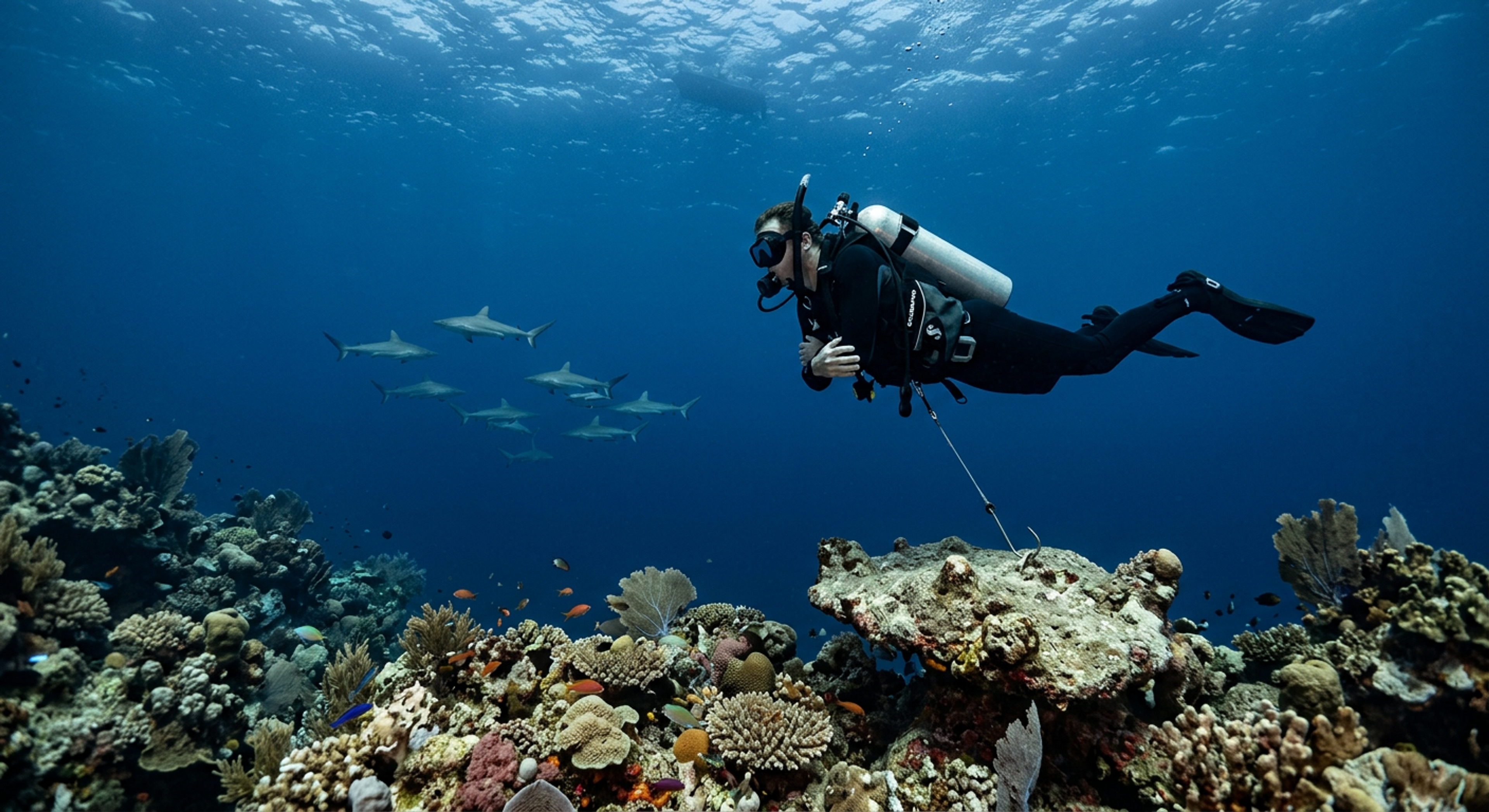
It is a remarkably simple tool. It consists of a dull stainless steel hook, a length of strong nylon line, and a brass clip. You clip the brass end to a secure D ring on your buoyancy compensator. When you reach the edge of the channel drop off, you find a completely dead, barren piece of rock. You carefully wedge the metal hook into a crevice.
Once secured, you add a tiny puff of air to your jacket to achieve positive buoyancy. You let go of the rock. The current will instantly blow you backward until the nylon line pulls completely tight. The line will strum and vibrate in the water like a guitar string.
You fly like a kite underwater.
It sounds incredibly simple. Yet guests constantly get it wrong. They hook onto living, fragile coral branches. This absolutely breaks my heart and destroys decades of delicate coral growth. Or they unclip their hook while their BCD is still fully inflated, shooting to the surface like a runaway missile.
Let me make this completely clear to anyone stepping onto my boat. If you damage my reefs because you refuse to learn how to handle your hook, I will permanently ban you from the dive deck. I have zero tolerance for sloppy divers destroying the ecosystem.
Reef Hook Etiquette
| Action | The Elegant Diver | The Deck Banned Diver |
|---|---|---|
| Placement | Finds smooth, dead rock or rubble. Tests stability gently. | Hooks onto branching coral, snapping it instantly. |
| Buoyancy | Adds just enough air to float horizontally, lifting fins off the reef. | Drags knees and heavy fins across the reef, crushing sponges. |
| Breathing | Slow, rhythmic breaths. Lowers heart rate to conserve air. | Pants heavily. Chews through a full tank of air in twenty minutes. |
| Detaching | Dumps all air from BCD first. Pulls forward on the line, unhooks gracefully. | Unclips while fully inflated, causing an uncontrolled rapid ascent. |
The Return to the Surface
After forty five minutes of flying on the hook, the bottom time runs out. I give the signal. We dump our air, unhook from the dead rocks, and let the current sweep us into the calm, shallow waters of the inner lagoon.
We shoot our safety sausages to the surface. We do our three minute stop while drifting over white sand and small patch reefs.
Breaking the surface is always a massive sensory shock. The roaring sound of your scuba bubbles instantly vanishes. The hot, salty wind hits your wet face. You hear the drone of our dhoni approaching to pick us up.
You climb up the heavy wooden ladders. Your legs feel like lead. The deck crew immediately wraps a steaming hot towel around your cold shoulders. You sit on the teak deck, sipping sweet black Maldivian tea, and look back out at the flat, glittering blue water of the channel. From the surface, it looks incredibly peaceful. You would never know there is a hurricane of teeth, tails, and raw ocean power spinning just below.