

Stop Drinking the Ocean! 3 Ways to Fix Your Mask Clearing at Home
Mask clearing is the number one reason new divers panic. Stop blaming your gear. Tatay Santiago explains why you choke and how to fix it with a simple bucket of water.
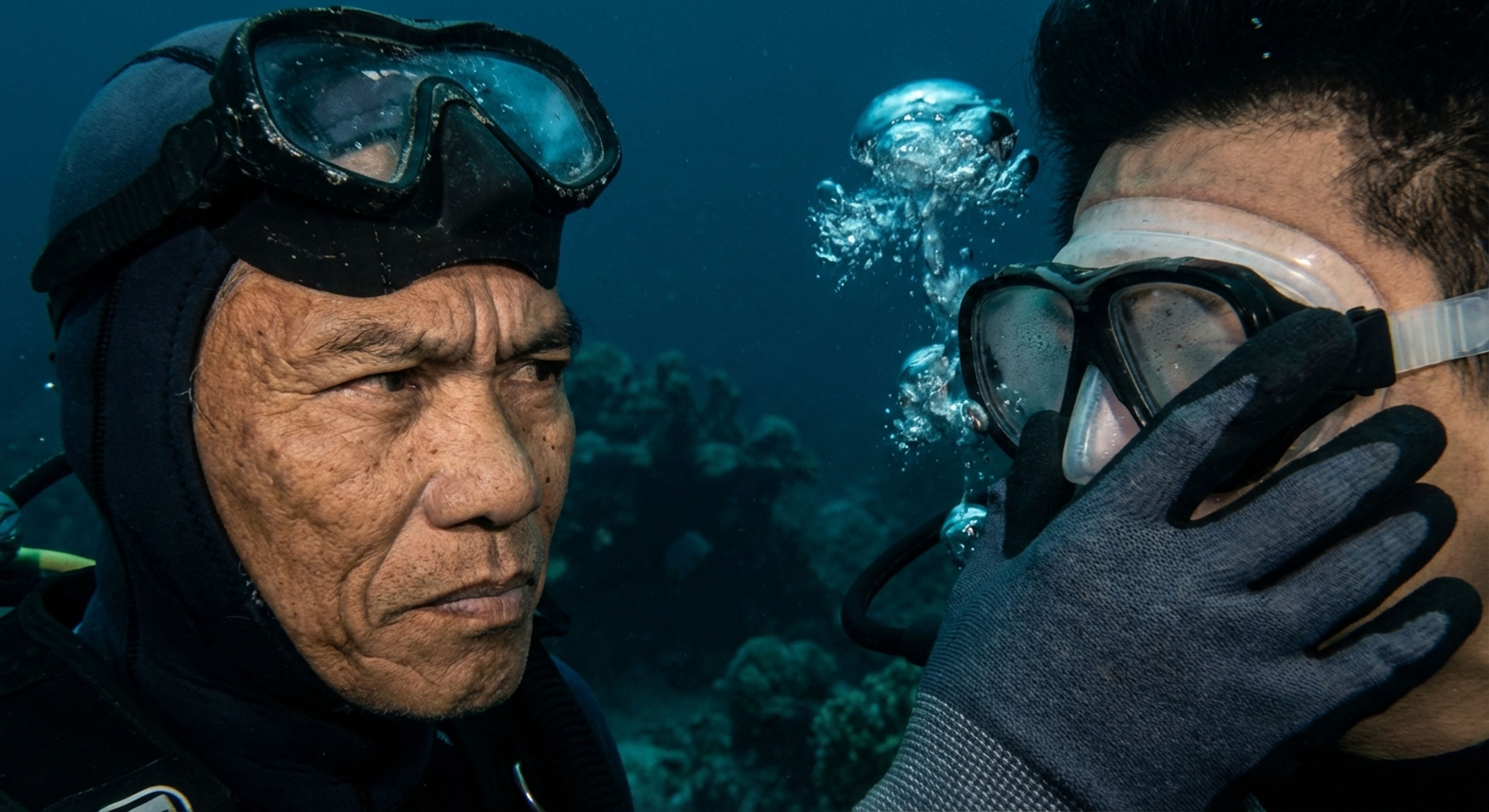
Hay naku. Every time. Every single time I take a group of Open Water students, there is one.
You know who you are. You have the shiny new fins. You have the dive computer that costs more than my first motorcycle. You look like a Navy SEAL on the boat. But the moment we go down to five meters and I signal "Mask Flood," I see the eyes go wide. I see the panic.
You rip the mask off. You bolt to the surface like a Polaris missile. You risk your lungs. You ruin the dive. And for what? A little bit of salt water in the nose?
Sus maryosep. Listen to Tatay Santiago.
Mask clearing is not a magic trick. It is not rocket science. It is basic survival. If you cannot clear your mask, you have no business being underwater. The ocean does not care about your expensive gear. The ocean is heavy, wet, and unforgiving.
But don't worry. I am grumpy because I care. I don't want to fish you out of the water. I want you to see the sharks, not the inside of a hyperbaric chamber.
Today, we talk about why you choke. We talk about the simple physics. And I give you three drills to do in your bathroom. No ocean needed. Just discipline.
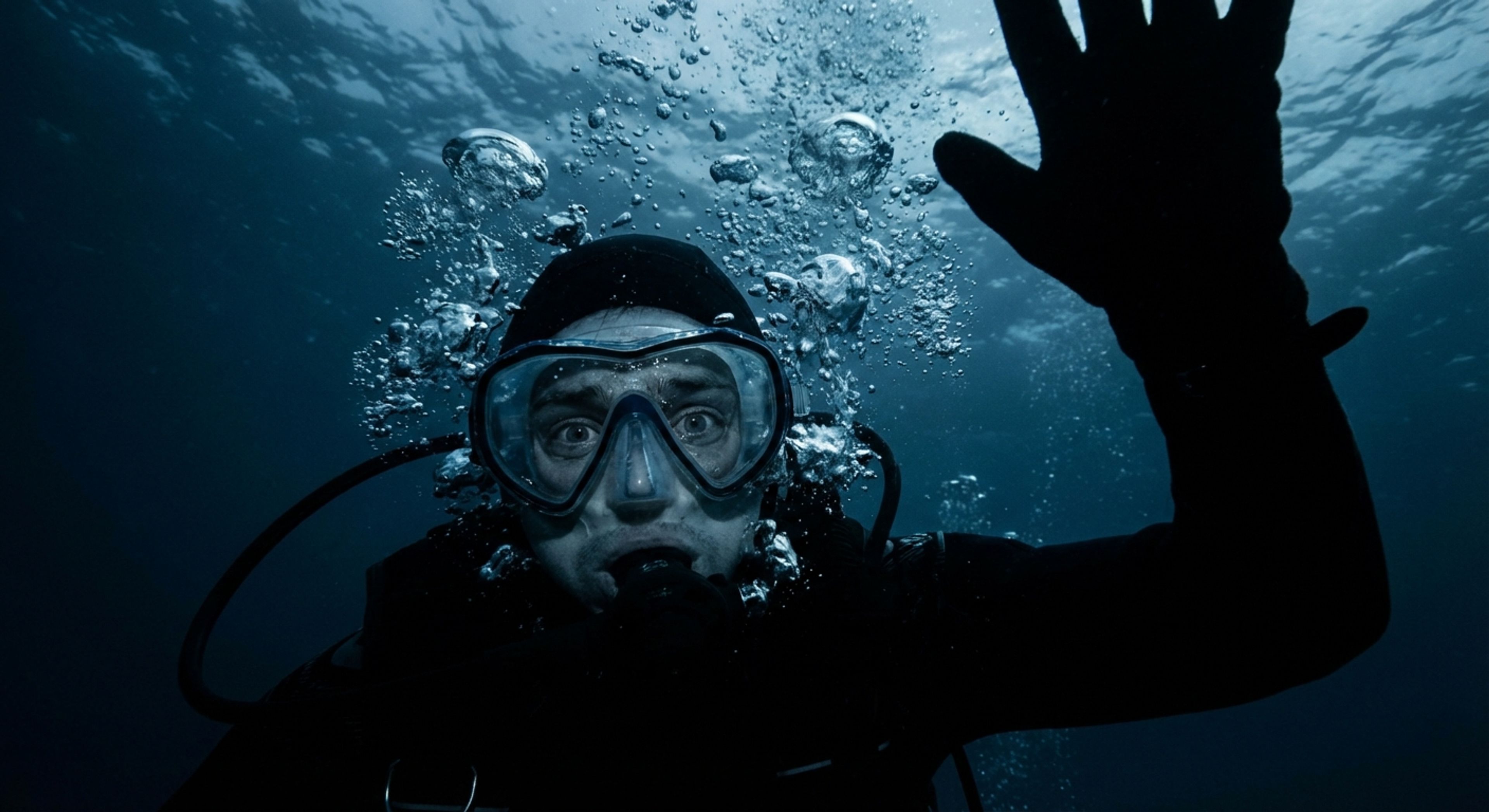
The Physics: Air Push Water
Why is this hard for you? Let us look at the mechanics.
The mask is a rigid air space. When water comes in, it sits at the bottom. Water is heavier than air. Gravity. Simple.
To get the water out, you need to replace it with air. Where does the air come from? Your lungs. Through your nose.
When you exhale through your nose into the mask, the air goes to the top of the mask. It pushes down. If the bottom of the skirt is sealed tight, the pressure builds up and the mask lifts off your face. That is messy.
So, we use physics.
- Look Up: This makes the bottom of the mask the lowest point. Gravity keeps the water there.
- Press Top Frame: This keeps the top sealed so air cannot escape into your eyes.
- Exhale Nose: The air fills the mask, displacing the water. The water has nowhere to go but out the bottom skirt.
It is displacement. Like pouring beer into a glass that is already full of water. The beer pushes the water out. Except here, the air pushes the ocean out.
Why You Choke (The Nose Problem)
You choke because you breathe in.
It sounds stupid, I know. "Santiago, why would I breathe in water?"
Because you are a mammal. You are not a fish. When cold water hits your nose, your brain screams "DANGER!" This is the Mammalian Dive Reflex. But sometimes, instead of holding breath, beginners gasp. It is instinct.
Also, many of you use the mouth to blow. You think you are blowing from the nose, but you are just making a face. You must dissociate, separate, the mouth breathing from the nose breathing.
If you have water in the mask and you inhale through the nose? You get a saltwater sinus wash. It stings. Then you cough. Then you lose the regulator. Then you scare the turtles.
Method 1: The "Batya" Drill (The Basin of Shame)
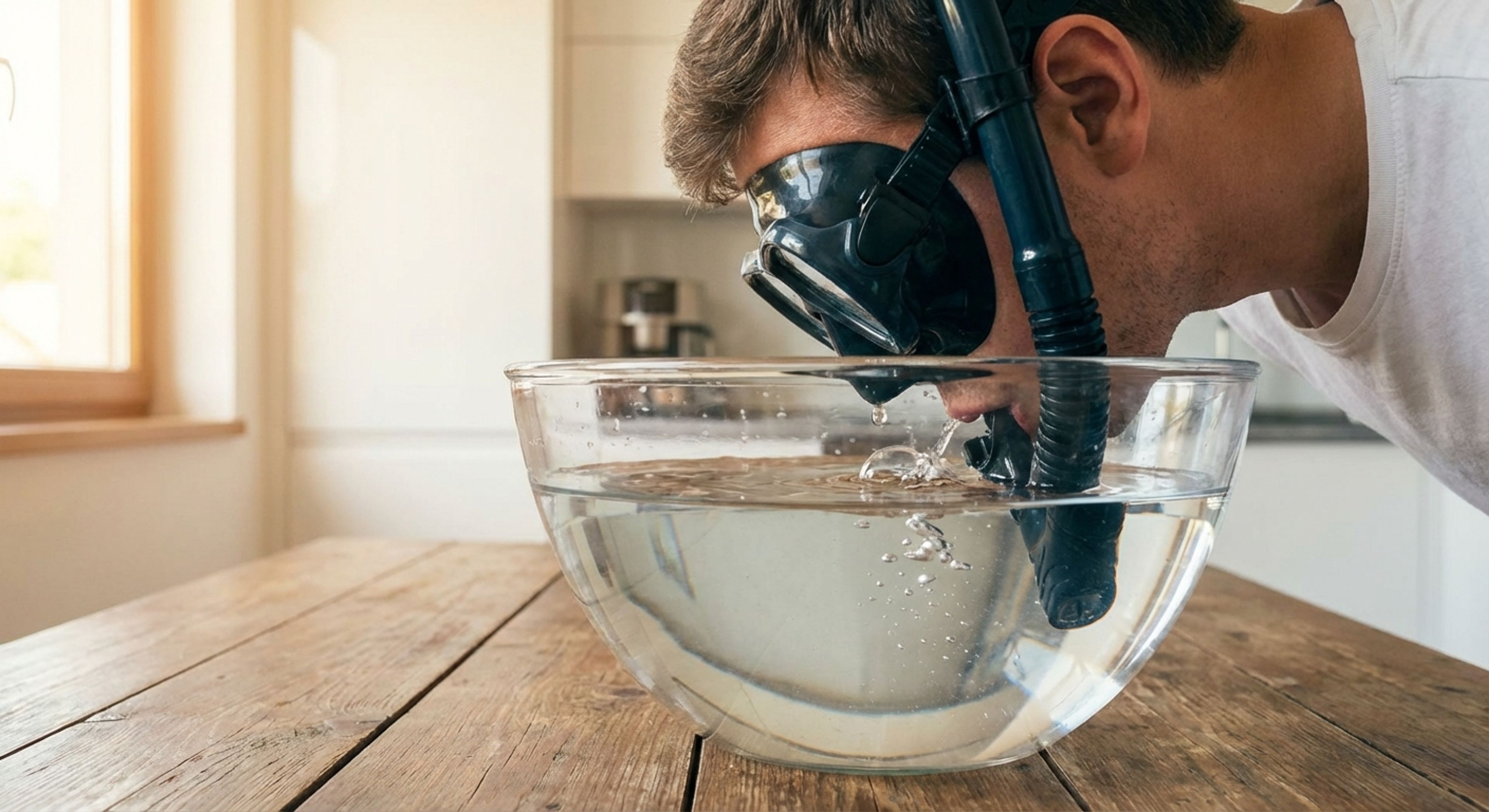
You don't need to pay for a pool session to fix this. You need a plastic basin. A batya. Or a large salad bowl if you are fancy.
The Setup: Fill the basin with tap water. Put it on the kitchen table.
The Drill:
- Don't wear the mask yet.
- Put your regulator or a snorkel in your mouth. If you don't have one, buy a cheap snorkel. Do not be kuripot (stingy). Do not use a garden hose, that is dirty and dangerous. Use proper gear.
- Dip your face into the water. Keep the snorkel tip above water.
- Breathe in through the mouth.
- Breathe out through the NOSE.
Do this for 10 minutes. In mouth. Out nose. In mouth. Out nose.
You will see bubbles. If you don't see bubbles coming from your nose, you are cheating.
Once you are comfortable, put the mask on.
- Put face in water.
- Pull the mask skirt open slightly to let water in. Fill it up.
- Now, practice the clear. Press top frame, look up slightly (don't lift head out of water), blow nose hard.
The goal is to be calm while your nose is wet. That is the secret. If you can sit there with a nose full of water and watch TV, you are a diver. If you panic, you are just a swimmer with expensive toys.
Method 2: The Shower Torture
This is for those who are scared of the water stinging the eyes.
Some of you wear contact lenses. Some of you have sensitive eyes. I understand. But the ocean is salty. It happens.
When you take a shower, close your eyes. Let the water run over your face. Now, put the snorkel in your mouth.
Breathe through the mouth while the water hits your face. Now, open your eyes.
Yes. Open them. The tap water is not salt, but it gets you used to the sensation of water on the eyeballs. Many divers panic because they cannot see clearly when the mask floods. Everything is blurry.
Get used to the blur.
The Advanced Shower Drill: Wear your mask in the shower. Let it flood. Clear it while standing up. Do this until you are bored. Boredom is good. Boredom means no panic.
I remember a student, a big guy from Texas. Strong like a carabao. But water in the nose made him cry. I told him to wear his mask in the shower every day for a week. His wife thought he was crazy. But next dive trip? He cleared his mask like a pro.
Method 3: The TV Watcher (Dry Muscle Memory)
Sometimes the problem is not the water. It is the hands.
You are underwater. You are weightless. You are confused. Which way is up? Where are my hands? You grab the mask and pull it away from your face. WRONG.
If you pull the mask away, you just dump more water in. You must only lift the bottom skirt or just let the air pressure do the work.
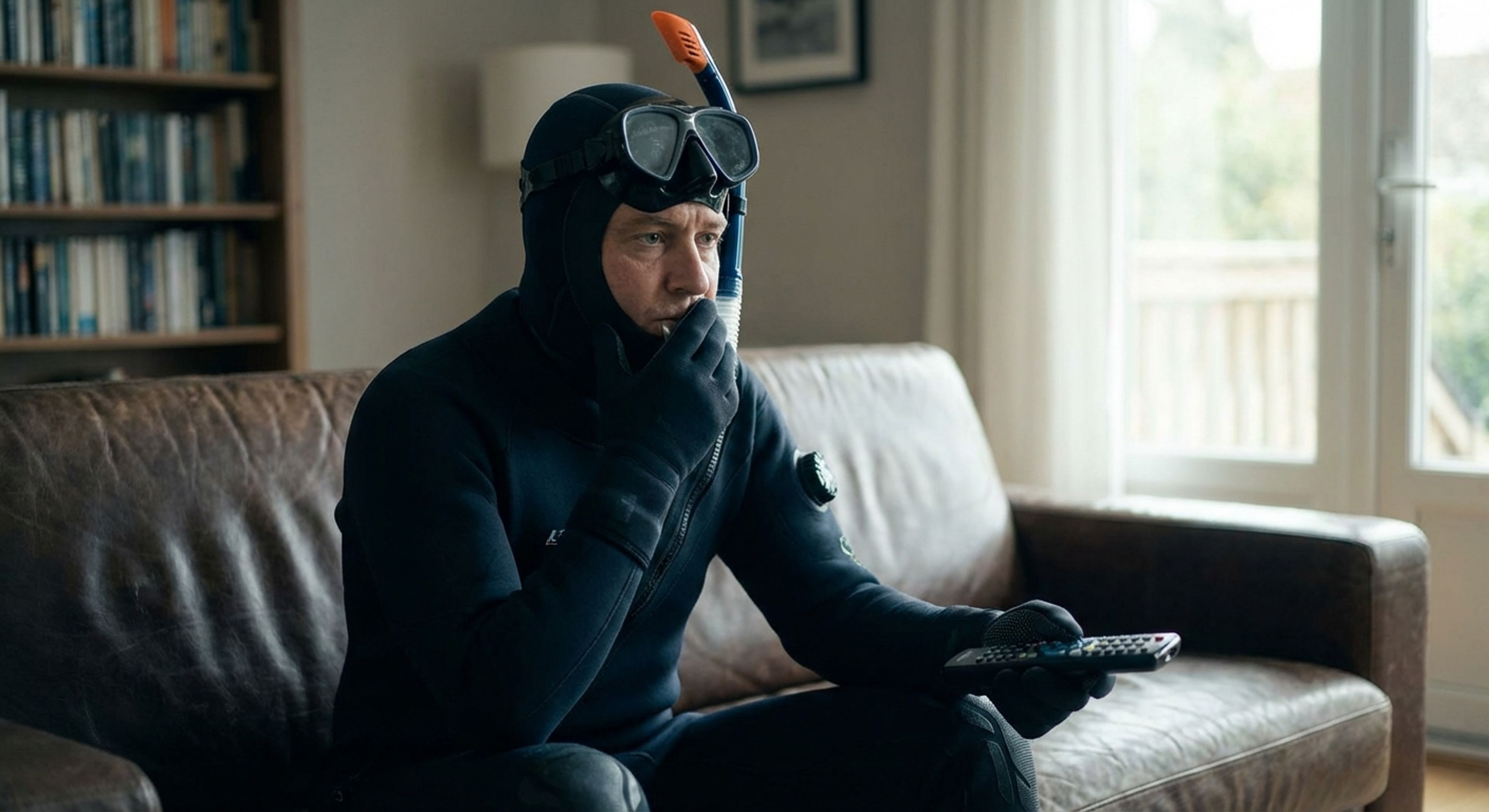
Sit on your sofa. Put on your mask. Watch your favorite show. Every time a commercial comes on (or every 5 minutes if you stream), do the motion:
- Deep breath in mouth.
- Hand placement: Two fingers on the top frame (forehead). Do not touch the bottom.
- Tilt head back. Look at the ceiling.
- EXHALE NOSE. LONG. STRONG. Like you are trying to blow a booger across the room.
Build the muscle memory. Top press. Head tilt. Nose blow.
If you do this 50 times on land, your hands will know what to do when your brain freezes underwater.
Common Mistakes Analysis
Let us look at the data. I have been teaching since 1985. These are the numbers.
| Mistake | What Happens | The Fix |
|---|---|---|
| Looking Down | Air gets trapped at the back of the mask. Water stays near the nose. You choke. | Look at the surface! Look at the sun! |
| Short Breath | You go "pfft" with your nose. Not enough air to displace the water. | HAAAAAAA! A long, continuous exhalation. |
| Mouth Exhale | The mask fogs up, regulator vibrates, but water stays in mask. | Close your mouth. Use the nose. |
| Tight Strap | You think tighter is better. No. Tighter deforms the silicone skirt. It leaks more. | Loosen it. It should float on your face. |
The "Mustache" Factor
Ah, the men with the facial hair. Like me. If you have a mustache, you have a leak. The hair breaks the silicone seal. You have three choices:
- Shave. (I will never do this).
- Use proper silicone grease (mask sealant) on the mustache. Do not use petroleum jelly (Vaseline), it eats the silicone skirt of your expensive mask.
- Accept that you will always have a little water in the mask.
I choose number 3. I am a diver. I am wet anyway. A little water at the bottom of the nose pocket is fine. Just clear it every few minutes. Don't be a baby about it.

A Final Word from Tatay
I remember a dive in Corón. Deep wreck. Very dark. My buddy's strap broke. Bam. Mask gone. He did not bolt. He did not panic. He switched to his backup mask in his pocket. He put it on. He cleared it. He checked his air. He gave me the "OK" sign. He was calm because he had practiced.
You practice these three things at home. The Basin. The Shower. The Sofa. Do not come to my boat and tell me you "forgot" how to clear. The ocean does not forgive forgetting.
Master the basics. Then we can talk about looking for the Thresher Sharks.
Now, go get a bucket.