

Nitrox is a Tool, Not a Toy: Beyond the NDL
Enriched Air Nitrox isn't just about staying down longer. It's about physiological efficiency and understanding the lethal limits of oxygen. Stop treating it like magic gas.
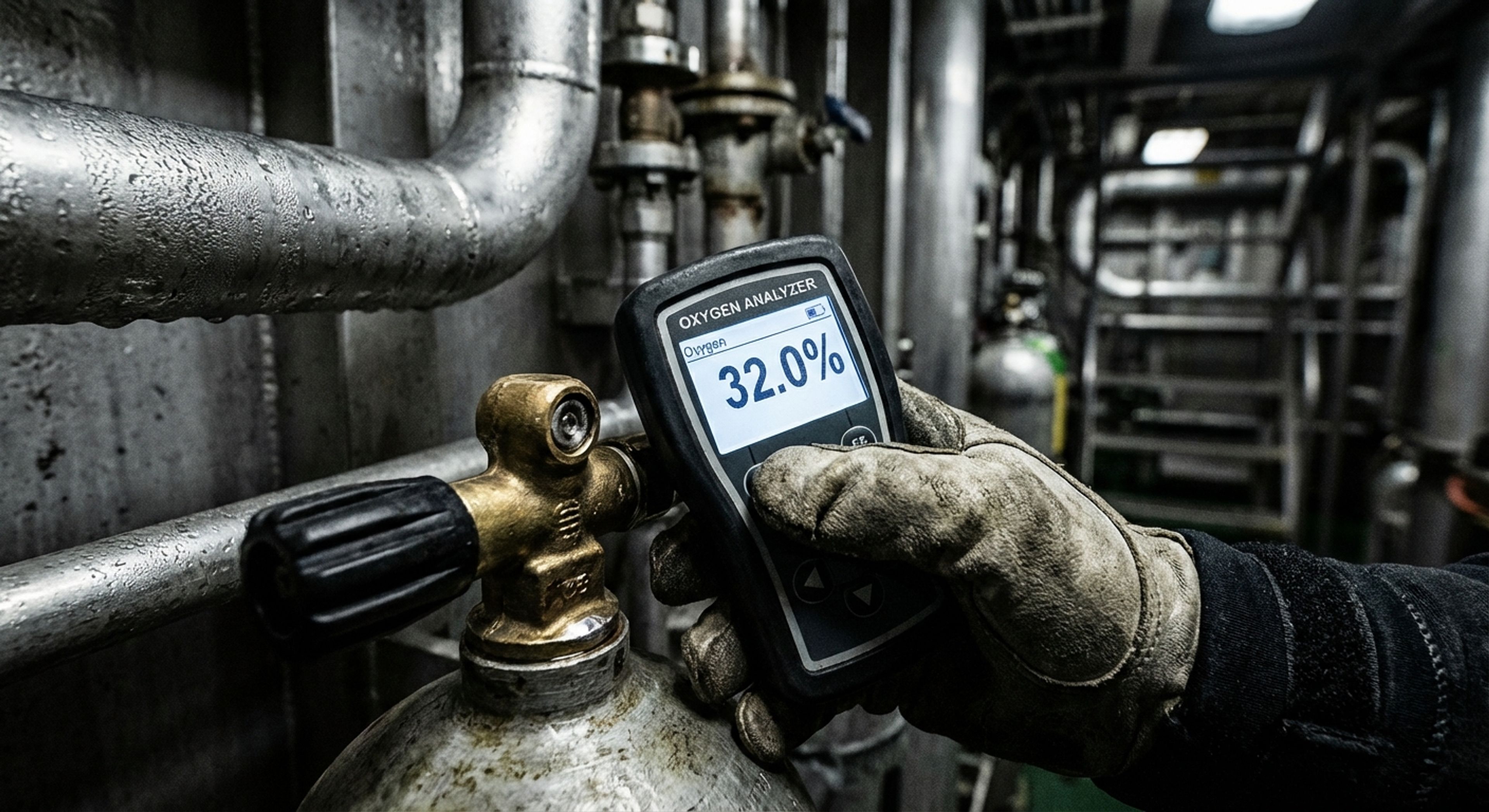
The smell of a compressor room is specific. It smells of hot oil, ozone, and noise. It is the smell of life support. When you are three hundred feet down in the North Sea, fixing a weld on a pipeline in pitch black water that is barely above freezing, you do not care about the color of the coral. You care about the gas in your tank. You care about the physics keeping your blood from turning into foam.
Recreational divers often treat Enriched Air Nitrox like a cheat code. They think it is some premium fuel that makes them Superman. I see them at the resorts when I am forced to take a holiday, bragging about their yellow and green tank stickers. They do not understand the thermodynamics. They do not respect the gas.
Nitrox is not magic. It is simply a different set of risks managed by mathematics. If you use it wrong, you don't just get bent. You convulse and drown.
The Gas is Just Numbers
Let’s strip away the marketing fluff. Air, the stuff you are breathing right now reading this screen, is roughly 21% oxygen and 79% nitrogen. There are trace gases like argon, but we ignore them for basic calculations.
Nitrogen is the enemy of the diver. It is an inert gas. Your body does not use it. It simply sits there. Under pressure, it saturates your tissues. It dissolves into your blood, your fat, your joints. When you ascend, the pressure drops. That gas wants to come out. If you come up too fast, or stay down too long, it forms bubbles. Big bubbles. They block blood flow. They press on nerves. Pain. Paralysis. Death. We call it decompression sickness (DCS), or the bends.
Nitrox, or Enriched Air Nitrox (EANx), is any breathing mix where the oxygen percentage is higher than 21%. In the recreational world, the standard mixes are EAN32 (32% oxygen) and EAN36 (36% oxygen).
The math is simple. If you put more oxygen in the cylinder, there is less room for nitrogen.
Air: 79% Nitrogen loading potential. EAN32: 68% Nitrogen loading potential. EAN36: 64% Nitrogen loading potential.
Less nitrogen in means less nitrogen absorbed by your tissues at a given depth.
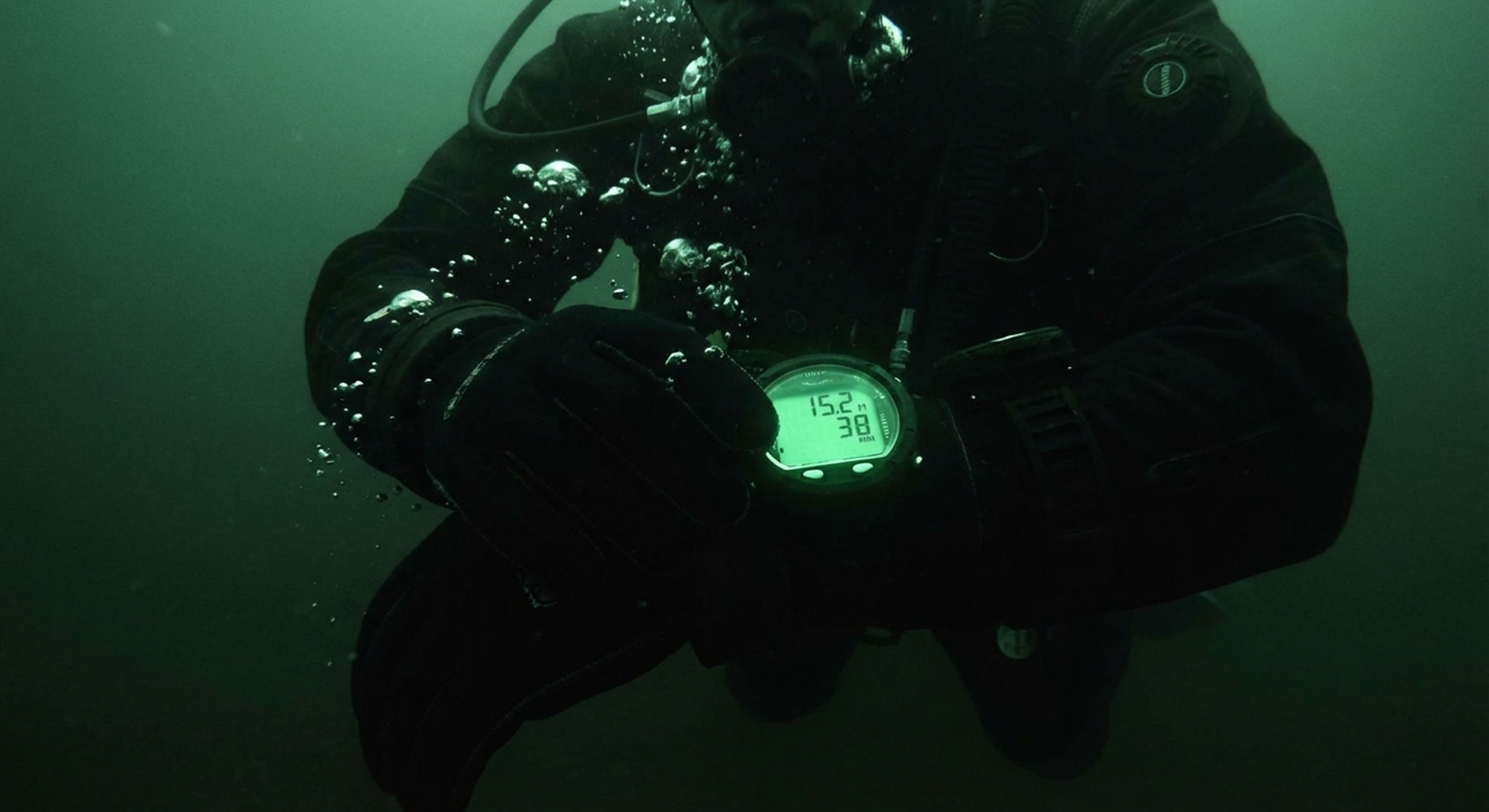
This extends your No Decompression Limit (NDL). That is the selling point every dive shop pushes. On air at 30 meters (100 feet), you might have 20 minutes before you enter decompression obligations. On EAN32, that might jump to 30 minutes or more. It is efficient. But efficiency is not the only reason we use it.
The Fatigue Factor: A Cold Reality
There is a physical toll to diving that has nothing to do with swimming. It is the physiological stress of off-gassing. When I spend six hours in a saturation bell or working a lock-out, the exhaustion hits deep in the bones. It is a heavy, leaden tiredness that coffee cannot touch.
Many divers report feeling less tired after diving on Nitrox. The scientific community goes back and forth on this. They want double-blind studies. They want data.
I do not care what the white papers say. I care about how I feel when I have to haul a hundred pounds of gear back onto a rolling boat deck in a gale.
Breathing less nitrogen reduces sub-clinical decompression stress. Even if you do not get "bent" in a way that requires a chamber ride, your body is fighting micro-bubbles. Your immune system sees these bubbles as foreign invaders. It attacks them. This creates a massive inflammatory response. That is why you want to sleep for twelve hours after a day of diving.
More oxygen. Less nitrogen. Less immune system panic. Less stress. If you are doing four dives a day on a liveaboard in the Red Sea, or working a multi-day salvage operation where mental clarity is the difference between keeping your fingers or losing them to a winch, Nitrox keeps your head clear.
In my line of work, a clear head prevents mistakes. Mistakes kill.
The Great Misconception: The Depth Trap
Here is where people get stupid. I once watched a guy in Thailand gear up with EAN36. He was excited. He told me he was going to go deep to see a wreck at 40 meters.
I grabbed his manifold and physically stopped him. I told him if he went to 40 meters on that gas, he would likely die.
He looked at me like I was speaking Norwegian. He thought "Enriched Air" meant "Super Air". He thought it made him stronger. He thought it was high-octane fuel for deep diving.
Nitrox does not let you dive deeper. It forces you to dive shallower.
This is the trade-off. You gain time, but you lose depth.
Oxygen is toxic under pressure. On the surface, we need it to live. At depth, high partial pressures of oxygen attack the Central Nervous System (CNS). This is the Paul Bert effect. It is not a slow onset like nitrogen narcosis.
When nitrogen hits you too hard, you get narcosis. You feel drunk. You feel happy. You might try to give your regulator to a fish. It is dangerous, yes, but if you recognize it, you can ascend a few meters and it clears up instantly.
Oxygen toxicity offers no such mercy. There is rarely a warning. No drunkenness. No dizziness. You go straight into a grand mal seizure.
Imagine having a seizure on land. Now imagine it underwater. You spit out your regulator. Your jaw clamps shut, often biting through your tongue. You try to inhale, but you can't. Then your throat opens and you inhale water. You drown. Game over.
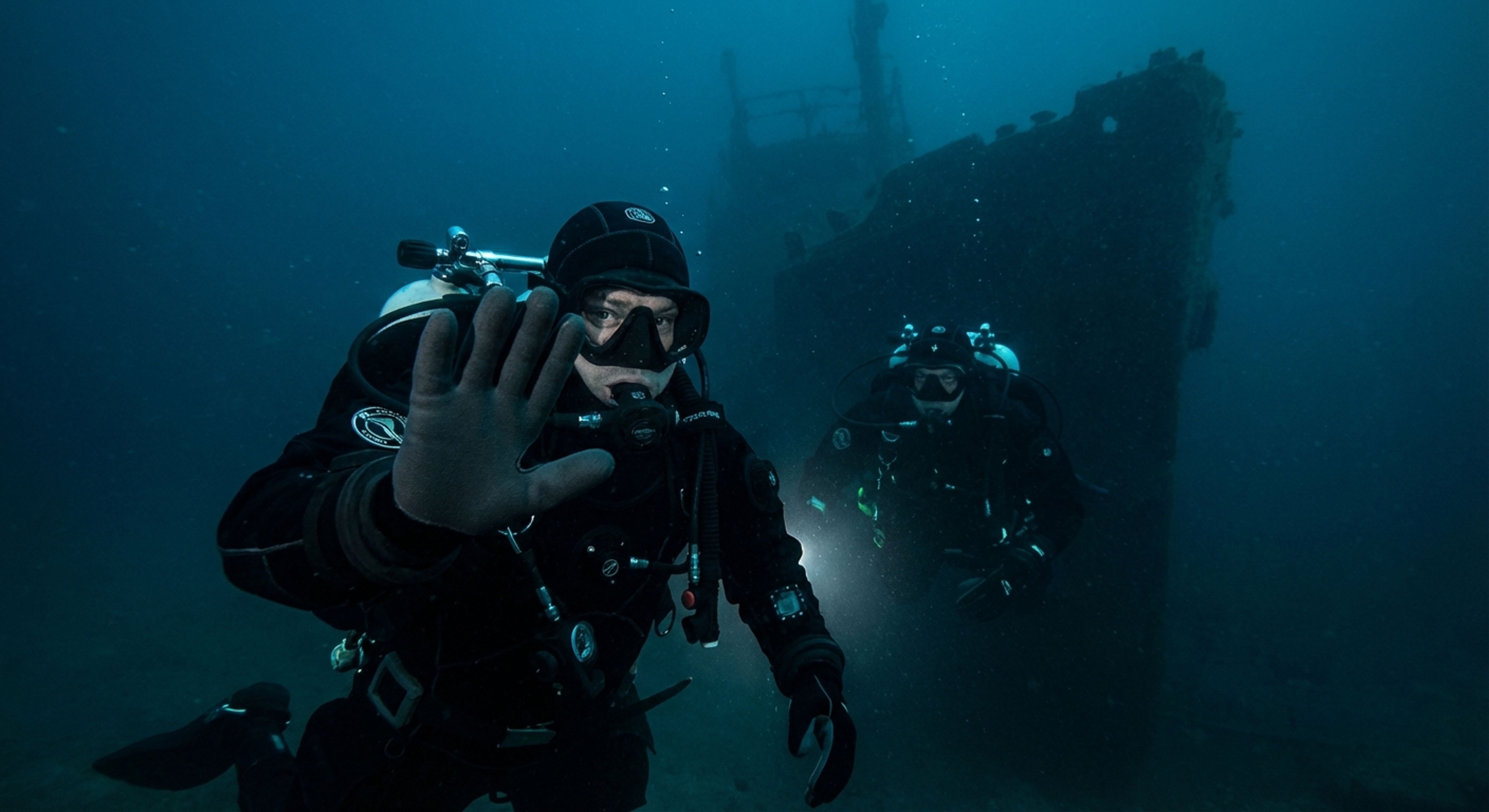
Calculating the Kill Zone (MOD)
In commercial diving, we do not guess. We calculate. We operate within safety margins because equipment is expensive and training a new diver takes time.
We use a limit for the Partial Pressure of Oxygen (PO2).
- 1.4 ATA (Atmospheres Absolute): The maximum limit for the "working" phase of the dive. This is your bottom time.
- 1.6 ATA: The absolute contingency limit, usually reserved for decompression stops where the diver is stationary and not exerting energy.
You must calculate your Maximum Operating Depth (MOD). If you cannot do this math, stay out of the water. Go play golf.
The formula is derived from Dalton's Law: MOD (meters) = [(Limit PO2 / Fraction of O2) - 1] x 10
Let's look at the numbers. Let's see why that tourist in Thailand was trying to kill himself.
The Comparison Table
| Gas Mix | Oxygen % | PO2 Limit | MOD (Meters) | MOD (Feet) | Risk Factor |
|---|---|---|---|---|---|
| Air | 21% | 1.4 ATA | 56m | 185ft | Narcosis usually hits before O2 tox. |
| EAN32 | 32% | 1.4 ATA | 33m | 111ft | Standard operational depth. |
| EAN36 | 36% | 1.4 ATA | 28m | 95ft | Shallow reefs only. |
| Pure O2 | 100% | 1.6 ATA | 6m | 20ft | Decompression stops ONLY. |
The Math for the Tourist: He wanted to take EAN36 (36% O2) to 40 meters. Pressure at 40 meters is 5 ATA (1 atmosphere of air + 4 atmospheres of water).
PO2 = 0.36 x 5 = 1.8 ATA.
The seizure threshold for a working diver is 1.4. The absolute "do not cross" line is 1.6. He was planning to hit 1.8 while swimming against a current. He was planning to swim into a blackout.
The Ritual of Analysis
This is why we analyze. Every tank. Every time.
I do not care if the dive master is your brother. I do not care if the shop has been open for twenty years. You never trust the sticker on the cylinder. You never trust the guy at the fill station. Maybe he was hungover. Maybe he didn't drain the banks. Maybe his oxygen sensor cells are three years old and drifting.
If you dive Nitrox, you own an analyzer. Or you use the shop's analyzer personally.
The Protocol:
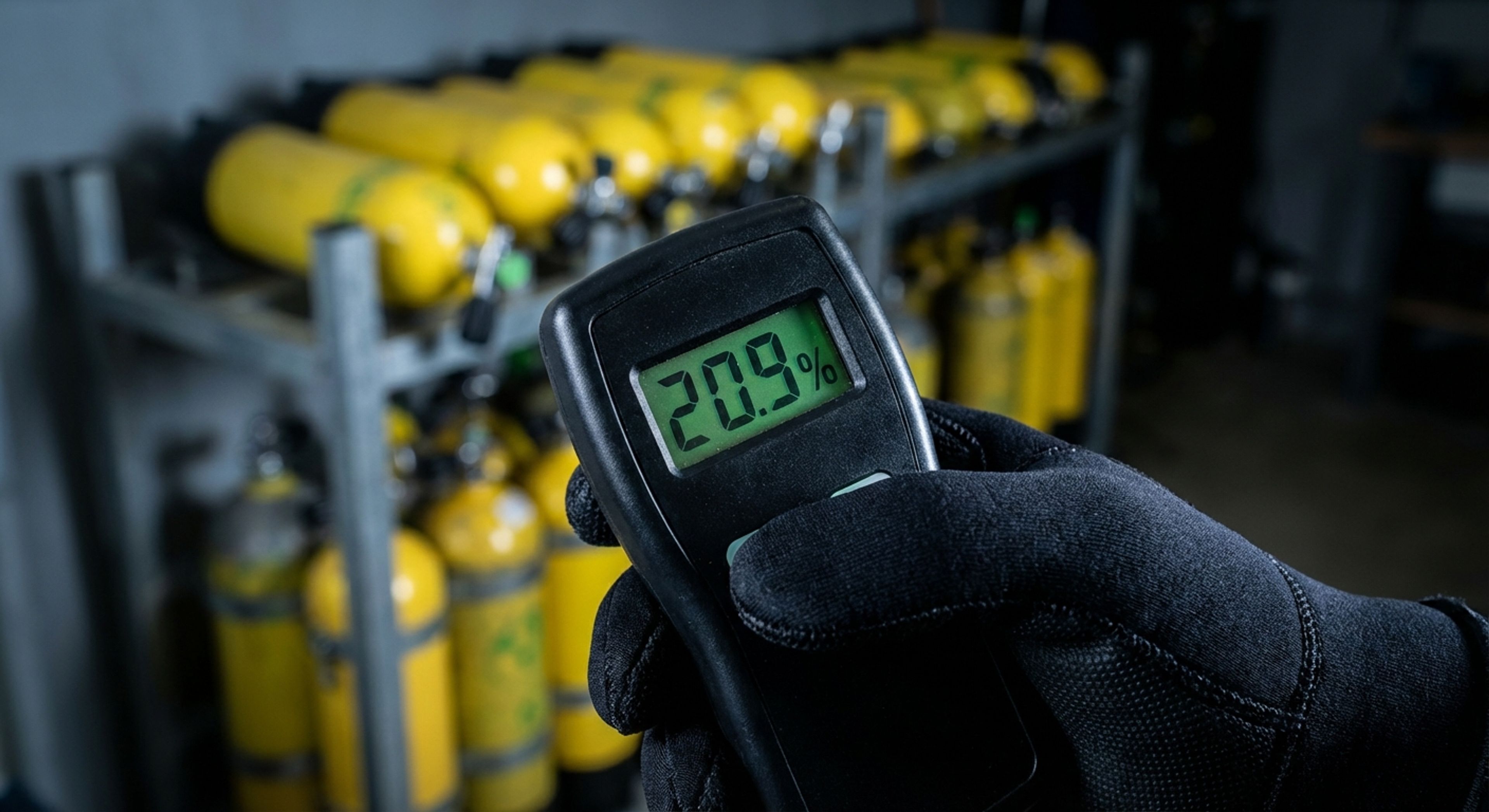
- Calibrate the analyzer to atmospheric air (20.9% or 21%).
- Open the tank valve slowly. Let it hiss.
- Smell the gas. It should smell like nothing. If it smells like exhaust, reject it. If it smells like oil, reject it.
- Apply the analyzer. Watch the numbers stabilize.
- Mark the tank.
If the tank sticker says EAN32, but your analyzer reads 34%, your MOD just got shallower.
- MOD for 32% = 33 meters.
- MOD for 34% = 31 meters.
Two meters difference. It doesn't sound like much until you are hovering at 32 meters looking at a shark, unaware that your CNS clock is ticking down to zero. You must program your dive computer with the exact number you analyzed. If you feed garbage data into your computer, it will give you garbage safety advice.
Reliability Over Comfort
I dive dry. I dive with steel tanks. I dive with redundant regulators. Nitrox is just another piece of equipment. It is a tool for gas management.
If I am doing a square profile dive to 25 meters to inspect a bridge piling, I will use EAN32. It gives me a massive safety margin on the NDL. I can get the job done without watching my computer count down the seconds to deco. It allows me to focus on the weld, on the rigging, on the cold.
But if I am dropping to 50 meters, I am not breathing Nitrox on the bottom. I am breathing Trimix (helium, nitrogen, oxygen). Helium replaces nitrogen and oxygen to reduce both narcosis and oxygen density. I might switch to a high-oxygen Nitrox mix like EAN50, or even pure Oxygen, only when I am shallow, at my decompression stops. This creates a steep gradient to flush the nitrogen out of my blood faster.
That is technical diving. But the principles apply to you.
The Bottom Line
Don't use Nitrox because it sounds cool. Don't use it because the certification card looks nice in your wallet. Use it because you understand the physiology.
- It extends bottom time by reducing nitrogen loading. This is the primary benefit for shallow to mid-range dives.
- It shortens surface intervals. If you have less nitrogen to off-gas, you can get back in the water sooner.
- It creates a safety buffer. If you dive EAN32 but keep your computer set to Air profiles, you have a massive physiological safety margin. I do this often when conditions are rough.
- It kills you if you go too deep.
Respect the depth. Respect the gas. Analyze your cylinder yourself. If you see someone diving EAN40 and heading for the abyss, do not follow them. They are already dead; they just haven't convulsed yet.
The ocean is indifferent to your survival. It does not care if you are a good person. It only respects physics. Make sure the math is on your side.
Stay safe. Stay warm.