

The Heavy Lead Suit: Why Post-Dive Fatigue Crushes You
You didn't run a marathon. You barely kicked your fins. Yet after a dive, you feel like you've gone twelve rounds with a sledgehammer. It's not just the exercise. It's the nitrogen, the cold, and the physics of survival.
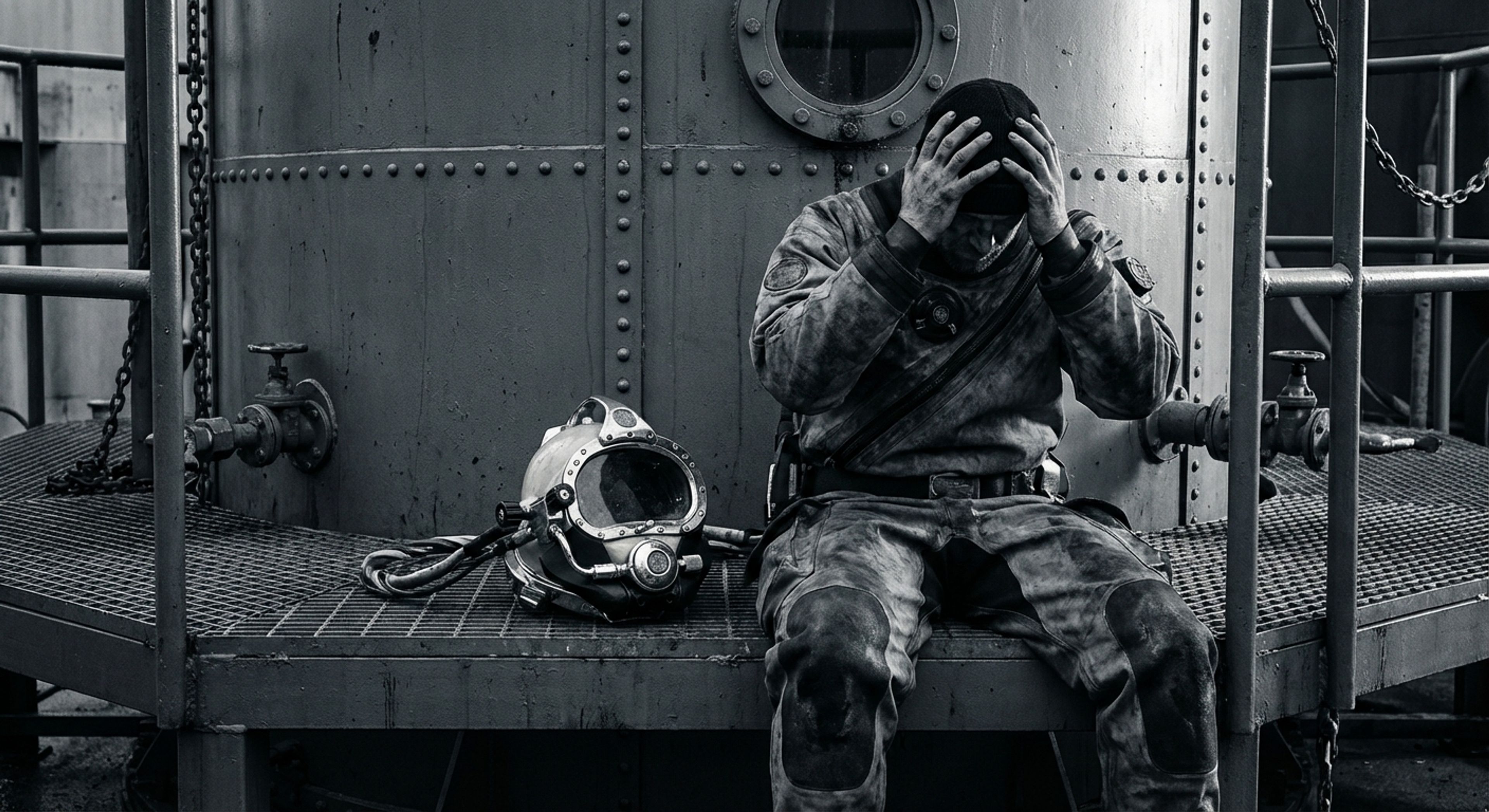
You climb up the ladder. You pull off your fins. You unzip the suit. Suddenly gravity remembers you exist. Your limbs feel like they are filled with wet concrete. You just spent forty-five minutes floating weightless in the water. You barely kicked. You certainly didn't run a marathon. So why does your body feel like you spent the last hour hauling scrap metal on a construction site?
I hear recreational divers complain about this all the time. They come up from their warm, clear tropical water, which is basically a swimming pool compared to where I work, and they need a nap. They think it's just the swimming. They are wrong.
The ocean extracts a tax for letting you survive in it. It takes your heat. It steals your water. It fills your blood with inert gas that your body has to fight to expel. Fatigue is not a symptom of weakness here. It is a symptom of physics. Thermodynamics and gas laws do not care about your comfort.
Let's break down why the deep makes you tired. And no, it is not because you skipped breakfast.
The Silent Enemy: Subclinical Decompression Stress
You know about the bends. Decompression Sickness. DCS. You avoid it by watching your computer and doing your safety stops. You think DCS is binary. You either have it or you don't.
That is a lie.
Every time you breathe compressed air at depth, nitrogen dissolves into your tissues. Henry's Law dictates this. When you ascend, that pressure releases. The nitrogen comes out of solution. Ideally, it comes out in your lungs and you exhale it. But in reality, tiny micro-bubbles form in your venous blood on almost every dive, even within "safe" limits.
We call this "silent bubbles" or subclinical decompression stress. You don't feel pain. Your joints don't lock up. You don't get a rash. But your body knows they are there.
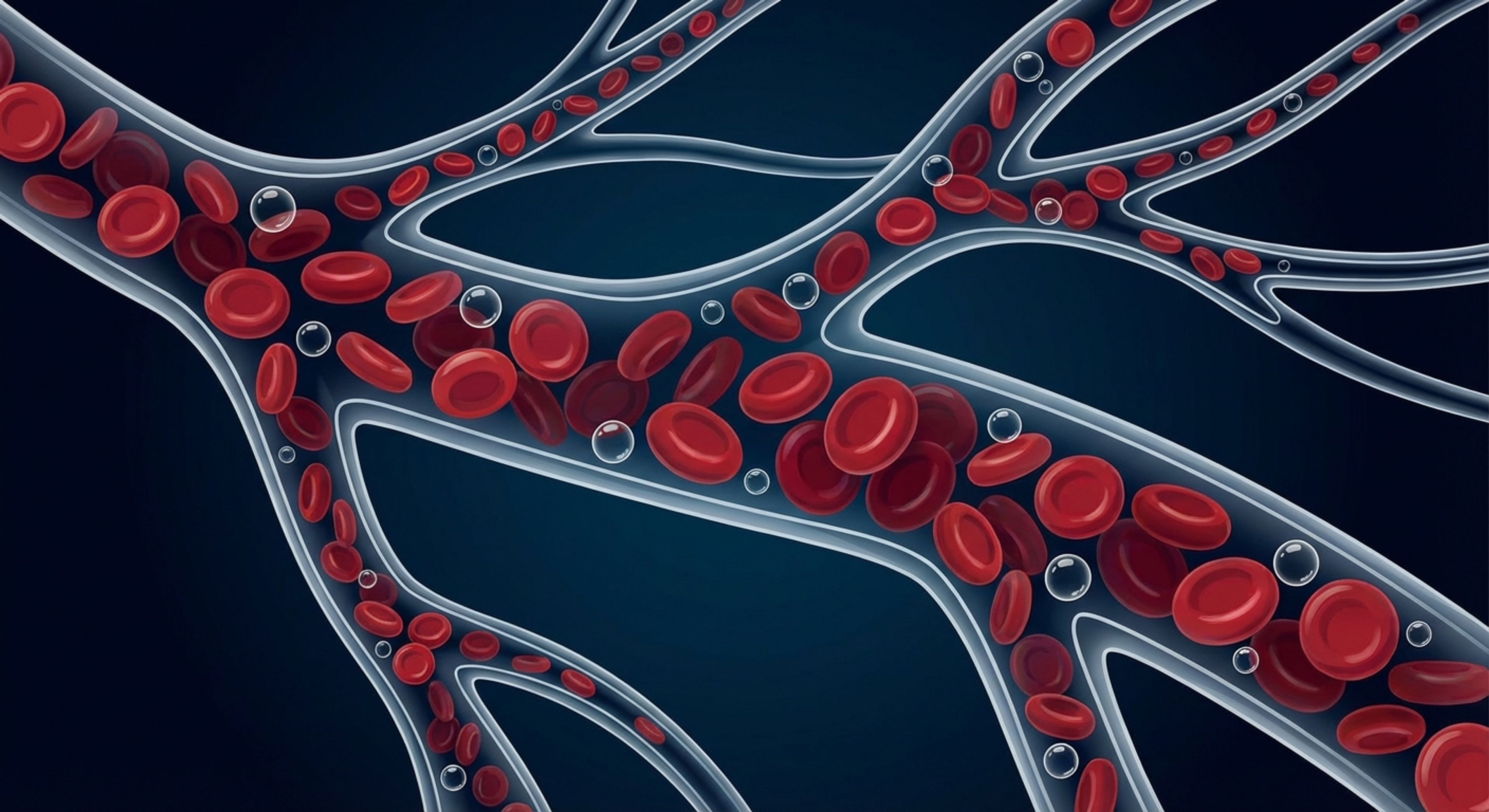
Your immune system is aggressive. It sees these micro-bubbles as foreign invaders. It treats a bubble of nitrogen the same way it treats a virus or a bacteria. It attacks. Your white blood cells coat the bubbles. Platelets gather. The complement system activates.
This causes a massive, systemic inflammatory response. Your body is fighting a war on a microscopic level while you are sitting on the boat talking about the pretty fish you saw. This immune response consumes energy. Massive amounts of energy. It releases chemical byproducts that make you feel lethargic and achy.
When I am in saturation at 150 meters, we live under pressure. We don't decompress until the end of the month-long shift. But for bounce divers, that's you, you are cycling pressure every time you go in. That constant loading and off-loading of gas, creating these silent bubbles, puts a heavy load on your physiology. That exhaustion you feel is your body trying to clean up the mess you made in your bloodstream.
The Thief of Heat
I dive in the North Sea. The water is cold enough to kill you in minutes without a suit. We respect the cold. We use hot water suits that pump 40-degree water around our bodies constantly.
Recreational divers are arrogant about heat. You dive in 28-degree Celsius water and wear a rash guard or a 3mm shorty. You say the water is warm.
Water is a thief. It conducts heat away from your body about 20 times faster than air. Even if the water is 30 degrees, it is lower than your core body temperature of 37 degrees. Thermodynamics dictates that heat flows from hot to cold. You are the hot object. The ocean is the heat sink.
Your body has to work overtime to maintain core temperature. You might not be shivering. Shivering is the last line of defense. Long before you shiver, your metabolism ramps up. Your body burns glucose and fat stores just to keep your organs functioning at the right temperature.
This happens even in the tropics. You are burning calories just by existing underwater. This metabolic burn generates waste products. It depletes your glycogen stores.
I remember a job repairing a pipeline riser off the coast of Stavanger. My hot water line got kinked. The flow stopped. Within three minutes, the cold began to seep through the suit layers. It feels like iron claws gripping your ribs. I finished the clamp, but by the time I got back to the bell, I was wrecked. Not from the wrench work. From the cold. The fatigue from thermal stress is deep. It settles in your bones.
If you are diving in a wetsuit, you are losing heat. Period. That energy loss translates directly to physical exhaustion when you hit the surface.
The Fluid Dynamics: You Are Dehydrated
You are surrounded by water, yet your body is drying out. It is a cruel irony of the trade.
There are two main mechanisms at work here.
1. Immersion Diuresis
When you jump into the water, the ambient pressure and the cooling effect push blood from your extremities toward your core. Your heart and chest detect this increase in blood volume. Your body thinks, "I have too much fluid."
To regulate this, your kidneys start working overdrive to filter out water. You produce urine. You need to pee. We call this immersion diuresis. You are rapidly losing fluid volume just because you are submerged.
2. The Dry Gas
The air in your scuba tank is filtered. It has to be. Moisture in a tank causes rust and can freeze the regulator in cold water. So the air you breathe is bone dry. Nearly zero percent humidity.
Your lungs require moisture to function. The delicate tissues need to be wet to exchange gas. Every time you inhale that dry tank air, your lungs strip moisture from your blood to humidify the gas. Every time you exhale, you are blowing that moisture out into the ocean.
You are literally exhaling your body's hydration with every breath.
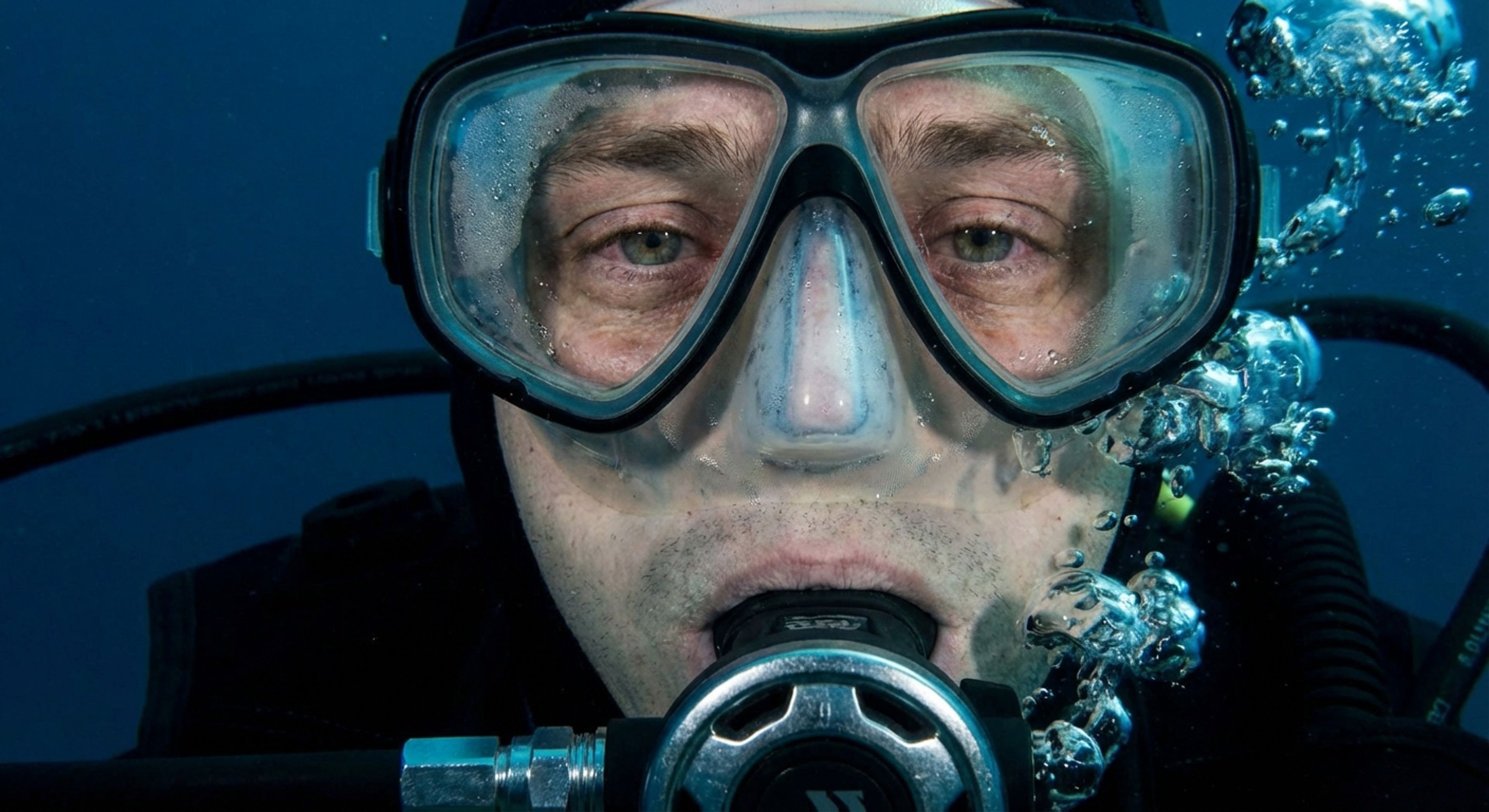
By the end of a 60-minute dive, you have lost a significant amount of water. Your blood becomes thicker. We call this increased viscosity. Sludge blood.
Thick blood is harder to pump. Your heart has to beat harder to push this sludge through your capillaries. This reduces the efficiency of gas exchange. It makes off-gassing nitrogen harder (increasing the DCS risk mentioned above). And it makes you tired.
The Mechanics of Breathing
Breathing underwater is not like breathing on the surface. You are pulling air through a mechanical device. The regulator has resistance. The deeper you go, the denser the air becomes.
At 30 meters, the ambient pressure is 4 ATA, meaning the air is four times denser than at the surface. It is like breathing soup. The turbulent flow of air through the regulator and your airways increases the "work of breathing." Your diaphragm and intercostal muscles, the muscles between your ribs, have to pull harder to inflate your lungs.
You are effectively doing a respiratory workout for the entire duration of the dive. You don't notice it because you are distracted by the environment. But your muscles feel it later.
Carbon dioxide retention is also a factor. If you are working hard against a current or skip-breathing (which you should never do), CO2 builds up. CO2 is a narcotic. It causes headaches and heavy fatigue. If you come up with a "CO2 hit," you will feel like you have a hangover without the fun of drinking the night before.
Recovery is Mandatory, Not Optional
So you have subclinical bubbles causing inflammation, thermal stress burning your calories, thickened blood from dehydration, and tired respiratory muscles. And you wonder why you want to sleep?
Stop fighting it. The "tough guy" attitude doesn't work with physiology. I've seen big guys, commercial divers who can bench press an engine block, get dropped by ignoring recovery.
Here is the protocol. It is simple.
1. Hydrate before you die. Drink water. Not coffee. Not soda. And definitely not alcohol immediately after the dive. Alcohol dilates blood vessels and dehydrates you further. It accelerates the circulation of those silent bubbles. Drink water until your urine is clear. Thin that blood out so your heart doesn't have to pump sludge.
2. Warmth. Get out of the wet gear immediately. Dry off. Put on a windbreaker or a hoodie. Even in the tropics, the wind on wet skin causes evaporative cooling. Stop the heat loss. If you are cold diving, get a warm drink. Warm the core from the inside.
3. Rest. Don't go for a run. Don't hit the gym. Heavy exercise after diving increases the risk of bubble formation. Your body is busy fighting the nitrogen war. Let it win. Sleep is when the repair happens.

The Bottom Line
Fatigue is a safety signal. It is your dashboard warning light. If you are excessively tired, your risk of DCS increases on the next dive.
I treat my body like a machine. A machine requires maintenance. You don't run an engine redline without changing the oil. You don't dive deep without paying the price.
Accept the heaviness. It means you went where humans aren't supposed to go, and you came back. That fatigue is the feeling of being back in gravity, dealing with the consequences of visiting the void.
Drink your water. Shut up. Go to sleep.
We dive again tomorrow.