

Regulator Mechanics: Piston, Diaphragm, and Survival Maintenance
Your regulator is not a toy. It is a machine that cheats death. Learn the difference between piston and diaphragm systems and how to keep them from killing you.
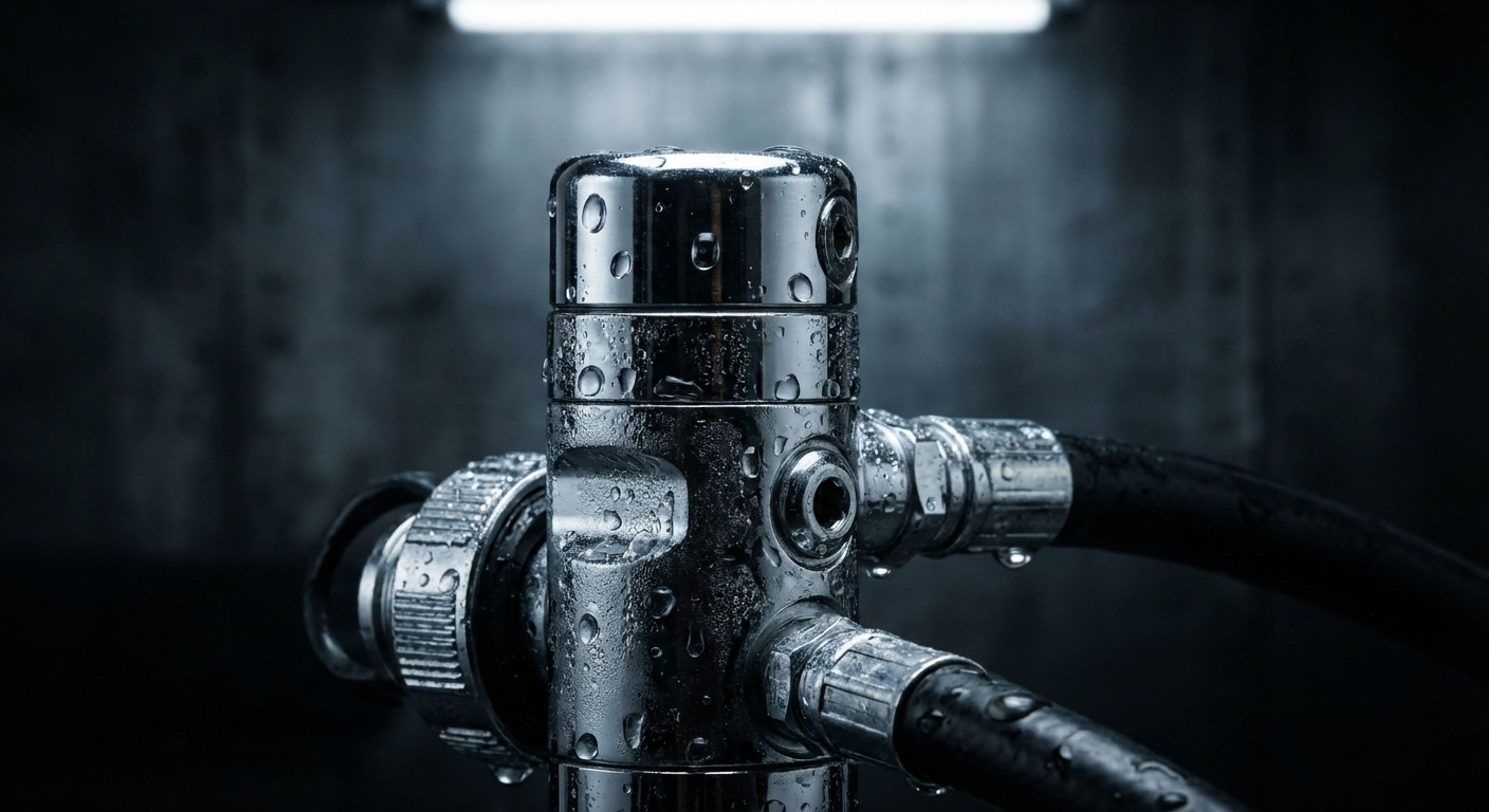
You are 400 feet down. The water is 4 degrees Celsius. It is pitch black. The only thing separating your lungs from the crushing weight of the Atlantic Ocean is a piece of machined brass and a few rubber O-rings.
Recreational divers in the tropics treat their gear like toys. They toss regulators in the sand. They rinse them without looking. They assume the air will always flow.
I don't make assumptions. In saturation diving, assumption is the first step toward a closed-casket funeral.
To survive the deep, or even just a cold dip in a fjord, you need to understand the mechanics of your life support. You need to know how the pressure is stepped down and why your choice of valve matters when the temperature drops. And you need to know how to clean it without destroying it.
The First Stage: Taming the Beast
The tank on your back holds gas at around 3000 psi (200 bar). Sometimes more. If you took a hit of that directly to your lungs, it would blow them apart like wet paper bags.
The first stage is the muscle. It bolts to the tank valve and reduces that massive tank pressure to an "intermediate pressure." This is usually around 135 to 145 psi over the ambient surrounding pressure. It’s a step-down transformer for gas.
There are two main ways this mechanical magic happens: Piston and Diaphragm.
Piston Regulators
Piston regulators are simple. They have fewer moving parts. Inside, a hollow metal piston moves back and forth against a spring to control the airflow.
The Good: They flow massive amounts of air. If you are deep and breathing hard, a high-end balanced piston delivers gas effortlessly.
The Bad: In the standard design, water enters the main spring chamber. This is fine in the Caribbean. In Norway? It is a disaster. The water freezes around the piston. The regulator locks open. You get a free flow. Your tank drains in seconds. The ocean fills with noise and bubbles. You have a problem.
Diaphragm Regulators
These are my choice. A flexible rubber diaphragm separates the internal mechanism from the outside water. A pin transfers the pressure from the diaphragm to the valve seat.
The Good: They are sealed. The freezing seawater never touches the moving metal parts inside. They are resistant to freezing and resistant to silt and grime.
The Bad: They have more parts. They are slightly more complex to service. But complexity is a fair price for not having ice crystals form inside your life support.
Balanced vs. Unbalanced
This is where physics hits your wallet.
Unbalanced: The tank pressure helps push the valve closed or open. As the tank empties and pressure drops, the breathing effort changes. It gets harder to breathe the deeper you go and the lower your tank gets. These are cheap. Rental gear. I wouldn't use one to clean my pool.
Balanced: The mechanism is designed so the tank pressure does not affect the force required to open the valve. You get the same air delivery at 200 bar as you do at 50 bar. You get the same ease of breathing at 10 meters as you do at 100 meters. If you dive deep, you dive balanced.
Here is the breakdown for the pragmatists:
| Feature | Balanced Diaphragm | Balanced Piston | Unbalanced Piston |
|---|---|---|---|
| Airflow | Excellent | Superior | Adequate |
| Cold Water | Superior (Sealed) | Poor (unless sealed) | Poor |
| Reliability | High | High | Moderate |
| Cost | High | High | Low |
| Best For | Cold/Dirty Water, Tech | Deep Warm Water | Shallow Warm Water |
The Second Stage: The Demand Valve
The gas leaves the first stage through a hose at intermediate pressure. It hits the second stage. This is the bit in your mouth.
The second stage takes that 140 psi and drops it down to ambient pressure. It is a "demand valve." It only gives you gas when you inhale.
Inside, there is a lever. When you suck in, the pressure inside the casing drops. The diaphragm (a different one from the first stage) gets pushed in by the water pressure outside. It hits the lever. The lever opens the valve. You get air.
When you exhale, you push the diaphragm out, the lever closes, and the exhaust valve opens to let the bubbles out.
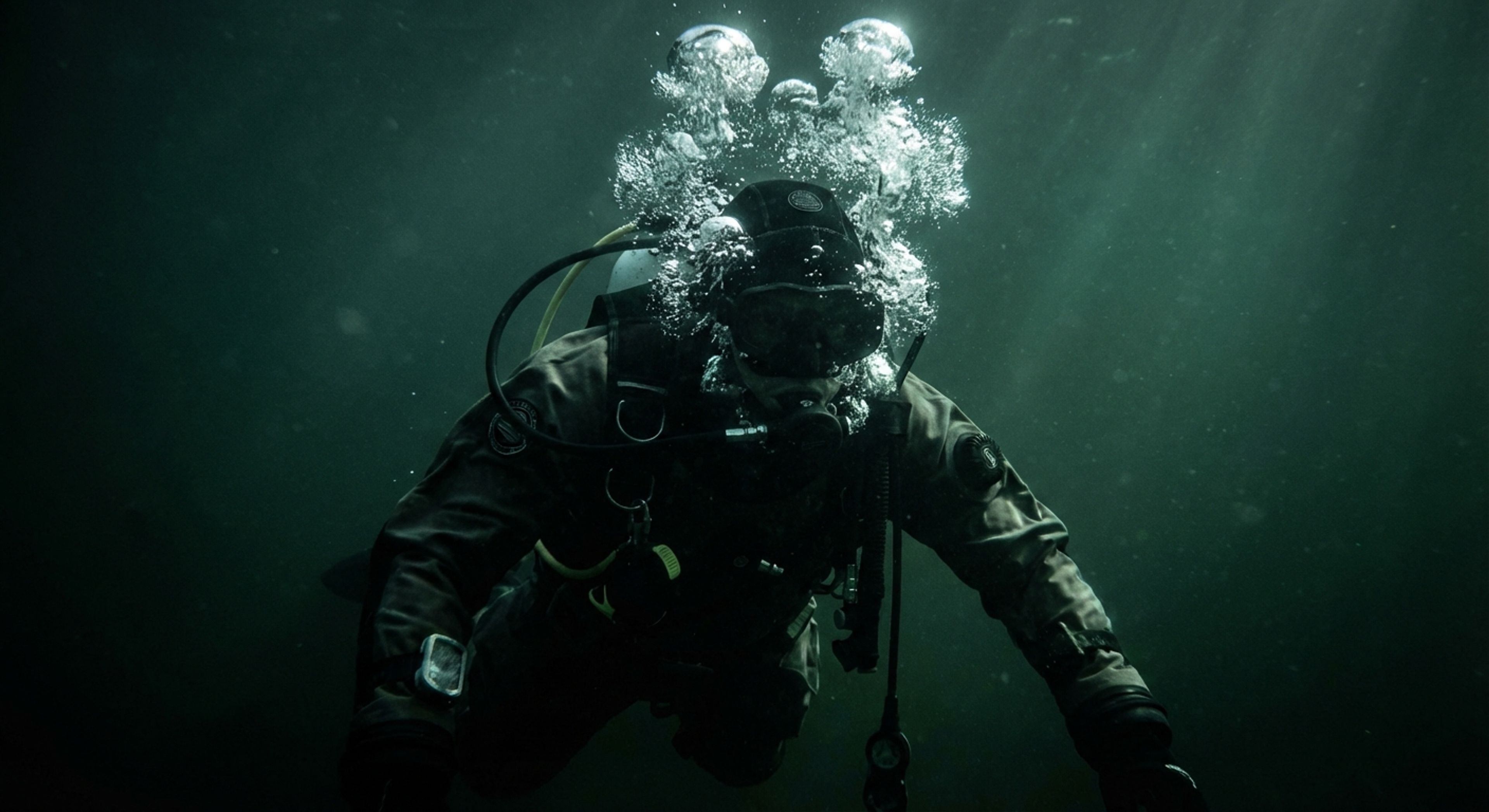
Simple. But if it is poorly adjusted, you fight for every breath. That is "work of breathing." High work of breathing leads to CO2 buildup. CO2 buildup leads to panic. Panic leads to death.
Maintenance: Don't Be an Idiot
I have seen divers finish a dive, throw their regulator in a rinse tank without the dust cap on, and walk away.
If I was their supervisor, I would fire them.
The most critical part of the first stage is the sintered filter. It is a small metal mesh at the inlet. It stops rust and dust from the tank entering the delicate high-pressure seat.
If you let water enter the first stage inlet, you are flooding the high-pressure system. The water will corrode the springs. It will degrade the lubricants. It will ruin the pressure gauge.
The Cleaning Protocol
- Secure the Dust Cap: Before any water touches the regulator, the dust cap must be on the first stage inlet. It must be dry. It must be tight. If you use DIN valves (which you should, yoke valves are for tourists), ensure the screw cap is sealed.
- No High Pressure Rinsing: Do not blast water at the first stage with a hose. You might force water past the seals. Gentle flow only.
- Do Not Press the Purge Button: When the regulator is soaking and not pressurized, never press the purge button on the second stage. This opens the valve and allows water to travel up the hose and into the first stage. I see people do this in rinse tanks all the time. They are flooding their own gear.
- Soak it: Salt crystals harden like concrete. A quick dunk does nothing. Soak it in fresh water for an hour. Let the salt dissolve.
- Dry it: Hang it up. Keep it out of direct sun. UV light destroys rubber hoses.
Signs Your Gear is Dying
Mechanical failure rarely happens instantly. The machine warns you. You just have to listen.
1. The Hiss (Leaks)
If you hear a hiss from the first stage when you pressurize the tank, you have an O-ring failure or a high-pressure seat failure. Do not dive. If that seat fails underwater, the intermediate pressure will spike. The second stage will not be able to hold it. It will free flow violently.
2. Creeping Intermediate Pressure
Sometimes the gauge needle twitches. Or the second stage burps a little bubble every few seconds. This is "IP creep." The high-pressure seat inside is not sealing perfectly. Pressure is leaking from the tank side to the hose side. Eventually, it will force the second stage open. It needs a technician.
3. Increased Breathing Resistance
If you have to suck hard to get air, something is wrong. The filter might be clogged. The lever height might be too low. The lubricant might have dried out. Hard breathing causes stress. Stress kills.
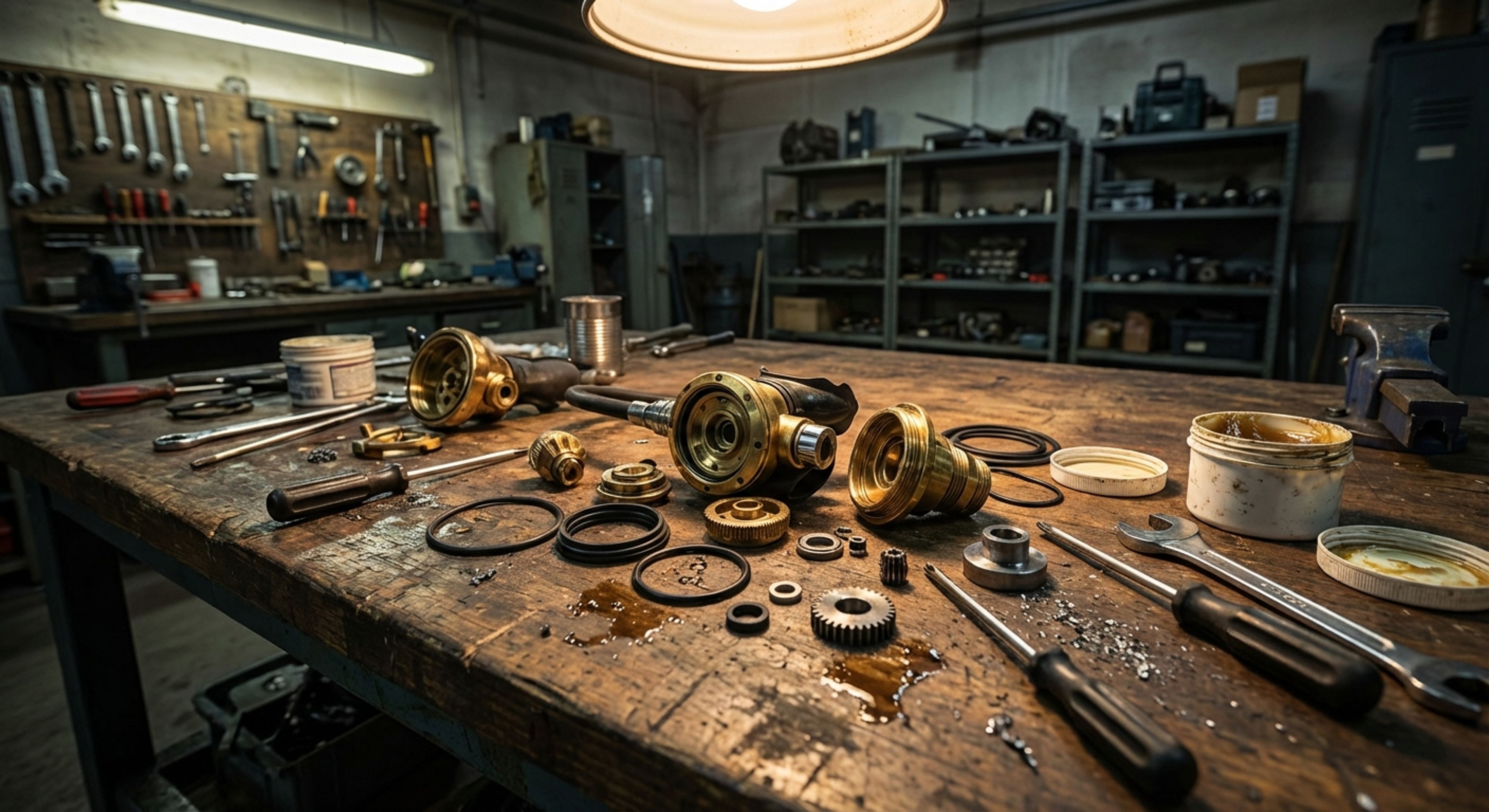
A Cold Lesson
I remember a job in the North Sea. Winter. We were working on a pipeline flange. I was using a backup regulator I hadn't serviced in two years. I thought it was fine. It was just a backup.
I switched to it during a gas change. The water was near freezing. The moment I took a breath, the unsealed piston froze. The thermal shock was too much. The regulator locked open.
It felt like someone shoved a fire hose down my throat. The gas hit me with such force my cheeks flapped. I had to feather the valve on the cylinder just to breathe without lung damage. I aborted the dive. I lost pay. I looked like an amateur.
Since then, I check everything. I service my gear annually, regardless of how many dives it has.
Metal corrodes. Rubber rots. Salt destroys.
Your regulator is the only thing that allows you to visit the hostile world beneath the surface. Treat it with respect. Rinse it properly. Service it often.
Or stay on the boat. It’s warmer there anyway.