

Sever the Link: Why You Must Reject Unsafe Dive Buddies
A dive buddy is a redundant life support system. If that system is faulty you shut it down. Here is how to tell a diver they are a liability without starting a brawl on the boat deck.
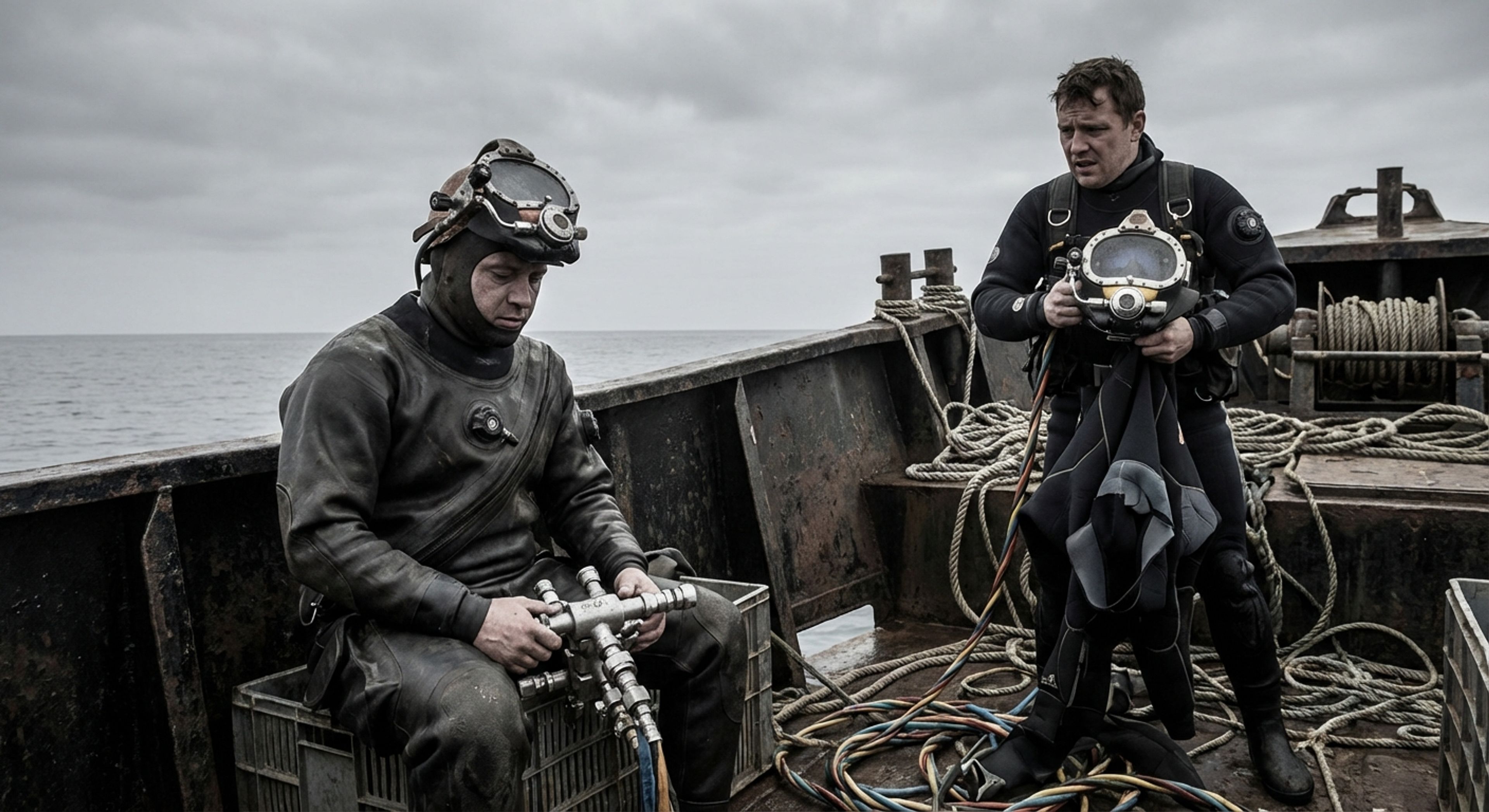
At 120 meters under the North Sea the only thing keeping me alive is a mix of helium, oxygen, and rigid discipline. My umbilical is my lifeline. My helmet is my castle. I do not have a "buddy" holding my hand. I have a team of professionals monitoring my vitals from a control room. We deal in absolute certainty.
Recreational diving is different. It is softer. It is warmer. And frankly it is more dangerous.
You jump off a plastic boat in some tropical soup with a stranger the divemaster paired you with five minutes ago. You don't know this person. You don't know if they panic when their mask floods. You don't know if they check their SPG or if they just wait until the regulator gets stiff to signal "low air".
In my world a failure point is isolated and removed. In your world that failure point is swimming three feet away from you.
You have the right to refuse a buddy. In fact you have a duty to do it. If you accept an incompetent partner you are accepting a variable that could kill you. I don't care about politeness. I care about physics and physiology.
Here is how you handle the "Insta-Buddy" problem without emotion.
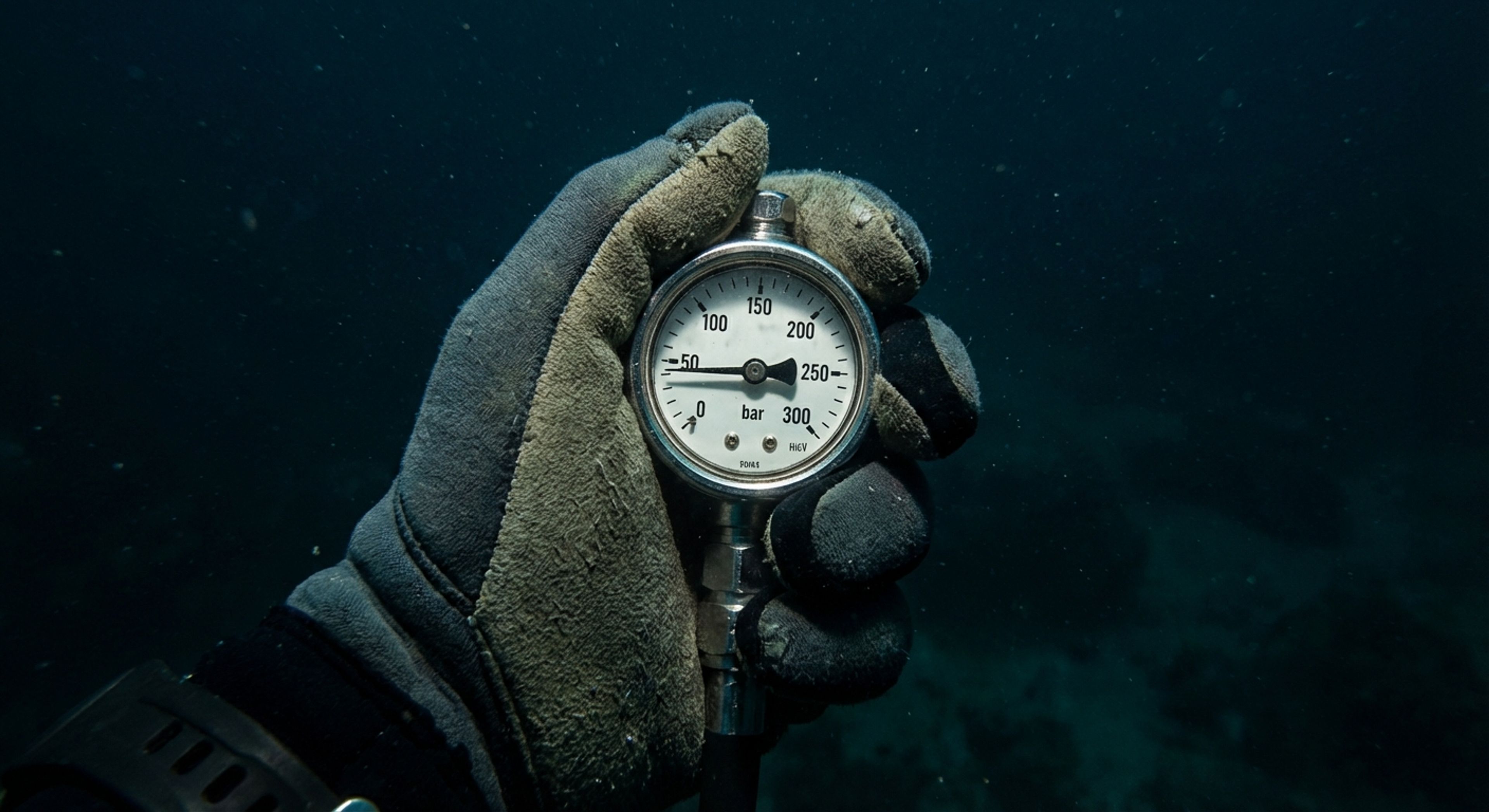
The Liability Assessment
Before you even zip up your suit you can tell if a diver is going to be a problem. I watch them on the shore or the deck. I look for the tell-tale signs of the cowboy or the tourist.
- Gear Management: Are their hoses routed cleanly? Or does their octopus drag across the deck plates picking up grease and grit? If they cannot manage their equipment on dry land where gravity is normal they will be a disaster underwater.
- The Rush: A safe diver is slow. We move deliberately. We check valves. We analyze gas. The unsafe diver is rushing to get in the water. They are fumbling with clips. They are sweating.
- The Noise: Competence is quiet. Insecurity is loud. If they are bragging about how deep they went in Cozumel last year or how much air they don't use, mark them as a liability.
If I see a diver mounting a regulator on a tank backwards, I am not diving with them. It is not an elitist stance. It is risk management. If they can't orient a first stage correctly how will they handle an out-of-air emergency at 30 meters?
The Pre-Dive Veto
There is a social pressure in recreational diving to be nice. To smile and say "Okay sure let's buddy up."
Kill that instinct.
If you have assessed the diver and found them wanting you need to sever the link before the splash. This is awkward for people who care about social graces. I do not. However I understand you might not want to ruin the vibe on the holiday boat.
You do not need to say "You are incompetent and I fear for my life." That makes people defensive. You frame the refusal around compatibility and objective mission parameters.
The "Profile Mismatch" Tactic
This is the cleanest way to separate yourself.
- "I plan to swim very slowly and take photos of macro life. I won't be moving much. You look like you want to cover ground. We aren't a good match for this dive."
- "I am diving a specific profile today for decompression practice. I need to be rigid with my stops and depth. It is boring for anyone else. I should go solo or with the guide."
The "Equipment Focus" Tactic
If they are sloppy you can blame your own gear requirements.
- "I am testing a new rig configuration today. I need to be 100% focused on my equipment and I won't be a good buddy for you. You should pair with the DM."
The Hard No
Sometimes you just have to say it. If they are dangerous, drunk, hungover, or clearly aggressive, you walk away.
- "I am not comfortable with your condition. I am not diving with you."
It is cold. It is final. It saves lives.

The Red Flags Underwater
Sometimes the incompetence only reveals itself when you are already at depth. This is the worst case scenario.
I remember a job in the fjords near Narvik. Not a saturation dive, just a surface-supplied inspection. But on my off days I would take a twinset and go look at the wrecks. The local shop paired me with a "Master Scuba Diver". A title that implies experience but often guarantees nothing if the skills have rusted.
He had all the shiny gear. Titanium knife. Brand new computer.
We descended to 25 meters. The visibility was poor. Maybe three meters. Cold. 4°C.
Within five minutes he was silting up the bottom. His finning technique was a bicycle-kick, churning up the sediment until the wreck disappeared in a brown cloud. He was bouncing. Up five meters, down five meters. His buoyancy control was nonexistent.
I watched him. He wasn't checking his SPG. He was chasing a crab.
At that moment he ceased to be a buddy. He became an environmental hazard.
If you find yourself in this situation:
- Distance Yourself: Do not let them grab you. Keep a defensive posture.
- Monitor Them: You are now a solo diver with a dependent. Watch their bubbles and behavior. They won't do it.
- End the Dive: Do not wait for them to hit reserve. Signal the "End Dive" thumb clearly. Confirm they see it. Initiate ascent. If they ignore you, you must ascend anyway.
When we surfaced that day in Narvik he was ecstatic. "Did you see that crab?"
I looked at his gauge. 10 bar. He was two breaths away from a panicked ascent.
I told him on the boat. "You were at 10 bar. You have zero buoyancy control. You are dangerous."
He got angry. He called me an elitist. I didn't care. I drank my coffee and watched the grey waves hit the hull. I didn't dive with him the next day.
The Solo Mindset
The ultimate solution to the buddy problem is to develop the skills to not need one.
I am not advocating for everyone to jump in the water alone without training. True solo diving requires redundancy. You need two of everything. Two masks. Two computers. Two cutting tools. A completely independent gas source like a pony bottle or a twinset with an isolation manifold.
But even if you are diving with a partner you must have a Solo Mindset.
You are responsible for your own gas. You are responsible for your own navigation. You are responsible for your own rescue.
If you rely on your buddy to know which way the boat is, you are a passenger, not a diver.
| Feature | The Dependent Diver | The Self-Sufficient Diver |
|---|---|---|
| Gas Checks | Waits for DM to ask | Checks frequently / Knows exact pressure |
| Navigation | Follows fins in front | Knows compass heading & landmarks |
| Emergency | Panics, grabs buddy | Deploys backup, solves problem |
| Gear | Single tank, no backup | Redundant air source, backup mask |
Confrontation is Safety
There is a culture in warm water holiday diving that ignores errors. The guide tips the diver upside down to fix their trim and nobody talks about it on the boat. They clap and say "Great dive!"
This is toxic positivity.
If your buddy shoots to the surface without a safety stop you must tell them why that is bad. If they disappear chasing a turtle you must tell them that they broke the formation.
You can be professional. You can be calm. But you cannot be silent.
"You separated from me. If I had an issue I would have been dead. Do not do that again."
If they can't handle the critique they shouldn't be under the pressure. The ocean effectively kills the incompetent. It is only our technology and procedure that holds the water back.
Conclusion
The "Right to Refuse" is the most important card in your pocket.
Do not trade your safety for social comfort. If you look at a potential buddy and your gut tightens, listen to it. That instinct is millions of years of survival evolution talking to you.
If you don't trust their skills, stay dry. Or find a new buddy. Or get the training and gear to dive alone.
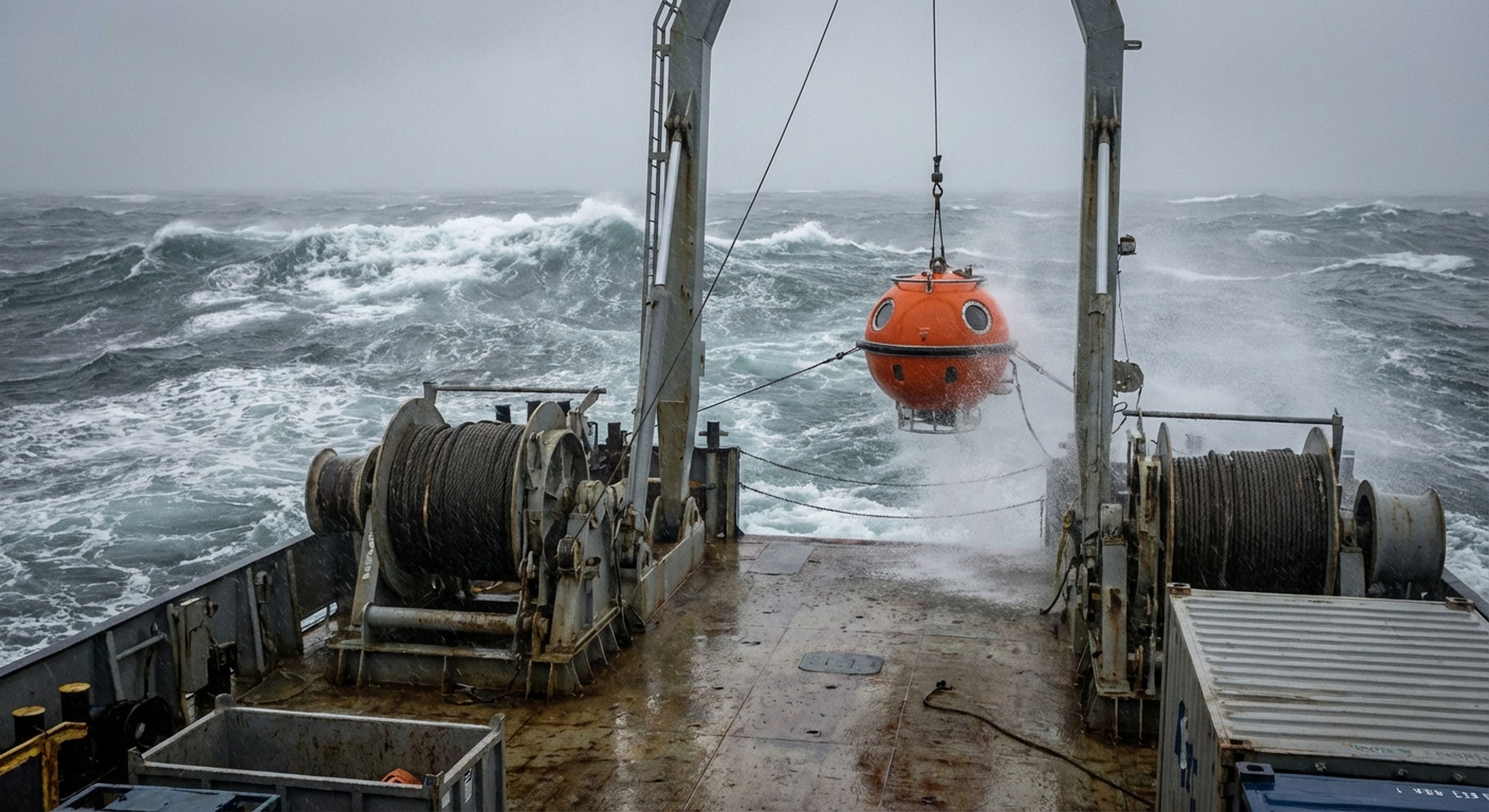
The water is heavy. It presses in on all sides. It waits for a mistake. Don't let someone else make that mistake for you.
Check your valves. Trust no one but yourself.