

Sidemount Diving: Saving Your Spine and Mastering Trim
Sidemount isn't just for squeezing through tight limestone cracks. It is the art of saving your spine and finding perfect balance in the underwater world.
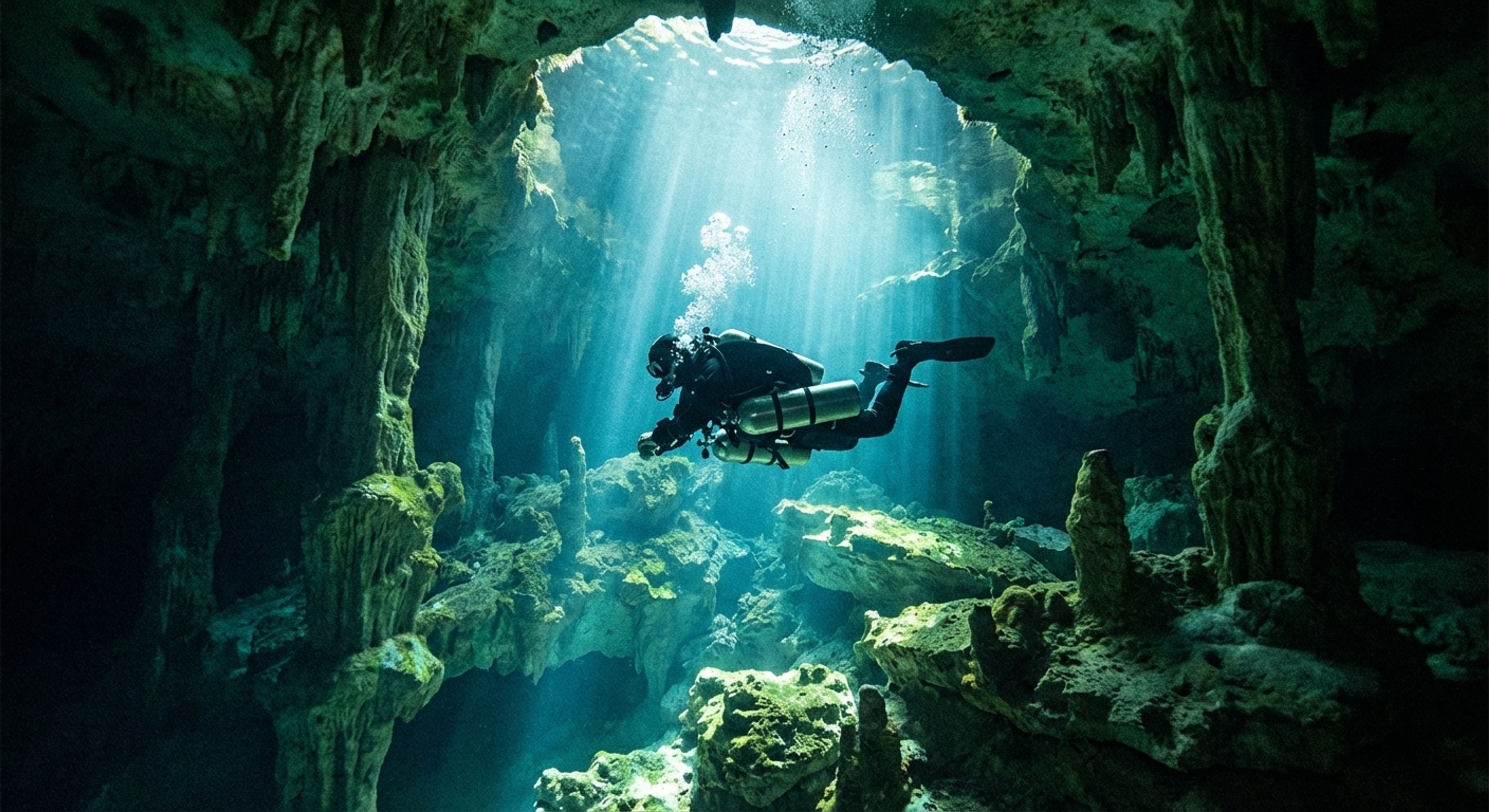
The silence of a cave is heavy. It presses against your eardrums harder than the water pressure itself. When I slide into the black mouth of a cenote here in Yucatán, I leave the noise of the surface world behind. But for years, I brought a different kind of noise with me. The clanking of manifold valves against rock. The strain of steel tanks crushing my vertebrae as I hiked through the jungle to the water's edge.
Backmount diving is traditional. It is sturdy. But it is also a burden.
There is a misconception among open water divers that sidemount is exclusively for the "crazy" ones. They think we clip tanks to our sides only to squeeze through holes no wider than our shoulders. To scratch our way deep into the throat of the earth.
They are wrong. While we certainly use it to access the tightest veins of Xibalba, the Mayan underworld, sidemount offers something far more valuable to the recreational diver. It offers freedom. It offers a way to dive without feeling like a pack mule.
Origins in the Darkness
We did not invent this configuration to look cool on social media. It was born out of necessity in the cold, muddy sumps of the United Kingdom and the pristine, jagged architecture of Florida and Mexico.
In the early days of cave exploration, if a passage became too low, a backmount diver had to stop. The valves on their back would scrape the ceiling. The tank bottom would drag in the silt. The exploration ended where the cave decided.
But exploration is an addiction. We needed a way to detach.
The original sidemount pioneers were essentially dismantling their gear underwater. By moving the cylinders from the back to the lateral line of the body, the diver becomes flat. We become part of the water column rather than an obstruction within it. In the UK, they used it to pass "sumps", short underwater sections connecting dry caves. Here in Mexico, we refined it into a precise art form for traversing miles of submerged tunnels.
It was a survival tool. It allowed us to manipulate our profile. If I need to pass through a restriction, I unclip the bottom of my tanks and push them ahead of me. I become no thicker than my own chest.
However, you do not need to be exploring a virgin cave system to appreciate the logic of this design.
The Logic of Comfort
Let’s be honest about the physical toll of scuba diving. I have seen strong men wince while hauling twin steel tanks down the steep stairs at Cenote El Pit. That is nearly 40 kilograms of steel and gas focused entirely on the lumbar spine. It compresses the discs. It ruins the knees.
Sidemount changes the logistics of gravity.
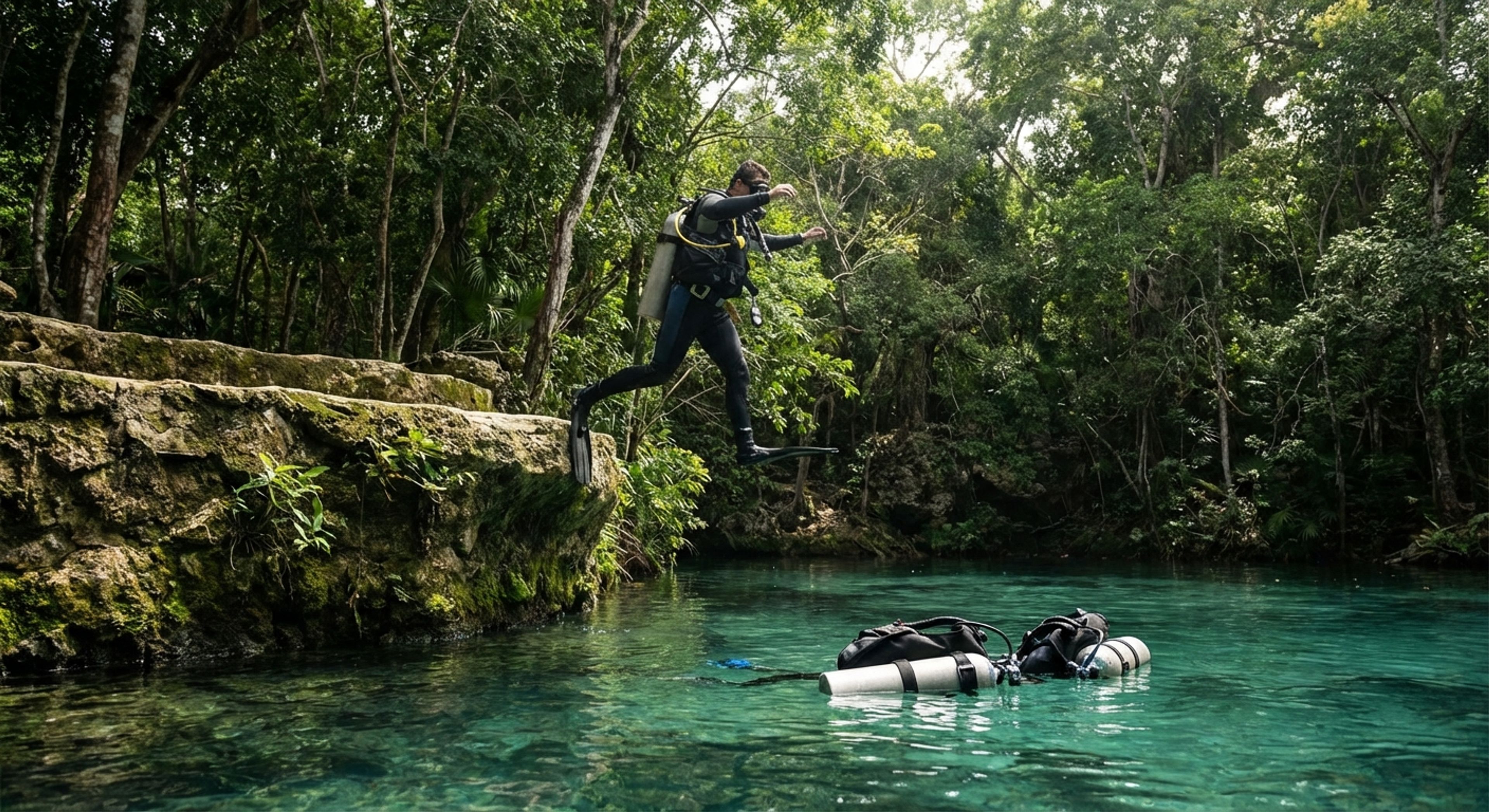
When I dive sidemount, I walk to the water wearing only my harness and wetsuit. I am light. I can navigate slippery rocks or steep jungle trails with the agility of a jaguar. My tanks are brought down separately. I clip them on in the water, where they are weightless.
For divers with back issues, or those of us who simply plan to be diving well into our sixties, this is not a luxury. It is preservation.
The Safety of Redundancy
The ocean is indifferent to your survival. The caves are even less forgiving. In a standard single-tank backmount setup, you have one valve. One first stage. One point of failure. If that O-ring bursts deep underwater, you are relying entirely on your buddy or a frantic ascent.
In sidemount, you carry two independent gas sources. Two tanks. Two first stages. Two second stages.
If my right regulator begins to free-flow in the deep silence of a tunnel, I do not panic. I simply switch to my left regulator to ensure I have air, and then reach down to close the valve on my right tank. I have lost access to half my gas, yes, but I still have the other half. I am calm. I am alive. This self-sufficiency changes your psychology underwater. You stop looking at the surface as your only escape route. You carry your safety with you.
Streamlining and The "Water Walker"
There is a feeling we chase. The feeling of trim.
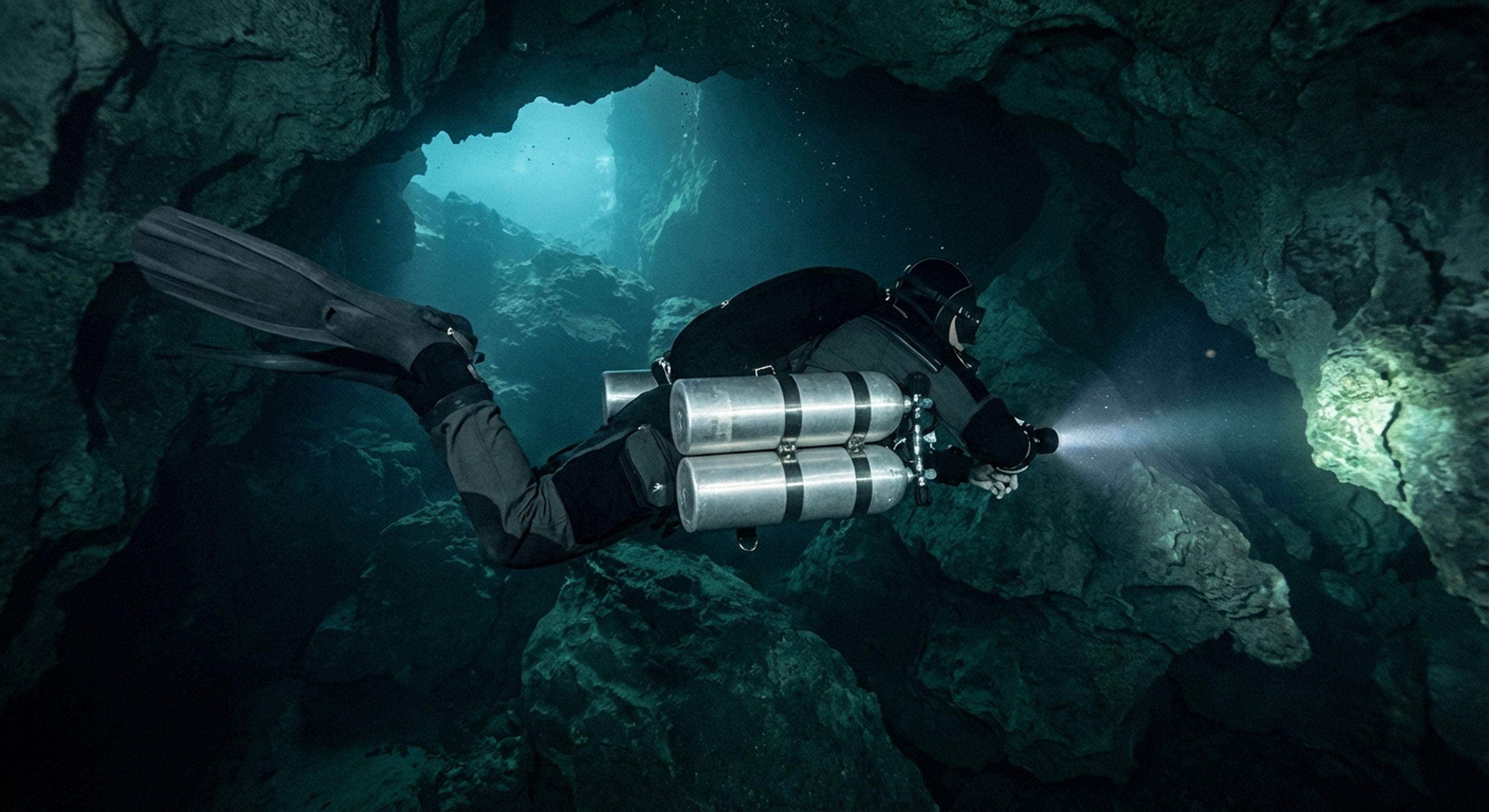
In backmount, your center of gravity is high. The tank wants to roll you over. You fight it constantly, even if you don't realize it. In sidemount, the tanks run parallel to your spine, tucked under your armpits. The center of gravity is low. It aligns with your body’s natural axis.
When you get the weighting right, you do not need to use your fins to stay horizontal. You simply exist in that position. It feels like flying. We call it being "in trim." Your profile is slick. Water flows over you without turbulence. This reduces gas consumption because you are fighting less drag.
I remember a dive in Cenote Carwash. The halocline, the layer where fresh water meets salt water, was thick that day. It looks like a mirror or a blurring oil painting. Moving through it in backmount feels clumsy, like a bull in a china shop. In sidemount, gliding through that visual distortion felt spectral. I was just a shadow passing through the chemistry of the earth.
The Price of Admission: Complexity
I will not lie to you. I will not tell you this is easy. Sidemount is not "plug and play."
With a jacket BCD, you strap it on and jump in. If it's a bit loose, it doesn't really matter. Sidemount is unforgiving of laziness. It requires obsession. You cannot just buy the gear online and jump in; you need a certified instructor to teach you the specific drills and rigging.
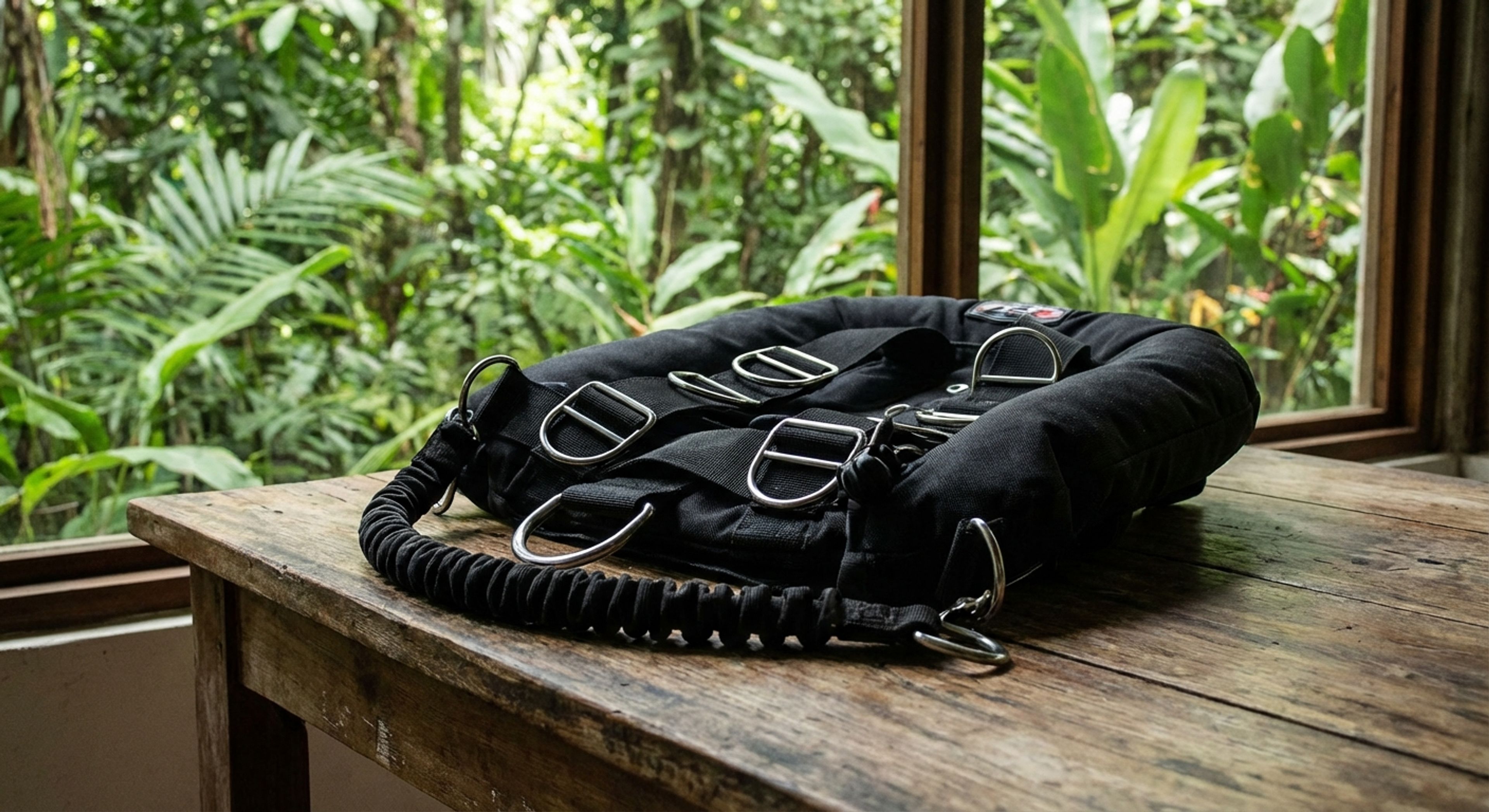
You have to rig your tanks correctly. The bolt snaps must be at the precise height. The bungee cords that hold the tank valves close to your neck must have the exact tension. If they are too loose, your tanks droop like dead wings, creating drag and looking terrible. If they are too tight, you cannot reach your valves.
You must manage your gas carefully. You cannot breathe one tank empty and then switch. You must alternate to keep the weight balanced on both sides of your body. Breathe 30 to 40 bar from the left, switch. Breathe 30 to 40 bar from the right, switch. It is a rhythm. It requires mental bandwidth.
For many recreational divers, this "faff" is annoying. They just want to look at fish. They do not want to spend twenty minutes adjusting a sliding D-ring on their waist belt. If you are not willing to learn the equipment, you will hate sidemount. You will look like a tangled mess of hoses and metal.
Comparing the Configurations
To help you understand if this path is for you, look at this breakdown.
| Feature | Single Tank Backmount | Sidemount |
|---|---|---|
| Setup Time | Fast (5 minutes) | Slow (15-20 minutes initially) |
| Land Transport | Heavy, strains back | Light (carry components separately) |
| Gas Supply | Single source (riskier) | Redundant (two independent sources) |
| Water Entry | Giant stride or waddle | Put gear on in water (easy) |
| Streamlining | High drag | Very low drag (if rigged well) |
| Learning Curve | Low | High (requires specialty training) |
The Ritual of Rigging
There is a meditative quality to setting up sidemount gear. I enjoy it. Checking the bungees. Routing the long hose across the chest. Making sure the clips are moving freely. It is a ritual that prepares my mind for the dive. It forces me to slow down before I even touch the water.
When I teach students here in Tulum, I see the frustration in their eyes during the first day. They tangle themselves. They clip the wrong things. They feel awkward.
But then, usually on day three, it clicks.
They descend into Cenote Kukulkan. They stop fighting the gear. They realize they can roll upside down to look under a ledge and the tanks stay with them. They feel the freedom of the harness. They stop swimming with their hands. They become still.
Sidemount is not just about fitting through small holes. It is about fitting into the water itself. It is about removing the barriers between you and the environment.
When you dive into the dark places, or even when you drift along a colorful reef in Cozumel, you want to feel like you belong there. Not like a visitor wearing a backpack. But like a creature of the liquid world.
The configuration requires respect. It demands practice. But once you feel that weightlessness, true weightlessness, you will find it very hard to strap a heavy steel tank to your spine ever again.