

Similan Islands: Seasonal Pearl of the Andaman Sea
The Similan Islands offer Thailand's finest diving, but the window is strictly seasonal. Prepare for purple soft corals, whale sharks, and the ultimate beginner liveaboard experience.
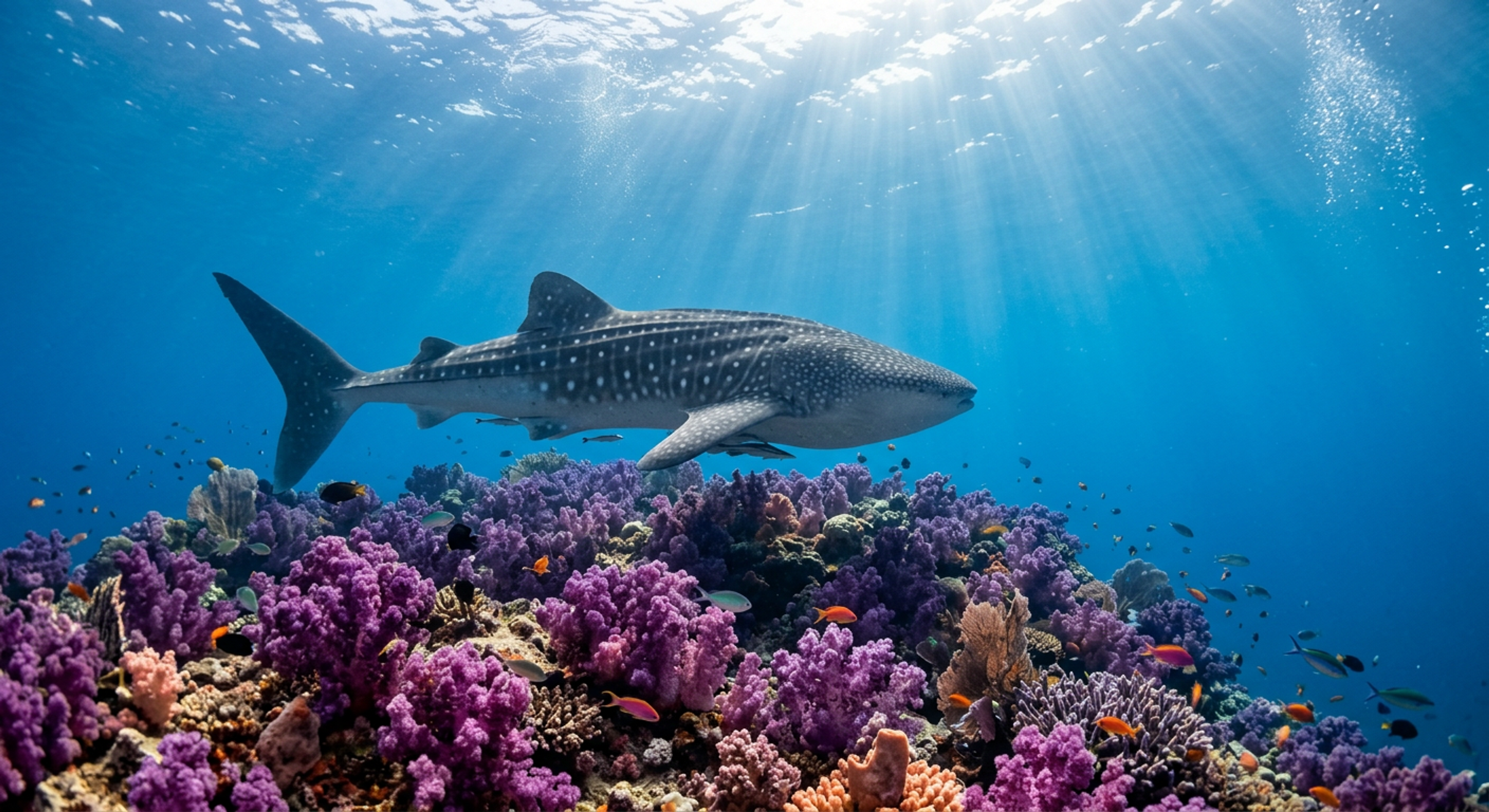
The smell of instant coffee and boat diesel at 5:45 in the morning is a scent that instantly triggers my dive reflexes. You are standing on the damp teak deck of a wooden liveaboard boat. The sun is just starting to bleed orange across the horizon. Your 3mm wetsuit is still cold and slightly clammy from yesterday. You step into it anyway. You zip it up. You taste the dry salt on your lips.
This is morning number two in the Similan Islands.
I have certified more instructors than I can count on Koh Tao. I love my little rock in the Gulf of Thailand. But when October rolls around and the winds shift, my heart looks west to the Andaman Sea. The Similan Islands are a massive granite archipelago off the coast of Phang Nga province. They are famous for giant smooth boulders above the water and explosive coral reefs below.
But you cannot just show up whenever you want. The ocean makes the rules here.
The Six-Month Window of Opportunity
The Similan Mu Ko National Park is not open all year. The Thai government strictly enforces a diving season that runs from October 15th to May 15th.
During the off-season, the southwest monsoon brings heavy rains and massive waves. The seas become violently rough. It is dangerous for boats and impossible for diving. But there is a biological reason for this closure too. Nature needs a break. The corals need time to spawn without bubbles hitting them. The marine life needs quiet. When we return in late October, the water is a crisp 29 degrees Celsius. The visibility often stretches beyond 30 meters.
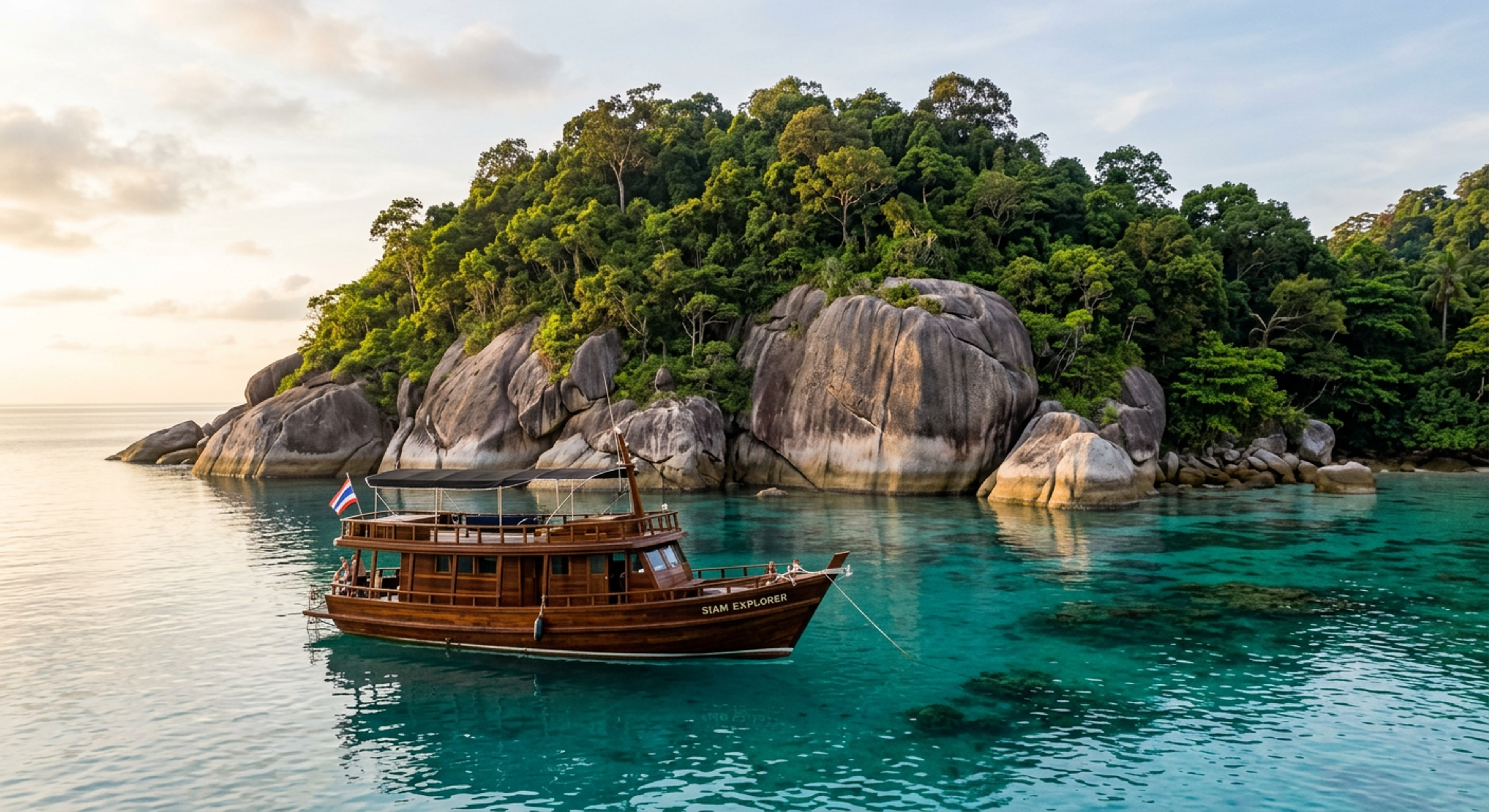
If you are planning your trip, the visibility usually peaks between February and April. This is also when the plankton blooms start. Plankton makes the water slightly greener but it brings the giant pelagic fish. You have to decide what you want. Do you want crystal clear water in December or do you want the big shadows in March?
Your First Liveaboard: Eat, Sleep, Dive, Repeat
Many divers ask me if they are ready for a liveaboard. The Similan Islands are actually the perfect training ground for your first multi-day boat trip. The currents on the east side of the islands are generally mild. The dive sites gently slope down.
I remember taking a group of freshly certified Advanced Open Water students to the Similans back in 2014. One young woman named Ploy was terrified. She thought she would get claustrophobic sleeping in a tiny cabin. She thought doing four dives a day would break her legs. By day three, she was sleeping on a beanbag on the top deck between dives with salt crusted in her hair. She did not even care about brushing her teeth before the morning dive. Liveaboard life strips away your vanity. It leaves you with pure focus.
But you absolutely must have your buoyancy under control.
Think of your BCD (Buoyancy Control Device) like the gross adjustment knob on a microscope. It makes the big changes. Your lungs are the fine focus knob. When you are hovering over a delicate sea fan in the Similans, you do not touch your inflator hose. You control your position with your breath. If you are kicking the reef because you are overweighted, you are destroying the exact beauty you paid to see. I am very strict about this. If I see a diver bicycling their legs and kicking up sand, I will swim over and physically correct their trim.
Let us look at why a liveaboard makes sense here compared to a day trip.
| Feature | Day Trip Speedboat | Multi-Day Liveaboard |
|---|---|---|
| Travel Time | 90 minutes each way of hard bouncing on waves. | You wake up directly on top of the dive site. |
| Dives per Day | Maximum 2 dives. | 3 day dives plus 1 sunset or night dive. |
| Pace | Rushed. Quick briefings. Back to shore before dark. | Slow. Sleepy surface intervals. Plenty of time to log dives. |
| Access | Limited to the closer southern islands. | Reaches the far north including Surin and Richelieu Rock. |
| Fatigue Level | High. The speedboat ride drains your energy. | Low. You only walk five steps from your bed to the dive deck. |
The Crown Jewel: Richelieu Rock
Most Similan liveaboard itineraries head north into the Surin National Park on their third day. This is the home of Richelieu Rock.
Richelieu Rock is a limestone pinnacle that barely breaks the surface at low tide. It drops down in a horseshoe shape to about 35 meters deep. Jacques Cousteau allegedly named it after Cardinal Richelieu because the vivid purple soft corals reminded him of the cardinal's robe. I do not care much about the history. I care about the biology.
This rock stands alone in the middle of a deep sandy ocean floor. Ocean currents hit this rock and push deep nutrient-rich water up to the sunlit surface. This process is called upwelling. Nutrients feed plankton. Plankton feeds the tiny fish. The tiny fish feed the trevallies. It is a vertical tower of life.
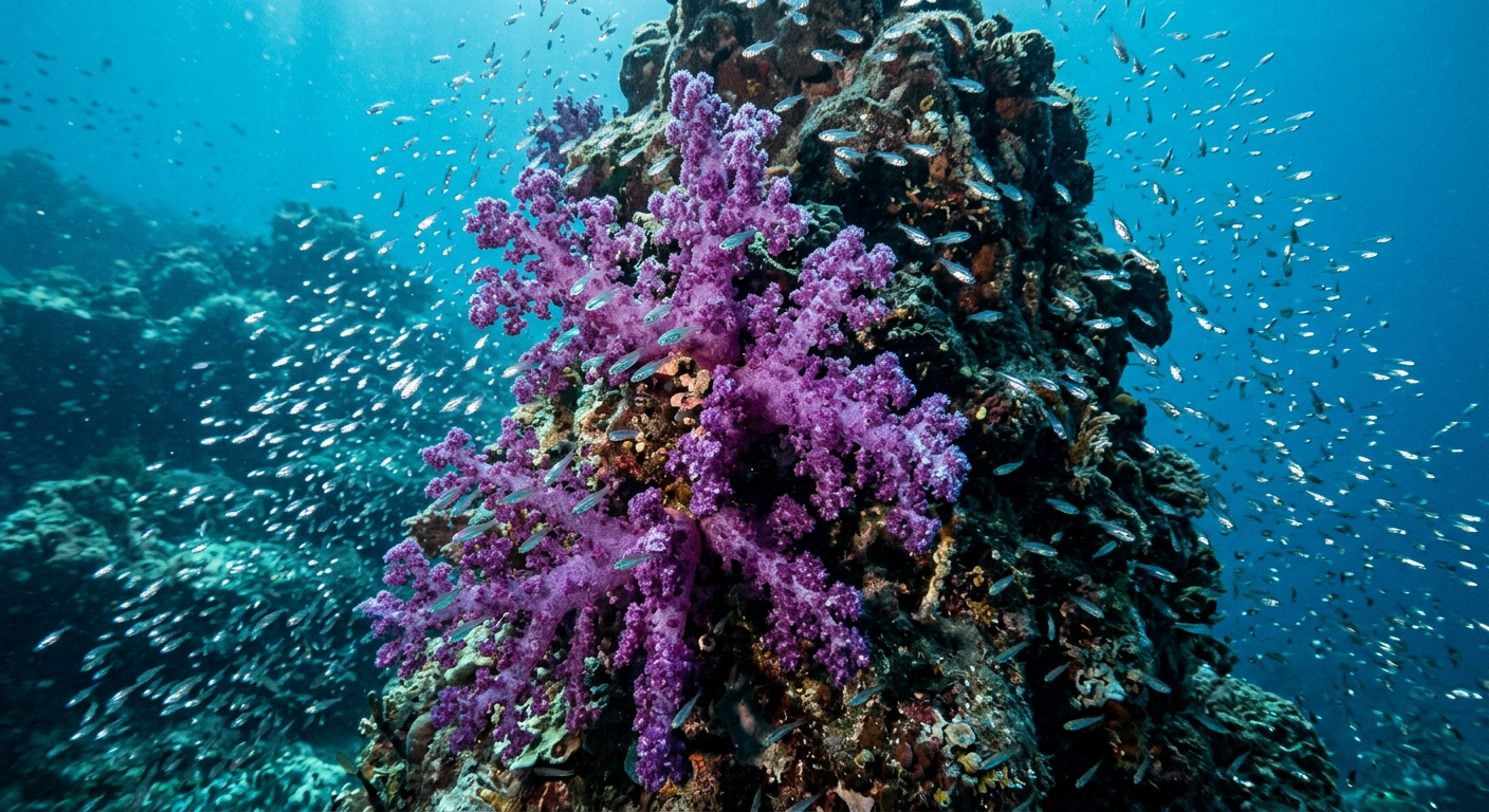
The walls of Richelieu are completely carpeted in Dendronephthya soft corals. They look like purple and pink broccoli. Hidden inside this purple forest are macro treasures. You can find yellow tiger tail seahorses wrapping their tails around gorgonian fans. You can spot the ornate ghost pipefish hanging upside down looking exactly like a dead piece of crinoid. You can find Harlequin shrimp pulling starfish apart.
But let us be honest. You are looking into the blue. You are waiting for the spots.
The Gentle Giant
Richelieu Rock offers one of the highest chances in Thailand to see a whale shark (Rhincodon typus).
These animals can grow up to 12 meters long. Seeing a creature the size of a city bus glide effortlessly out of the green gloom is a religious experience. The water suddenly feels very small. The temperature often drops when they appear. You might hit a thermocline where the water shifts from 29 degrees down to 26 degrees in a single meter. You feel the cold hit your cheeks just as the massive shadow blocks out the sun.
When this happens, divers lose their minds. They forget their training.
I have watched grown men kick their buddies in the face trying to swim closer to a whale shark. Listen to your Kru Supanya. If you chase a whale shark, it will flick its massive tail once and disappear into the deep. You cannot outswim it.
Here is exactly what you do when you hear the divemaster bang their tank with a metal stick to signal a big fish.
- Stop swimming. Establish neutral buoyancy immediately.
- Check your depth gauge. Whale sharks often cruise near the surface. Do not accidentally pop up to the surface and miss your 3-minute safety stop at 5 meters while looking upward.
- Check your air. Excitement causes hyperventilation. You will burn through 30 bar of air in two minutes if you panic.
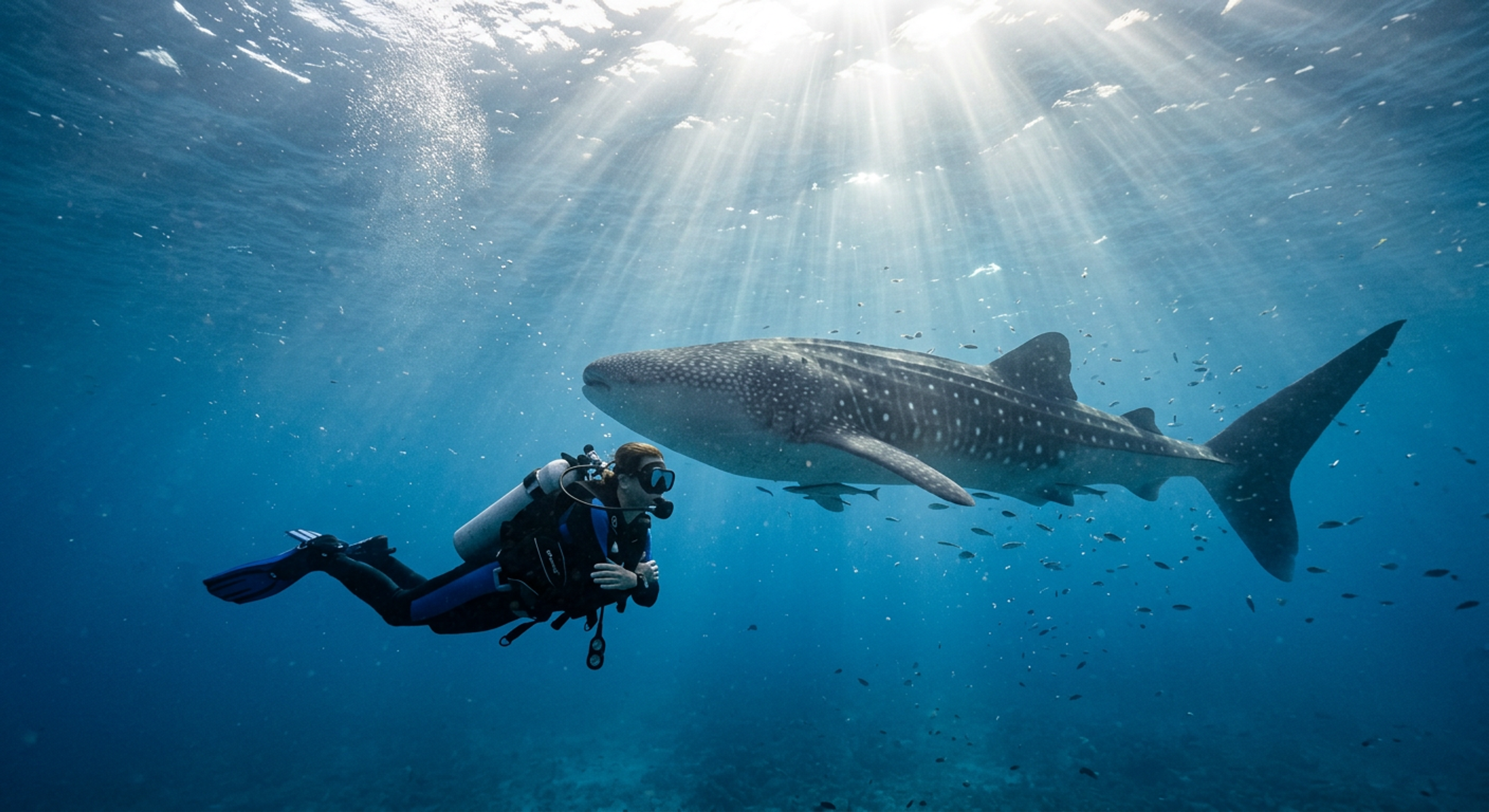
- Wait. If you stay perfectly still and hover in the water column, the whale shark will often turn and swim directly toward you. They are deeply curious animals.
- Never touch. The natural oils on human skin destroy the protective slime coat on the shark. Keep your hands crossed over your chest.
Safety and Skill Reminders for the Andaman
Diving in the Similans is spectacular but it demands respect. The Andaman Sea is connected to the Indian Ocean. The currents here are entirely different from the sheltered Gulf of Thailand.
You will encounter sweeping currents at dive sites like Elephant Head Rock. You will have to swim through narrow granite swim-throughs. You will experience down-currents that try to push you toward the sand.
You must stay close to your dive guide. They know the topography. They know where to hide behind a boulder to get out of the current. If you find yourself caught in a strong flow, do not fight it. Fighting a current is a fight you will always lose. Get close to the reef where the water friction slows the current down. Crawl finger by finger over bare rock if you have to, making absolutely sure you are not touching any living coral.
Watch your nitrogen limits. Doing up to four dives a day for four days straight builds up residual nitrogen in your tissues. Even if you are diving with Nitrox (which I highly recommend you get certified for before a liveaboard), you must be conservative. Drink more water than you think you need. Dehydration is a massive risk factor for decompression sickness.
Most importantly, manage your breathing.
When you drop into the water at Koh Bon and see massive manta rays doing backflips over the cleaning station, your heart will race. Your chest will tighten. You will want to hold your breath in sheer awe of the ocean.
Do not.
You are a guest in their house. You are carrying your life support on your back. Breathe slow. Breathe deep. Let the ocean show you its secrets on its own schedule.
Never stop breathing.