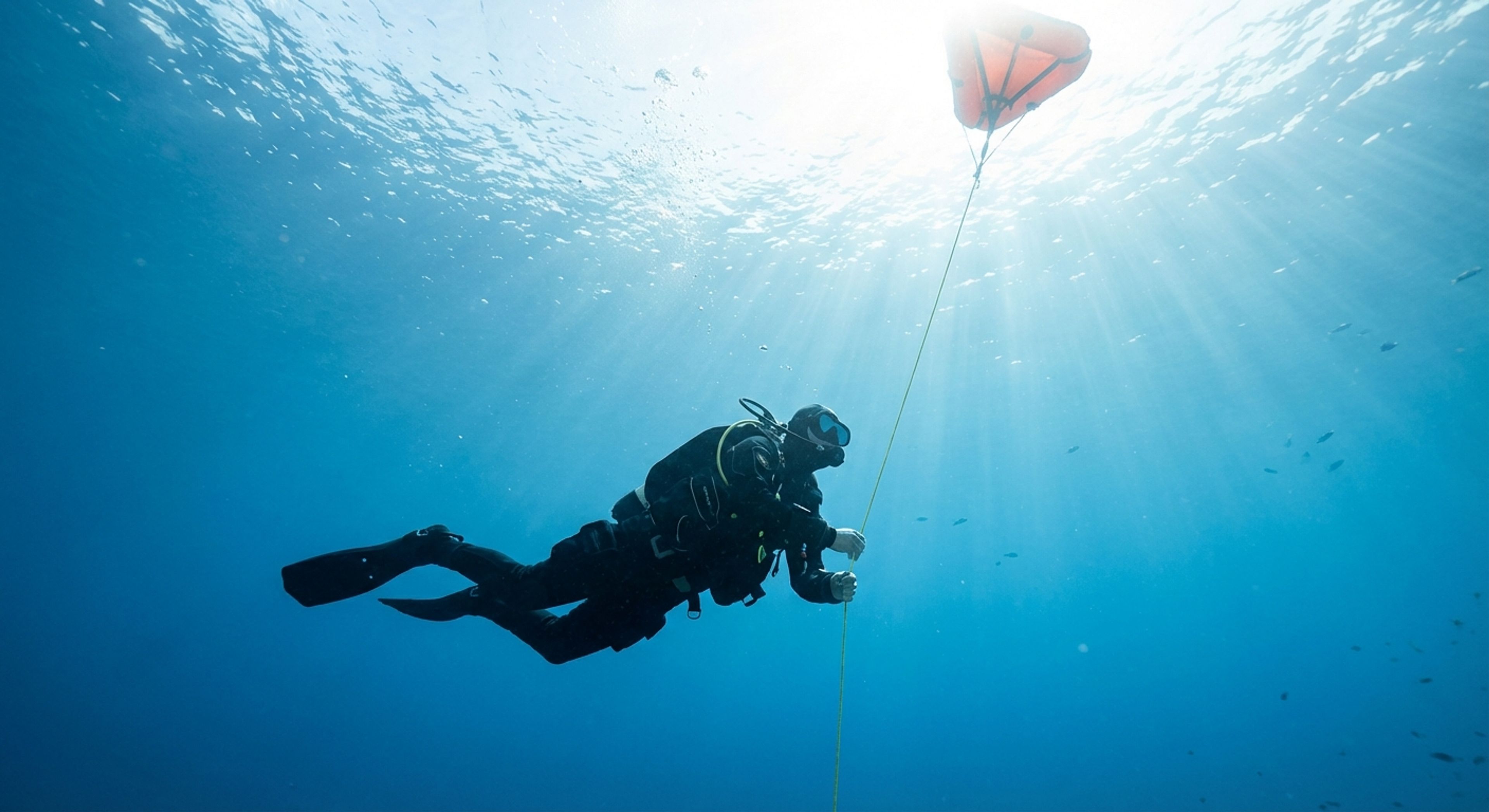

SMB Deployment Guide: How to Shoot a Safety Sausage
Too many divers look like panicked turkeys when they shoot the SMB. You want to get run over by a banca? No? Then listen to Tatay Santiago. Here is how you use the sausage without killing yourself.
Hay naku. I watched a group of "advanced" divers in Verde Island yesterday. Nice wetsuits. Expensive computers. Cameras big like toaster ovens. But when it was time to drift and do the safety stop? Chaos. Absolute chaos.
One boy, he inflates his SMB (Surface Marker Buoy) like he is filling a hot air balloon. He holds the reel tight. Whoosh! He goes up with the balloon. From 15 meters to the surface in three seconds. He looked like a missile. A stupidity missile.
If a boat was passing, he is hamburger meat. If his lungs were full, he risks a lung over-expansion injury.
Sus maryosep. Listen to Tatay. The SMB is your best friend in the ocean. It tells the boat captain, "Hello, I am here, please do not chop my head off." But if you use it wrong, it is your enemy.
Stop buying split fins and learn to use your spool.
Why You Must Shoot the Sausage
You think the boat captain has sonar eyes? No. The ocean is big. Your head is small. Especially here in Batangas, the currents are strong. We call it the "washing machine" for a reason. You drift one kilometer away from the dive site, and the waves are chop-chop. Without that orange tube sticking up, you are invisible.
Also, underneath the water, we are deaf. We hear the vroom vroom of the engine, but we don't know where it is. If you ascend without a flag, you are gambling with your life.
The Gear: Keep It Simple
First, stop buying those giant plastic reels with the handle and the ratchet and the spring. The ones that look like a fishing rod for sharks. They jam. Sand gets in, the mechanism fails, and now you are fighting your gear at 5 meters.
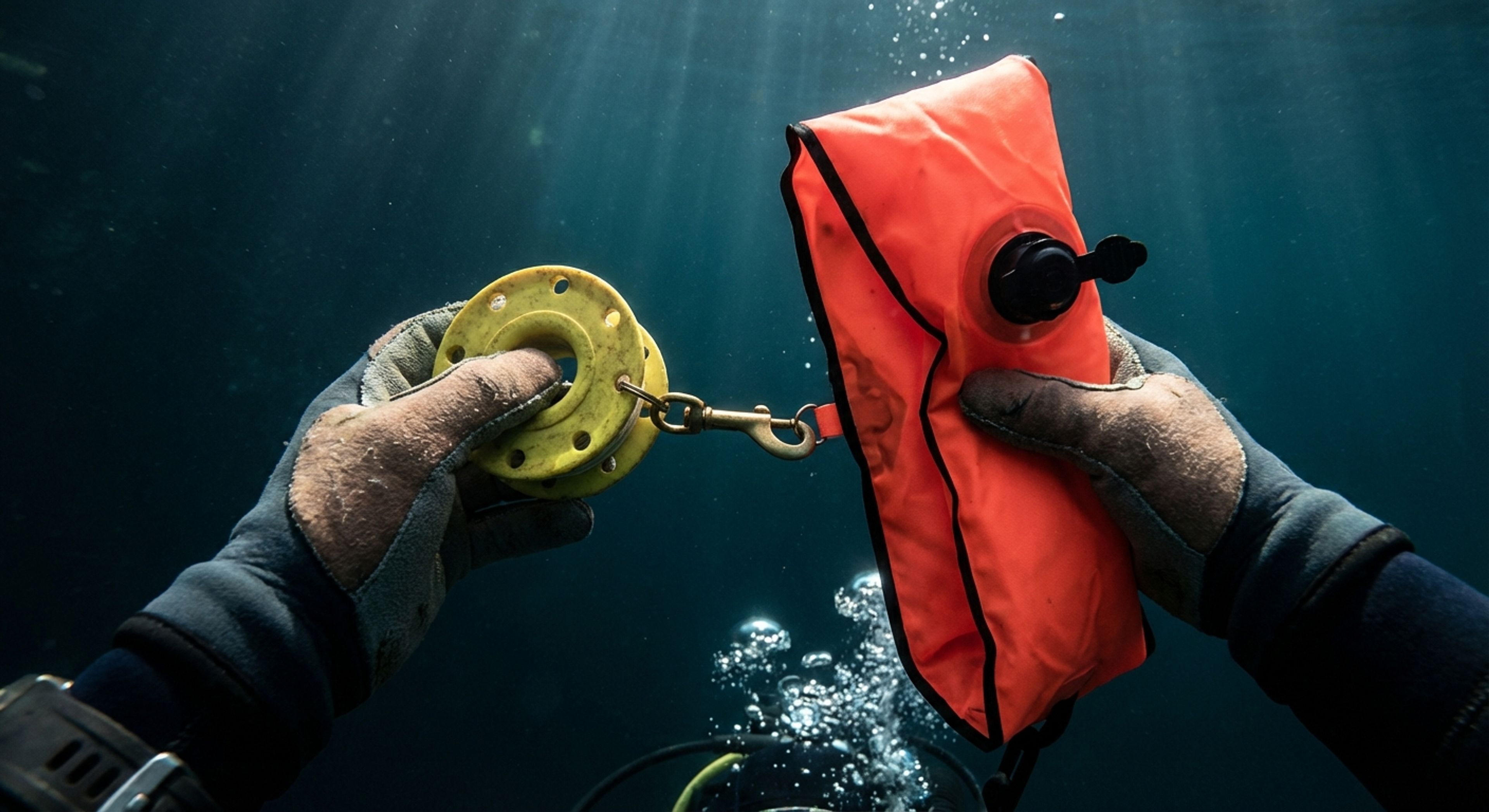
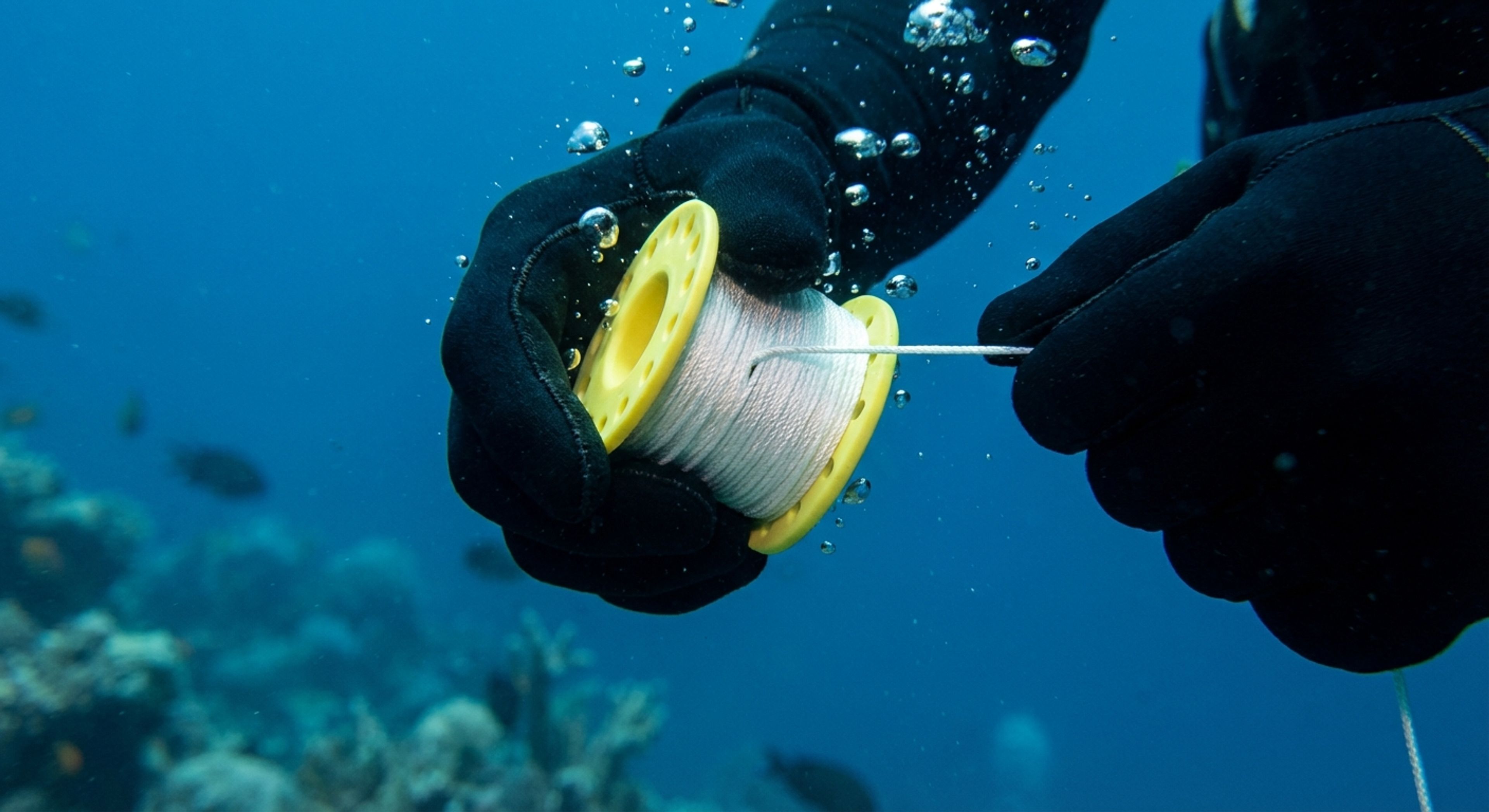
Get a simple finger spool. A piece of plastic, a brass double-ender bolt snap, and string. That is all. It does not break. It does not jam.
And get a Delayed SMB (DSMB). Open bottom is good for beginners, but a self-sealing one with an oral inflation valve (the little plastic nipple) is better because it keeps the air in at the surface.
Step 1: Get Stable, Anak
Before you even touch the spool, you must be neutral.
I see divers drop their knees to the coral to shoot the SMB. Why? Are you praying? Do not touch the reef. If you cannot hover at 5 meters or 10 meters while handling gear, you are not ready for the SMB. You need buoyancy practice, not a safety sausage.
- Check your depth. 5 to 6 meters is standard for a safety stop deployment, but sometimes we deploy deeper (10-15 meters) for drift pickups.
- Check your surroundings. Look up. Always look up. If there is a boat directly above you, do not shoot.
- Signal your buddy. "I am deploying."
Step 2: The Setup
Take the spool and SMB out of your pocket. Do not drop them.
Unclip the double-ender bolt snap. Now, listen carefully. Secure the line to the SMB. Pass the loop of the line through the SMB D-ring, then pass the spool through the loop (a girth hitch). This is the safest connection.
Clip the loose bolt snap to your right shoulder D-ring so you don't lose it. Do not hold it in your hand with the spool and the buoy. You will drop it. I have a collection of fifty bolt snaps I found on the sand. They are mine now.
Unroll a little bit of line. Just enough to keep the spool away from the buoy.
Check the line. Is it tangled? Is it wrapped around your dive computer? Is it wrapped around your neck? Don't laugh. I have seen it.
Step 3: The Inflation (The Art)
There are two main ways to put air in the bag. One is the "Standard Way" and one is the "Finesse Way."
The Octopus Method (The Standard Way)
You take your octopus (alternate air source), you hold it under the open bottom of the SMB, and you press purge briefly.
- Pro: Very fast. Easy to do if you have gloves.
- Con: It can be violent. If you press too hard, the SMB shoots up and jerks your arm. Danger: If the line wraps around your regulator, it can rip the reg out of your mouth or drag you up. Keep the line far away from the regulator!
The Oral/Exhaust Method (Santiago’s Way)
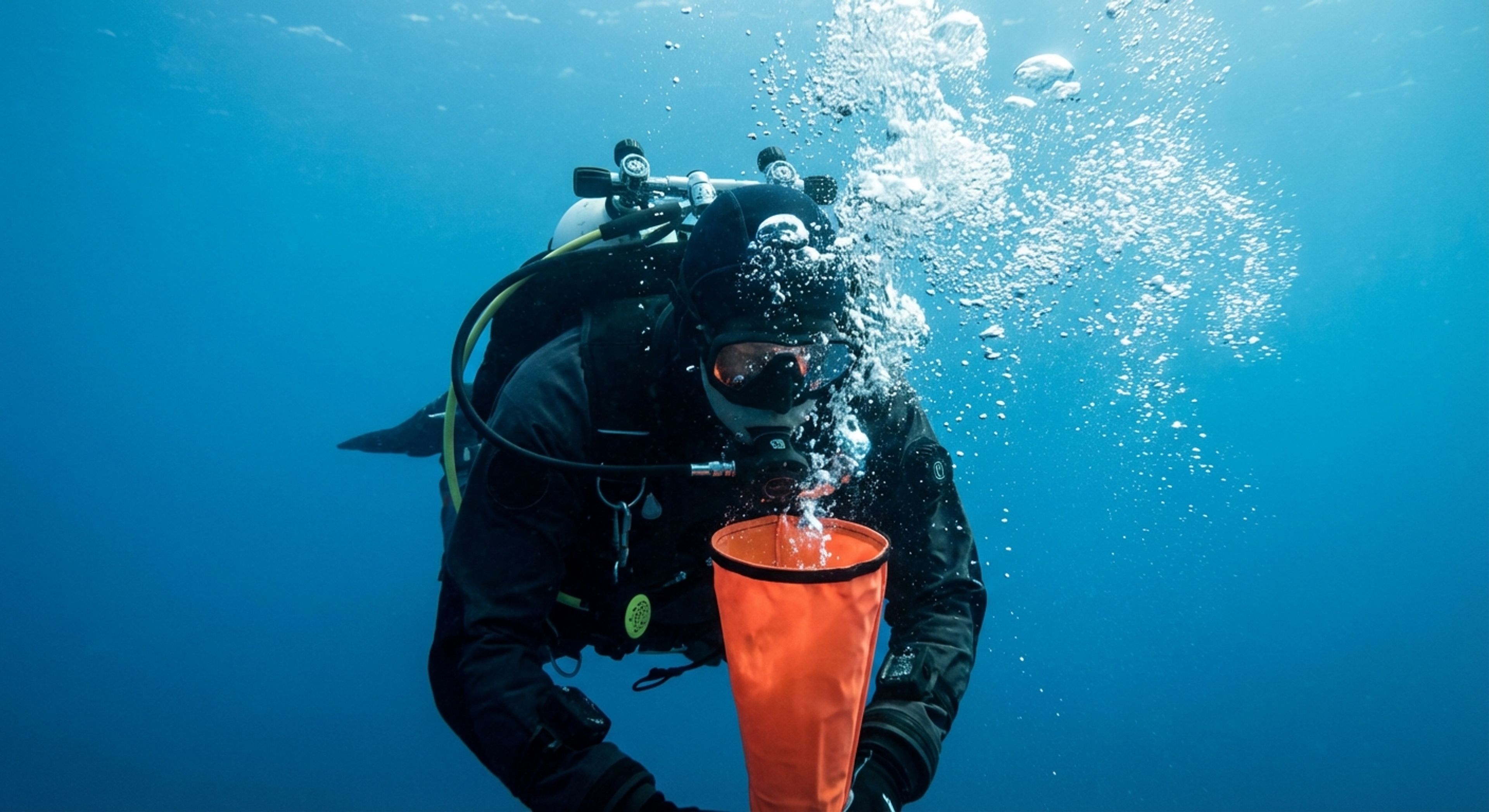
You use your mouth or exhaust bubbles.
For Oral Inflation: Take a breath, remove your regulator, blow into the open bottom or the valve, replace your regulator and clear it. Warning: Only do this if you are comfortable removing your regulator underwater. Do not hold your breath!
For Exhaust Inflation: You tilt your head and catch your bubbles in the open bottom of the bag. This takes practice but uses "free" air.
You only need a little bit of air. Remember Boyle’s Law? You learned this in Open Water. Air expands as it goes up. If you put one lungful of air at 10 meters (2 ATA), by the time it hits the surface (1 ATA), it is double the size. The bag will be full. You don't need to fill it 100% at depth.
Comparison: Oral vs. Octo
| Feature | Oral/Exhaust Inflation | Octopus/Regulator Purge |
|---|---|---|
| Control | High. You add small puffs. | Low. It is all or nothing. |
| Risk of Jamming | Zero. | Medium. Line can snag on the reg. |
| Risk of Rocketing | Low. | High. Very easy to get pulled up. |
| Gas Consumption | Uses your waste gas (exhaust). | Uses tank air. |
| Cool Factor | 100% (Old School). | 0% (Tourist). |
Step 4: The Shot
This is the moment of truth.
- Look up again.
- Hold the spool in one hand. Do not put your finger through the center hole. If the spool spins fast, it will break your finger or de-glove your skin. Hold it by the edges or let it spin on your open palm.
- Hold the SMB in the other hand.
- Arms out. Extend your elbows. Keep the gear away from your body.
- Let go of the SMB.
- Let the spool spin. Do not squeeze it.
If the line snags, or if the spool jams, LET GO. Let the whole thing go. Better to lose a $20 spool than to get decompression sickness because you shot to the surface at 30 meters per minute. I can buy a new spool. I cannot buy you a new spinal cord.
Step 5: Tension and the Ascent
Once the SMB hits the surface, the line will go slack. Reel in the extra line quickly.
You must keep tension on the line. If the line is loose, the SMB flops over on the surface. The boat captain sees a floppy orange thing and thinks, "Ah, trash." He does not stop.
If the line is tight, the SMB stands up tall. "Here is a diver!"
As you ascend to your safety stop, you wind the line. Keep it tidy.
Common Mistakes (Don't Do This)
- Clipping to the BCD: Never, ever clip the spool to your D-ring while the SMB is going up. If it catches, you are attached to a rocket.
- The "Web of Death": Letting the line float everywhere around your legs. Keep the line in front of you.
- Too Much Air: Filling the bag until it looks like a sausage ready to burst at depth. It will explode or drag you up. A half-full bag at depth is a full bag at the surface.
- Eyes Down: Staring at the spool while you shoot. Look at the line, yes, but look at your depth. You might sink 5 meters while fiddle-faddled with the string.
A Note on Choppy Water
When the weather is bad, like monsoon season in Batangas, the waves are high. A small sausage is hard to see.
In big waves, you need to hold that line deep. Hang on it a little bit (if you are neutral). Make that tube stand up proud. Wave the line back and forth if you hear a boat.
And please, stay together. If the group is spread out, we need five SMBs. If you are together, one is enough (maybe two for backup). But everyone deploying their own sausage at the same time? It looks like a spaghetti factory exploded. Lines tangling everywhere.
Conclusion
It is not magic. It is physics and practice.
Go to a shallow sandy patch. 5 meters. Tell your divemaster, "Tatay, I want to practice shooting the bag." We will sit there and laugh... I mean, watch you. Practice until you can do it without changing your depth more than half a meter.
Don't wait until you are drifting in the blue with a 3-knot current and a ferry boat coming to learn how to use your gear.
Dive safe. Don't be lazy. And burn those split fins.