

So You Want to Blow Bubbles? The Real Price of Scuba Diving
Everyone asks me how much money they need to see the fish. I tell them, the ocean is free, but staying alive costs money. Here is the truth about the budget, from your first breath to empty pockets.
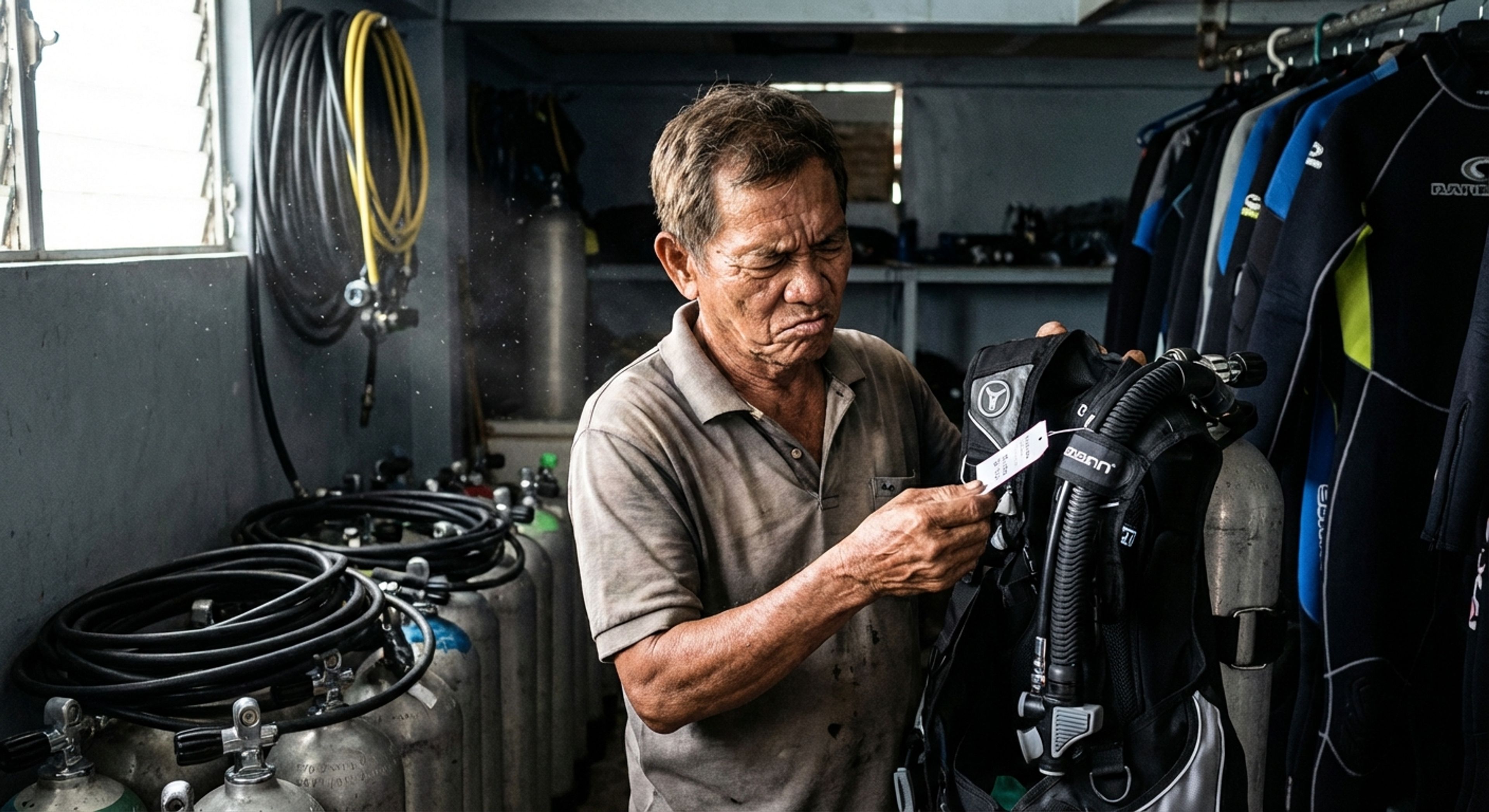
Hay naku. Every week, a new kid comes to my shop in Anilao. They have the shiny GoPro, the long hair, the excitement. They look at the ocean and say, "Tatay Santi, I want to be a diver! How much?"
I laugh. I tell them, "How much you got?"
Because here is the truth. Diving is not golf. Golf, you buy the clubs, you pay the green fee, you drink the whiskey. Diving? You pay for the school, you pay for the gear, you pay for the boat, you pay for the air. And then, when you think you are done, you see a shiny new regulator or a trip to Raja Ampat, and sus maryosep, you are broke again.
But you are here. You want to know the numbers. You want the spreadsheet. Fine. I will break it down for you. But remember, the prices I say are estimates. The ocean does not care about your currency conversion.
Phase 1: The Ticket to Ride (The License)
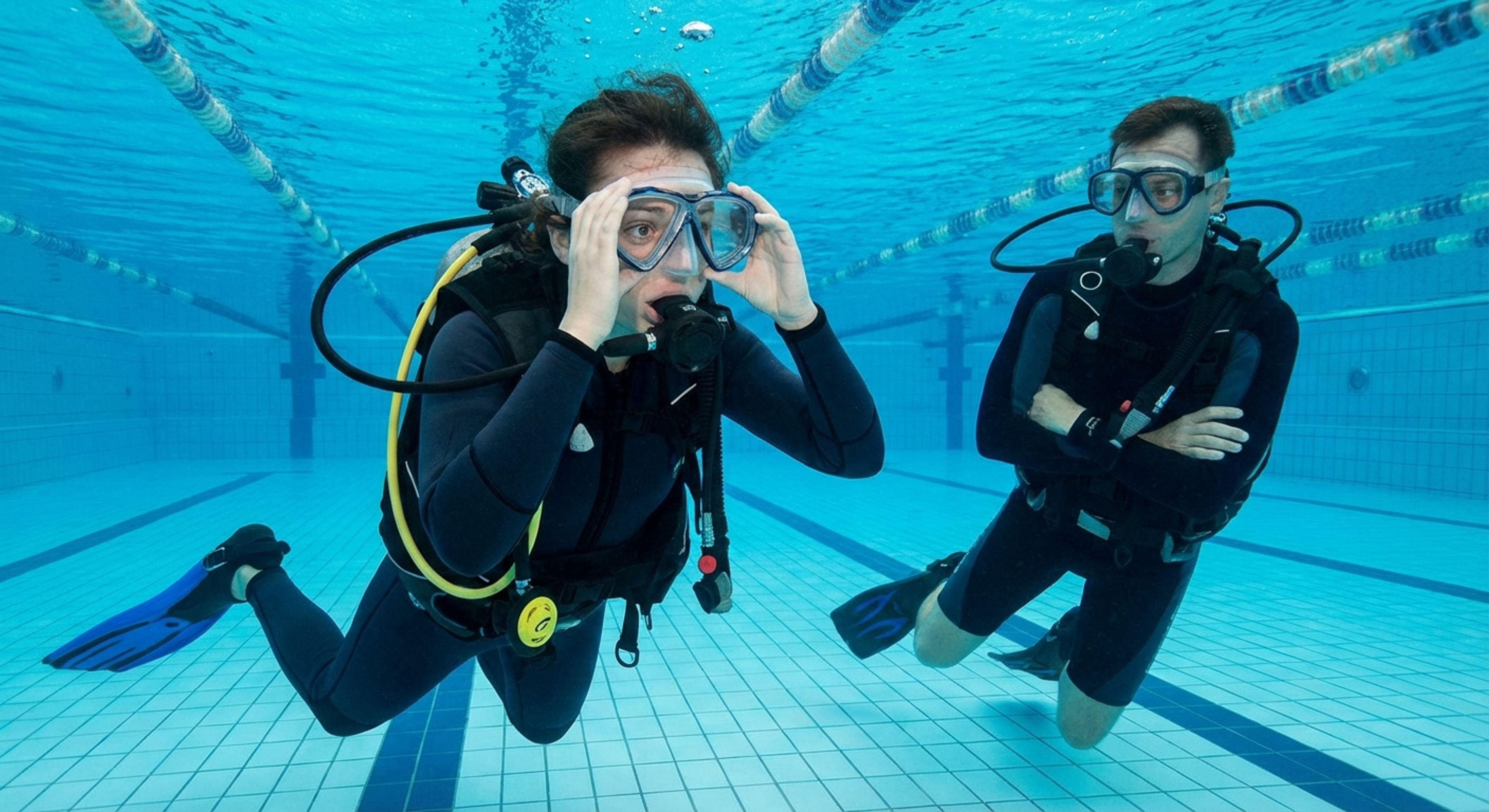
You cannot just jump in. Well, you can, but you will probably die or pop a lung. You need the Open Water Diver license. This is your entrance fee.
Do not look for the cheapest price on the internet. Sus, I see these "Groupon" divers. They come to me and they cannot clear a mask. They are dangerous. You are paying for a human being to teach you how not to drown. You want a discount on your life?
The Breakdown:
- Tuition (Open Water Course): $350 - $600 USD. This includes the book (or the digital learning that hurts my eyes), the pool rental, the tanks, and the instructor. If you do this in a cold place, it costs more. If you do it here in the Philippines or Thailand, maybe cheaper.
- Hidden Costs:
- Tips: If your instructor did not let you die, buy him a beer or give a tip. It is polite.
- Accommodation: You need to sleep somewhere for 3-4 days.
- Photos: Some shops charge extra if you want a picture of yourself looking like a frightened pufferfish.
Total Entrance Fee: Approx $400 - $800 USD.
Phase 2: The "Soft Gear" (Hygiene and Fit)
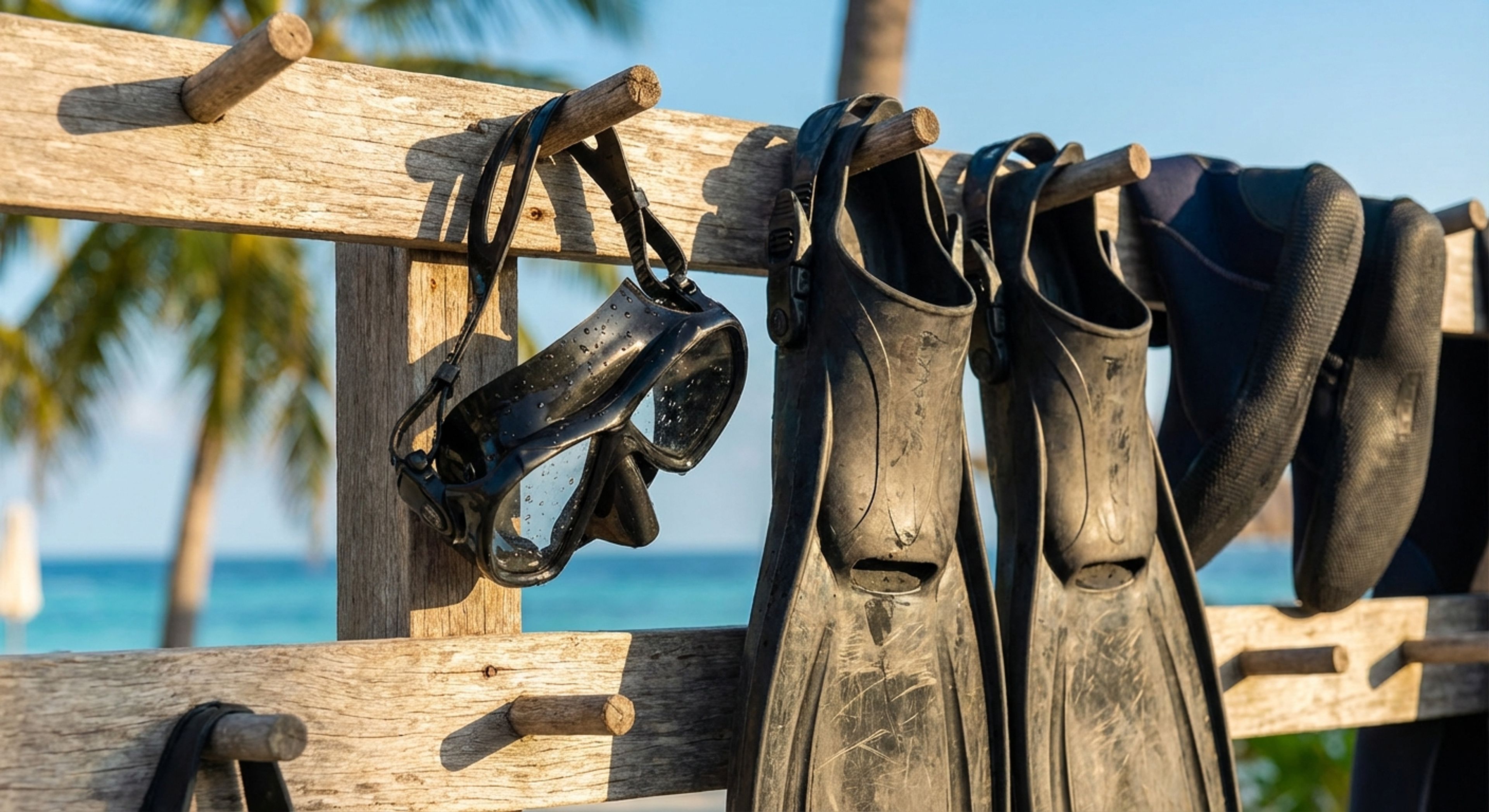
After you get the card, you want your own stuff. Rental gear is okay for a start. But do you know how many people spit in that rental mask? Do you know how many feet were inside those booties? Hay naku.
You start with the "Soft Gear". Mask, Snorkel, Fins, Booties.
The Mask
This is the most important. If it leaks, you panic. If you panic, you burn air. If you burn air, the dive is over in 20 minutes and I get angry. Do not buy online. You must put it on your face. Suck in through your nose. If it sticks without the strap, it is good. Cost: $50 - $100.
The Fins
Listen to me carefully. Do not buy split fins. Those floppy things with the cut in the middle? Useless. They are for lazy divers who do not want to work against the current. In Batangas, the current is strong. You need power. Get a solid blade fin. Mares Avanti, Scubapro Jet Fin. Old school rubber is best. It lasts forever. Cost: $100 - $200.
The Snorkel
A plastic tube. Do not buy the one with five valves and a dry top and a whistle. Simple J-tube. You only use it on the surface waiting for the boat. Cost: $20 - $40.
Wetsuit and Booties
I dive in a rash guard because I have leather skin. You? You will get cold. You need a 3mm wetsuit. And booties because the shore here is rocks, not soft sand. Cost: $150 - $300.
Phase 3: The "Hard Gear" (Life Support)
Now we talk big money. This is the stuff that keeps you breathing.
The Regulator
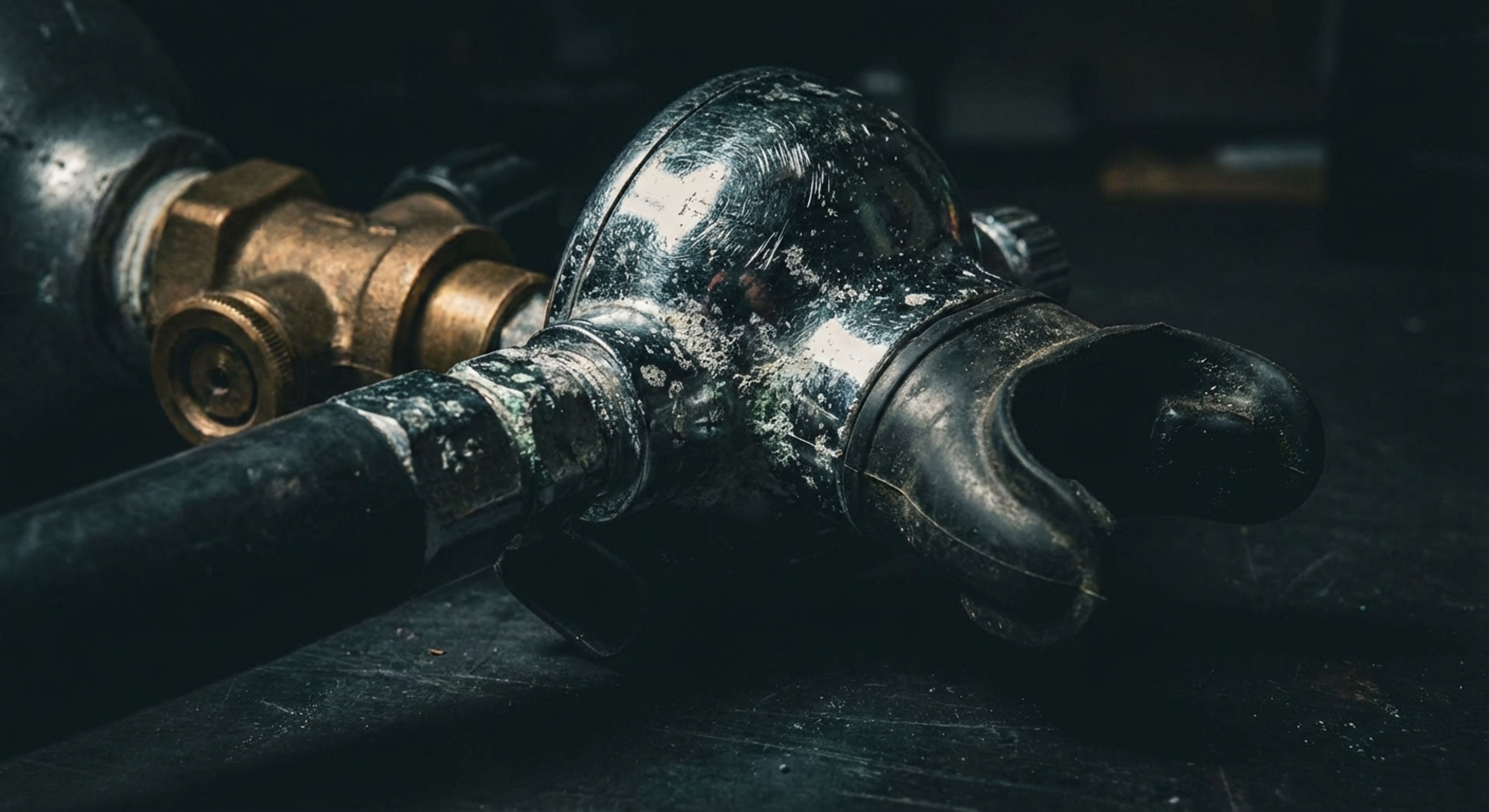
This brings air from the tank to your mouth. Do not buy the plastic toy regulator. You want balanced, sealed. If you go deep, the cheap one gets hard to breathe. It feels like sucking a milkshake through a tiny straw. Brands? Scubapro, Apeks, Aqualung. I have used my Mk25 for twenty years. I service it, it works. Cost: $500 - $1,000.
The BCD (Buoyancy Control Device)
The jacket that holds the tank. Many young people now want the "Backplate and Wing". They think they look like tech divers. It is good, yes. Streamlined. But a simple Jacket BCD is also fine. Just make sure it has metal D-rings, not plastic. Plastic breaks when you pull yourself onto the banca (boat). Cost: $400 - $800.
The Computer
Sus. I hate these things. In the old days, we used a watch and the US Navy tables. We planned the dive in our head. Now, you have a computer on your wrist beeping at you. Beep beep, go up. Beep beep, too fast. But, for safety, you need one. You don't need the one with the color screen and the GPS and the text messaging. You need depth, time, and NDL (No Decompression Limit). That is all. A simple Suunto Zoop or Cressi Leonardo is enough. Cost: $250 - $1,000 (if you are crazy).
The Santiago Budget Table
Here is the list. I wrote it down so you stop asking.
| Item Category | Item Name | Estimated Cost (USD) | Santiago's Note |
|---|---|---|---|
| Education | Open Water Course | $350 - $600 | Don't be cheap here. |
| Soft Gear | Mask & Snorkel | $70 - $140 | Fit is everything. |
| Fins & Booties | $150 - $250 | No split fins allowed on my boat. | |
| Wetsuit (3mm) | $100 - $250 | Or freeze. Your choice. | |
| Hard Gear | Regulator Set | $500 - $900 | Your lungs will thank you. |
| BCD | $400 - $700 | Get one with pockets. | |
| Dive Computer | $250 - $500 | Simple is better. | |
| Accessories | SMB (Sausage) | $30 - $50 | So the boat doesn't run you over. |
| Flashlight | $50 - $150 | For looking in holes. | |
| TOTAL | Full Setup | $1,900 - $3,540 | Start saving your pesos. |
Phase 4: The Bleeding Never Stops (Recurring Costs)
You buy the gear. You think, "Okay Tatay, I am done paying." No. You are never done.
The Dive Trip
You live in the city? There is no ocean in the city. You must travel. Bus, ferry, plane. Then the resort. You pay per dive.
- Fun Dive: $30 - $50 per tank (includes boat and guide).
- Conservation Fee: $5 - $20. The local government needs money to protect the reef (hopefully).
- Equipment Service: Every year or two years, you must service your regulator. That is $100. If you don't, it will free-flow at 30 meters and you will have a very exciting day.
The "Upgrade" Sickness
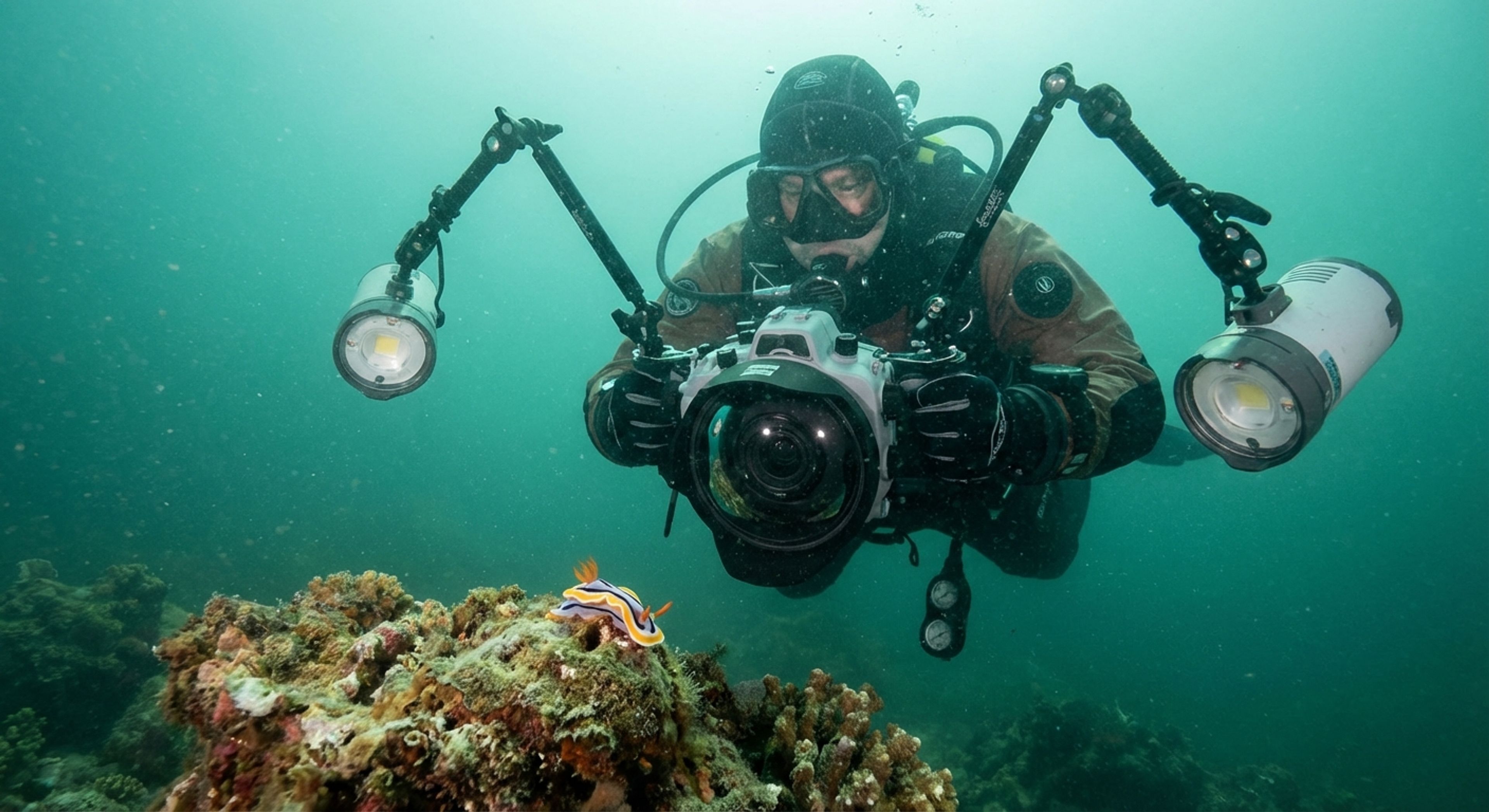
You will see another diver with a titanium knife. You want it. You see a diver with a long-hose configuration. You want it. You see a camera... sus maryosep, the cameras. Once you start underwater photography, sell your house. A good housing costs more than the camera inside it. Lights, arms, clamps. It is endless.
How to Save Money (The "Tatay" Tips)
You are crying now? Looking at your wallet? Don't worry. There are ways.
- Buy Used (Second Hand): Many people learn to dive, buy all the best gear, dive three times, get scared, and sell everything on Facebook. This is your chance.
- Good to buy used: Fins, BCD, Tanks, Weights, Wetsuit (wash it well).
- Careful to buy used: Regulator. If you buy used, send it to a technician immediately.
- Never buy used: Mask (silicone gets old and yellow), Computer (you don't know the battery life history).
-
Dive Local: You don't need Maldives. You don't need Galapagos yet. The Philippines, Indonesia, Malaysia... we have the best diving in the world. It is cheaper here. The food is better too. Adobo is better than whatever they serve on those fancy liveaboards.
-
Take Care of Your Gear: Rinse it. Fresh water. Every time. Salt is the enemy. It eats metal. It rots rubber. I have seen divers throw their $800 regulator on the sand. I want to hit them with my stick. If you treat your gear like trash, you will buy new gear soon.
-
Don't Buy Gimmicks: You don't need the underwater shaker. You don't need the tank banger. You don't need the fancy colored mouthpiece. You need skills. Buoyancy is free. Good trim is free.
The Final Word
Is it expensive? Yes. Is it worth it? Let me tell you something. When you are down there, at 20 meters, and the current stops, and the sun comes through the water like cathedral light, and a turtle eats a sponge next to you... you do not think about the credit card bill. You think about how small you are. You think about how quiet the world is.
Technology makes us lazy, but the ocean makes us humble. That is worth the money.
Now, stop reading the internet. Go work. Save money. Come dive. And bring me a San Miguel.