

Stop Saying 'Yellow Fish': A Guide to Marine Life Identification
The Red Sea is not just blue water and moving shapes. It is a neighborhood. Here is how you move from seeing generic colors to knowing the names of your underwater friends.
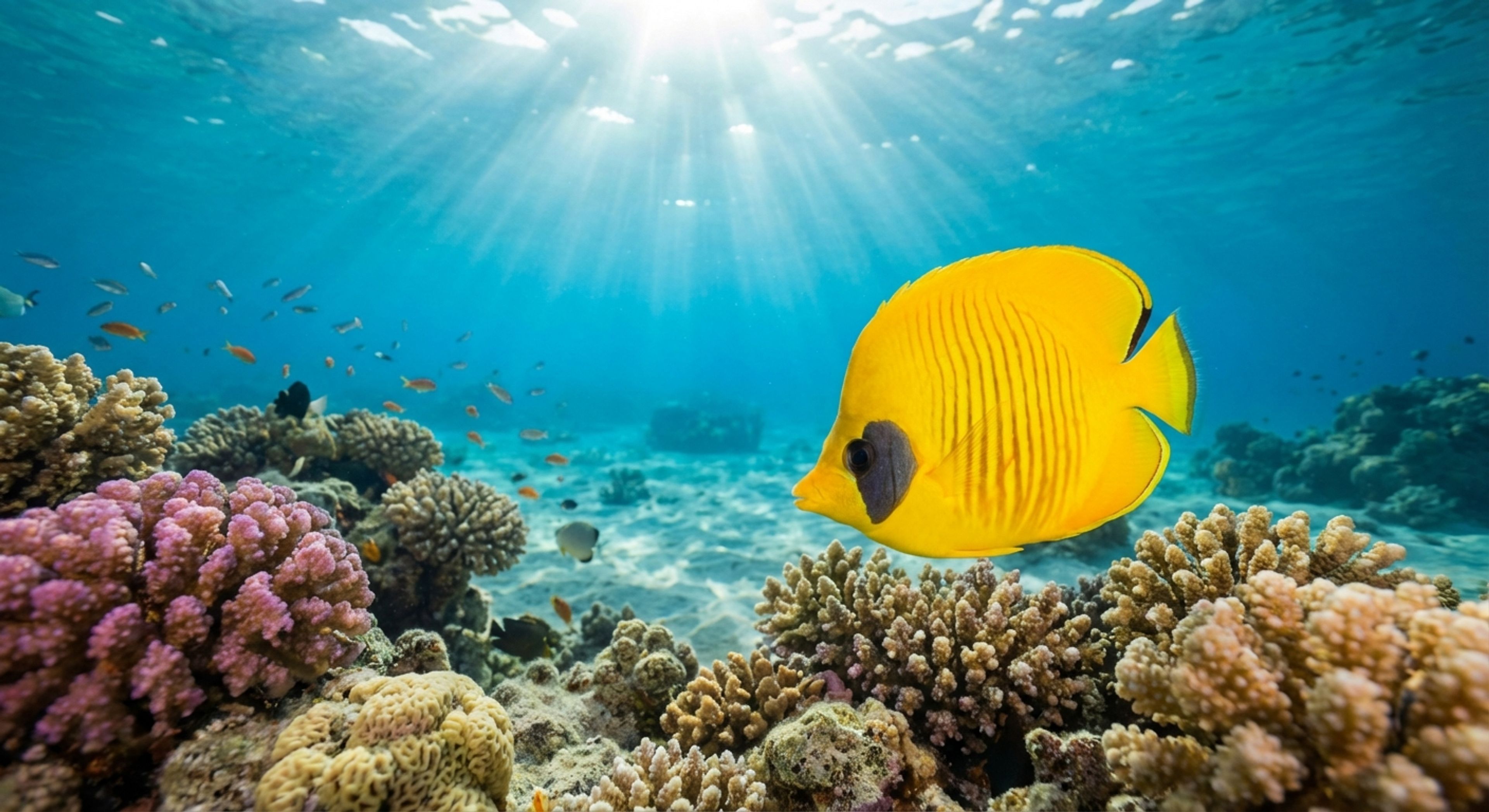
Ah, welcome my friend. Sit. The tea is hot. It has plenty of sugar and mint, just how we like it here in Dahab after a long dive. Look at that sunset over the Sinai mountains. The desert turns purple, then black. It looks empty, no? But the Bedouin knows every rock, every track of the fox, every hidden spring.
The sea is the same.
Yesterday, I took a group to the Lighthouse reef. Beautiful dive. We come up, we dry off, and a nice young man says to me, "Malik! Did you see that yellow fish? It was amazing!"
I smile. I say, "Habibi, there are five hundred yellow fish in the Red Sea. Was it the one that looks like a dinner plate? The one with the nose like a pair of pliers? Or the one that looks like it ran into a wall?"
He looked confused.
This is the difference between swimming and diving. When you do not know the names, you are just watching a screensaver. When you know the names, you are walking through a village where you know the neighbors. You know who is grumpy, who is hungry, and who is stealing a wife.
Let me teach you how we see things here. It is not magic. It is just looking.
The Silhouette: The Shape of the Soul
Forget the colors for a minute. Colors lie. Down deep, at thirty meters in the Blue Hole, red looks black. Yellow looks grey. If you rely only on color, the ocean will trick you.
You must look at the shape. The silhouette tells you the family.
Imagine you are looking at shadows on a wall.
The Disc
If the fish looks like a plate or a disc, it is usually a Butterflyfish or an Angelfish. They are tall and thin. Why? So they can turn fast and hide in the cracks of the coral when a big jack comes looking for lunch.
- The trick: How do you tell them apart? The Angelfish has a sharp spine on its cheek cover (preoperculum), near the gills. The Butterflyfish does not. But please, do not try to touch the cheek to find out.
The Torpedo
These are the hunters. Barracuda, Jacks, Tunas. They are built for speed. They look like a silver bullet. They do not maneuver well in tight spaces, but in the open blue, they are faster than your eyes. When you see a shape like a missile, you know this fish means business.
The Box
Have you seen the Pufferfish or the Boxfish? They swim like a falafel ball. They are not fast. They do not need to be. They have other defenses, like poison or spikes. When you see a clumsy, boxy fish, it is usually one that knows it does not need to run away.
The Snake
Eels. Morays. They are easy. But be careful. Sometimes a pipefish looks like a snake, but it is just a long, skinny stick floating in the current.
The Tail Tells the Tale
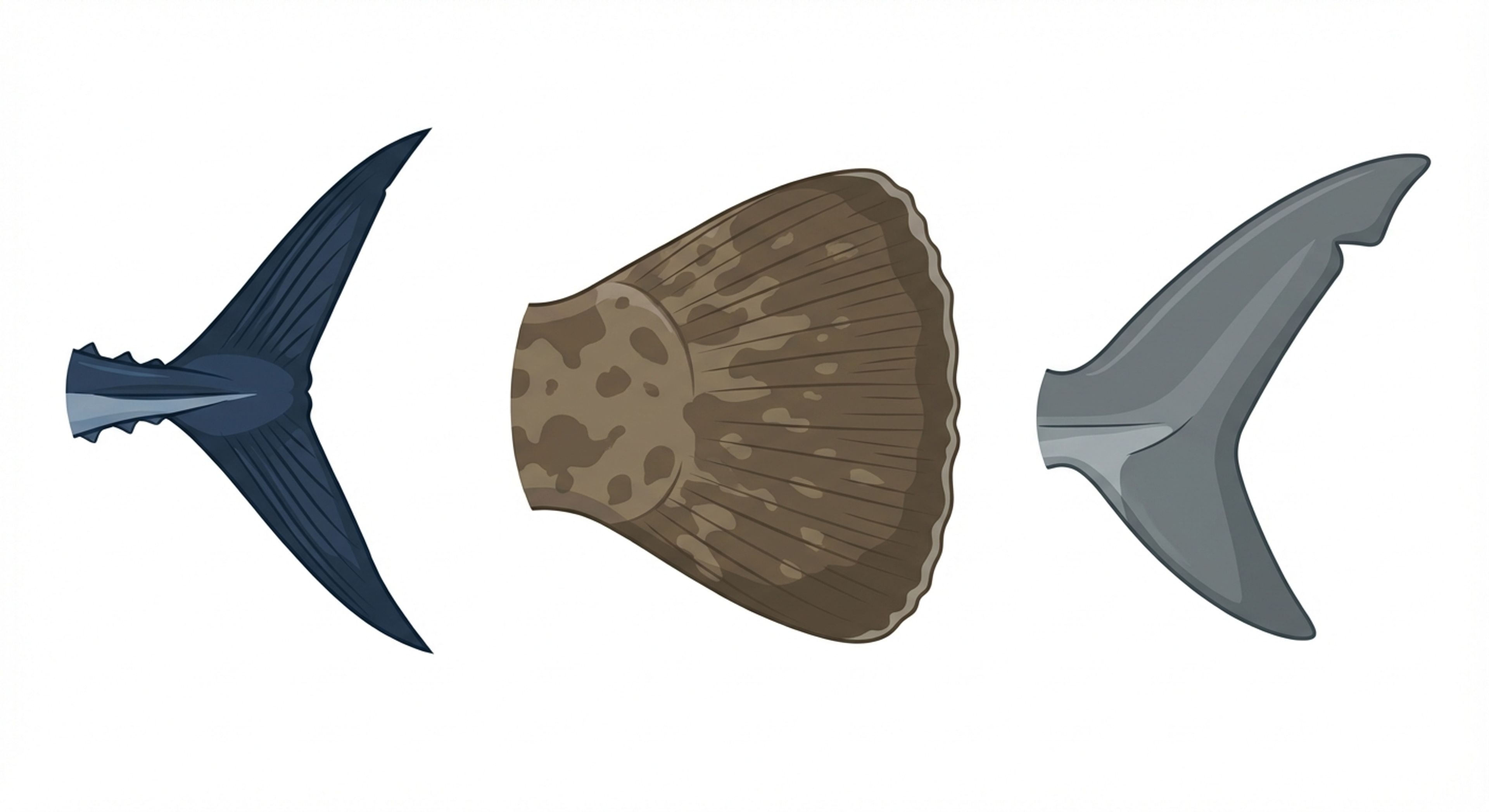
My grandfather used to look at the tracks of a camel to see if it was running or walking. Underwater, look at the tail. The tail fin, or the caudal fin, tells you how the fish lives.
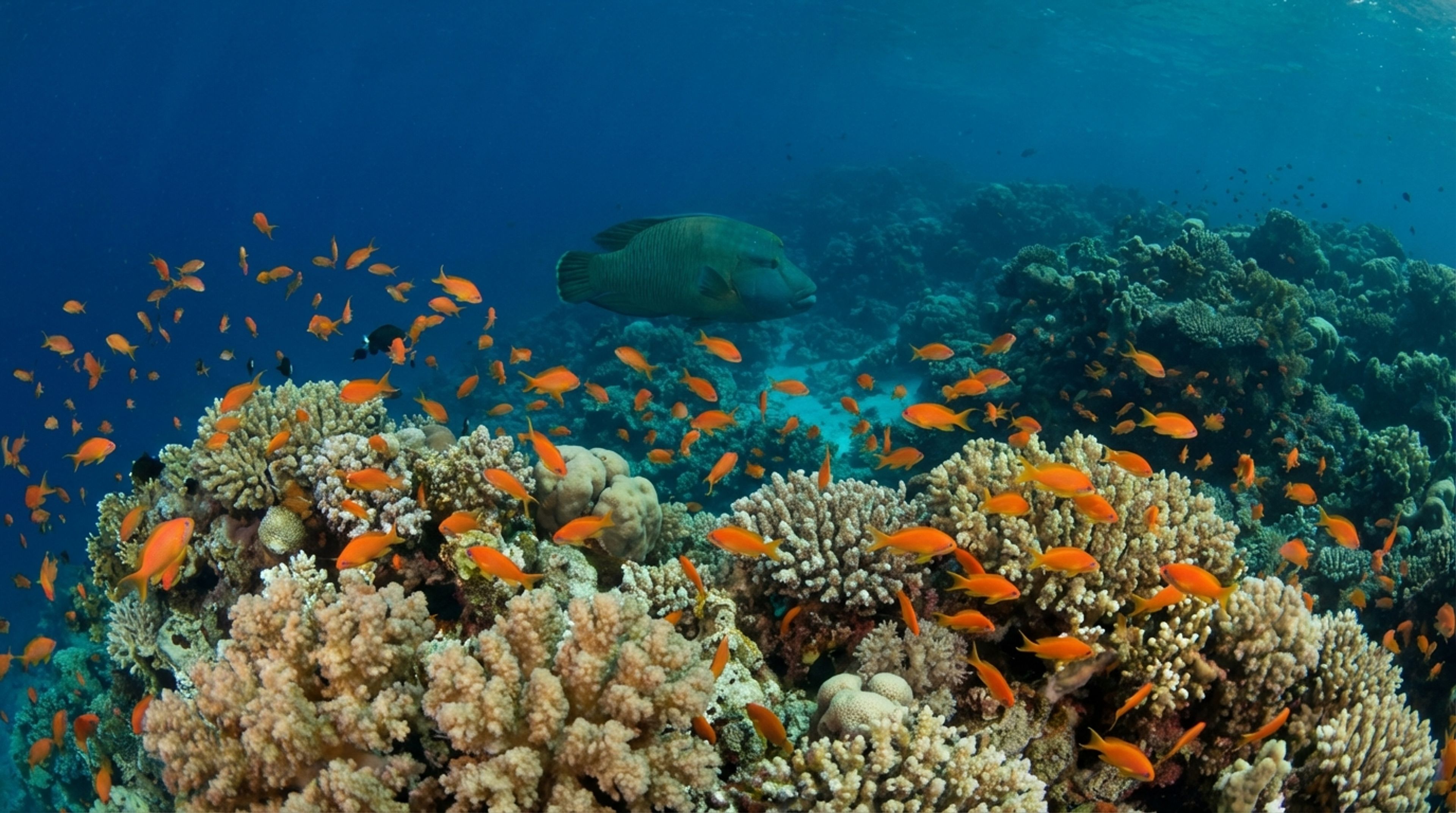
The Crescent Moon (Forked Tail) Look at the Anthias or the Fusiliers. Their tails are deeply forked, like a crescent moon. This design is for constant swimming. They never stop. They are the marathon runners of the reef.
The Broom (Rounded or Truncated Tail) Look at the Grouper or the Blenny. Their tail is round or flat. This acts like a paddle. It gives them a huge burst of power to grab prey, but they get tired fast. They are the sprinters. They sit, they wait, and BOOM.
Painting and Patterns
Now we talk about the paint. In the Red Sea, we have the Masked Butterflyfish. It is bright yellow with a black mask across the eyes. It looks like a bandit.
Stripes are important. But you must look at the direction.
Vertical Bars These go up and down. This helps the fish hide against vertical coral structures or tall sea grass. It breaks up their outline.
Horizontal Stripes These go from head to tail. This is confusing for predators when the fish school together. When a hundred fish with horizontal stripes move together, it looks like one giant blurry monster.
The False Eye Many of my friends down there, like the Butterflyfish, have a black spot near their tail. We call it an eyespot. Why? Because predators usually attack the head to predict where the fish will swim. If the predator thinks the tail is the head, the fish swims the "wrong" way and escapes. Clever, no?
The Dance: Swimming Style
This is my favorite way to identify a fish. You can identify a fish from fifty meters away just by how it moves.
The Pectoral Paddlers (Wrasses and Parrotfish) Watch a Parrotfish. It does not use its tail much. It "flies" through the water using its side fins (pectorals). It looks like a bird flapping wings. It bounces up and down. If you see a fish flapping its side fins like a chicken, it is likely a Wrasse or a Parrotfish.
The Whole Body Wiggle Eels and sharks move their whole body. It is a sinuous motion. An S-shape. It is primal. It is beautiful and a little bit scary.
The Hoverers Hawkfish and Gobies do not like to swim much. They sit on the coral. They have no swim bladder, so they sink. They perch like a hawk on a branch, watching for small shrimp. If it is sitting on a rock and looking grumpy, it is probably a Hawkfish or a Blenny.

Tools for the Scholar
You want to learn? Good. But do not try to learn everything at once. You will get a headache.
Books (The Old Ways are Best)
I love books. Books do not run out of battery. Books do not need 4G signal, which is good because there is no signal at the bottom of the Canyon.
- Reef Fish Identification (Tropical Pacific) by Gerald Allen & Co: This is the bible. If it is not in this book, you probably hallucinated it from nitrogen narcosis.
- Red Sea Reef Guide by Helmut Debelius: This is specific to my home. The photos are incredible. It sits on the table of every dive center in Dahab.
Apps (For the Young Ones)
I see the guests with their phones. There are good tools now.
- iNaturalist: You upload a photo, and scientists or AI help you identify it. It is good for science.
- FishBase: It is ugly, like an old truck, but it has all the data.
- Reef Life Pro: Good for quick checks on the boat.
A Story from the Canyon
Let me tell you why this matters.
Years ago, I was guiding inside the Canyon. It is a deep dive, narrow, shadowy. A guest grabbed my fin. He was panicking. He pointed at a large, grey shape coming out of the gloom. He thought it was a shark. He was ready to bolt to the surface, very dangerous, my friend. Never shoot to the surface.
I looked. It was a giant shape, yes. But I saw the thick lips. I saw the eyes that move independently. I saw the hump on the forehead.
It was not a shark. It was George.
George is a Napoleon Wrasse (Cheilinus undulatus). He is enormous, maybe two meters long. But he is a gentle giant. He knows me. Because I knew the shape, and the swimming style, he moves slow and regal, using his pectoral fins, I was calm.
I signaled the guest: "Okay. Big Fish. Cool."
We stayed. George came within one meter of us. He looked at us with his big eye, like a grandfather checking on the children. The guest stopped shaking. He stared. It became the best moment of his life.
If he did not know the ID features, that moment would have been terror. Because I knew, it was magic.
Your Homework
Next time you dive, do not try to name every fish. Pick one family. Say, "Today, I will learn the Butterflyfish."
Look for the discs. Look for the yellow. Look for the pairs, they usually swim with their habibi, their life partner.
Then, come back to the surface, sit with me, have some tea, and describe it. Do not tell me "yellow fish." Tell me about the mask. Tell me about the spot on the tail.
Then we are speaking the same language.
Yalla, let's go get the tanks. The water is waiting.
| Feature to Watch | What it tells you | Example Fish |
|---|---|---|
| Pectoral Swimming | Likely a Wrasse or Parrotfish | Napoleon Wrasse |
| Forked Tail | Open water swimmer, never stops | Fusilier, Anthias |
| Spine on Cheek | It is an Angelfish, not a Butterflyfish | Emperor Angelfish |
| Scalpel on Tail | Surgeonfish (Do not touch!) | Sohal Surgeonfish |
| Sits on Rocks | Lacks swim bladder | Hawkfish, Blenny |