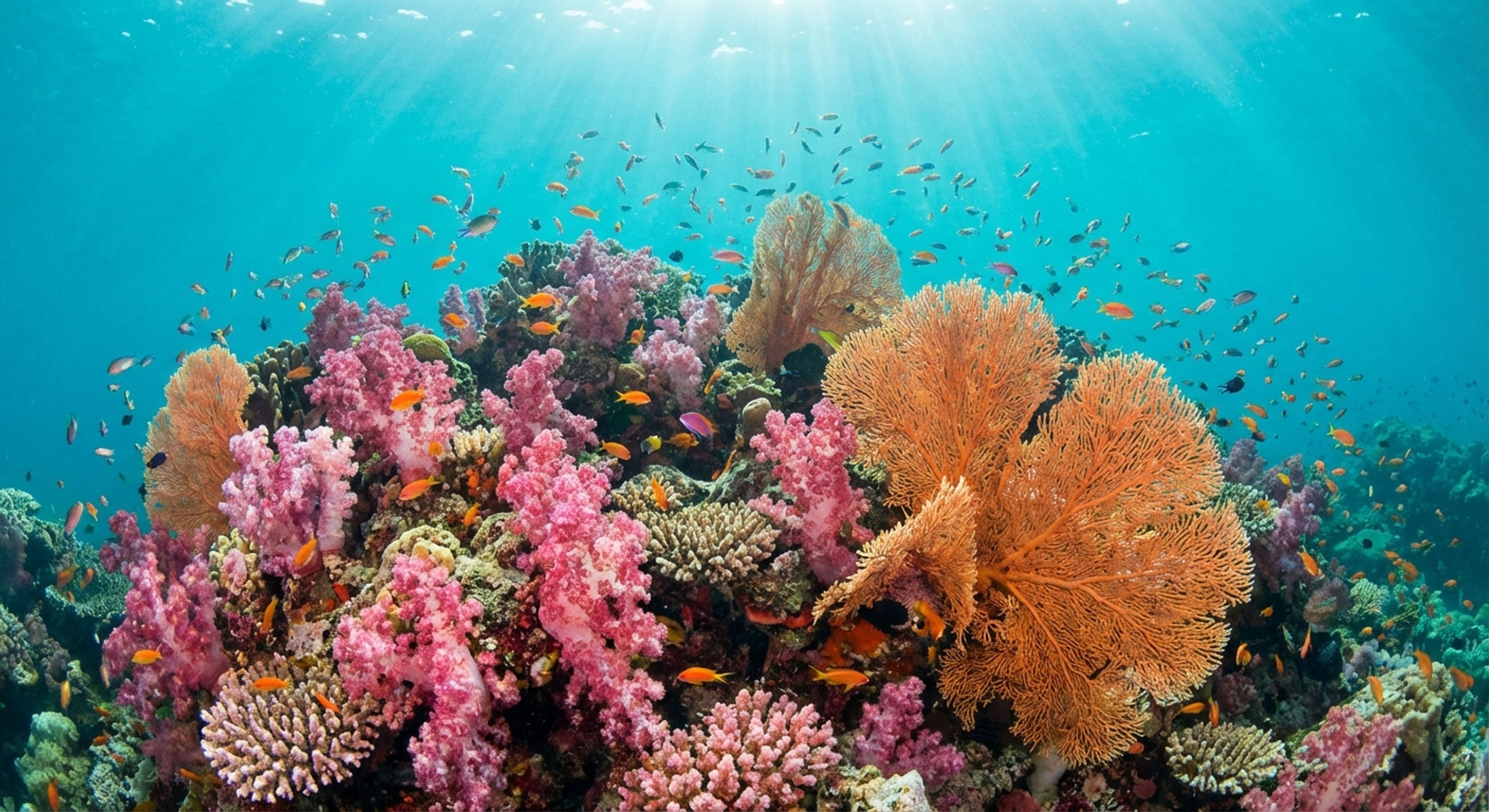

Reef-Safe Sunscreen Myths: Is Your Lotion Killing Coral?
We slather ourselves in chemicals to protect our skin, but we are suffocating the very reefs we travel thousands of miles to see. Here is the uncomfortable truth about 'reef-safe' labels and the chemical warfare we wage on the ocean.
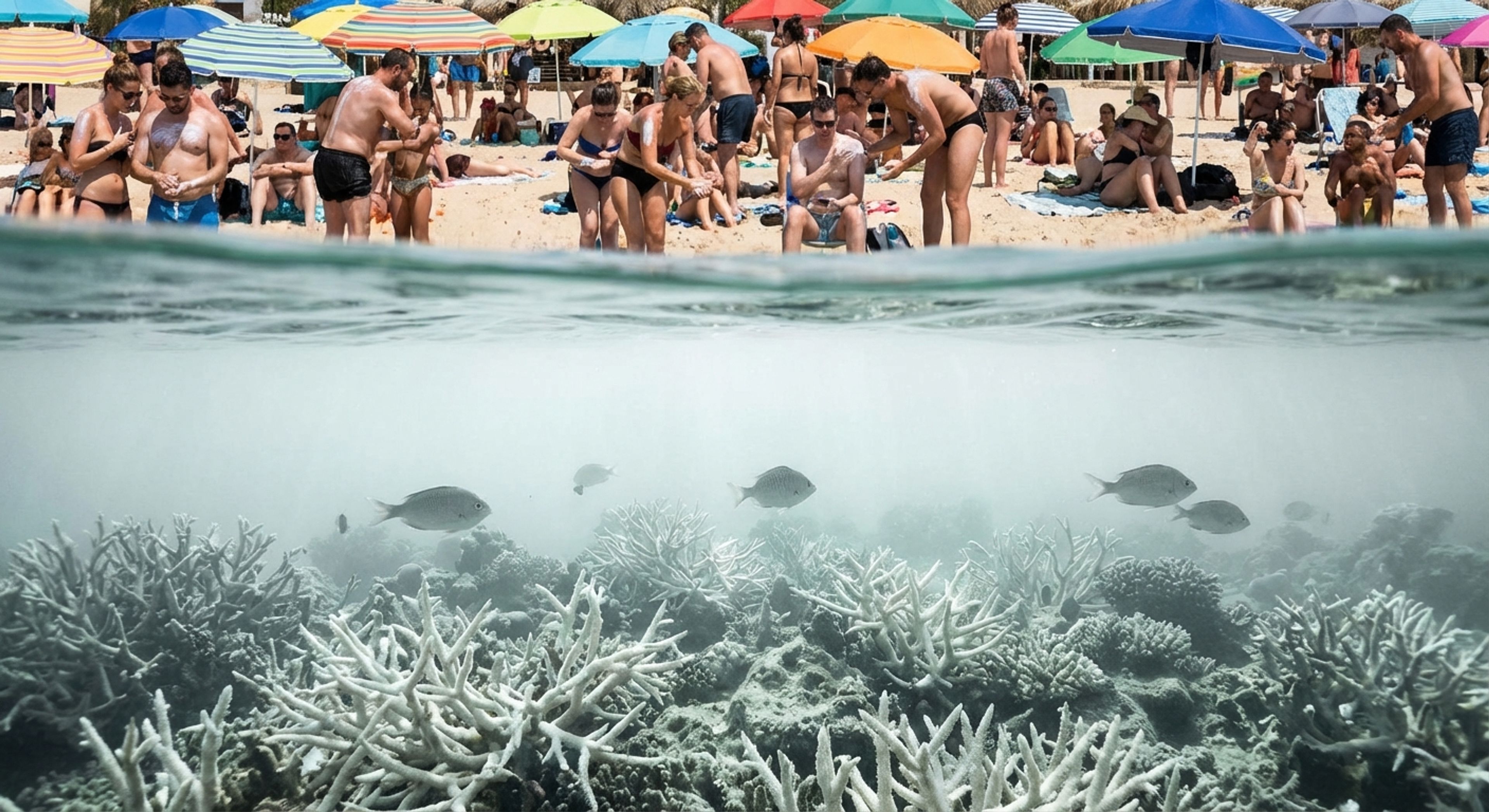
The smell of coconut and synthetic vanilla used to remind me of summer holidays. It used to remind me of warm sand sticking to my ankles and the promise of a long afternoon by the sea.
Now that smell makes me nauseous.
When I smell that sweet, oily scent wafting from a boat deck, I do not see relaxation. I see an oil slick. I see a chemical weapon. I see the slow, suffocating death of the animals I have dedicated my life to protecting.
We divers can be hypocrites. I say this with love, but I say it with anger. We spend thousands of euros on regulators and computers. We travel to the ends of the earth to see the Coral Triangle or the Red Sea. We act like pilgrims entering a cathedral when we descend into the blue. We hover, breathless, watching the polyps feed. We weep when we see bleaching events.
And yet, minutes before jumping in, we cover our bodies in poison. We rinse it off directly into the sanctuary.
It is time to look at the bottle in your hand. It is time to understand that your "protection" is their destruction.
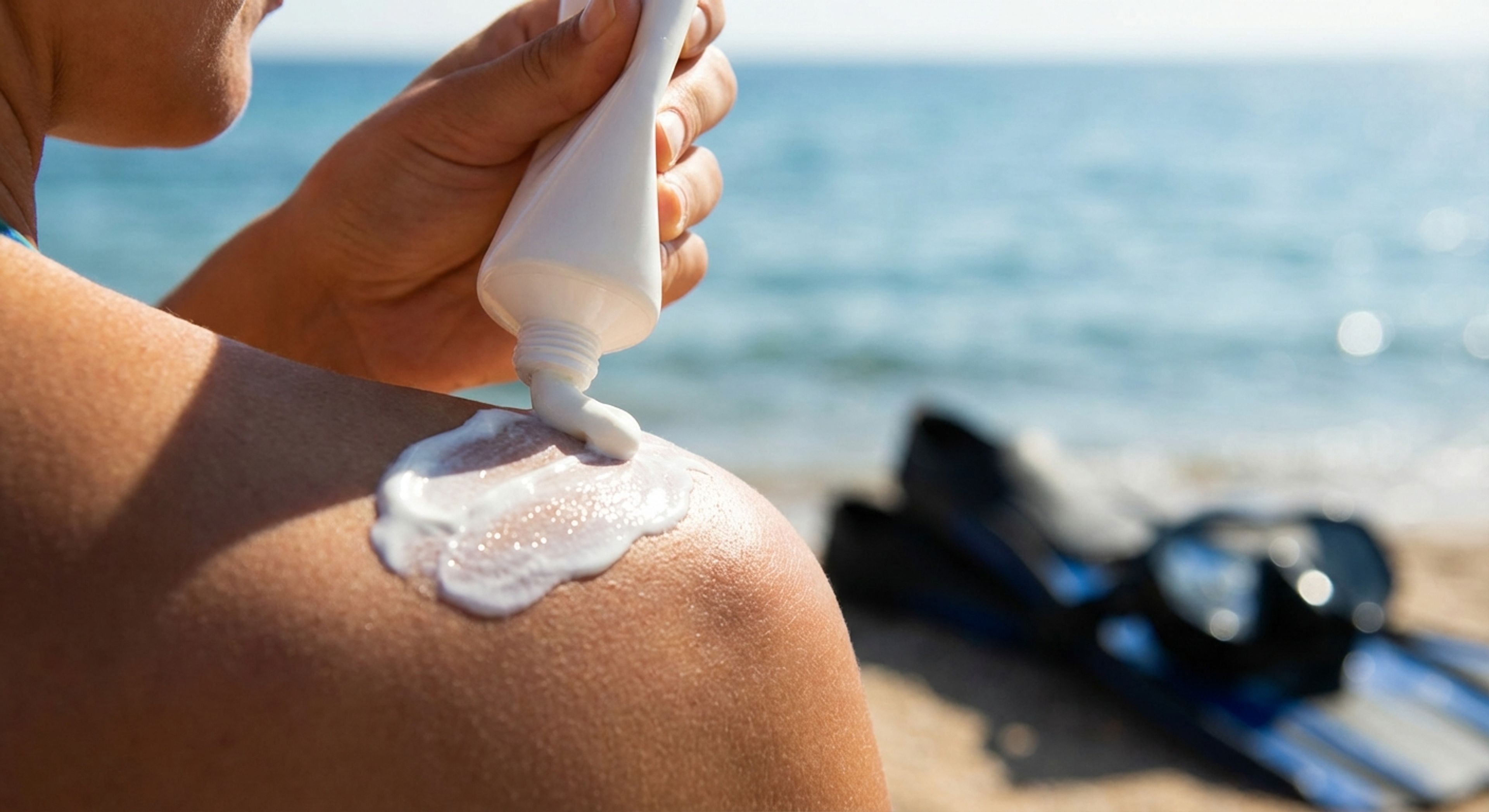
The Silent Killers: Oxybenzone and Octinoxate
Coral is not a rock. I have to remind people of this constantly. It is an animal. A fragile, ancient animal that lives in a symbiotic relationship with tiny algae called zooxanthellae. This relationship is like a marriage. The algae provides food and color through photosynthesis, and the coral provides shelter.
When we introduce common UV filters like Oxybenzone and Octinoxate into the water, we are essentially poisoning this marriage.
I remember reading the first major study on this years ago. I sat in my lab, staring at the data, feeling cold despite the Italian summer heat outside. These chemicals are endocrine disruptors. In simple terms, they mess with the hormones of marine life. But for coral, it is even more grotesque.
What actually happens?
These chemicals lower the temperature at which corals bleach. You know that global warming is heating the oceans. It is a fever the ocean cannot shake. But when Oxybenzone is present, the coral gets sick at much lower temperatures. It is like stripping the immune system of a patient who is already fighting the flu.
Even worse, Oxybenzone damages the DNA of coral larvae (planulae). It causes the baby coral to deform. It traps them in their own skeletons. They become encased in stone, unable to grow, unable to colonize. It is a birth defect on a massive scale.
And it does not take much. A single drop of Oxybenzone in an area the size of six Olympic swimming pools is enough to cause damage. Think about that the next time you see a tour boat with fifty snorkelers sliding into a quiet bay. The water shimmers with an oily film. That film is death.
The Myth of the "Reef-Safe" Label
This is where I get angry. This is where I want to scream at the marketing executives in their high-rise offices who have never looked a clownfish in the eye.
The term "Reef-Safe" is not strictly regulated in many parts of the world. It often means nothing.
You can walk into a pharmacy, pick up a bottle that has a picture of a turtle and a stamp saying "Ocean Friendly," and turn it over to find Oxybenzone listed as the active ingredient. It is a lie. It is greenwashing at its finest. They prey on your guilt. They know you want to do the right thing, so they sell you a sticker instead of a solution.
I have seen divers in the Maldives, people who truly love the ocean, applying this toxic sludge. They smile at me and say, "Don't worry, Elena, it's reef safe!"
I have to bite my tongue. Or, usually, I don't. I take the bottle. I point to the tiny text on the back. "Octocrylene," I read out loud. "Homosalate. Avobenzone."
These are not as famous as Oxybenzone, but the science is catching up. They are preservatives and stabilizers that are showing up in the tissues of dolphins, in the eggs of birds, and in the skeletons of corals. If you are putting synthetic chemistry into a delicately balanced saltwater ecosystem, you are part of the problem.

The Solution: Minerals and Metal
So, do we burn? Do we let our skin turn into leather under the fierce sun? No. I am Italian; I understand the need to care for one's skin. We treat our skin like silk. But we must treat the ocean like gold.
The only true "reef-friendly" sunscreens use physical blockers. You want ingredients that sit on top of your skin and reflect the sun like a mirror, rather than chemicals that soak into your blood and absorb the heat.
You are looking for two things, and two things only:
- Zinc Oxide
- Titanium Dioxide
But there is a catch. It is never simple, is it?
You must look for Non-Nano Zinc Oxide.
"Nano" means the particles have been pulverized to be microscopic. Manufacturers do this because it makes the cream rub in clear. We are so vain that we cannot stand to have a little white cast on our skin for an hour. But these nano-particles are so small that they can be ingested by the coral polyps. They can clog the internal systems of the marine life.
You want Non-Nano. You want the particles to be big enough that they just sink to the sand and become part of the sediment. They are minerals. They come from the earth. They return to the earth.
Yes, these creams are thick. They are sticky. They make you look a little bit like a ghost or a mime. When I dive, I have a white stripe across my nose and cheeks. I wear it like war paint. It tells the world that I care more about the reef than I care about looking perfect in a selfie.
The Best Protection: Wear Your Armor
Better than any cream, better than any mineral paste, is fabric.
I advocate for "Physical Protection First." This means Rash Guards (we call them Lycra), dive skins, leggings, and hoods.
Why are we so resistant to this? I see tourists in bikinis and board shorts, shivering after thirty minutes, their backs burning red. Why?
A good Lycra shirt is elegant. It moves with the water. It feels like a second skin. It protects you not just from the UV rays, but from the sting of a jellyfish, the scrape of the boat ladder, the bite of sea lice.
When I am in the water, I am covered from ankle to wrist. I am not hiding my body; I am streamlining it. I am making myself hydrodynamic. I am removing the variable of "sunburn" from my dive plan completely.
If you cover 90% of your body with fabric, you only need a tiny amount of Zinc Oxide for your face and hands. You reduce the chemical load entering the water by a massive amount. It is simple math.

A Comparison of Choices
I made this table for my students. I tape it to the wall of the dive shop. It simplifies the choice.
| Feature | Chemical Sunscreen (The Villain) | Physical Sunscreen (The Ally) | Protective Clothing (The Hero) |
|---|---|---|---|
| Active Ingredients | Oxybenzone, Octinoxate, Avobenzone, Homosalate | Non-Nano Zinc Oxide, Titanium Dioxide | Lycra, Spandex, Nylon (UPF 50+) |
| How it works | Absorbs into skin, turns UV to heat | Sits on top, reflects UV light | Physically blocks UV rays |
| Impact on Coral | Bleaching, DNA damage, hormone disruption | Minimal (if Non-Nano) | Zero negative impact |
| Human Health | Can disrupt human hormones, allergic reactions | Generally safe, inert | Safe |
| Longevity | Washes off easily, needs frequent reapplication | Water resistant, stays on visible | Lasts as long as you wear it |
A Memory of Loss
I want to tell you why this matters to me.
Ten years ago, during a research trip to the tropics, I monitored a specific patch of Acropora coral. It was purple and orange, sharp and vibrant. It looked like a field of wildflowers frozen in glass. It was my secret garden. I knew where the moray eel lived. I knew the specific anemone where a family of clownfish had laid eggs.
A resort expanded nearby. It was not a bad resort; they tried to be eco-friendly. But they had hundreds of guests. Every day, the guests swam over my garden. They were slathered in oil.
Within two years, the colors faded. The purple turned to a sickly brown. Then, during a particularly hot July, the entire reef turned bone white. It looked like a graveyard. The fish left. The silence in that spot became deafening.
It wasn't just the heat. The water analysis showed high concentrations of UV filters. We poisoned them. We loved them to death.
The Choice is Yours
Every time you pack your gear bag, you make a choice.
You can choose the easy way. You can buy the cheap spray bottle from the supermarket that smells like fake coconuts and kills the things you love.
Or you can choose the hard way. You can read the label. You can hunt for the words "Non-Nano Zinc Oxide." You can pull on a tight rash guard even when it is hot outside. You can look a little white and pasty in your photos.
The ocean does not need our vanity. It needs our respect. It needs us to be inconvenient.
Next time you go to the water, look at what you are bringing with you. If you cannot pronounce the ingredients, do not feed them to the coral.