

Underwater Photography: Career or Financial Suicide?
You want to trade a welding torch for a camera shutter. I break down the brutal economics of underwater photography, from gear depreciation to the saturation of the stock market.
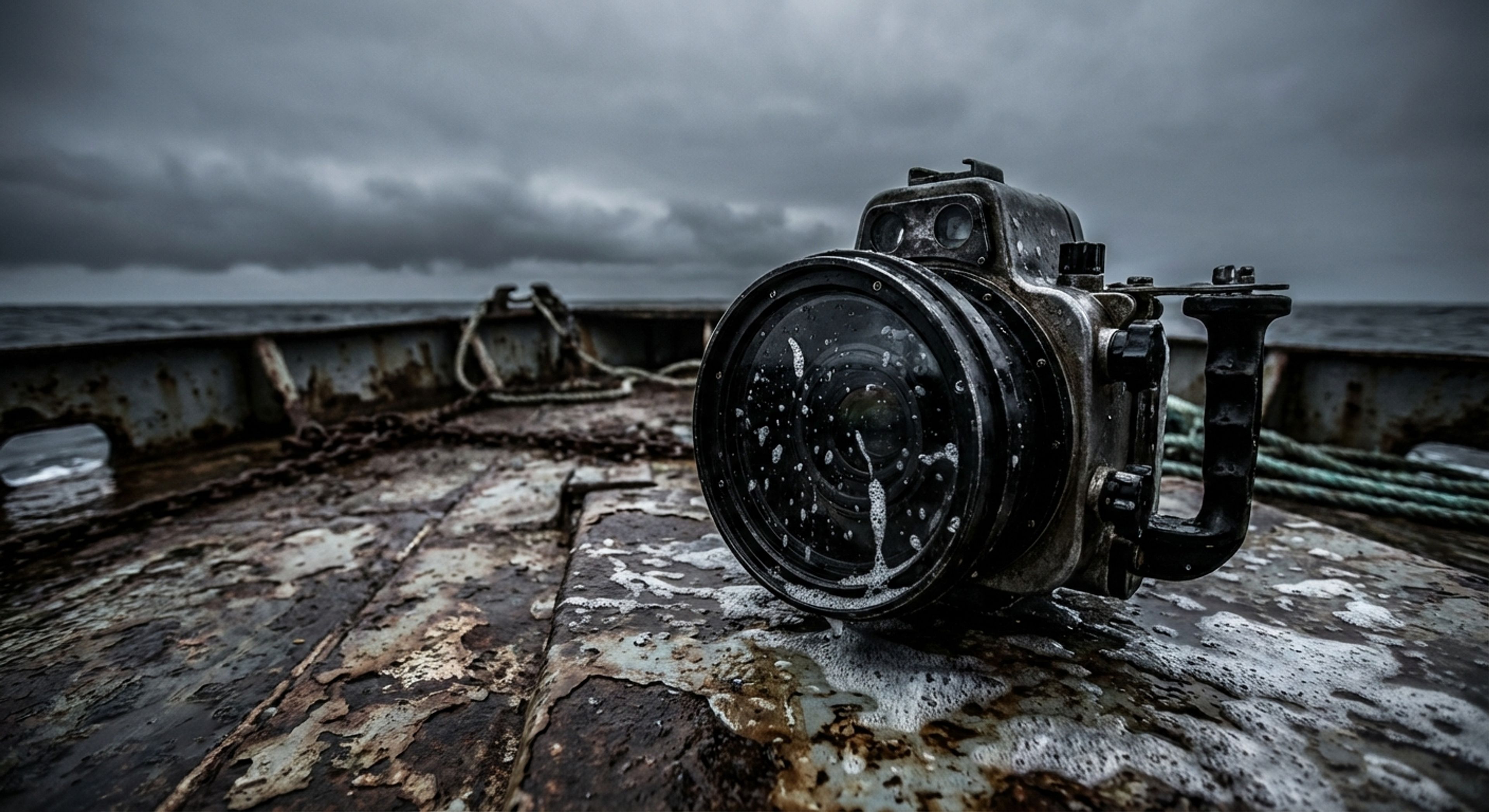
The North Sea does not care about your ISO settings. At 150 meters down, when the darkness is so absolute it feels like a physical weight pressing against your eyeballs, the only thing that matters is the integrity of your seals and the heliox mix in your tanks. I weld pipelines for a living. I fix the arteries of the industrial world in freezing black water. It is cold. It is dangerous. It pays.
People ask me about taking pictures. They see the ocean as a canvas. I see it as a hostile environment trying to crush anything filled with air. You want to be an underwater photographer? You want to make a living capturing the "beauty" of the deep?
Fine. Let's talk about the thermodynamics of your bank account. Because from where I sit, in a decompression chamber smelling of stale sweat and ozone, it looks less like a career and more like an expensive way to starve.
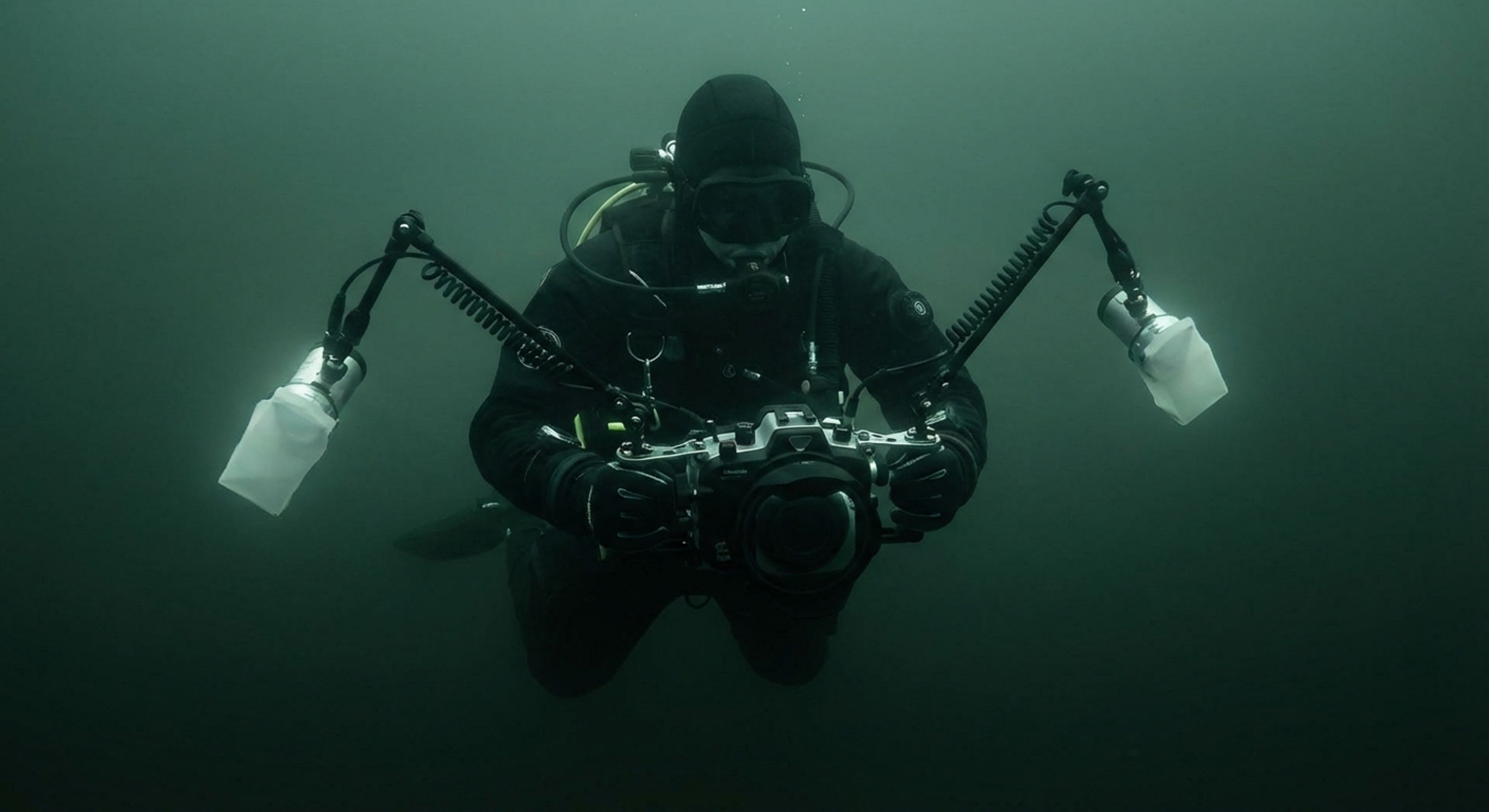
The Myth of the National Geographic Paycheck
There is a fantasy sold by dive centers in the tropics. You drift over a coral reef in warm, useless water. You snap a photo of a shark. A magazine wires you ten thousand dollars. You drink a cocktail with an umbrella in it.
Wake up.
The ocean is an industrial zone. The photography market is a scrapyard. Twenty years ago, maybe you could sell a shot of a Great White for a mortgage payment. Today, every tourist with a GoPro and a selfie stick is flooding the market. The supply is infinite. The demand is dead.
Stock Photography is Dead Weight
I look at the numbers. They are colder than the bottom of a fjord. Microstock sites sell images for pennies. You risk decompression sickness, hypothermia, and equipment failure to get a shot that sells for $0.30. You need volume. You need thousands of generic images of "diver looking at fish" to buy a coffee.
I knew a guy in Stavanger. Good diver. Spent $15,000 on a housing and lights. He uploaded five thousand photos over three years. He made enough to buy a used dry suit zipper. That is not a job. That is a slow leak in your hull.
Magazines and Editorial
Print is dying. The few publications left pay in "exposure." Exposure does not buy silicone grease. It does not pay for the hydrostatic testing of your cylinders. Unless you are the top 0.01% of shooters, the guys who get hired by the BBC to wait three weeks in a hide for a penguin to sneeze, you are not paying rent with magazine spreads.
The Real Revenue Streams (If You Can Stomach Them)
If you are stubborn, and you insist on bringing sensitive electronics into salt water for money, you have to pivot. You cannot be an artist. You must be a technician of vanity or a salesman of gear.
The "Mermaid" Industry
This is the only sector growing, and it makes me sick. Private shoots. Influencers. People who want to look like they belong underwater when they can barely hold their breath for thirty seconds.
You are not tracking elusive marine life. You are managing fabric in a swimming pool or shallow reef. You are babysitting. It pays better than stock. A wealthy client might drop a few thousand for a portfolio. But you are barely a diver. You are an underwater portrait photographer dealing with panic attacks, buoyancy issues, and runny mascara. It is undignified. But it feeds the machine.
Gear Reviews and Brand Ambassador
This is the hustle. You get free gear. You write about the gear. You tell people they need the gear. The manufacturers own you. You become a billboard for aluminum and glass.
It works if you have the following. But realize this: you are no longer selling your vision. You are selling polycarbonate housings and strobes. You are a commercial diver in the worst sense, selling product, not skill.
The Brutal Physics of Gear Depreciation
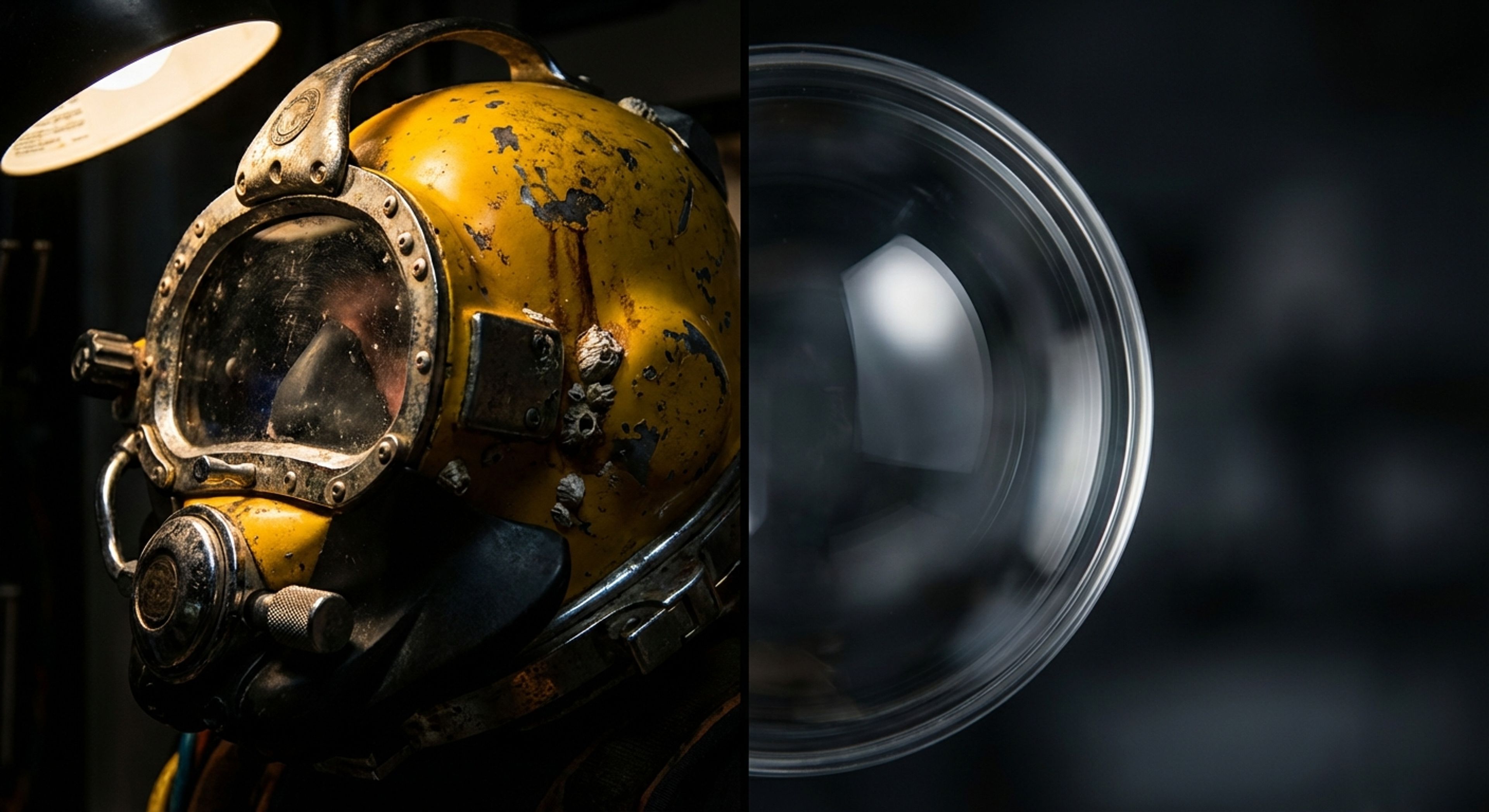
In commercial saturation diving, our gear is heavy. Brass. Stainless steel. Kirby Morgan helmets. It lasts. It takes a beating. Your camera gear is fragile. It is obsolete the moment you buy it.
The ocean destroys electronics. Even if you don't flood it, the salt air eats the circuits. The humidity rots the sensors. Galvanic corrosion welds your bolts shut. And the depreciation is faster than a free-fall descent.
Here is the math of your toolset.
The Housing Trap
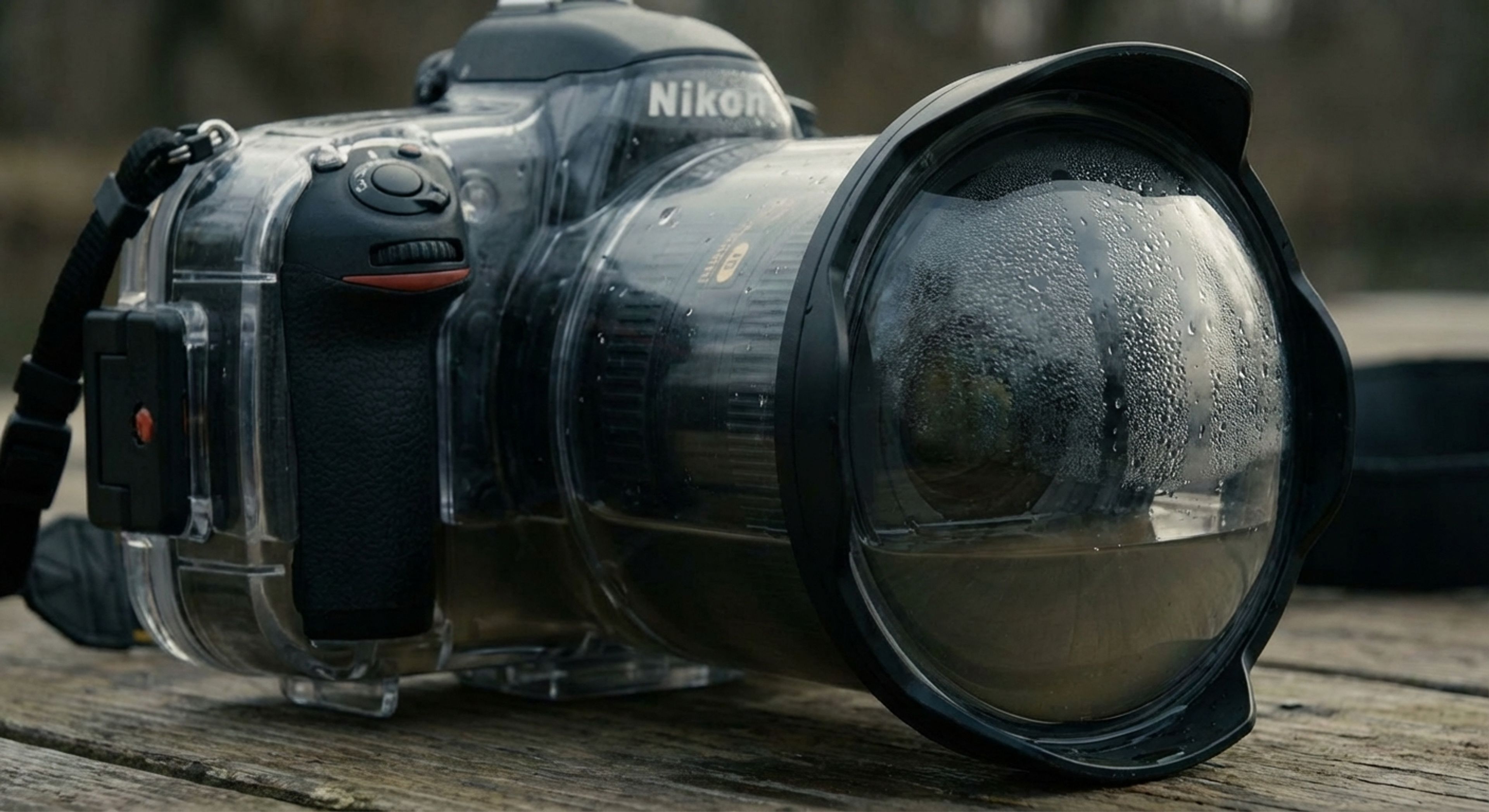
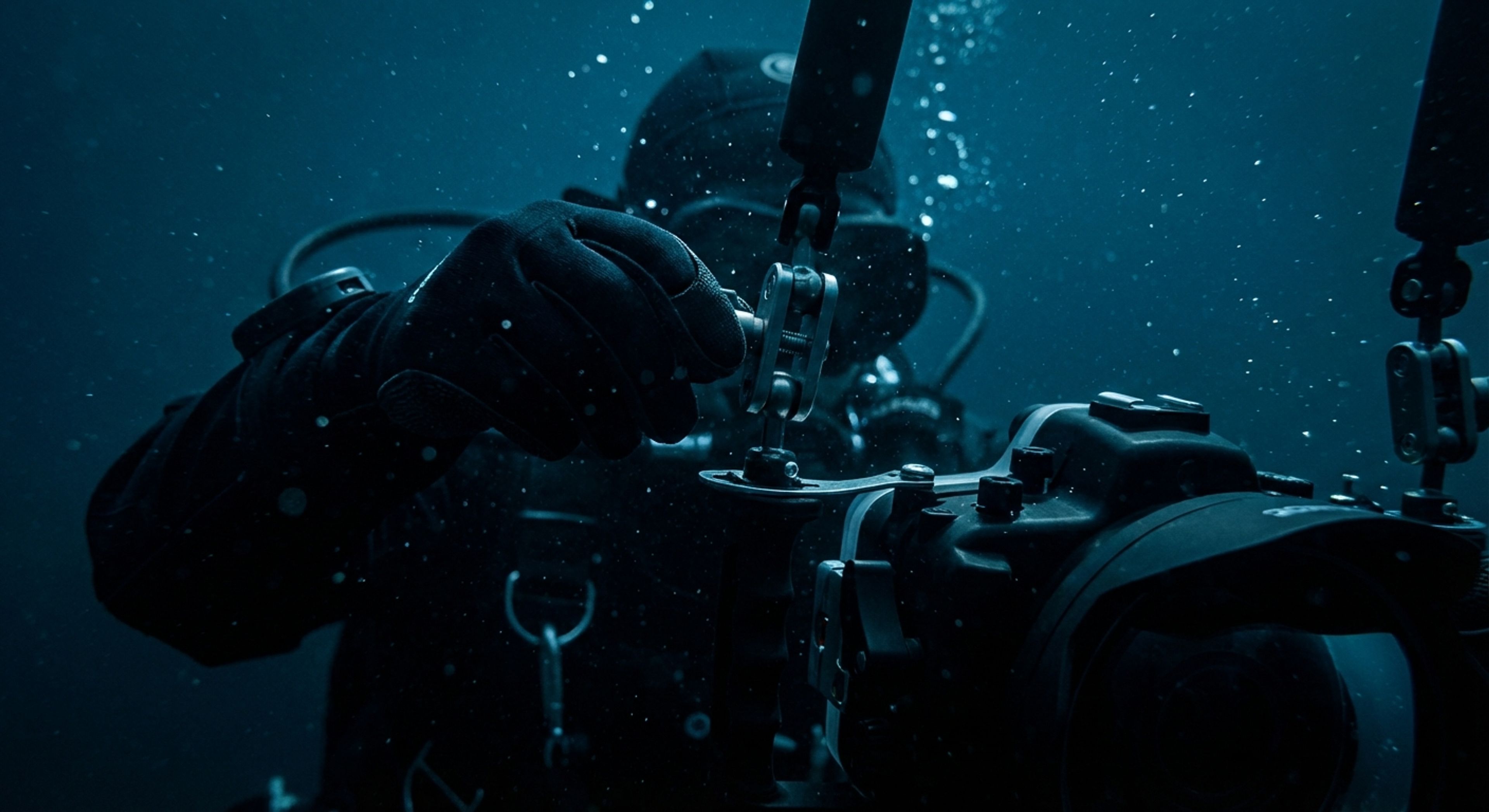
The camera body costs $4,000. The lens costs $2,000. Then you need the housing. An aluminum block, machined to microns. That is another $3,000. Ports. Dome for wide angle. Flat for macro. Extensions. Gears. $2,000. Strobes. Arms. Clamps. Sync cords. Batteries. Vacuum systems. $3,000.
You are in the water for $14,000 minimum.
Two years later, the camera manufacturer releases a new body. The buttons moved two millimeters. The dials are slightly larger. Your $3,000 housing is now a paperweight. It fits nothing else. You cannot weld it to fit. It is scrap metal.
You have to buy it all again.
The Risk of Total Loss
In my line of work, if a seal fails, I might die. If your seal fails, your bank account dies. A single hair on an O-ring. A grain of sand. The pressure at depth finds the weakness.
I remember a shoot in the Arctic Circle. A photographer was trying to capture orcas. He rushed his setup. Didn't pull a vacuum check. He jumped in. At five meters, the moisture alarm screamed. By the time he surfaced, the salt water had fried the motherboard, the lens contacts, and the battery. $8,000 gone in three seconds. Insurance might cover it, but premiums for commercial underwater equipment are astronomical. They know the risks. They know water always wins eventually.
The Safety Compromise
There is a safety factor here that nobody talks about. Cameras kill divers.
When you are looking through a viewfinder, you are not looking at your SPG (Submersible Pressure Gauge). You are not looking at your buddy. You are task-loaded.
I have seen photographers chase a turtle down to 40 meters, ignoring their no-decompression limit, ignoring their gas consumption. They get "shutter fever." Their breathing rate spikes. They suck down a tank in twenty minutes. This is how you get bent. This is how you embolize.
In commercial diving, we have strict protocols. Focus is on the job and the life support. In photography, the job is the distraction. It is fundamentally unsafe unless your discipline is ironclad.
The Side Hustle vs. Full Time Calculation
I am a pragmatist. I look at risk versus reward.
If you weld a pipe, you get paid by the hour. Hazard pay. Depth pay. Saturation bonus. The money is in the bank before the rust sets in.
If you take a photo, you do the work upfront. You buy the gear upfront. You take the risk upfront. You might get paid in six months. You might never get paid.
Comparison: Commercial Diver vs. Underwater Photographer
| Factor | Commercial Sat Diver | Underwater Photographer |
|---|---|---|
| Primary Environment | Cold, dark, high pressure, industrial | Warm, clear, shallow, recreational |
| Initial Investment | Certification ($20k+), basic personal gear | Camera rig ($15k+), continuous upgrades |
| Income Stability | High. Contract based. | Very Low. Speculative. |
| Risk to Life | High (mitigated by team/procedure) | Moderate (elevated by distraction/task loading) |
| Risk to Gear | Equipment is company owned usually | Equipment is personally owned |
| Depreciation | Skills appreciate with experience | Gear depreciates immediately |
Recommendations from the Deep
You want my advice? Keep the camera dry. Or keep it cheap. But if you must proceed, listen to this.
1. Keep Your Day Job Do not quit a stable income to chase fish. The stress of needing a photo to sell will ruin your diving. You will burn through your gas too fast because your heart rate is up, worrying about focus peaking instead of your partial pressure of oxygen. Be a weekend warrior. Shoot for yourself. If it sells, buy a beer.
2. Focus on Macro Wide angle requires clear water. It requires travel to the tropics. It is expensive. Macro, tiny things, can be done anywhere. Even in the cold muck of a harbor in Norway, there are nudibranchs. The gear is smaller. The lights are cheaper. The subjects don't swim away as fast. You can hone your skills in low visibility without spending thousands on flights.
3. Become a Specialized Technician If you must do this full time, don't just be a "photographer." Be an inspection specialist. Learn to pilot an ROV (Remotely Operated Vehicle). Learn 3D photogrammetry for hull inspections and shipwreck mapping. Use the camera as a tool for data, not art. Oil companies pay for data. Survey companies pay for maps. Magazines pay for dreams. Data pays better.
The Cold Reality
The ocean is not a studio. It is a wilderness that wants to kill you. It creates corrosion. It creates pressure. It hides things.
I respect the technical skill of a good underwater photographer. Managing buoyancy, lighting, and camera settings while drifting in a current requires discipline. But do not mistake a hobby for an industry.
If you want to live by the sea, get a trade. Learn to weld. Learn to fix diesel engines. Learn to mix gas. Then, take your camera down on your days off. You will enjoy it more when your livelihood doesn't depend on a sea turtle deciding to look at your lens.
Stay safe. Check your O-rings. Watch your gas. And remember, warm water is just a bath.