

Strobes vs Video Lights: Why Your Underwater Photos Lack Red
The ocean is a thief that steals color from the spectrum. Dr. Aarav Patel explains the physics of light absorption and why choosing between a strobe and a video light is critical for restoring the historical accuracy of your images.
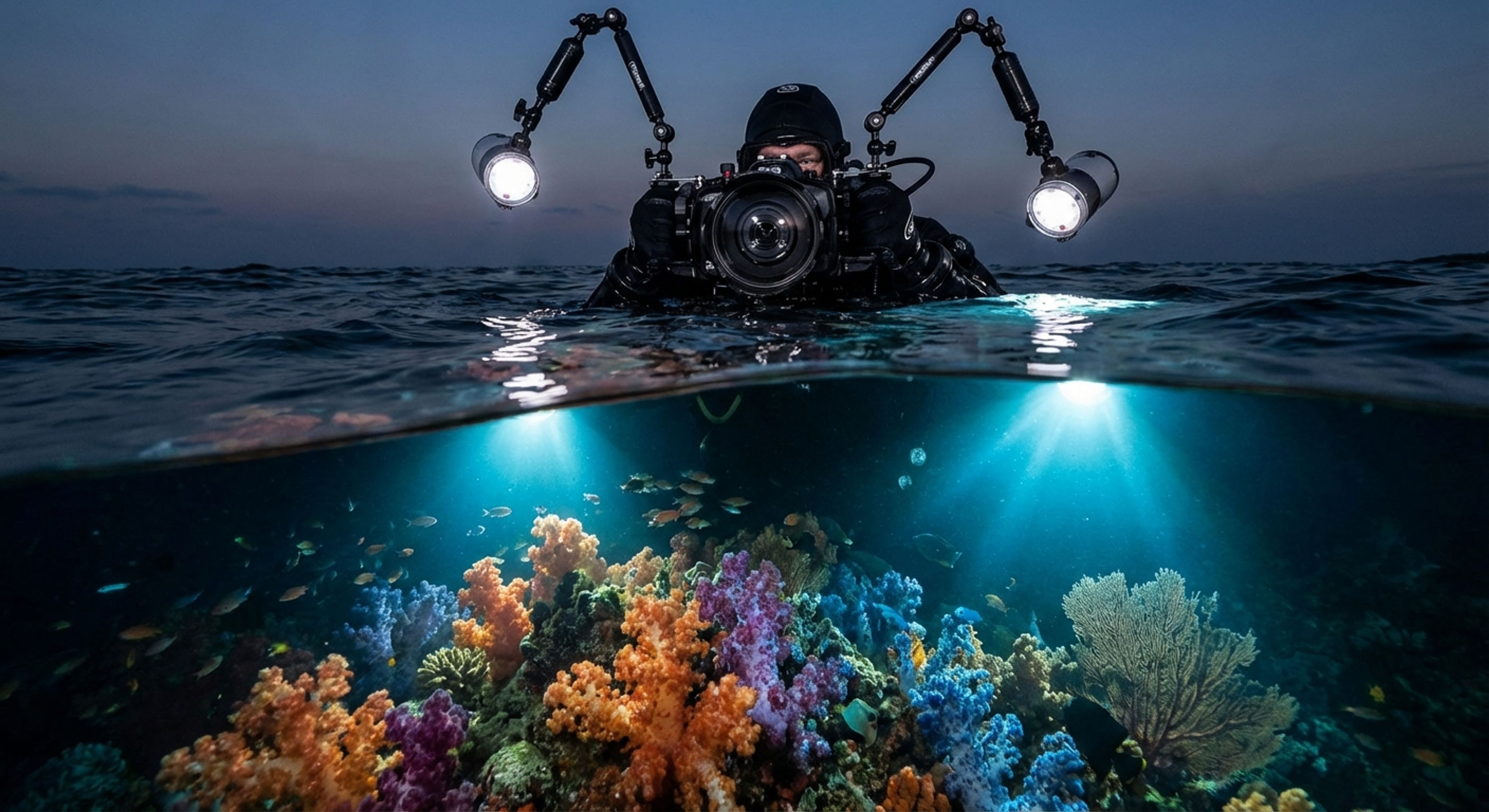
It is a tragedy of physics that the ocean, for all its biological magnificence, is essentially a giant filter designed to destroy color. I recall my first expedition to the sunken remains of the ancient port city of Dwarka. I was a young doctoral candidate, eager to document the submerged masonry. I took a photograph of what I believed to be a vibrant, rust-colored ceremonial pot.
When I developed the image, the pot was not rust-colored. It was a dull, depressing shade of cyan. The water had absorbed the red wavelengths of light long before they hit my sensor. I had not captured history. I had captured a blue smudge.
The primary grievance many of you have with your underwater photography is that it "looks blue" or lacks the vibrancy of the Amphiprion ocellaris (False Clownfish) you saw with your own eyes. To fix this, you must introduce artificial light. But here lies the dilemma that confuses many of my students: do you invest in a Strobe (Flash) or a Video Light (Constant Light)?
Please pay attention. We are discussing optics today.
The Thief Called Water
Before we discuss the hardware, we must understand the environment. Water is roughly 800 times denser than air. As sunlight penetrates the surface, the water molecules absorb energy at different rates.
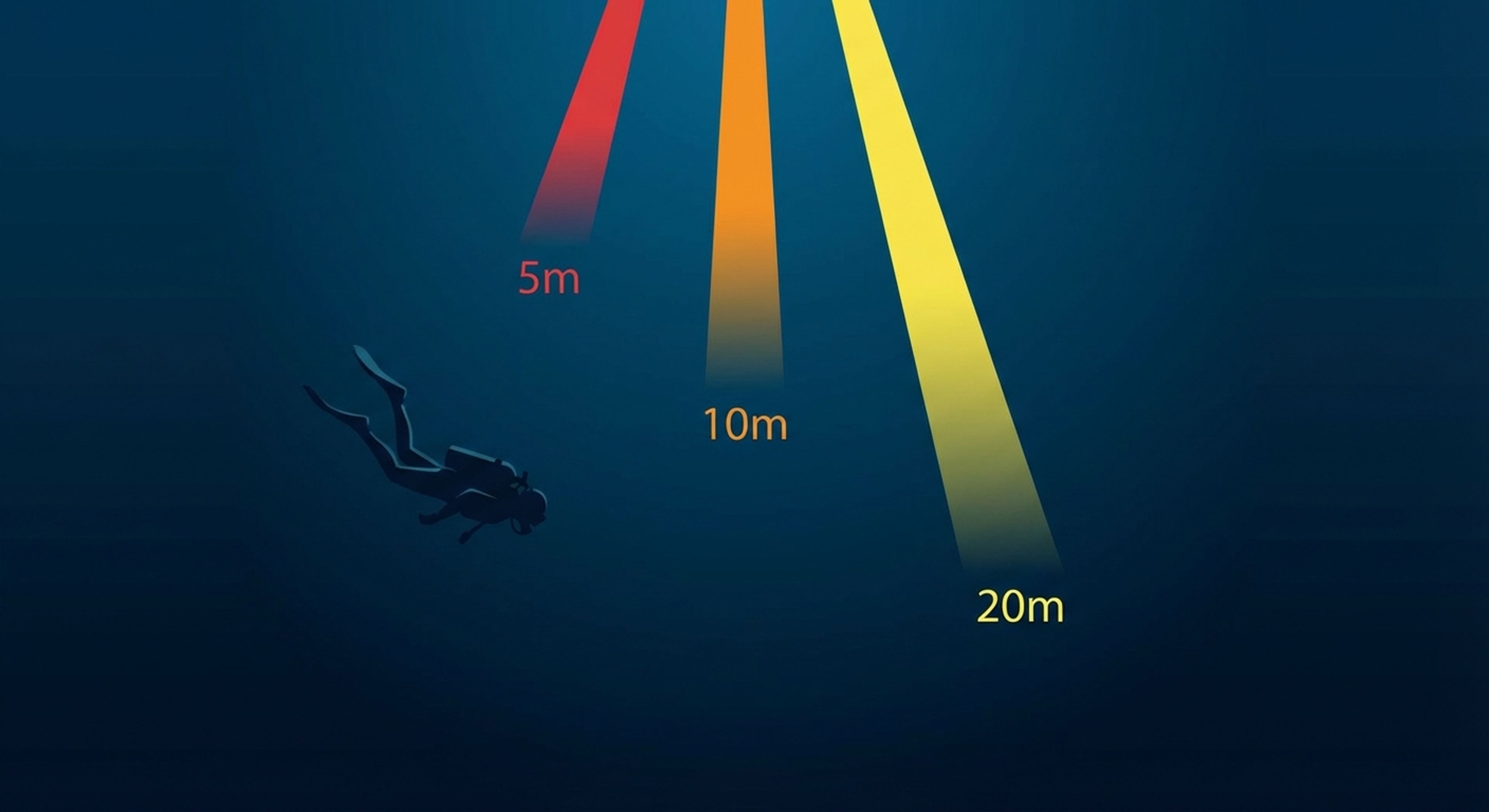
Red light has the longest wavelength and the lowest energy. It is the first casualty. By the time you descend to 5 meters (15 feet), the color red is effectively gone. It turns to black or brown. By 10 meters, orange vanishes. By 20 meters, yellow begins to fade. Below 30 meters, you are diving in a monochrome world of blue and green.
If you are photographing a Gorgonia sea fan at 20 meters without artificial light, you are photographing a blue structure. It does not matter how expensive your camera is. The red light physically does not exist at that depth. You must bring it with you.
The Strobe: The Time Machine
A strobe, or flash, is a device that stores electrical energy in a capacitor and releases it in a fraction of a second. I often compare using a strobe to wielding a miniature lightning bolt.
Freezing Time
The duration of a strobe flash is incredibly fast, often 1/1000th of a second or faster. This is crucial for taxonomy. If you are attempting to photograph a Chromis viridis (Blue-green Chromis), you know they are erratic swimmers. They do not pose.
A video light requires you to use your camera's shutter speed to freeze motion. If it is dark, your shutter stays open longer, and the fish becomes a blur. A strobe dumps so much light so quickly that it freezes the fish instantly, regardless of your shutter speed (within sync speed limits). It creates crisp, sharp images where every scale is visible.
Power and Penetration
Strobes possess raw power. We measure this in Guide Numbers (GN). A high-quality strobe can illuminate a shipwreck section five meters away. It fights the sun. It allows you to use a small aperture (like f/16 or f/22) to get a deep depth of field, ensuring that both the snout and the tail of a Carcharhinus amblyrhynchos (Grey Reef Shark) remain in focus.
The disadvantage? You cannot see the light until you take the picture. It requires an understanding of angles to avoid backscatter (the reflection of light off plankton). It is not intuitive. It requires study.

The Video Light: What You See Is What You Get
A video light is a continuous light source. It is a torch. In the early days of my career, these were hot, halogen bulbs that lasted 20 minutes. Today, we use LEDs.
Ease of Use
For the novice, the video light is seductive. You turn it on. You see the colors return to the Acropora coral. You snap the photo. What you see on your LCD screen is roughly what you get in the final image. It helps your camera focus because the sensor can "see" the contrast.
The Power Deficit
However, continuous lights are weak compared to strobes. To match the instantaneous light output of a mid-range strobe, you would need a video light the size of a suitcase.
Because the light is weaker, you must open your aperture (f/4 or f/5.6) or slow your shutter speed. This leads to a shallow depth of field (blurry backgrounds) or motion blur. Video lights are excellent for video, obviously. For photography, they are best suited for macro subjects (tiny creatures) where the light is very close to the subject.
Technical Concepts: Lumens vs. Kelvin
Do not purchase gear based on the box art. Look at the numbers.
Lumens
This measures the total quantity of visible light emitted by a source.
- Video Lights: Measured in Lumens. 1,000 lumens is a focus light. 3,000 to 5,000 lumens is entry-level for wide-angle video. Professional cinema lights exceed 30,000 lumens.
- Strobes: Measured in Guide Number (GN). Do not try to convert GN to Lumens. It is apples and oranges. Just know that a GN 20 strobe is significantly brighter for that split second than a 5,000 lumen light.
Color Temperature (Kelvin)
Light has a "temperature."
- Warm light (3000K): Looks yellow/orange, like an old lightbulb.
- Daylight (5000K-5600K): This is neutral white. This is what you want. It mimics the sun at noon.
- Cool light (6500K+): Looks blue. Avoid this. The ocean is already blue enough. We are trying to fix the blue, not add to it.
I prefer a slightly warmer strobe (4800K) to bring out the rich reds in soft corals.
The Comparison Matrix
As a scientist, I appreciate data arranged logically. Here is the breakdown.
| Feature | Strobe (Flash) | Video Light (Continuous) |
|---|---|---|
| Primary Use | Photography (Still images) | Videography & Macro Focus |
| Light Duration | Instant (1/1000 sec) | Constant |
| Motion Blur | Freezes motion effectively | Subject to shutter speed limitations |
| Power Output | Extremely High (Burst) | Low to Medium (Continuous) |
| Battery Life | Hundreds of flashes | 45-60 minutes on high power |
| Learning Curve | High (Must predict lighting) | Low (WYSIWYG) |
| Subject Type | Fast fish, Wide-angle scenes | Static subjects, Macro video |
Dr. Patel’s Prescription for the Beginner
You are likely asking, "Professor, which one should I buy to stop my photos from looking like blue mud?"
Here is my advice. It is blunt because I want you to save money.
Scenario A: You mainly shoot video (GoPro / TG-6). Buy a Video Light. You have no choice. Strobes do not work for video. You need at least 2,500 lumens. Anything less is a toy. Ensure it has a "wide beam" (100 degrees or more) so you do not get a "hot spot" (a bright white circle) in the center of your footage.
Scenario B: You want to take beautiful photos of fish and landscapes. Buy a Strobe. Do not buy a video light thinking it will do both. It will not. A video light on a wide-angle reef shot from 1 meter away will do absolutely nothing. The sun is too strong, and the water is too dense. A strobe will punch through the blue and illuminate the reef.
Start with one strobe. Learn to position it. Later, buy a second one to fill in the shadows.
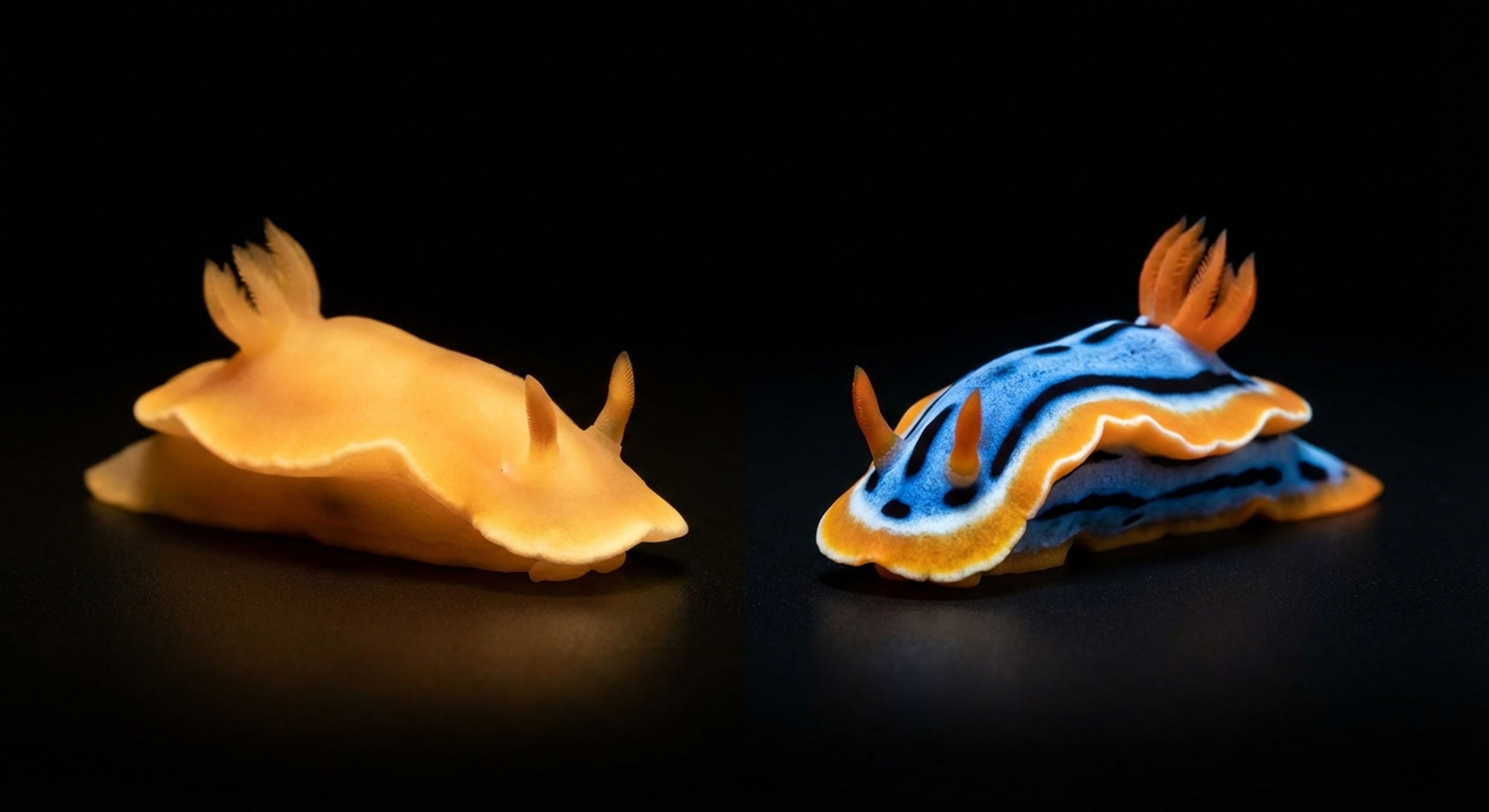
Scenario C: The Macro Enthusiast. If you only photograph nudibranchs, those delightful little sea slugs, you can use a high-quality video light. Since the light is only centimeters from the subject, the intensity is sufficient. It creates a pleasing, soft light that is easier to manage than the harsh burst of a strobe.
A Final Warning on Etiquette
I must conclude with a point of underwater manners. If you see a fellow diver, perhaps a distinguished archaeologist examining a pot shard, do not shine your 5,000-lumen video light directly into their face. It is blinding. It is rude. It ruins their night vision.
Treat your light as a tool for revealing history, not as a weapon.
The ocean hides its true colors. It is our job to bring them back, but we must do so with the correct instruments. Choose wisely. A strobe captures the moment; a video light captures the flow. Decide which history you wish to record.