

The Ink of the Sea: Why Your Dive Log Is More Than Just Numbers
Don't let your memories dissolve in the salt water. Here is how to write a logbook that keeps the magic of the Red Sea alive forever.
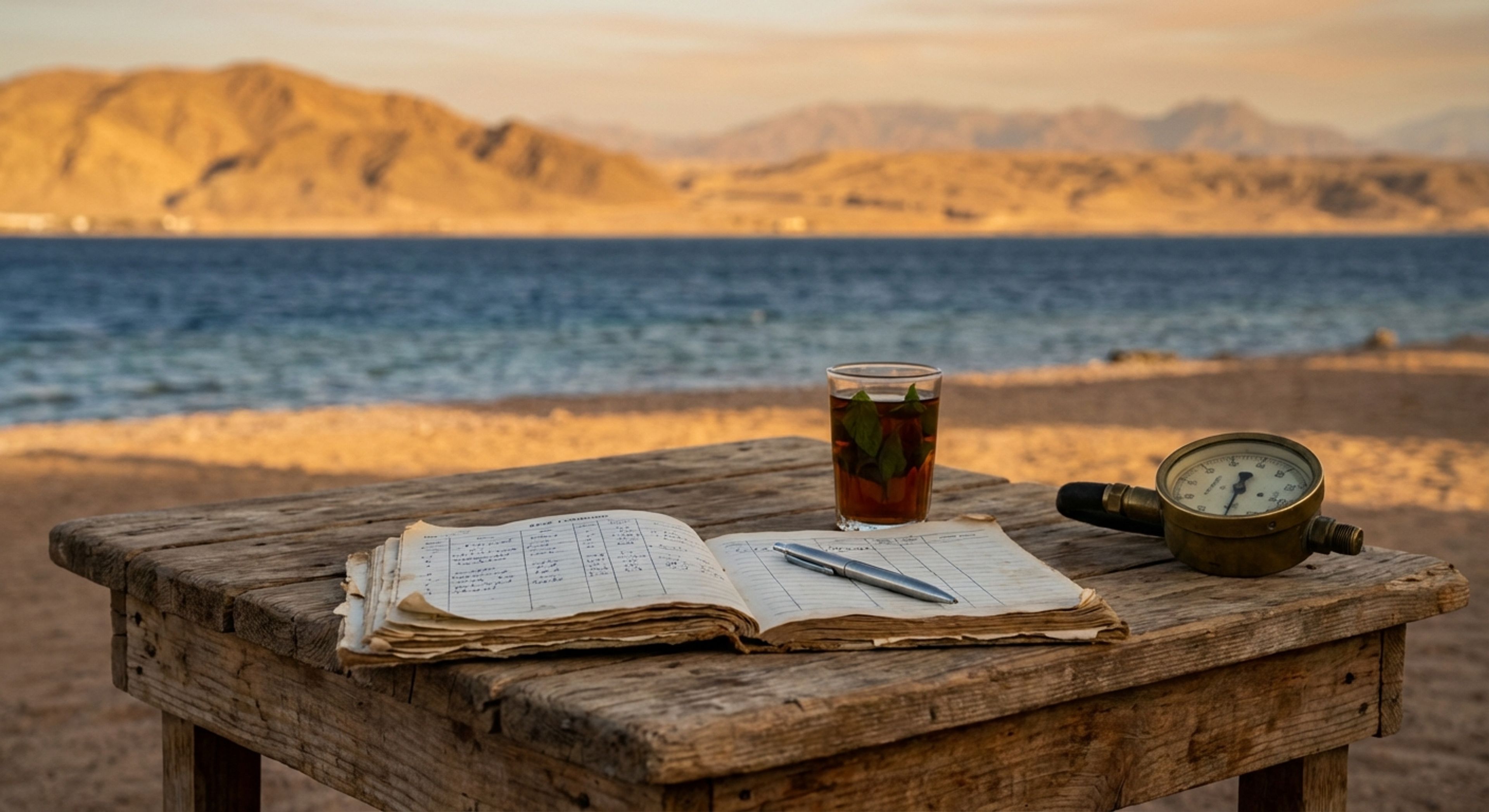
Ahlan, my friend. Welcome. Sit down here on the cushion. The tea is hot and the sugar is plenty. That is the Bedouin way.
Look out there. You see how the Red Sea changes color? In the morning it is the color of turquoise stone. Now, as the sun goes behind the Sinai mountains, it is deep indigo. It is like a bruise on the desert.
You just finished your dive? Good. I saw you coming out of the Lighthouse reef. You look happy. But tell me, where is your logbook?
Ah, you say you will write it later. You say you will just put it in your app later tonight. Or maybe you think, "Malik, I know I went to 18 meters for 50 minutes, what else is there?"
My friend, you are making a mistake.
A dive log is not a spreadsheet. It is not a receipt you keep for taxes. It is a story. It is the only thing that separates a diver from a tourist who just got wet. I have guided thousands of people here in Dahab. I have seen the "Blue Hole" claim too many egos. And I have seen divers who have done five hundred dives but cannot remember a single one because they never wrote down the magic.
Let us drink tea and talk about how to write a log truly.
The Ghost in the Details
I remember a diver named Thomas. He came to me years ago. He had a fancy computer on his wrist. It cost more than my jeep. He told me, "Malik, I don't need to write anything. The computer downloads the profile to the cloud."
The cloud. I do not trust the cloud. I trust the sea.
Two days later, Thomas changed his wetsuit from a shorty to a full 5mm because the winter wind was biting. He didn't have a record of what he wore last time he used a thick suit. He guessed. He panicked that he would float, so he loaded his belt with lead.
We jumped in at the Canyon. He sank like a stone. He crashed right into the bottom because he was severely overweighted. He kicked up sand, ruining the visibility for everyone. He crushed a piece of delicate fire coral. It was ugly.
If he had written in his logbook, he would have known exactly how much lead he needed for a 5mm suit versus a shorty. He would have been neutral. He would have been safe.
What You Must Write (Beyond the Numbers)
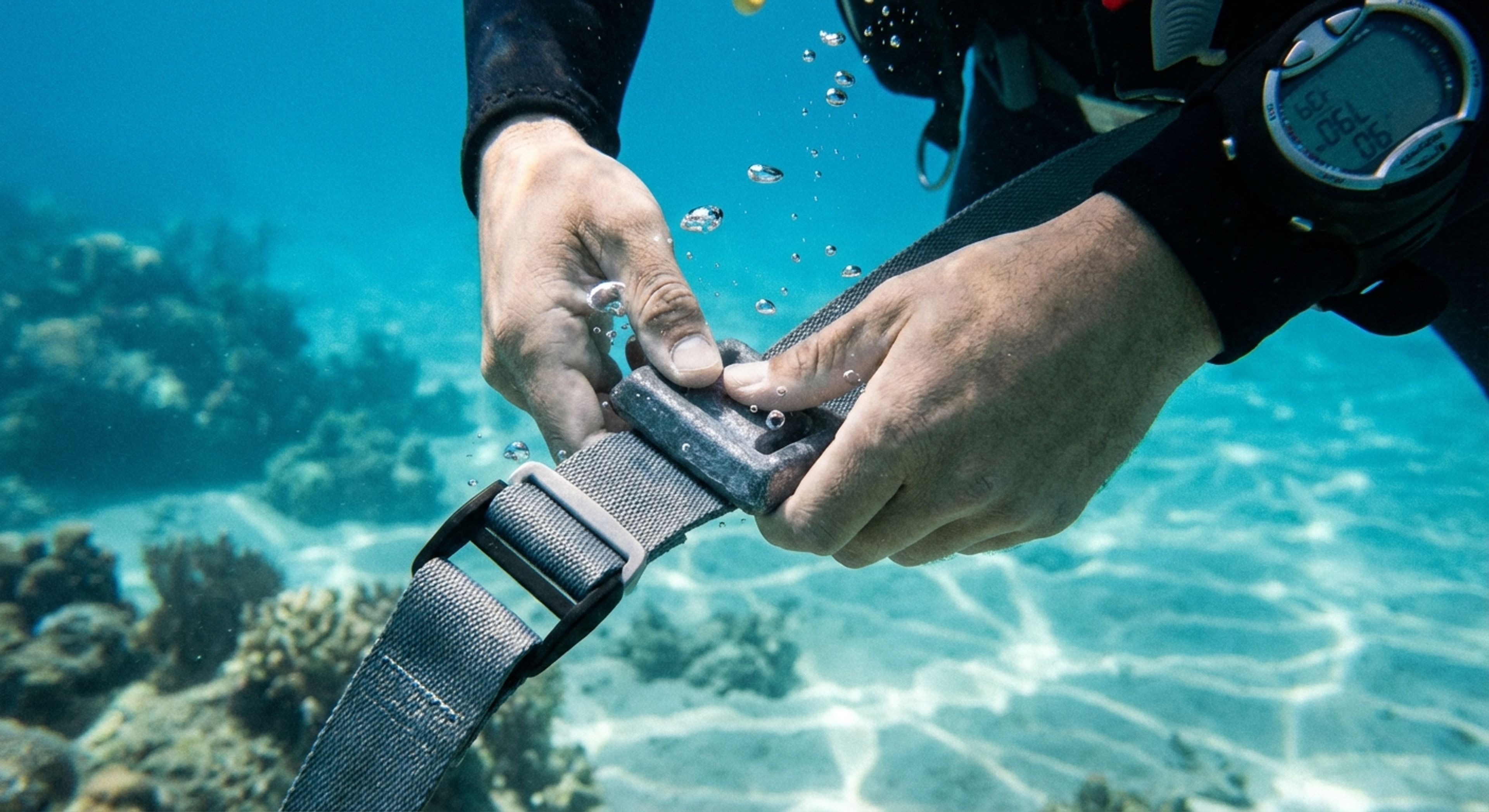
Start with the Weight and Trim. This is technical but it is the skeleton of your dive. Do not just write "6 kilos." Write where you put them. Two on the belt? Two in the BCD pockets? Did your feet float up? Did your face smash into the sand? Write it down: "Used 6kg with 5mm suit. Felt heavy at the safety stop with 50 bar. Try 5kg next time." This is how you become a master. Not by buying gear. By knowing yourself.
Then, write about the Creatures. Do not write "Saw fish." That is lazy. Which fish? Did you see the Napoleon Wrasse? The one with the lips like a sad old man? Was he eating? Was he sleeping? I once saw a Spanish Dancer nudibranch in the daylight. It is rare. Red like fresh blood against the blue. If I did not write down the date and the current, I might think I dreamed it. Use the proper names if you can. If you do not know, ask me. I know them all. Or draw a picture. Even a bad drawing is better than nothing.
Write the Mood. This is the most important part. How did the water feel? Was the current fighting you like an angry dog? Or was it carrying you gently like a mother carries a child? How was your head? Were you scared? Excited? Peaceful? Sometimes we have bad dives. The mask leaks. The buddy is annoying. The ears do not clear. Write this down. It is good therapy. When you read it five years later, you will laugh.
The Reflection. Be your own teacher. "I used my air too fast because I was swimming too hard against the current." "I forgot to check my SPG often enough." "I had perfect buoyancy at the safety stop." Honesty is the only way to get better. The ocean does not care if you lie to yourself. But the ocean will punish you for it eventually.
Paper vs. Digital: The Old Battle
You young people love your screens. I understand. My nephew shows me things on his phone that make my head spin.
There is a romance to the Paper Logbook. I have logs from twenty years ago. They smell like old paper and dried salt. The pages are crinkled from water drops. They have stamps from dive centers that do not exist anymore. When I open them, I am 25 years old again. I can see the handwriting change. When I was excited, my writing was messy. When I was cold, it was shaky. You cannot get that from a screen. But paper has problems. You lose it. It gets wet and the ink runs. You run out of pages.
Digital Apps are smart. They track your statistics. They show you a map of where you have been. They back up your life so you do not lose it at the airport. But many apps are cold. They feel like work.
Here is how I see the fight:
| Feature | Paper Logbook | Digital App |
|---|---|---|
| Soul | High. Smells like adventure. | Low. Feels like data. |
| Safety | Low. Can be lost or ruined. | High. Cloud backups. |
| Verification | Stamps are physical and official. | Digital verification is getting better. |
| Analytics | You have to count manually. | Instant graphs and stats. |
| Convenience | Need a pen and dry hands. | Just tap tap tap. |
A Bridge Between Two Worlds: DIVEROUT
I was skeptical when a guest from Taiwan showed me an app called DIVEROUT. I thought, "Another toy."
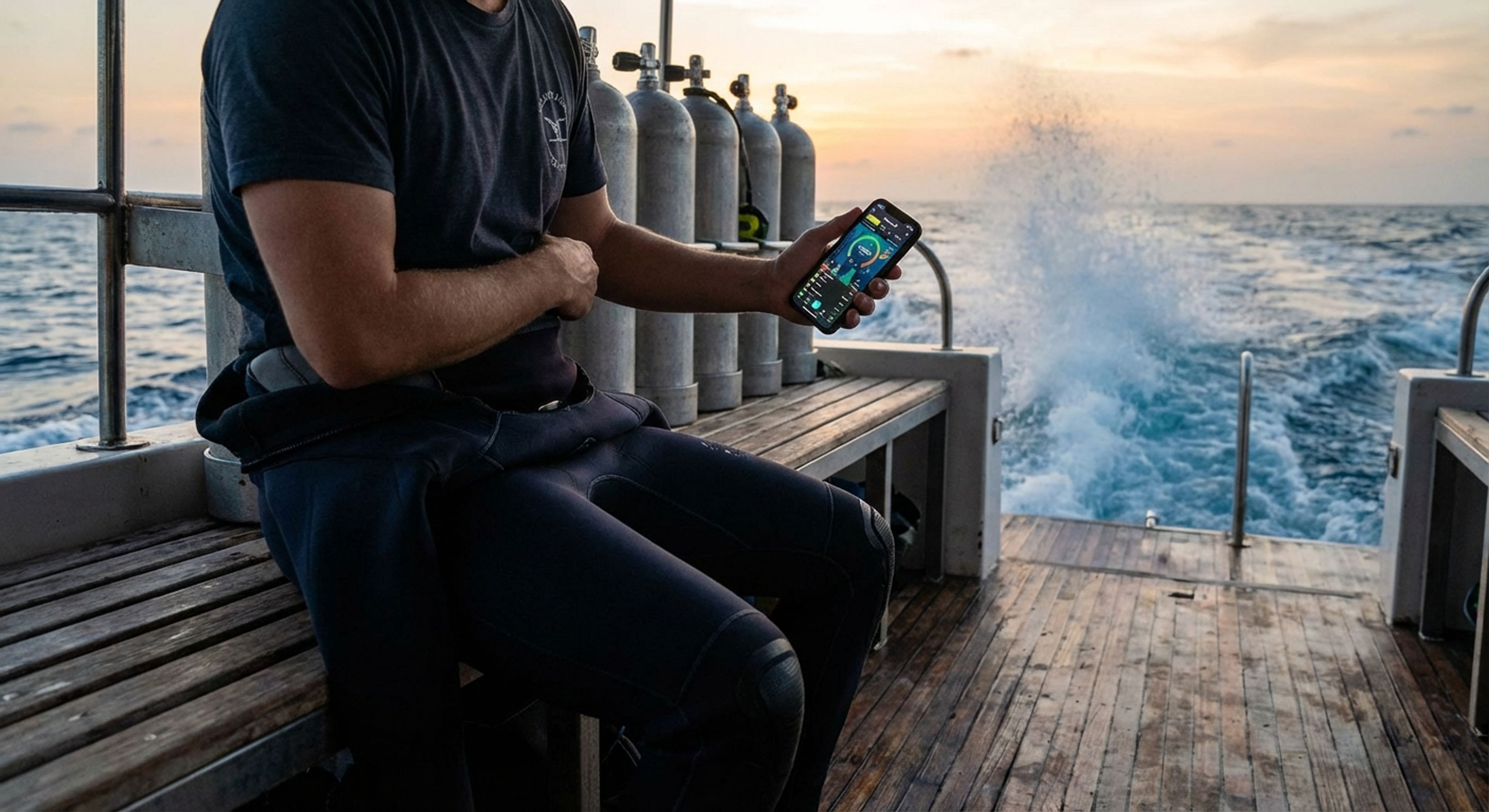
But I looked over his shoulder. It was different. It looked... friendly. It lets you record the technical things, the weights, the tank pressure, the depth, very fast. But it also encourages you to add photos and feelings. It makes the log look beautiful, like a magazine of your life.
My guest told me, "Malik, look, I can share this with my friends instantly." I saw the interface. It was clean. Not cluttered with nonsense. For those of you who want the convenience of the phone but want to keep the spirit of the story, you should look at this. You can find it at https://diverout.com.
I like that it focuses on the community too. You can see what others are seeing. If someone saw a Hammerhead at the Canyon yesterday, you will know. It is a good tool. I still love my paper, but I respect this tool.
The Proof of Your Life
Why does this matter? Listen to me carefully. One day, you will go to a new dive center. Maybe in Komodo. Maybe in the Galapagos. The currents there are not like our gentle Red Sea. They are rivers. The dive master will look at you. He does not know you. He sees a plastic card that says "Advanced Open Water." That card means nothing. You can buy that card in three days. He will ask for your logbook.
If you show him a blank book, or a book with only signatures and no details, he will put you on the "baby boat." You will dive in the shallow bay with the people who are learning to clear their masks.
But if you show him a logbook, paper or digital, that is rich with detail. A log that says "Drift dive, strong current, negative entry, saw Manta Ray," he will nod. He will see you are a real diver. He will put you on the boat that goes to the big water. The sharks. The deep walls.
Your logbook is your passport. It is the proof that you have lived these moments.
The Sun is Setting
The sun is almost gone now. The mountains are turning purple. The wind is picking up. This is the best time in Dahab. The diving is done. The stories begin.
Do not let your dive vanish. When we are underwater, we are visitors. We are silent observers in a world that is not ours. The only thing we can take with us is the memory. If you do not write it down, the memory fades. The colors turn gray. The feeling of weightlessness becomes heavy.
So please. Finish your tea. Take your pen, or take your phone with DIVEROUT. Write down what you saw. Write down how the salt tasted. Write down the name of the fish that looked at you.
Do it now, before the details float away like bubbles.
Yalla, my friend. See you underwater tomorrow.